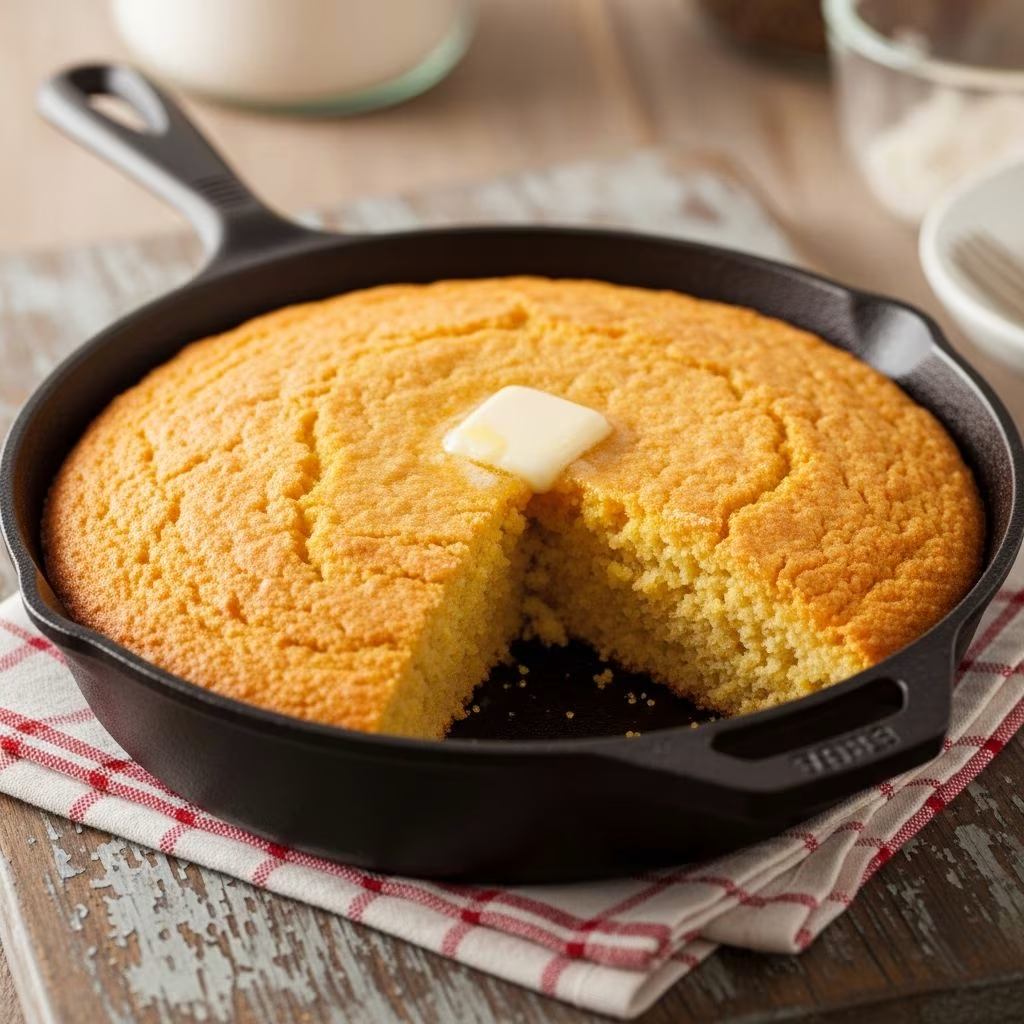
Cornbread prepared in a cast iron skillet represents one of the most beloved comfort food traditions in American cuisine. The combination of high heat, proper technique, and quality ingredients produces a distinctive golden crust while maintaining a tender crumb structure inside. This preparation method has been passed down through generations, becoming a staple accompaniment to countless main dishes at family tables across the country.
Understanding the Foundation: Dry Ingredients
The dry ingredient blend forms the backbone of any successful cornbread recipe. The proportions between cornmeal and flour determine the final texture and flavor profile. A typical ratio includes equal parts yellow cornmeal and all-purpose flour, though variations exist depending on personal preference and regional traditions.
Yellow cornmeal provides the characteristic corn flavor and contributes to the bread’s texture, while all-purpose flour helps bind the mixture and creates structure. The proportion of cornmeal to flour affects how crumbly or tender the finished product becomes. Higher cornmeal ratios produce a more pronounced corn flavor and slightly grainier texture, whereas additional flour creates a softer, more delicate crumb.
Leavening agents play a crucial role in cornbread’s rise and structure. Baking powder serves as the primary leavening ingredient, creating carbon dioxide bubbles that help the batter expand during baking. The standard amount typically ranges from one to two tablespoons per batch, adjusted based on altitude and humidity conditions in your kitchen.
Salt enhances all flavors while balancing sweetness. Many traditional recipes include a subtle amount of granulated sugar—approximately one tablespoon—which adds a slight sweetness without making the cornbread dessert-like. This sugar particularly complements the corn’s natural flavors.
The Wet Ingredient Combination
Buttermilk serves as the primary liquid component in most skillet cornbread recipes. Its acidity reacts with baking soda when included, creating additional lift and contributing to browning. For those without buttermilk, milk combined with a splash of white vinegar creates a suitable substitute, allowing the acidic reaction to occur.
Eggs bind ingredients together while adding richness and helping achieve proper texture. Most recipes call for two large eggs, beaten well to incorporate air and ensure even distribution throughout the batter. The egg proteins set during baking, creating the structure that traps moisture and produces the tender crumb.
Melted butter adds richness and flavor while contributing to browning. It’s important to allow melted butter to cool slightly before combining with other wet ingredients, particularly if eggs are already in the mixture, to prevent scrambling. The butter amount typically ranges from one-third to one-half cup depending on desired richness.
The Cast Iron Advantage
Cast iron skillets transform cornbread in ways standard baking pans cannot replicate. The material’s exceptional heat retention properties ensure consistent, even baking from bottom to top. Once properly preheated, cast iron maintains stable temperatures throughout the baking process, preventing cool spots that can result in uneven cooking.
A 9 to 10-inch skillet works best for most cornbread recipes, producing appropriately portioned servings. Smaller skillets require shorter baking times, while larger ones may need additional minutes to cook through. The skillet’s sides and bottom conduct heat directly to the batter, creating that signature crispy, browned exterior.
For optimal results, place the empty skillet in the oven during preheating. This ensures maximum heat accumulation before the batter is added. Some cooks add a small amount of shortening, bacon grease, or lard to the heated skillet moments before pouring in the batter, creating an extra-crispy bottom layer through the searing effect.
Temperature Control and Baking Precision
Most skillet cornbread recipes call for oven temperatures between 400 and 425 degrees Fahrenheit. Higher temperatures accelerate browning and crust formation, while lower temperatures allow more gentle cooking throughout. The specific temperature often depends on whether you prefer a darker crust or prefer to prioritize interior tenderness.
Preheat your oven thoroughly before beginning the recipe preparation. This usually requires ten to fifteen minutes, ensuring the skillet reaches optimal temperature. Beginning the baking process when the skillet isn’t adequately heated results in uneven cooking and may prevent proper crust development.
Baking time typically ranges from fifteen to twenty-five minutes, varying based on skillet size, oven calibration, and batter thickness. A toothpick inserted into the center should come out clean or with just a few moist crumbs, not wet batter. The top and edges should exhibit golden-brown coloring, and the cornbread should pull slightly away from the skillet sides.
Preparation Methodology
Successful cornbread begins with a two-bowl mixing approach. First, combine all dry ingredients in a large bowl, stirring thoroughly to distribute leavening agents and salt evenly. This prevents pockets of dry leavening agents that could create bitter spots or uneven rising.
In a separate medium bowl, whisk together wet ingredients until well combined and smooth. This ensures eggs distribute evenly and buttermilk fully incorporates with butter. The slight emulsification created by whisking helps bind these components cohesively.
Combine wet and dry ingredients by folding them together gently until just combined. Overmixing develops gluten strands, resulting in tough, dense cornbread rather than the desired tender crumb. A few dry patches are acceptable and preferable to overworked batter that lacks tenderness.
Carefully remove the preheated skillet from the oven and add a small amount of fat to coat the bottom and sides if desired. Pour the batter immediately into the hot skillet and smooth the top gently. The temperature contrast between hot skillet and cool batter initiates crust formation immediately.
Customization and Flavor Variations
| Variation | Additions | Notes |
|---|---|---|
| Sweet Cornbread | Increase sugar to 2-3 tablespoons, add honey | Creates dessert-like quality; pairs well with coffee |
| Corn-Filled | Fold in 1 cup fresh or frozen corn kernels | Adds texture and additional corn flavor throughout |
| Jalapeño Cheddar | Add diced jalapeños and sharp cheddar cheese | Creates savory profile; reduces sugar by half |
| Honey-Butter | Drizzle warm skillet with honey after baking | Creates glaze; enhance with cinnamon if desired |
Cooling and Serving Recommendations
After removing the cornbread from the oven, allow it to cool in the skillet for approximately ten minutes before slicing. This resting period allows the crumb to set properly, making it easier to slice without crumbling excessively. The cornbread continues cooking slightly from residual heat during this time.
Once cooled slightly, slice the cornbread into wedges or squares and transfer to a serving plate. Cornbread is best served warm, topped with generous pats of butter that melt into the warm crumbs. Honey, honey butter, or jam also complement cornbread beautifully.
Leftover cornbread stores well at room temperature for up to one week when wrapped tightly. For extended storage, freeze cornbread wrapped securely in plastic wrap and aluminum foil for up to three months. Reheat frozen cornbread wrapped in foil at 350 degrees Fahrenheit for approximately fifteen minutes.
Troubleshooting Common Issues
Dense, heavy cornbread often results from overmixing the batter or using insufficient leavening agents. Ensure baking powder hasn’t expired and mix the batter only until ingredients combine. Using an oven thermometer can verify actual temperature matches the dial setting.
Uneven cooking or pale coloring may indicate the skillet wasn’t adequately preheated or the oven temperature runs low. Extend baking time slightly and use an oven thermometer for accuracy. If browning occurs too quickly, reduce oven temperature by 25 degrees and extend cooking time.
Cornbread that sticks to the skillet suggests insufficient fat coating or removal before cooling fully. Ensuring adequate fat in the skillet and allowing proper cooling before removal prevents this issue. Using a thin spatula around the edges can help loosen stubborn pieces.
Equipment Selection and Preparation
While cast iron skillets produce superior results, properly seasoned cookware ensures optimal nonstick properties and heat distribution. If using a new cast iron skillet, season it thoroughly before use by rubbing with oil and heating until it begins to smoke, then wiping away excess oil.
Nine-inch round skillets accommodate most standard cornbread recipes efficiently. For smaller portions, eight-inch skillets work well, though baking time may decrease slightly. Some cooks prepare cornbread muffins by dividing batter among muffin tin cups, reducing baking time to approximately twelve to fifteen minutes.
Alternative baking vessels include ceramic baking dishes, glass pans, and steel cake pans. These options work adequately but don’t provide the same heat retention and crust development that cast iron delivers. If using alternatives, reduce oven temperature by 25 degrees to prevent over-browning.
Ingredient Quality and Selection
Selecting quality cornmeal significantly impacts the final cornbread’s flavor and texture. Whole grain yellow cornmeal provides more robust corn flavor than refined varieties, though both work effectively. Stone-ground cornmeal offers exceptional flavor but may require slightly longer baking times due to larger particle size.
Fresh buttermilk produces superior results compared to older bottles or substitutes, though proper substitutes work acceptably. Egg freshness affects the batter’s binding properties and final texture. Using room-temperature ingredients allows better mixing and more even baking.
Unsalted butter allows better control over total salt content, though salted butter works in recipes not specifically requiring unsalted varieties. Avoid margarine or butter substitutes, which lack the flavor and browning properties of real butter.
Frequently Asked Questions
Can I prepare cornbread batter in advance? Yes, prepare batter up to two hours ahead, storing it covered in the refrigerator. Baking time may increase slightly since the batter will be colder when poured into the hot skillet.
What size skillet produces the best results? A 9 to 10-inch cast iron skillet works optimally for most recipes, producing proportionate thickness and even baking throughout. Smaller skillets may overbake on the edges before the center sets.
How do I prevent cornbread from sticking? Ensure adequate fat coats the skillet bottom and sides. Cool cornbread in the skillet for ten minutes before turning out onto a cooling rack or serving plate. A thin spatula helps loosen stubborn edges.
Can I use regular milk instead of buttermilk? Mix regular milk with one tablespoon vinegar and let sit five minutes before using. This creates an adequate buttermilk substitute, allowing the acidic reaction necessary for proper rise.
What causes dark spots on cornbread? Overly high oven temperatures or extended baking times create dark spots and over-browning. Use an oven thermometer to verify accurate temperature, and monitor cornbread during the final few minutes of baking.
References
- Skillet Cornbread Recipe — The Country Cook. 2024. https://www.thecountrycook.net/skillet-cornbread/
- Simple Skillet Cornbread — Simple Bites. 2024. https://simplebites.net/simple-skillet-cornbread/
- Honey Skillet Cornbread with Corn Inside — Sally’s Baking Addiction. 2024. https://sallysbakingaddiction.com/honey-skillet-cornbread/
- How to Make Cornbread in a Cast Iron Skillet — Field Company. 2024. https://fieldcompany.com/blogs/journal/field-skillet-cornbread
- Skillet Cornbread — Meat Church. 2024. https://www.meatchurch.com/blogs/recipes/cornbread