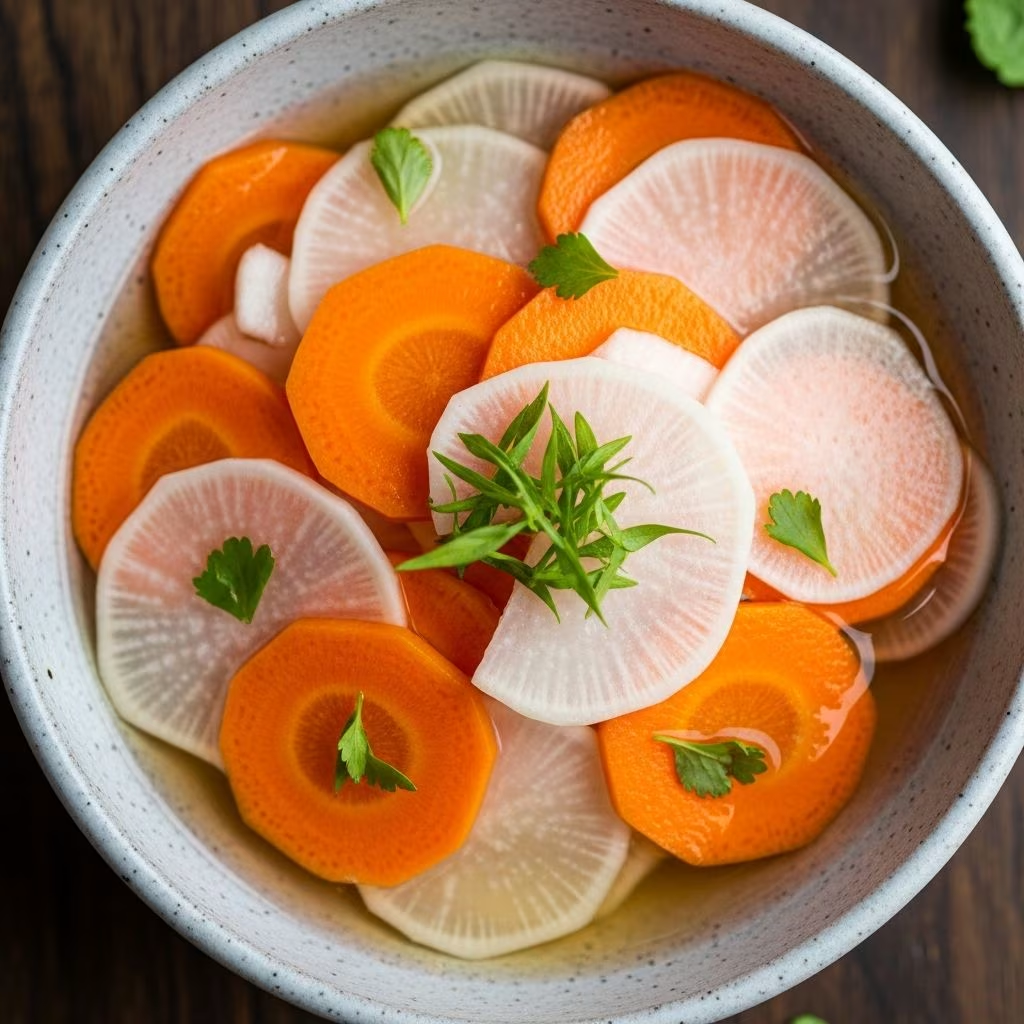
Vietnamese Do Chua, the beloved pickled daikon and carrots, brings a burst of sweetness, tang, and crunch to countless dishes. This quick pickle, known as Đồ Chua, is a staple in Vietnamese cuisine, elevating everything from sandwiches to noodle bowls with its vibrant flavors.
The Allure of Do Chua in Vietnamese Cooking
Do Chua embodies the balance of flavors central to Vietnamese food: sweet from sugar, sour from vinegar, and a subtle saltiness. Unlike fermented pickles, this quick method uses a brine of vinegar, sugar, salt, and water, allowing it to be ready in hours or days. Its julienned strips of daikon radish and carrots provide texture that contrasts rich meats and creamy pates in banh mi.
Originating as a simple preservation technique, Do Chua has evolved into a versatile condiment. Home cooks prize it for its ease—no canning equipment needed—and ability to brighten meals. Whether piled high on grilled pork banh mi or tossed into fresh spring rolls, its role is indispensable.
Essential Ingredients for Authentic Do Chua
Crafting Do Chua starts with fresh, firm vegetables. Key components include:
- Daikon radish: Typically 1 pound, peeled and julienned for mild spice and crispness.
- Carrots: ½ pound, adding natural sweetness and color.
- Salt: 1-2 teaspoons kosher or sea salt to draw out moisture.
- Vinegar solution: White or distilled vinegar (½-1½ cups), sugar (⅔-½ cup), water (1-2 cups).
Optional chili peppers introduce heat, sliced thinly for even distribution. Use granulated white sugar for quick dissolution and a clear brine.
Step-by-Step Guide to Making Do Chua
Preparation takes about 15-30 minutes, with pickling time varying from 1 hour to 3 days.
Prep the vegetables: Peel daikon and carrots. Julienne into thin matchsticks using a mandoline slicer for uniformity—safer with the guard to avoid injury. Aim for 2-inch lengths.
Salt and drain: Toss strips with 1-2 tsp salt in a bowl. Let sit 5-15 minutes to release water, creating a firmer pickle. Rinse thoroughly under cold water and squeeze dry in handfuls or a towel.
Prepare the brine: In a saucepan, heat 1 cup water, ⅔ cup sugar, and ½ cup vinegar until sugar dissolves. Stir occasionally; do not boil vigorously. Cool slightly.
Pack and pickle: Layer drained vegetables into sterilized jars. Pour brine over to submerge, adding filtered water if needed. Seal and let sit at room temperature in a sunny spot for 1-3 days, tasting daily. Refrigerate once desired tang is reached.
For faster results, increase vinegar ratio or use hot brine directly. Smaller cuts pickle quicker.
Recipe Variations for Every Palate
Customize Do Chua to suit preferences:
| Variation | Adjustments | Best For |
|---|---|---|
| Sweeter Profile | Increase sugar to ¾ cup | Balancing spicy dishes |
| Tangier Bite | Boost vinegar to ¾ cup, reduce water | Quick pickles under 24 hours |
| Spicy Kick | Add 1-2 sliced red chilies | Bold banh mi or noodle soups |
| Extra Crunch | Blanch briefly in boiling water post-salting | Longer storage |
Adjust vegetable ratios—more daikon for earthiness or carrots for sweetness.
Perfect Pairings: Where Do Chua Shines
Do Chua’s versatility makes it a kitchen MVP:
- Banh Mi Sandwiches: Classic with pate, pork, and cilantro.
- Rice Bowls: Tops grilled meats or tofu for contrast.
- Spring Rolls: Finely chopped inside fresh rolls.
- Salads and Noodles: Adds zing to bun cha or pho sides.
It cuts through fatty proteins, refreshing palates in heavy meals.
Pro Tips for Pickle Perfection
- Sterilize jars: Boil lids and jars 10 minutes to prevent spoilage.
- Moisture control: Thorough rinsing post-salting avoids mushiness.
- Storage: Keeps 2-4 weeks refrigerated; flavors peak after 3 days. Freezes well in brine up to 3 months.
- Temperature matters: Warmer spots (65-75°F) speed pickling.
- Scaling: Brine for 1½ lbs veggies; double for larger batches.
Common Mistakes and How to Avoid Them
Avoid these pitfalls for success:
- Too soft texture: Insufficient draining leads to sogginess—squeeze firmly.
- Uneven flavor: Ensure full submersion; press veggies down.
- Overly sweet: Taste brine before pouring; adjust incrementally.
- Spoilage: Use clean tools and fridge promptly after pickling.
Health Benefits of Homemade Do Chua
Beyond taste, Do Chua offers probiotics from natural fermentation hints, plus vitamin C from veggies. Low-calorie at ~20 kcal per serving, it’s gut-friendly when not overly sugared[general knowledge].
Frequently Asked Questions (FAQs)
Can I make Do Chua without a mandoline?
Yes, julienne by hand or use a grater for thicker strips, though pickling takes longer.
How long does Do Chua last?
Up to 4 weeks in the fridge; discard if cloudy or off-smelling.
Is rice vinegar a good substitute?
It works but yields milder tang; stick to distilled for authenticity.
Can I reuse the brine?
Yes, for another batch if fresh veggies are added promptly.
Why is my Do Chua not crunchy?
Likely under-drained; next time salt longer and squeeze harder.
Scaling Up: Batch Cooking Do Chua
For parties, triple the recipe: 3 lbs daikon, 1.5 lbs carrots, 3 cups water, 2 cups sugar, 1½ cups vinegar. Use quart jars; process in assembly line for efficiency. Sunny windowsill fermentation works best in batches.
Experiment with additions like green papaya for nuoc cham-inspired twists, maintaining core ratios.
References
- Vietnamese Pickled Carrots and Daikon (Đồ Chua) — Two Plaid Aprons. Accessed 2026. https://twoplaidaprons.com/vietnamese-pickled-carrots-and-daikon-do-chua/
- Traditional Vietnamese Pickled Carrots and Daikon (Do Chua) — Cooking Therapy. Accessed 2026. https://www.cooking-therapy.com/vietnamese-pickled-carrots-and-daikon/
- Pickled Carrots & Daikon (Đồ Chua) — Simple Vietnamese Food. Accessed 2026. https://simplevietnamesefood.com/pickled-carrots-daikon-do-chua/
- Vietnamese Pickled Daikon & Carrot Recipe (Đồ Chua) — Hungry Huy. Accessed 2026. https://www.hungryhuy.com/vietnamese-pickled-daikon-carrot-recipe-do-chua/
- Vietnamese Pickled Daikon & Carrots for Bánh Mì (Đồ Chua) — Vicky Pham. Accessed 2026. https://vickypham.com/blog/pickled-daikon-carrot-for-banh-mi/