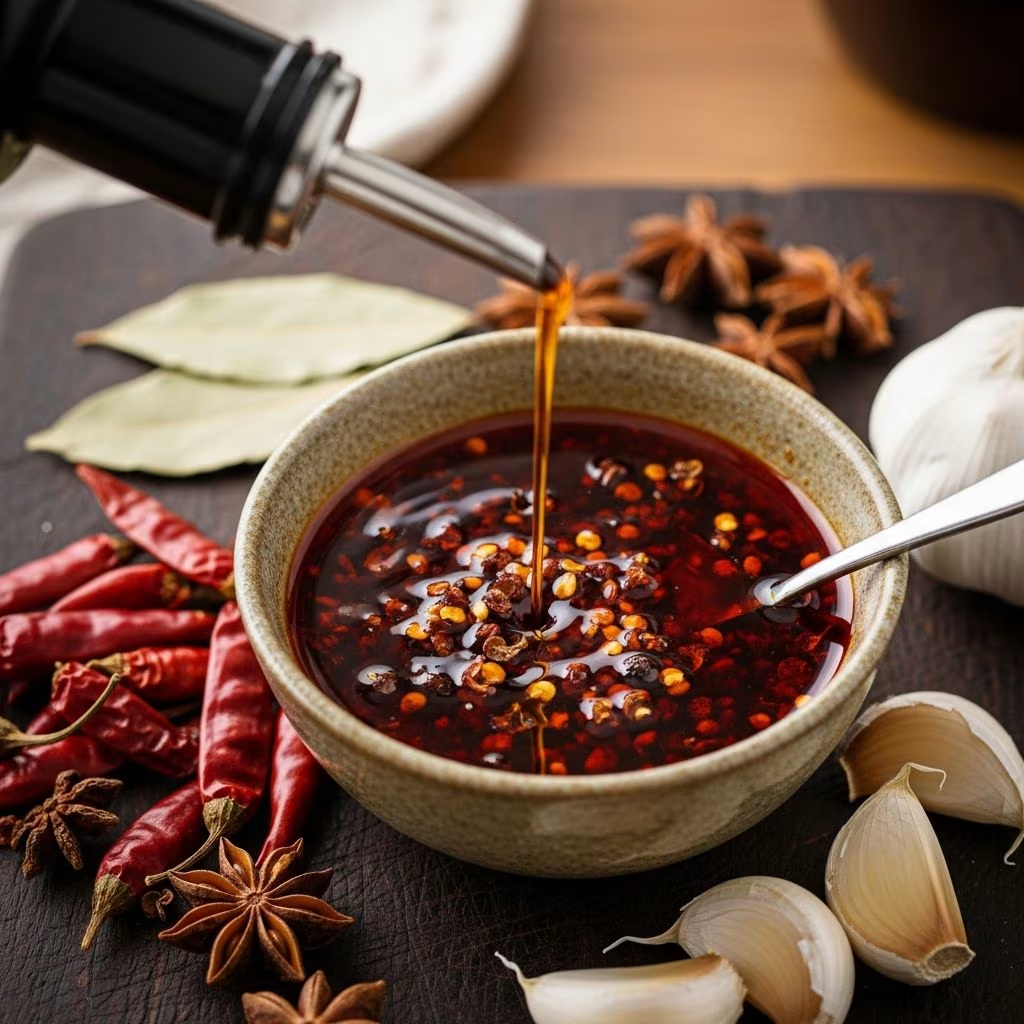
Chili oil stands as a cornerstone of global cuisines, particularly in Chinese and Sichuan cooking, where it delivers intense heat, deep aroma, and vibrant color to everyday meals. This versatile condiment transforms simple dishes into flavorful masterpieces, drizzled over noodles, stir-fries, or even eggs. Making it at home allows full control over spice levels, freshness, and customization, far surpassing store-bought versions in potency and purity.
The Essence of Chili Oil: Origins and Appeal
Rooted in Sichuan province, chili oil emerged as a way to preserve chilies and amplify flavors in oil-based preparations. Its allure lies in the balance of numbing spice from Sichuan peppercorns, fiery heat from chili flakes, and fragrant notes from aromatics like star anise and cinnamon. Home preparation ensures no preservatives or diluted tastes, yielding a product that lasts months when stored properly.
Unlike mild olive oils, neutral bases like vegetable or canola oil absorb infusions without overpowering them, creating a canvas for spices. The process involves heating oil to extract essences without burning, a skill that yields ruby-red oil with layered complexity.
Essential Ingredients for Authentic Flavor
Building a superior chili oil starts with quality components. Here’s a breakdown of core elements:
- Neutral Oil: 1.5 to 3 cups of vegetable, canola, avocado, or peanut oil provides the base. These withstand high heat without smoking.
- Chili Flakes: 3/4 to 1 1/4 cups of Sichuan chili flakes or a mix of gochugaru, crushed red peppers, and flakes for varied heat profiles. Opt for coarse textures to capture oil effectively.
- Sichuan Peppercorns: 2-4 tablespoons, toasted and ground, impart the signature mala (numbing) sensation.
- Aromatics: Star anise (5 pods), cinnamon sticks (1-2), bay leaves (2), black cardamom (2 pods, optional), cloves (2 tsp, optional), and dried ginger for depth.
- Fresh Additions (Optional): Crushed garlic (3 cloves), halved shallots (1-2) for savory umami, added late to prevent bitterness.
- Seasonings: 1-2 tsp salt, sugar to taste, and sesame seeds for finish.
Scale ingredients proportionally: for 1.5 cups oil, use minimal aromatics; for 3 cups, incorporate all for intensified flavor.
Step-by-Step Guide to Perfection
Precision in temperature and timing separates exceptional chili oil from mediocre attempts. Follow these stages meticulously.
Prepare the Spice Base
In a large heatproof bowl, combine chili flakes, ground Sichuan peppercorns, salt, and any ground spices. Mixing dry ensures even distribution before oil contact. For extra toastiness, lightly pan-toast whole chilies first, then grind coarsely.
Infuse the Oil
Combine oil and whole aromatics (star anise, cinnamon, bay leaves, peppercorns, etc.) in a deep pot—ensure 2 inches clearance to prevent overflow. Heat over medium, reducing to low as bubbles form around spices at 225-250°F (107-121°C). Tiny, steady bubbles indicate ideal infusion; vigorous sizzling means reduce heat immediately.
Simmer 30-60 minutes, monitoring garlic/shallots to remove when golden-brown. If no thermometer, test with chopstick: steady bubbles around it confirm readiness. Oil should shimmer without smoking.
The Critical Pouring Technique
Strain aromatics, reserving infused oil. Employ the three-pour method for optimal results: Heat strained oil to 360°F (182°C), pour 1/3 over flakes (expect sizzle). Cool to 280°F (138°C) for second pour (bright color), then 210°F (99°C) for final (spicy depth). Stir between pours.
Alternative single-pour: Heat to 200-225°F (93-107°C), pour directly over flakes for simpler process. Taste and adjust salt/sugar/spice.
Cooling and Storage
Allow to cool completely, then transfer to sterilized jars. Refrigerate for 1-2 months shelf life, or room temperature for weeks if no fresh ingredients. Flavor peaks after 24 hours steeping.
| Method | Oil Temp (°F/°C) | Pros | Cons |
|---|---|---|---|
| Single Pour | 200-225 / 93-107 | Quick, beginner-friendly | Less nuanced color/flavor |
| Three-Pour | 360→280→210 / 182→138→99 | Balanced aroma, color, heat | Requires thermometer |
| Long Simmer | 225-250 / 107-121 (30-60 min) | Deep infusion | Risk of overcooking |
Customization for Every Palate
Tailor your chili oil to preferences:
- Milder Version: Reduce flakes by 25%, add sesame oil post-infusion.
- Extra Numbing: Double Sichuan peppercorns, grind finely.
- Garlicky Twist: Increase garlic/shallots, blend into flakes.
- Sweet Heat: Stir in 1 tsp sugar per cup oil.
- Herbal Boost: Infuse with fresh ginger or lemongrass.
Experiment with oils: peanut for nuttiness, rapeseed for clean taste.
Creative Ways to Use Chili Oil
Beyond drizzling, integrate into recipes:
- Toss with noodles or dumplings for instant zing.
- Mix into mayo for spicy aioli.
- Marinate meats before grilling.
- Top congee, eggs, or pizza.
- Blend into vinaigrette for salads.
In Sichuan cuisine, it anchors dan dan noodles and mapo tofu, but globally, it enhances ramen, tacos, and roasted veggies.
Troubleshooting Common Pitfalls
Avoid these errors:
- Bitter Taste: Oil too hot—cool before pouring.
- Pale Color: Insufficient flakes or low temp—aim for ratios above.
- Weak Flavor: Short infusion—extend to 45+ minutes.
- Separation: Stir vigorously post-pour.
Always use heatproof tools; safety first with hot oil.
Advanced Techniques for Pros
For elevated results, toast sesame seeds separately and fold in last. Ferment flakes overnight in soy sauce for umami depth. Use a sous-vide for precise 110°C infusion without monitoring. Scale up for gifts, sterilizing jars via boiling.
Frequently Asked Questions
Can I use olive oil?
Neutral oils preferred; olive oil’s flavor dominates and lowers smoke point.
How spicy is it?
Adjustable; Sichuan flakes hit medium-high heat. Test small batches.
Does it need refrigeration?
Yes for fresh aromatics; lasts 1-2 months.
Vegetarian/vegan?
Fully plant-based as is.
Substitute for Sichuan flakes?
Gochugaru or red pepper flakes work, but lack mala.
Nutritional Snapshot
Per tablespoon: ~120 calories, mostly from oil. Rich in capsaicin (anti-inflammatory) and antioxidants from spices. Use sparingly for calorie control.
References
- Easy Homemade Chili Oil Recipe — The Foodie Takes Flight. 2023. https://thefoodietakesflight.com/easy-chili-oil-recipe/
- Homemade Spicy Chili Oil — Siriusly Hungry. 2023. https://siriuslyhungry.com/homemade-spicy-chili-oil/
- How to Make Chili Oil: The Perfect Recipe! — The Woks of Life. 2023-10-15. https://thewoksoflife.com/how-to-make-chili-oil/
- Homemade Sichuan Chili Oil — Chill Crisp by Xueci Cheng. 2023. https://chillcrispbyxueci.substack.com/p/homemade-sichuan-chili-oil
- How to Make the BEST Chili Oil at Home — Seonkyoung Longest (YouTube). 2023. https://www.youtube.com/watch?v=cX8UBpf5-wE