Creating candied orange peel at home represents one of the most rewarding and economical culinary projects for home cooks. What begins as kitchen waste transforms into an elegant confection that graces holiday platters, decorates desserts, and elevates cocktails with sophisticated citrus charm. The beauty of this technique lies in its simplicity—requiring nothing more than oranges, sugar, and water to produce a stunning ingredient that rivals commercial versions at a fraction of the cost.
Understanding the Foundation: Why Candied Citrus Peels Matter
Candied orange peel occupies a unique space in culinary traditions worldwide. The process converts the often-discarded outer layer of citrus fruits into a delicacy that balances sweetness with the bright acidity inherent to the fruit. This transformation has been perfected over centuries, with references appearing in European confectionery arts dating back centuries. The natural oils present in citrus peels contain aromatic compounds that intensify during the candying process, creating a complex flavor profile that enhances everything from baked goods to savory applications.
Beyond flavor considerations, making candied peel addresses sustainability concerns by utilizing the entire fruit. Rather than composting or discarding peels, resourceful cooks transform them into an ingredient worthy of premium applications. This approach aligns with modern culinary values emphasizing waste reduction and ingredient optimization.
Selecting and Preparing Your Citrus Foundation
Success begins with thoughtful fruit selection. Choose firm, unblemished oranges with thick skins, as these varieties provide the substantial peel required for candying. Organic oranges are recommended whenever possible, eliminating concerns about pesticide residues that may concentrate in the peel during processing. Navel oranges and other sweet orange varieties work exceptionally well, though the technique adapts readily to lemons, limes, grapefruits, and other citrus options.
The preparation phase demands attention to detail. Begin by washing oranges thoroughly under running water, scrubbing the surface to remove any dirt or debris. Using a sharp knife, remove the top and bottom of each orange, then score the peel vertically into quarters, being careful to cut only through the peel and pith layer without damaging the fruit flesh itself. This scoring technique allows peels to be removed as intact sections rather than fragmented pieces.
Once removed, cut the peel sections into uniform quarter-inch strips. Consistency in size ensures even cooking and a professional appearance in the finished product. Aim for strips approximately one-quarter inch in width, as thicker strips tend to remain too leathery, while thinner ones may become overly fragile.
The Bitterness-Reduction Protocol
An essential preliminary step distinguishes excellent candied peel from mediocre versions: the blanching process. Orange peel naturally contains bitter compounds that require systematic removal through repeated boiling cycles. This step cannot be skipped or rushed without compromising the final product’s palatability.
Place prepared peel strips in a large saucepan and cover generously with water. Bring to a rolling boil over high heat, then reduce to a hard simmer for approximately ten minutes. Drain the peels completely in a colander and rinse under cold water, discarding the cooking liquid. This process extracts bitter alkaloids from the peel’s surface. Repeat this blanching cycle a minimum of two additional times—three total cycles provide optimal bitterness reduction. After each cycle, use fresh water and follow the same boiling and draining procedure. The cooking liquid should appear increasingly clear with each iteration, indicating successful extraction of unwanted flavors.
Crafting the Perfect Simple Syrup
With blanched peels prepared, attention turns to creating the syrup that will both cook and coat the peel. Simple syrup serves as both the cooking medium and the vehicle for the candying process. The ratio of sugar to water creates the critical concentration needed for proper texture development.
Combine two to three cups of granulated sugar with two cups of fresh water in a saucepan—various recipes suggest slightly different ratios, and either approach yields excellent results. Place the saucepan over medium heat and stir constantly until all sugar crystals completely dissolve. This typically requires three to five minutes of continuous stirring. Resist the urge to move forward until the mixture appears perfectly clear, as undissolved sugar crystals can trigger crystallization issues during cooking.
Once the syrup reaches complete clarity, increase heat to bring the mixture to a boil. The syrup should reach a specific temperature stage—approximately 230°F to 235°F, known as the thread stage in candy-making terminology. If you possess a kitchen thermometer, this tool provides invaluable precision. Alternatively, observe the syrup’s consistency; it should coat a spoon lightly without appearing thick or sticky.
The Transformation: Simmering Peels Into Translucent Gems
This phase requires patience and restraint. Add the blanched peel strips to the prepared syrup and reduce heat to maintain a medium simmer—not a rolling boil. The distinction matters significantly; vigorous boiling can create undesired crystallization and tough, grainy textures. The simmer should be gentle, with small bubbles periodically rising through the syrup.
Allow the peels to cook undisturbed for forty-five to sixty minutes, depending on thickness and your stove’s characteristics. During this extended cooking period, the peel gradually transforms from opaque to translucent, indicating sugar penetration and proper candy development. You may notice the pith portion becoming distinctly pale green—this visual indicator signals readiness.
Here emerges a critical technique: during simmering, avoid stirring the syrup with a spoon or whisk. This stirring action introduces air and can initiate the crystallization process you’ve worked to prevent. If gentle movement becomes necessary, pick up the entire pot and swirl it gently rather than using utensils. This protective measure preserves the syrup’s integrity and ensures a glossy, smooth finished product.
Coating and Drying: The Final Refinement
Once the peels reach perfect translucency, remove the pan from heat and allow contents to cool to room temperature. This cooling period is not optional—attempting to handle hot, sticky peels results in burns and frustration. Allow a minimum of several hours for complete cooling.
Using a slotted spoon, remove peels individually from the cooled syrup, allowing excess liquid to drip back into the pot for a few seconds. Reserve the remaining flavored syrup for beverages or future culinary applications—this orange-infused liquid represents a valuable byproduct of the candying process.
Place prepared candied peels in a shallow bowl containing granulated sugar, shaking gently to coat all surfaces thoroughly. The sugar coating provides both textural contrast and preservation benefits. Some cooks prefer placing sugar in a ziplock bag and shaking peels within the bag—a practical approach for large batches.
Arrange sugar-coated peels on a wire cooling rack placed over a baking sheet to catch drips. Allow peels to dry completely in a cool, dry location for one to two days. Some cooks prefer using a turned-off toaster oven, which protects drying peels from dust and airborne particles while maintaining air circulation. Once completely dry, the finished candies develop their characteristic slightly crispy exterior concealing a chewy, sweet interior.
Storage Strategies and Longevity
Properly candied orange peel maintains quality for several weeks when stored appropriately. Transfer dried candies to an airtight container, separating layers with parchment paper to prevent sticking. Store in a cool, dry location away from direct sunlight. Refrigeration is unnecessary and can introduce unwanted moisture. The sugar coating acts as a natural preservative, and many home cooks successfully enjoy candied peels for a month or longer after preparation.
Creative Applications and Culinary Uses
The versatility of homemade candied orange peel extends far beyond simple snacking. Chop candies finely and incorporate into chocolate ganache or melted chocolate for dipped treats with sophisticated flavor dimensions. Include whole or chopped pieces in baked goods—holiday breads, cakes, and cookies all benefit from the bright citrus contribution. Candied peels serve as elegant garnishes for cocktails and beverages, adding both visual interest and complementary flavor notes. Incorporate into cheese platters alongside cured meats and crackers, where the sweetness and tartness create appealing contrast. Fine pastry chefs recognize candied citrus peel as a professional-grade garnish for plated desserts, adding refinement and homemade credibility to any presentation.
Troubleshooting Common Challenges
Grainy or Crystallized Texture: This typically results from stirring the syrup during cooking or using sugar that contained impurities. Ensure strict adherence to non-stirring protocols and use fresh, high-quality granulated sugar.
Peels Remaining Too Tough or Leathery: Insufficient cooking time or overly thin peels cause this issue. Extend simmering time and verify that your orange selection provided sufficiently thick peels.
Excessive Bitterness Persisting: The blanching phase requires three full cycles for optimal results. If bitterness remains apparent, additional blanching cycles can improve the final product.
Sugar Coating Not Adhering: Ensure peels are still warm when placing them in sugar, as temperature affects coating adherence. Allow slight cooling but not complete room-temperature cooling before coating.
Expanding Your Repertoire: Variations and Alternatives
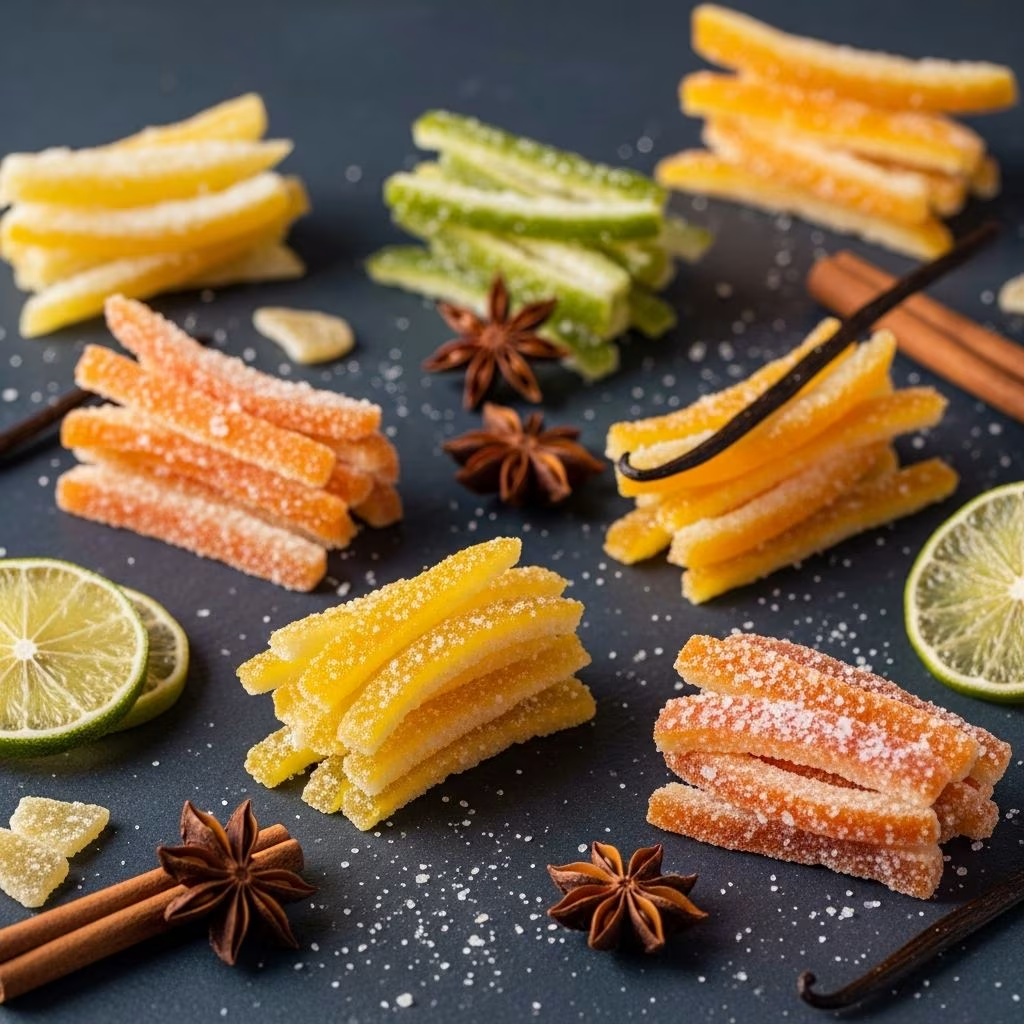
Once you master orange peel candying, the techniques adapt seamlessly to alternative citrus fruits. Lemon peel provides brighter, more intensely acidic character. Grapefruit peel yields sweeter, more subtle results. Lime peel delivers tropical, complex notes. Meyer lemon—prized by chefs for its sweeter profile—creates particularly refined candied products. You might also experiment with combinations, mixing different citrus peels in single batches for nuanced flavor complexity.
For chocolate lovers, dipping finished candied peels in dark, milk, or white chocolate creates elegant confections suitable for gifts or dessert applications. Adding subtle spice elements like cinnamon, cardamom, or clove to the syrup infuses additional flavor dimensions that complement the citrus base.
Why Homemade Surpasses Commercial Options
Commercial candied citrus products often contain additives, excessive artificial flavoring, or disappointing texture. Homemade versions allow complete control over sweetness levels, ingredient quality, and flavor intensity. The cost comparison proves equally compelling—homemade candied peel costs significantly less than comparable commercial products while delivering superior flavor and texture. Additionally, the satisfaction derived from transforming humble kitchen scraps into gourmet confections provides immeasurable value beyond mere economics.
References
- Candied Orange Peel Recipe — Glamorosi Cooks. Accessed April 2026. https://glamorosicooks.com/recipe/candied-orange-peel/
- Candied Orange Peel — The Daring Gourmet — The Daring Gourmet. Accessed April 2026. https://www.daringgourmet.com/how-to-make-candied-orange-and-lemon-peel/
- DIY: Candied Orange Peel — Bright-Eyed Baker. Accessed April 2026. https://www.brighteyedbaker.com/diy-candied-orange-peel/
- Candied Orange Peel — Preppy Kitchen. Accessed April 2026. https://preppykitchen.com/candied-orange-peel/
- Homemade Candied Orange Peel — Casual Foodist. Accessed April 2026. https://casualfoodist.com/homemade-candied-orange-peel/