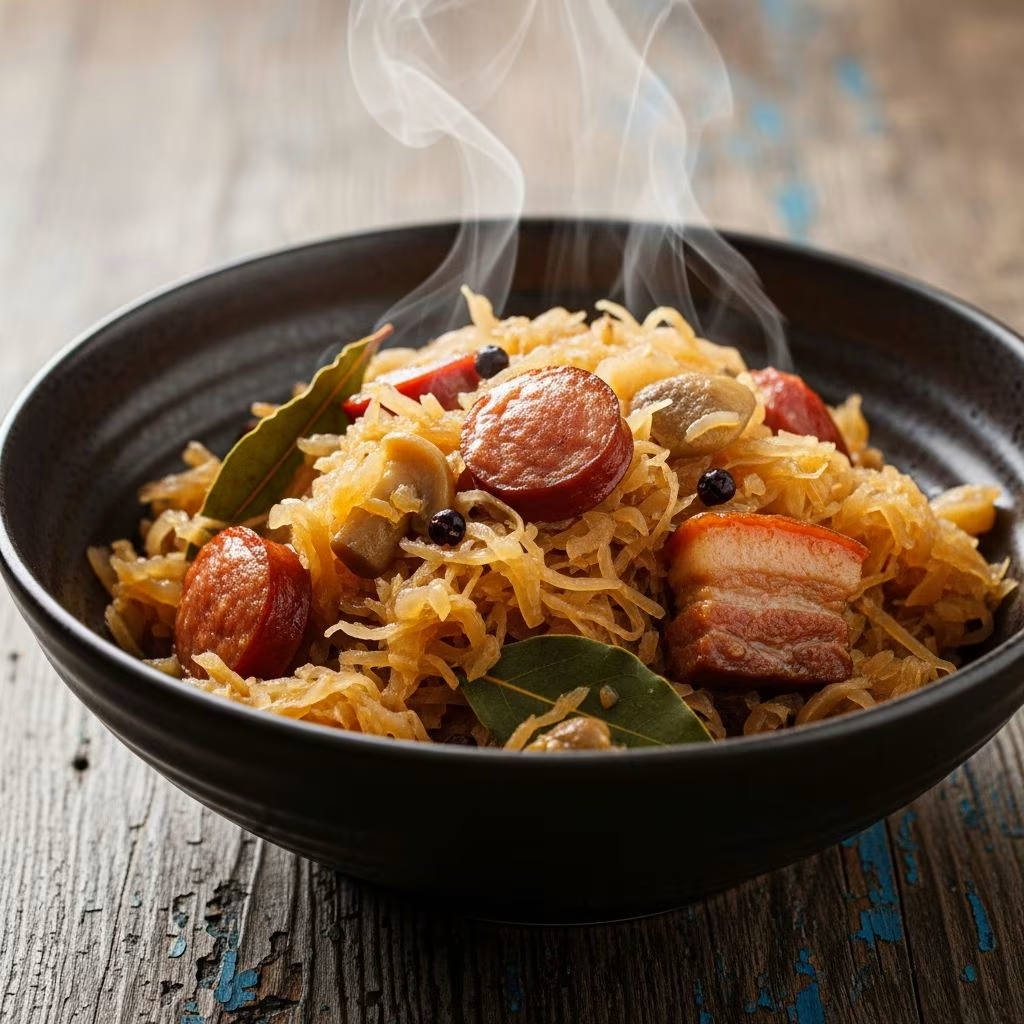
Kapusta represents far more than a simple side dish in Polish culinary tradition. The word itself translates directly to “cabbage” in Polish, yet the dish encompasses a rich heritage of preservation techniques, seasonal cooking, and family gatherings that span generations. This fermented vegetable preparation has become synonymous with Eastern European comfort food, particularly during colder months when hearty, warming meals dominate dinner tables across Poland and its neighboring regions.
The fundamental appeal of kapusta lies in its elegant simplicity. By combining just a handful of ingredients—primarily sauerkraut, onions, bacon, and a touch of sweetness—home cooks create a dish that delivers complex flavor profiles through minimal effort. The cooking process itself becomes meditative, with the aromatic blend of caramelizing onions and crispy bacon fat filling the kitchen with an unmistakable and inviting fragrance.
The Core Components of Authentic Kapusta
Creating genuine kapusta begins with understanding each ingredient’s role in the final dish. Rather than serving as individual flavors, these components work together to build layers of taste that deepen as the dish simmers.
Sauerkraut as the Foundation
Sauerkraut forms the backbone of kapusta, providing both nutritional benefits and distinctive tangy notes. This fermented cabbage offers several advantages: it requires minimal preparation since the fermentation process has already softened the vegetable, it contains beneficial probiotics that support digestive health, and it delivers a complex sour flavor that prevents the dish from becoming monotonous. Most home cooks opt for store-purchased sauerkraut for convenience, though traditionalists sometimes prepare their own through months-long fermentation processes. Regardless of sourcing, thorough draining before cooking ensures that excess liquid doesn’t create a soup-like consistency instead of the desired braised texture.
Bacon: The Flavor Catalyst
Bacon performs dual duties in kapusta preparation. First, it renders its fat into the cooking medium, creating a rich foundation that coats the other ingredients. Second, the crispy bacon bits provide textural contrast and smoky depth that elevates the entire dish. Cutting bacon into small, uniform pieces ensures even cooking and allows for proper distribution throughout the mixture. The rendered fat should not be discarded but rather preserved to sauté the onions, as this step transfers the bacon’s essence directly into the vegetables.
Onions: Aromatic Development
Yellow onions undergo a transformation during the cooking process, transitioning from sharp and pungent to mellow and slightly sweet. This metamorphosis occurs through the Maillard reaction, a chemical process that develops new flavors as the onion’s natural sugars interact with heat. Dicing onions finely allows them to distribute evenly throughout the dish while also enabling them to break down more completely during cooking. Some traditional recipes call for allowing onions to develop a light golden-brown color before adding other ingredients, as this caramelization intensifies their natural sweetness.
Sweetness and Seasoning Elements
Brown sugar serves as the sweet counterbalance to sauerkraut’s acidity, creating a harmonious flavor profile that prevents the dish from tasting overwhelmingly sour. The amount of sugar can be adjusted based on personal preference and the specific sourness level of the sauerkraut used. Beyond brown sugar, some regional variations incorporate additional seasonings including bay leaves, caraway seeds, or fennel seeds, each contributing distinctive aromatic qualities that reference the broader Eastern European flavor landscape.
Preparation Techniques and Cooking Methods
The beauty of kapusta lies not just in its ingredients but in the flexibility of preparation approaches. Different cooking methods yield variations in texture and intensity of flavor.
Stovetop Braising Method
The traditional stovetop approach represents the most common preparation technique. Begin by cooking bacon pieces in a large frying pan or Dutch oven over medium-high heat until the bacon becomes crispy and most of the fat has rendered into the cooking vessel. This process typically requires six to eight minutes of occasional stirring. Remove the cooked bacon temporarily and set aside, leaving the rendered fat in the pan. Add diced onions to this flavorful fat and cook for three to four minutes, stirring occasionally until the onions achieve a light golden-brown color and soften considerably. If the pan appears too dry, a teaspoon or two of olive oil can be added to prevent sticking.
Once the onions have reached the desired stage, introduce the drained sauerkraut along with brown sugar and water. The water serves to create steam and prevent the mixture from sticking to the pan bottom while also allowing the flavors to meld through gentle heating. Return the bacon to the pan and reduce the heat to medium-low, allowing the mixture to simmer gently. Cover the pan partially or fully depending on whether you prefer more evaporation (uncovered) or moisture retention (covered). Simmer for approximately ten minutes, stirring occasionally, until the entire mixture has heated through and developed light golden-brown coloring on the sauerkraut strands.
Slow Cooker Adaptation
For cooks seeking hands-off convenience, slow cooker methods offer excellent results with minimal active preparation. This technique works particularly well when incorporating heartier proteins like kielbasa or other Polish sausages. Begin by melting butter and bacon drippings in a large skillet over medium heat, then sauté finely chopped sweet onions for eight to ten minutes until they become translucent and develop light browning at their edges. Meanwhile, rinse and drain sauerkraut at least twice to remove excess saltiness and fermented liquid. Transfer the cooked onions to a slow cooker along with the well-drained sauerkraut, protein selections, brown sugar, water, and seasonings. Cook on high heat for one hour to bring flavors together quickly, then reduce to low and continue cooking for six additional hours, stirring occasionally. This extended low-heat cooking allows the flavors to mature and intensify while the sauerkraut becomes increasingly tender.
Flavor Variations and Regional Interpretations
| Variation Type | Key Ingredients | Flavor Profile |
|---|---|---|
| Polish Classic | Bacon, onions, brown sugar, sauerkraut | Smoky, tangy, subtly sweet |
| Ukrainian Kobasa | Kielbasa, fennel seeds, sauerkraut, minimal sweetening | Spiced, herbal, savory dominant |
| Mushroom Enhanced | Mushrooms, sausage, garlic, brown sugar | Earthy, umami-rich, complex |
| Fresh Cabbage Blend | Sauerkraut, shredded fresh cabbage, bay leaves | Balanced sour, tender cabbage texture |
| Vegetarian Adaptation | Olive oil, smoked paprika, caraway seeds | Smoky without meat, herbaceous |
Adding Protein Elements
While sauerkraut forms the essential base, many contemporary preparations incorporate additional proteins that transform kapusta from a side dish into a complete meal. Polish kielbasa represents the most traditional choice, bringing its signature garlic and spice notes to the mixture. Cut into half-inch slices or bite-sized pieces, kielbasa releases additional flavors as it heats through. Other sausage varieties work equally well, with different regional styles contributing their own characteristic seasonings and smoke levels. Some cooks prefer shredded pork or beef, which can be browned separately before incorporation, while others experiment with smoked turkey or chicken for lighter interpretations.
Nutritional Considerations and Health Aspects
Kapusta offers numerous nutritional benefits beyond its exceptional flavor. Sauerkraut contains beneficial probiotic bacteria that support digestive system health when consumed raw or lightly cooked, though extended heating can reduce these live cultures. The fermented cabbage base provides substantial amounts of vitamin C, vitamin K, and dietary fiber. When prepared with traditional bacon and rendered pork fat, individual servings contain approximately 147 calories with approximately 9 grams of fat, making it a relatively calorie-conscious option for a flavorful side dish. The inclusion of brown sugar adds simple carbohydrates that provide quick energy, while the complete protein in meat-based versions contributes to satiety.
For individuals following reduced-sodium diets, rinsing sauerkraut multiple times before cooking significantly decreases salt content without substantially compromising flavor. Those avoiding pork products can successfully substitute vegetable oil and smoked paprika for bacon, creating a compassionate version that retains the dish’s essential character while accommodating dietary restrictions.
Serving Suggestions and Pairing Opportunities
Kapusta’s versatility extends to serving applications across various meal contexts. As a side dish, it complements roasted pork exceptionally well, with the sauerkraut’s tanginess cutting through the meat’s richness. Oven-roasted potatoes benefit from kapusta’s bright acidity, while traditional rye bread provides textural contrast and absorbs the flavorful cooking liquid. Holiday tables often feature kapusta as one component of larger meat-and-potato-centered meals.
For New Year’s Day celebrations particularly, kapusta holds traditional significance in Polish households, with superstitions suggesting that consuming sauerkraut-based dishes at year’s start brings prosperity and good fortune throughout the coming year. Whether folklore or habit sustains this tradition matters less than the comfort and continuity it provides across generations.
Storage and Make-Ahead Strategies
Kapusta’s flavors actually improve over time as ingredients continue to develop during refrigeration. Properly stored in airtight containers, prepared kapusta maintains quality for up to one week in the refrigerator. The dish reheats exceptionally well, either on the stovetop over medium-low heat or in a microwave-safe container with occasional stirring. Many home cooks prepare larger batches during weekend cooking sessions, portioning components into individual containers for grab-and-go meals throughout busy weekdays.
Freezing kapusta for extended storage requires some consideration regarding texture, as the repeated freeze-thaw cycle softens vegetables further. Despite this textural change, frozen and thawed kapusta remains quite palatable, retaining its flavor integrity while losing some structural integrity. Portioning into meal-sized amounts before freezing simplifies future reheating and prevents wastage.
Common Preparation Questions
Why does sauerkraut require rinsing before cooking?
Rinsing removes excess saltiness from the fermentation brine, allowing the cook to control final salt levels rather than inheriting the intense salinity preserved during fermentation. This practice also removes some of the sharpest fermented vinegar notes, tempering the overall sourness slightly.
Can fresh cabbage completely replace sauerkraut?
While some traditional recipes blend both sauerkraut and fresh shredded cabbage, using exclusively fresh cabbage creates an entirely different dish. Fresh cabbage requires significantly longer cooking time to soften adequately and lacks the complex fermented flavor sauerkraut provides. The cooking time for all-fresh-cabbage preparations can extend to one hour or longer.
What adjustments suit vegetarian diets?
Substituting bacon with vegetable oil and incorporating smoked paprika, caraway seeds, and bay leaves preserves the dish’s essential character while eliminating animal products. Some vegetarians incorporate mushrooms for umami depth, compensating for the savory notes bacon normally contributes.
How much water should be added?
Water content depends on desired final consistency. Approximately one-quarter cup creates a braised texture where individual sauerkraut strands remain visible yet coated with liquid. Reducing water to two tablespoons yields a drier preparation, while increasing to one-half cup approaches stew-like consistency.
References
- Kapusta (Polish Braised Sauerkraut with Bacon) — Healthy Delicious. 2024. https://www.healthy-delicious.com/kapusta-recipe/
- Kielbasa Kapusta – Polish Sausage and Sauerkraut — Food Folks and Fun. 2024. https://foodfolksandfun.net/kielbasa-kapusta/
- Ukrainian Kobasa Kapusta — Homemade & Yummy. 2024. https://homemadeandyummy.com/ukrainian-kobasa-kapusta/
- Kapusta (Braised Sauerkraut) for New Year’s Day — Teaspoon of Spice. 2024. https://teaspoonofspice.com/kapusta-braised-sauerkraut-new-years-day-recipe-redux/