Creating vinaigrette from scratch is one of the most rewarding culinary skills to develop. Unlike commercially prepared dressings that often contain preservatives and artificial ingredients, homemade versions allow you complete control over flavor profiles, ingredient quality, and nutritional content. A well-executed balsamic vinaigrette transforms simple salads into memorable dishes while serving as a versatile condiment for vegetables, proteins, and grains.
Understanding the Foundation of Vinaigrette
Vinaigrette represents one of cooking’s most elegant expressions of balance and proportion. At its core, this emulsified dressing combines acidic and fatty components in a manner that creates a cohesive, flavorful coating for ingredients. The traditional approach emphasizes the relationship between vinegar and oil, though modern interpretations introduce numerous variations that expand possibilities without compromising the fundamental structure.
The beauty of vinaigrette lies in its simplicity. By mastering basic ratios and understanding how different components interact, you gain access to an infinite array of flavor combinations. Whether preparing a weeknight dinner or hosting a formal gathering, understanding vinaigrette fundamentals elevates your culinary repertoire.
The Role of Balsamic Vinegar in Dressing Creation
Balsamic vinegar occupies a special position in culinary traditions, particularly within Italian gastronomy. This aged vinegar develops complex flavor notes through an extended maturation process, creating a product that offers depth and sophistication impossible to replicate with standard white or wine vinegars. The naturally sweet undertones provide inherent balance that simplifies the dressing-creation process.
When selecting balsamic vinegar for your vinaigrette, understanding quality distinctions proves valuable. Traditional balsamic vinegars undergo lengthy aging in wooden barrels, developing concentrated flavors and syrupy textures. Conventional balsamic vinegars, while more affordable, still deliver robust flavor suitable for most applications. Recognizing these differences helps you make informed choices aligned with your culinary goals and budget.
Essential Ingredients and Their Contributions
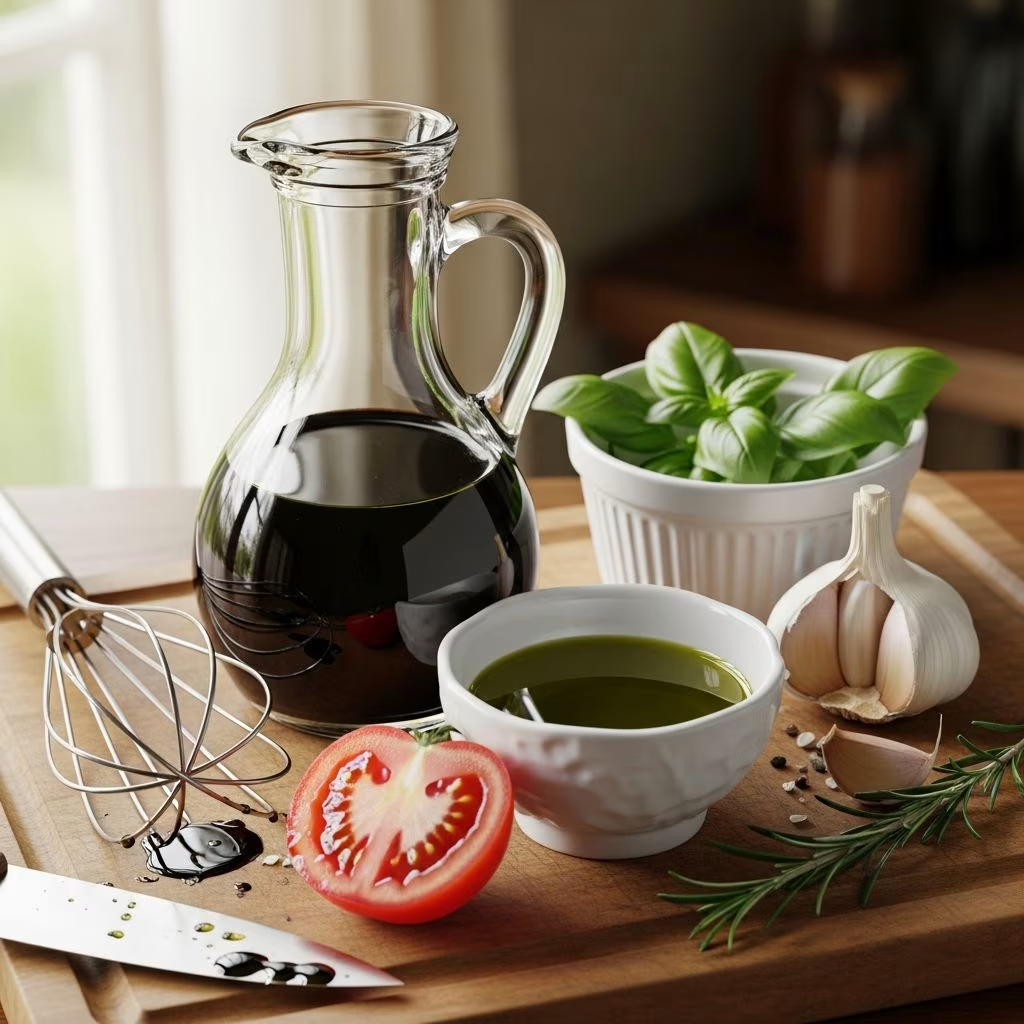
Creating exceptional balsamic vinaigrette requires assembling quality components that work harmoniously. The following elements form the backbone of your dressing:
- Balsamic Vinegar — Provides acidic backbone and characteristic sweetness that defines the dressing
- Extra Virgin Olive Oil — Contributes richness, body, and fruity undertones that complement the vinegar
- Dijon Mustard — Acts as emulsifier while introducing subtle complexity and preventing separation
- Minced Garlic — Delivers aromatic intensity and pungent notes that enhance overall depth
- Salt and Black Pepper — Amplifies existing flavors and creates balance across the palate
- Optional Honey or Maple Syrup — Provides additional sweetness for balancing acidic elements
- Fresh Herbs — Introduce brightness and personalized flavor dimensions
Mastering the Ratio Formula
The traditional vinaigrette formula operates at a three-to-one ratio of oil to acid. This proportion creates a dressing that clings to ingredients without overwhelming them with greasiness. For balsamic vinaigrette specifically, this ratio creates an ideal balance where the vinegar’s natural sweetness prevents the dressing from becoming overly acidic.
A basic formula begins with three tablespoons of quality olive oil combined with one tablespoon of balsamic vinegar. To this foundation, add one teaspoon of Dijon mustard, one minced garlic clove, and salt and pepper to taste. This quantity yields approximately four tablespoons of finished vinaigrette, sufficient for dressing a standard salad serving four people.
However, recipes should serve as guidelines rather than rigid formulas. Personal preferences vary significantly. Some palates prefer more pronounced vinegar presence, requiring adjustment toward a two-to-one ratio. Others appreciate additional sweetness, necessitating honey incorporation. Experimentation within reasonable parameters allows you to develop a signature vinaigrette reflecting your individual tastes.
Emulsification Techniques for Optimal Consistency
Emulsification represents the technique that transforms separate liquid components into a unified, cohesive dressing. The mustard functions as an emulsifier, containing compounds that encourage oil and vinegar molecules to maintain temporary suspension rather than separating.
Effective emulsification begins with combining mustard, garlic, vinegar, salt, and pepper in a mixing bowl. Whisk these components vigorously for approximately thirty seconds, allowing the mustard to dissolve and distribute evenly. Once fully incorporated, begin adding olive oil in thin streams while continuously whisking. This gradual incorporation encourages proper emulsification, creating a thicker, more stable dressing.
The whisking process proves critical. Aggressive whisking incorporates air into the mixture while forcing oil molecules into smaller droplets that disperse throughout the vinegar base. The result resembles a thin mayonnaise with a luxurious mouthfeel and improved adherence to salad ingredients.
For convenient preparation, many cooks prefer using a mason jar with a tight-fitting lid. Simply combine all ingredients directly in the jar, seal tightly, and shake vigorously for one to two minutes. This method achieves comparable results while eliminating the need for multiple bowls and whisks.
Flavor Enhancement and Customization Strategies
While the fundamental balsamic vinaigrette provides an excellent foundation, numerous opportunities exist for personalization. Understanding how different additions interact allows you to create dressings tailored to specific applications and preferences.
Sweetness Adjustments: A small amount of honey or maple syrup balances acidic elements while adding subtle complexity. Begin with a half teaspoon and adjust based on personal preference. This addition proves particularly valuable when using more assertive vinegars or when dressing delicate greens.
Herbal Infusions: Fresh basil, oregano, thyme, or parsley introduce brightness and aromatic dimensions. Minced herbs should be added immediately before serving to preserve their delicate flavors and visual appeal.
Shallot Incorporation: Minced shallots provide a milder garlic alternative with subtle onion undertones. This substitution works particularly well when preparing vinaigrettes for special occasions or refined presentations.
Citrus Integration: A small quantity of fresh lemon or orange juice introduces additional acidity with fruity characteristics that complement balsamic’s depth.
Spice Additions: Red pepper flakes, paprika, or cumin offer warmth and unexpected complexity. These additions should be used conservatively to avoid dominating other flavors.
Storage and Longevity Considerations
Properly stored balsamic vinaigrette maintains quality for extended periods, making batch preparation practical. Store finished vinaigrette in a glass container with an airtight lid, positioned in a cool, dark location away from direct sunlight and heat sources.
Under these conditions, vinaigrette remains fresh and flavorful for approximately two weeks. If preparing larger batches, divide into smaller containers to minimize air exposure during frequent access. This practice preserves flavor integrity while ensuring you always have quality dressing available.
Over time, separation naturally occurs as oil and vinegar layers form. This represents a normal process and does not indicate spoilage. Simply shake or whisk the vinaigrette before each use to re-emulsify the components. If noticeable separation occurs and whisking fails to restore cohesion, the mustard may have degraded. Preparing a fresh batch ensures optimal quality.
Application and Serving Suggestions
Beyond traditional green salads, balsamic vinaigrette enhances numerous preparations. Consider these applications to expand your usage:
- Drizzle over roasted vegetables to enhance natural sweetness and add glossy appeal
- Use as a marinade for grilled vegetables or proteins requiring depth and complexity
- Serve alongside fresh mozzarella and tomatoes for classic Italian presentations
- Incorporate into grain bowls with quinoa, farro, or brown rice for balanced nutrition
- Apply to fruit salads featuring berries or stone fruits for unexpected flavor harmony
- Use as a finishing drizzle on soups for aromatic enhancement
- Combine with roasted beets and goat cheese for elegant appetizer preparations
Troubleshooting Common Vinaigrette Challenges
Excessive Separation: If your vinaigrette separates immediately after preparation, insufficient emulsification likely occurred. Ensure adequate whisking during oil incorporation and confirm your mustard is fresh and active.
Overly Acidic Flavor: If vinegar dominates the palate, increase oil quantity slightly or incorporate a touch of honey to balance acidity. Future batches can adjust initial vinegar amounts downward.
Bland or Muted Flavors: Verify garlic is freshly minced rather than pre-prepared, as oxidation diminishes pungency. Additionally, ensure salt quantity proves adequate, as salt amplifies existing flavors dramatically.
Cloudy Appearance: Cloudiness typically results from inadequate emulsification or mustard particles remaining suspended. Strain through fine mesh if appearance concerns you, or simply understand this represents visual evidence of ingredient presence rather than quality compromise.
Advanced Techniques for Refined Preparations
Once comfortable with basic vinaigrette creation, several advanced approaches yield impressive results. These techniques elevate your dressing beyond standard applications.
Reduction Method: Simmer balsamic vinegar over low heat, allowing roughly half the liquid to evaporate. This concentrates flavors and creates a syrupy consistency that provides exceptional flavor impact in smaller quantities. Use reduced vinegar at a one-to-one ratio with oil.
Infusion Approach: Steep fresh herbs, cracked peppercorns, or other aromatics in warm olive oil for several hours before preparing vinaigrette. This technique extracts deep flavor directly into the oil component.
Temperature Consideration: Preparing vinaigrette with slightly warmed oil enhances emulsification while encouraging fuller flavor expression. Warm oil to approximately body temperature rather than using cold oil straight from storage.
Understanding Nutritional Aspects
Homemade balsamic vinaigrette offers clear advantages over many commercial alternatives. By controlling ingredient selection, you eliminate unnecessary additives while ensuring portion-appropriate fat and calorie content. A standard serving of homemade vinaigrette contains approximately forty to fifty calories, primarily from olive oil.
The olive oil component provides heart-healthy monounsaturated fats recognized for cardiovascular benefits. Balsamic vinegar contains minimal calories while providing antioxidants and potentially beneficial compounds. The result represents a nutritionally balanced condiment that enhances meals without introducing excessive calories or questionable ingredients.
Frequently Asked Questions
Can I prepare vinaigrette in advance? Yes, vinaigrette can be prepared up to two weeks ahead, though fresh preparation immediately before serving delivers superior flavor and optimal emulsification.
What prevents vinaigrette from becoming too oily? Proper emulsification disperses oil into smaller droplets, creating a lighter mouthfeel. Adequate whisking and sufficient mustard prove critical.
Should I use extra virgin olive oil? Extra virgin olive oil offers superior flavor, though regular olive oil works satisfactorily. Avoid light or pure olive oil varieties lacking the complexity that complements balsamic.
How do I fix broken vinaigrette? Start with fresh mustard in a clean bowl, then slowly whisk the separated mixture into it. This resets the emulsification process.
Can I make vinaigrette without mustard? While possible, mustard significantly aids emulsification. Without it, expect more rapid separation. If avoiding mustard, use an egg yolk as an alternative emulsifier.
References
- Olive Oil Chemistry and Nutrition — International Olive Council. 2023. https://www.internationaloliveoil.org
- Emulsification in Food Preparation — University of California, Davis Department of Food Science. 2024. https://foodscience.ucdavis.edu
- Traditional Balsamic Vinegar Production Standards — European Commission Protected Designations of Origin Database. 2023. https://ec.europa.eu/info/food-farming-fisheries
- Culinary Emulsions: Science and Application — Institute of Food Technologists. 2024. https://www.ift.org
- Vinegar Components and Health Benefits — National Institutes of Health, PubMed Central. 2023. https://www.ncbi.nlm.nih.gov/pmc