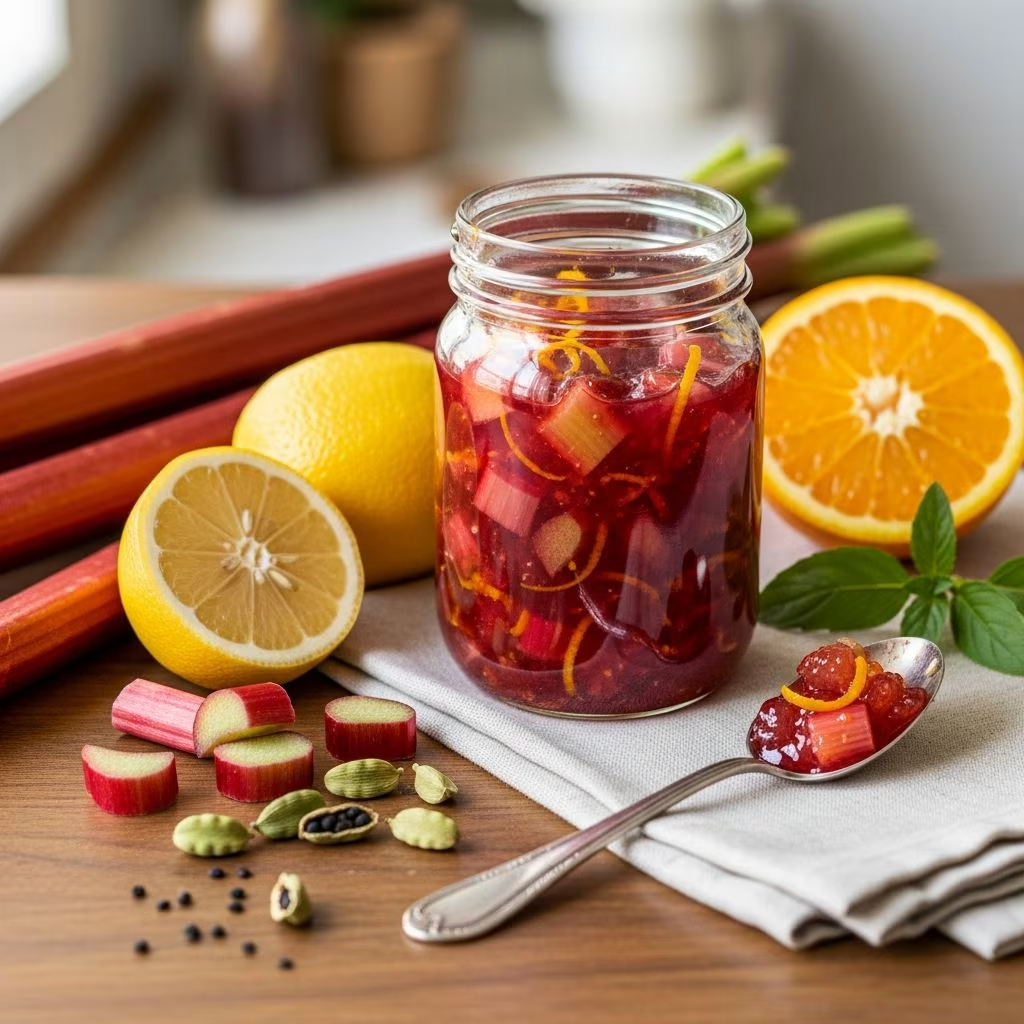
Creating a citrus rhubarb cardamom preserve at home offers a rewarding way to capture the fleeting tartness of rhubarb season. This vibrant spread combines the crisp, tangy stalks of rhubarb with the bright juiciness of oranges and the warm, exotic notes of cardamom. Unlike ordinary jams, this version delivers a complex flavor profile that balances sweetness, acidity, and subtle spice, making it versatile for toast, yogurt, or baked goods. Home preserving not only extends the life of seasonal produce but also allows customization to suit personal tastes.
Why Rhubarb Shines in Jams
Rhubarb, often called the ‘pie plant,’ brings a unique pucker to preserves due to its high oxalic acid content, which enhances natural tartness. When paired with citrus, it softens during cooking, releasing pectin-like properties that aid in gelling without excessive thickeners. Cardamom introduces an aromatic depth, reminiscent of Indian chai or Middle Eastern sweets, elevating the jam from basic to gourmet.
Fresh rhubarb is ideal, harvested in spring when stalks are slender and vibrant pink or green. Avoid thick, fibrous ones, as they can yield stringy results. Oranges provide natural pectin from their peels and membranes, boosting set while adding vitamin C. Cardamom pods or ground seeds infuse a floral, eucalyptus-like essence that mellows over time.
Essential Ingredients for Success
Gathering quality components ensures a superior preserve. Here’s a breakdown:
- Rhubarb: 2 pounds (about 900g), trimmed and cut into 1-inch pieces for even cooking.
- Oranges: 3 large navel varieties, peeled, chopped, with 2-3 tablespoons zest for intensified citrus punch.
- Sugar: 4-5 cups granulated white sugar to balance tartness and promote gelling.
- Pectin: 3 tablespoons powdered fruit pectin (standard, not low-sugar) to guarantee a firm set.
- Cardamom: ¾ teaspoon ground, or seeds from 6-8 crushed green pods for freshness.
- Optional enhancers: Lemon juice (2 tablespoons) for extra acidity, or a splash of balsamic for depth.
These proportions yield about 7 half-pint jars, perfect for gifting or stocking pantries. Scale up cautiously, maintaining ratios to avoid runny or overly sweet outcomes.
| Ingredient | Quantity | Role |
|---|---|---|
| Rhubarb | 2 lbs | Base tartness and texture |
| Oranges + Zest | 3 large + 2-3 tbsp | Citrus brightness, natural pectin |
| Sugar | 4.5 cups | Sweetness, preservation |
| Pectin | 3 tbsp | Gelling agent |
| Cardamom | ¾ tsp | Spice infusion |
Preparation and Cooking Techniques
Start with sterilizing jars: Submerge 7 half-pint glass jars in a large pot of water, boil for 10 minutes, and keep warm. This prevents contamination and ensures a proper seal.
Combine rhubarb, chopped oranges, and zest in a wide 8-quart non-reactive pot (stainless steel or enamel avoids metallic tastes). Whisk sugar, pectin, and cardamom separately before stirring in—this prevents clumping. Heat over high to a vigorous boil, then reduce to medium-high, stirring often. Cook 20-25 minutes until reduced by one-third, scraping sides to avoid scorching. The mixture will bubble furiously; use a long spoon for safety.
Test for set: Place a saucer in the freezer beforehand. Dollop jam on it; if it wrinkles when pushed after 1 minute, it’s ready. If not, boil longer. Stir in any add-ins like balsamic at this stage for fresh flavor.
Safe Canning Process
Ladle hot jam into warm jars using a funnel, leaving ½-inch headspace. Remove air bubbles with a knife, wipe rims clean, and apply lids finger-tight. Return to the pot, ensuring jars are covered by 1-2 inches of water. Boil 10 minutes (adjust for altitude: add 5 minutes over 1,000 feet). Turn off heat, lid off, let sit 5 minutes for vacuum seal. Cool undisturbed 12-24 hours; check seals by pressing lids—no pop means success. Refrigerate unsealed jars.
This water bath method, rooted in USDA guidelines, kills bacteria for shelf-stable storage up to a year in a cool, dark place.
References
- Complete Guide to Home Canning — United States Department of Agriculture. 2023-09-15. https://nchfp.uga.edu/publications/publications_usda.html
- Ball Blue Book Guide to Preserving — Ball Corporation. 2022-06-01. https://www.ballmasonjars.com/blue-book
- So Easy to Preserve — University of Georgia Cooperative Extension. 2024-01-10. https://nchfp.uga.edu/publications/nchfp/publications.html
- Orange Rhubarb Cardamom Jam with Strawberry Balsamic — Vinesation. 2023-05-20. https://www.vinesation.com/recipes/jams-chutneys/orange-rhubarb-cardamom-jam-with-strawberry-balsam/
Flavor Variations to Experiment With
Customize your preserve for diversity:
- Ginger Twist: Add 3 thin ginger slices per pound rhubarb; remove post-cook for warming heat.
- Vanilla Infusion: Scrape ½ pod or use 1 tsp paste during maceration.
- Berry Boost: Incorporate 1 cup strawberries for sweetness and color.
- Maple Sweetener: Swap half sugar for pure maple syrup, reducing pectin slightly.
- Pepper Kick: ½ tsp black pepper for savory contrast.
These adaptations draw from traditional pairings, like rhubarb’s affinity for spices in European and Asian cuisines.
Storage, Shelf Life, and Troubleshooting
Sealed jars last 12-18 months unopened. Once opened, refrigerate up to 3 weeks. Freezing jam in plastic containers extends usability. Common issues: Runny set? Over-boiled or low pectin—remedy by reboiling with lemon juice. Too firm? Too much pectin—use next batch with less. Cloudy jam signals dirty equipment; always sterilize thoroughly.
For small batches without canning, cool and store in fridge up to 2 weeks—ideal for quick testing.
Creative Ways to Enjoy Your Preserve
Beyond toast, try:
- Swirled into cheesecake batter.
- Glazed over roasted pork or chicken.
- Mixed with Greek yogurt and granola.
- Topping for scones or thumbprint cookies.
- Layered in thumbprint ice cream sandwiches.
Its tangy-spiced profile complements cheese boards, pairing with brie or goat cheese.
Nutritional Insights and Health Notes
A 1-tablespoon serving offers about 50 calories, mostly from sugar, with vitamin C from oranges and fiber from rhubarb. Low in fat, it’s a natural sweetener alternative. Those with oxalate sensitivities should moderate intake, as rhubarb contains moderate levels. Use responsibly in balanced diets.
Frequently Asked Questions
Can I use frozen rhubarb?
Yes, thaw and drain excess liquid first to prevent watery jam.
Is powdered pectin necessary?
For reliable set, yes—especially with low-pectin rhubarb. Natural methods work but vary.
How do I grind fresh cardamom?
Crack pods, remove seeds, and pulverize in a mortar or spice grinder for potency.
What if my jam doesn’t set?
Reboil with 1 tbsp pectin per cup; test again.
Can this recipe be halved?
Absolutely, for small batches—just monitor cooking time closely.
This preserve embodies seasonal joy in a jar, blending simple techniques with bold flavors for year-round delight. Experiment confidently, prioritizing safety for enjoyable results.