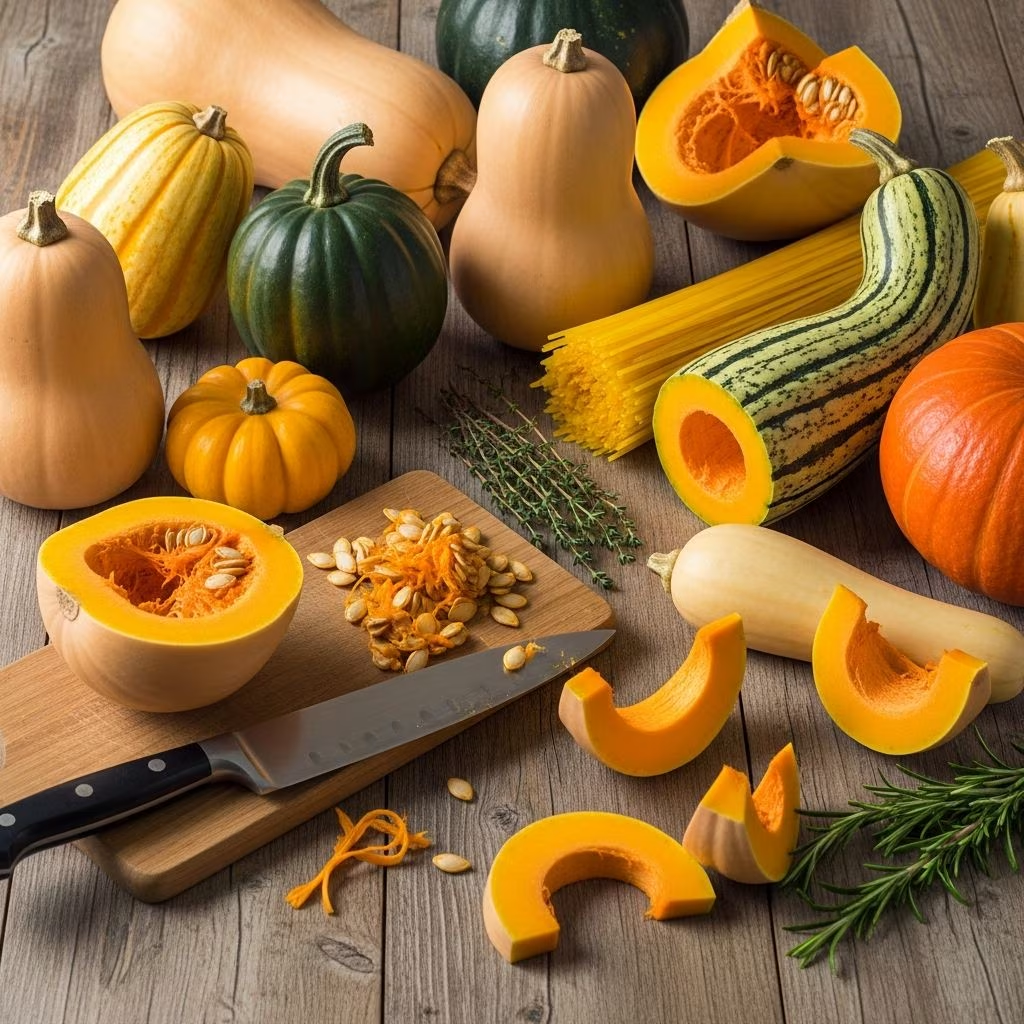
Winter squash varieties like butternut, acorn, and delicata bring bold flavors and vibrant colors to fall and winter meals. Their thick rinds protect dense, sweet flesh ideal for roasting, pureeing, or stuffing. However, the challenge lies in breaking through that tough exterior without injury or frustration. This guide explores practical techniques to cut, cook, and store these versatile vegetables, drawing on proven kitchen strategies for maximum ease and taste.
Understanding Winter Squash Varieties
Each type of winter squash offers unique textures and tastes, influencing preparation choices. Butternut squash features a smooth, elongated shape with sweet, nutty flesh perfect for cubes or purees. Acorn squash, smaller and ribbed, has tender skin that’s edible when roasted, delivering mild sweetness. Delicata provides thin, flavorful skin and creamy insides suited for slicing into rings. Spaghetti squash yields noodle-like strands upon cooking, ideal for low-carb dishes. Kabocha offers dense, chestnut-like meat with edible green skin.
- Butternut: Long neck for easy peeling, bulbous base with seeds.
- Acorn: Compact, dark green with orange flesh.
- Delicata: Pale yellow, ring-shaped slices.
- Spaghetti: Pale yellow, fibrous interior.
- Kabocha: Round, squat with mottled rind.
Selecting firm, heavy squash with dull rinds ensures freshness and longevity. Store them in a cool, dry spot for weeks.
Safe Cutting Techniques for Hard Rinds
The hardest part of winter squash prep is slicing through the unyielding skin. Start by softening if needed: microwave whole squash for 2-3 minutes to loosen the rind, or stab and bake briefly. For cutting, secure the squash on a stable surface.
Basic Steps:
- Trim ends flat for stability using a sharp chef’s knife.
- For butternut, separate neck from base: slice horizontally where it narrows, peel neck with a vegetable peeler, then halve base to remove seeds.
- Halve others lengthwise: position upright on a cut end, score top, and tap knife gently with a rubber mallet or rolling pin for control.
- Scoop seeds with a spoon or ice cream scoop while raw to avoid mess.
Avoid forcing the knife; use the mallet’s momentum for safety. Wear cut-resistant gloves if preferred. Once halved, slice into wedges, cubes, or rings based on recipe needs.
| Squash Type | Best Cut Method | Tools Needed |
|---|---|---|
| Butternut | Separate neck/base | Chef’s knife, peeler |
| Acorn/Delicata | Halve lengthwise | Knife, mallet |
| Spaghetti | Halve lengthwise | Knife, spoon |
Roasting: The Go-To Method for Flavor
Roasting caramelizes natural sugars, enhancing sweetness without added effort. It’s versatile for halves, pieces, or whole squash.
Whole or Halved Roasting
Pierce whole squash multiple times, place on a rack at 375-400°F for 45-60 minutes until fork-tender. Cool slightly, halve, and scoop. For halves: scoop seeds first, trim bottoms for flatness, oil cut sides, and roast cut-side down at 400°F for 40-60 minutes.
Cubed Roasting
Peel and cube into 1-inch pieces, toss with oil, salt, pepper, and herbs like rosemary. Spread on a parchment-lined sheet, roast at 400°F for 30-40 minutes, flipping midway. Delicata and acorn skins are edible, saving peeling time.
Pro tip: For even cooking, choose uniform sizes. Roasted squash stores refrigerated for 5 days or freezes well.
Steaming: Quick and Nutrient-Retaining
Steaming preserves vitamins better than boiling, softening flesh in under 30 minutes. Cube peeled squash into 1-inch pieces. In a pot with 1-inch water and steamer basket, cover and steam over medium-high for 15 minutes, then rest covered 5 minutes more. Test with a fork.
Advantages over roasting: Faster, moister results for purees or soups. Ideal for delicate flavors without browning.
Microwaving and Boiling Alternatives
For speed, microwave halves (seeds removed) cut-side down in a dish with water for 10-15 minutes. Or pierce whole and nuke 8-12 minutes, turning halfway. Boiling cubed squash takes 15-20 minutes but dilutes flavor—reserve for mashes.
Hybrid approach: Partially microwave to soften, then roast for best texture.
Storage and Freezing Best Practices
Raw whole squash lasts 1-3 months in cool storage. Cooked: refrigerate 4-5 days in airtight containers. For freezing, roast or steam first, puree or cube, then freeze in portions up to 10 months. Thaw overnight for use in recipes.
Recipe Ideas to Showcase Winter Squash
Maple Roasted Halves
Halve acorn squash, trim base, drizzle with maple syrup and butter dots. Roast at 350°F for 45 minutes. Serves 4.
Curry Squash Soup
Roast or microwave 1 squash. Saute onion, garlic, apple; add curry, nutmeg. Puree with broth, simmer with milk and sage. Creamy, spiced delight.
Stuffed Delicata Rings
Halve, seed, slice into rings. Roast briefly, fill with sausage, quinoa, herbs; finish baking.
Squash Pie
Puree roasted flesh, blend with milk, eggs, spices, sugar. Bake in crust at 425°F then 325°F.
Nutrition and Health Benefits
Winter squash packs beta-carotene, fiber, vitamins A and C. One cup roasted butternut provides over 100% daily vitamin A. Low-calorie (80 kcal/cup), supports immunity and eye health. Roasting retains more nutrients than boiling.
Common Mistakes and Fixes
- Uneven cooking: Uniform cuts and flipping.
- Watery texture: Pat dry before roasting.
- Bitter taste: Choose mature squash; season well.
- Knife slips: Stable surface, mallet assist.
FAQs
Can you eat winter squash skin?
Yes, for delicata, acorn, kabocha—roast until tender. Peel others like butternut for smoothness.
How do you know when it’s ripe?
Hard rind, dull color, heavy for size. Thump for hollow sound.
Best oil for roasting?
Olive or avocado for high smoke point; coconut for sweetness.
Can I freeze raw squash?
Cube and blanch first to prevent mushiness.
How to roast without oil?
Use parchment, broth spritz; air fry at 380°F.
Seasonal Pairings and Serving Ideas
Pair roasted cubes with kale salads, grains, or proteins like pork. Purees shine in risottos, pasta sauces. Stuff halves with grains, nuts, cheese for mains. Desserts: pies, custards mimic pumpkin spice.
Incorporate into meal prep: batch-roast for bowls all week.
References
- Tip, Trick & a Recipe: It’s always time for winter squash! — Saving Dinner. Accessed 2026. https://savingdinner.com/winter-squash/
- How to Cook Winter Squash: 10 Easy Recipes — Grow Forage Cook Ferment. Accessed 2026. https://www.growforagecookferment.com/easy-ways-to-cook-winter-squash/
- How to Roast Winter Squash (Safely, Deliciously, and for Any Recipe) — My Eclectic Bites. Accessed 2026. https://www.myeclecticbites.com/how-to-roast-winter-squash-in-the-oven/
- Winter Squash: To Roast or To Steam? — The Faux Martha. Accessed 2026. https://www.thefauxmartha.com/winter-squash-to-roast-or-to-steam/
- The Winter Squash Guide: Tips, Tricks, and Types — Red Fire Farm. Accessed 2026. https://www.redfirefarm.com/the-winter-squash-guide-tips-tricks-and-types/