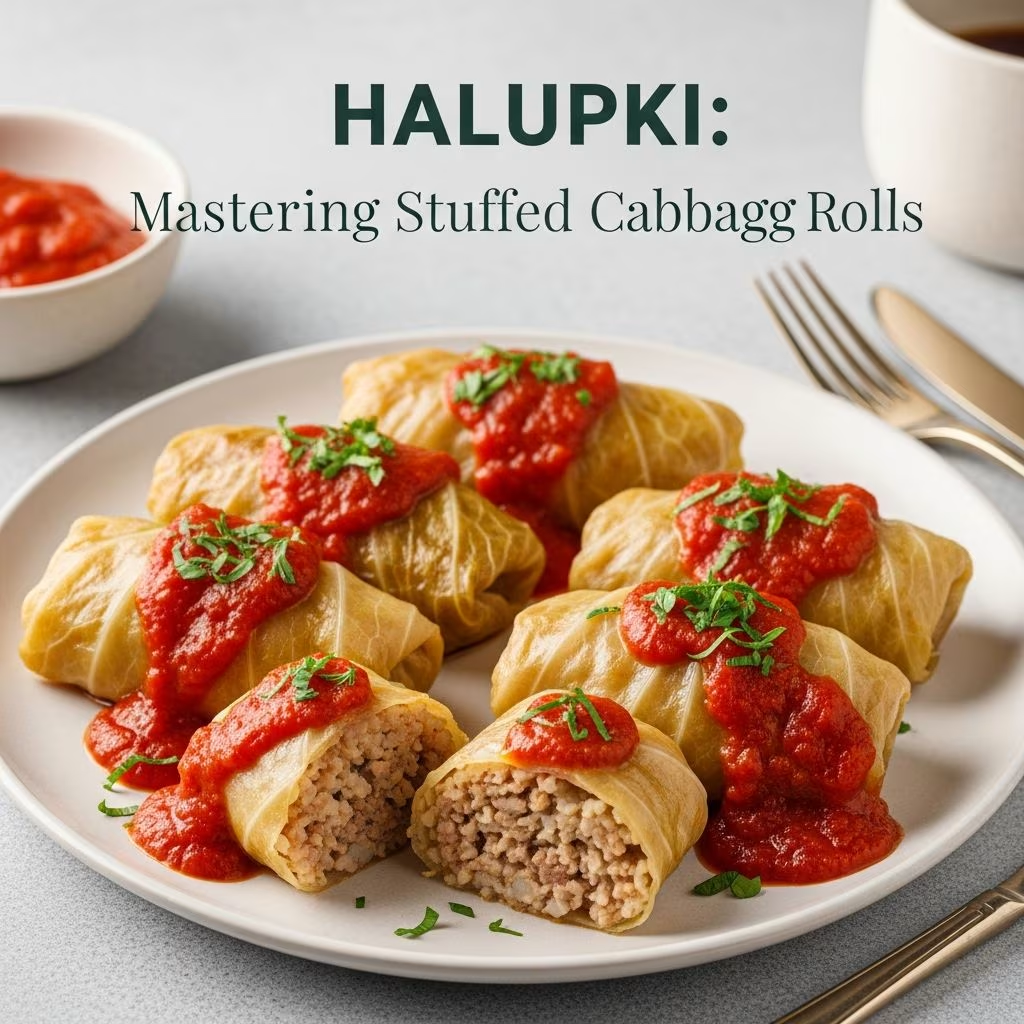
Halupki, also known as stuffed cabbage rolls, represent a cornerstone of Eastern European culinary heritage, blending simple ingredients into a dish bursting with savory depth and comforting warmth. These rolls feature tender cabbage leaves enveloping a hearty mixture of ground meats, rice, and seasonings, all bathed in a sweet-tangy tomato sauce. Popular in Polish, Slovakian, and surrounding cultures, halupki evoke family gatherings and holiday feasts, offering a balance of textures from the soft cabbage to the juicy filling.
The Rich Heritage of Halupki
Rooted in the traditions of Eastern Europe, halupki emerged as a practical meal using abundant cabbage and affordable meats. Families passed down recipes orally, adapting them with local ingredients like sausage or bacon for extra flavor. This dish’s versatility shines in its ability to feed crowds economically, often prepared in large batches for celebrations. Its enduring appeal lies in the harmonious blend of acidity from tomatoes, subtle sweetness, and umami from meats, creating a nostalgic taste that spans generations.
Historical accounts trace stuffed cabbage variations across regions, from Poland’s gołąbki to Ukraine’s holubtsi, each with unique twists. In American communities with Eastern European roots, halupki became a fusion favorite, incorporating pantry staples like canned tomato soup for convenience without sacrificing authenticity.
Essential Ingredients for Authentic Halupki
Selecting quality components ensures halupki’s success. Cabbage forms the wrapper, ideally green and firm-headed for pliable leaves. Ground meats provide the base—beef for richness, pork or sausage for moisture and fat. Cooked rice absorbs flavors, while aromatics like onions and garlic add depth. Tomato-based sauce ties everything together, often sweetened slightly.
- Cabbage: 1-2 large heads; core removed for easy leaf separation.
- Meats: 1-3 lbs total, mixing beef (lean) and pork/sausage (fattier) for balance.
- Rice: 1-2 cups cooked, jasmine or white for fluffiness.
- Aromatics: Onions (1/4-1 cup minced), garlic (powder or fresh cloves).
- Seasonings: Salt, pepper, paprika, garlic powder; eggs for binding.
- Sauce: Tomato soup (2-4 cans), broth, sauerkraut or diced tomatoes for tang.
Optional additions like bacon, mushrooms, or kielbasa elevate the dish, as seen in family recipes.
Preparing the Cabbage Leaves
The key to perfect halupki starts with tender yet intact leaves. Begin by coring a whole head under running water. Two methods prevail: boiling or freezing.
- Boiling Method: Simmer cored cabbage in a large pot for 8-10 minutes until outer leaves loosen. Use tongs to peel them off, returning the head to the pot as needed. Aim for 12-20 large leaves.
- Freezing Method: Freeze overnight, thaw, and core—leaves separate effortlessly without cooking.
Trim thick ribs with a V-cut using scissors for flexible rolling. Pat leaves dry to prevent soggy rolls. This step, often time-intensive, yields about 20-30 rolls per head.
Crafting the Perfect Filling
The filling’s magic comes from mixing by hand for even distribution. Combine cooled cooked rice with raw ground meats to prevent clumping. Sauté onions first for sweetness, then incorporate seasonings.
| Component | Quantity (Serves 8-12) | Purpose |
|---|---|---|
| Ground Beef | 1 lb | Robust flavor base |
| Ground Pork/Sausage | 1 lb | Moisture and tenderness |
| Cooked Rice | 1.5 cups | Bulk and texture |
| Onion (minced) | 1/2 cup | Aromatic sweetness |
| Eggs | 2 | Binder |
| Seasonings | Salt, pepper, garlic powder, paprika | Flavor enhancement |
Mix gently to avoid tough rolls. Form 2-tablespoon portions, about golf-ball sized.
Assembly Techniques for Tight Rolls
Place filling at the base of a leaf, fold sides inward, then roll upward like a burrito, tucking securely. Seam-side down prevents unraveling. Line a roasting pan or Dutch oven with leftover leaves or sauerkraut to cradle rolls and infuse flavor.
For layering: Arrange in single or double tiers, ensuring even sauce coverage. Add sliced kielbasa or bacon between layers for smoky notes.
Cooking Methods: Oven, Stovetop, or Pressure Cooker
Traditional baking yields caramelized tops, while slow simmering tenderizes deeply.
Oven Baking
Preheat to 350°F. Spread tomato soup or sauce (diluted with water/broth) on the pan bottom. Nestle rolls, cover with more sauce. Bake covered 1-3 hours until tender. Uncover last 20 minutes for browning.
Stovetop Simmer
Bring to boil, then low simmer 2-3 hours, checking doneness by slicing a roll.
Pressure Cooker
Layer in Instant Pot, pour sauce, high pressure 25-30 minutes, natural release.
All methods finish with resting 10 minutes for sauce thickening.
Customizing Your Halupki
Adapt for dietary needs: Use turkey or plant-based meats, brown rice, or gluten-free options. Enhance sauce with lemon juice, sugar, or cornstarch for gloss. Vegetarian versions swap meat for lentils and mushrooms.
- Spicy Twist: Add cayenne or chorizo.
- Sweet Note: Brown sugar in sauce.
- Make-Ahead: Freeze uncooked rolls up to 3 months.
Storage, Freezing, and Reheating Tips
Refrigerate leftovers up to 4 days in sauce. Freeze assembled rolls in sauce bags for 3 months—thaw overnight before reheating. Microwave gently or oven at 325°F with added liquid to restore moisture.
Nutrition and Serving Suggestions
Per serving (2 rolls): ~350 calories, 20g protein, 25g carbs, rich in vitamin C from cabbage, iron from meats. Pair with rye bread, pierogies, or mashed potatoes. For holidays, serve family-style with pickles.
Frequently Asked Questions
Why is my cabbage tough?
Blanch longer or freeze ahead for pliability.
Can I use uncooked rice?
Yes, but increase liquid and cook time as rice expands.
How do I prevent rolls from falling apart?
Tuck tightly and use sauce to baste.
What’s the best sauce ratio?
Equal parts soup and water/broth for balance.
Vegetarian halupki possible?
Replace meat with mushrooms, lentils, and walnuts.
Common Mistakes to Avoid
– Overmixing filling leads to density.
– Skipping cabbage coring hinders leaf removal.
– Insufficient sauce dries out rolls.
– High heat toughens cabbage.
References
- Halupki Stuffed Cabbage Rolls — 4 Sons ‘R’ Us. Accessed 2026. https://4sonrus.com/halupki-stuffed-cabbage-rolls/
- How to Make Halupkis (Stuffed Cabbage Rolls) — YouTube. Accessed 2026. https://www.youtube.com/watch?v=buMFdnFIQaE
- Stuffed Cabbage Rolls (Halupki) — Edible Blue Ridge. Accessed 2026. https://edibleblueridge.com/stuffed-cabbage-rolls-halupki/
- Grandma’s Cabbage Rolls (Halupki) — Meatloaf and Melodrama. Accessed 2026. https://www.meatloafandmelodrama.com/stuffed-cabbage-rolls-halupki/
- MY MOM’S HALUPKI: (AKA. Stuffed Cabbage) — Pittsburgh Fitness Project. Accessed 2026. https://www.pittsburghfitnessproject.com/blog-1/my-moms-halupki-stuffed-cabbage