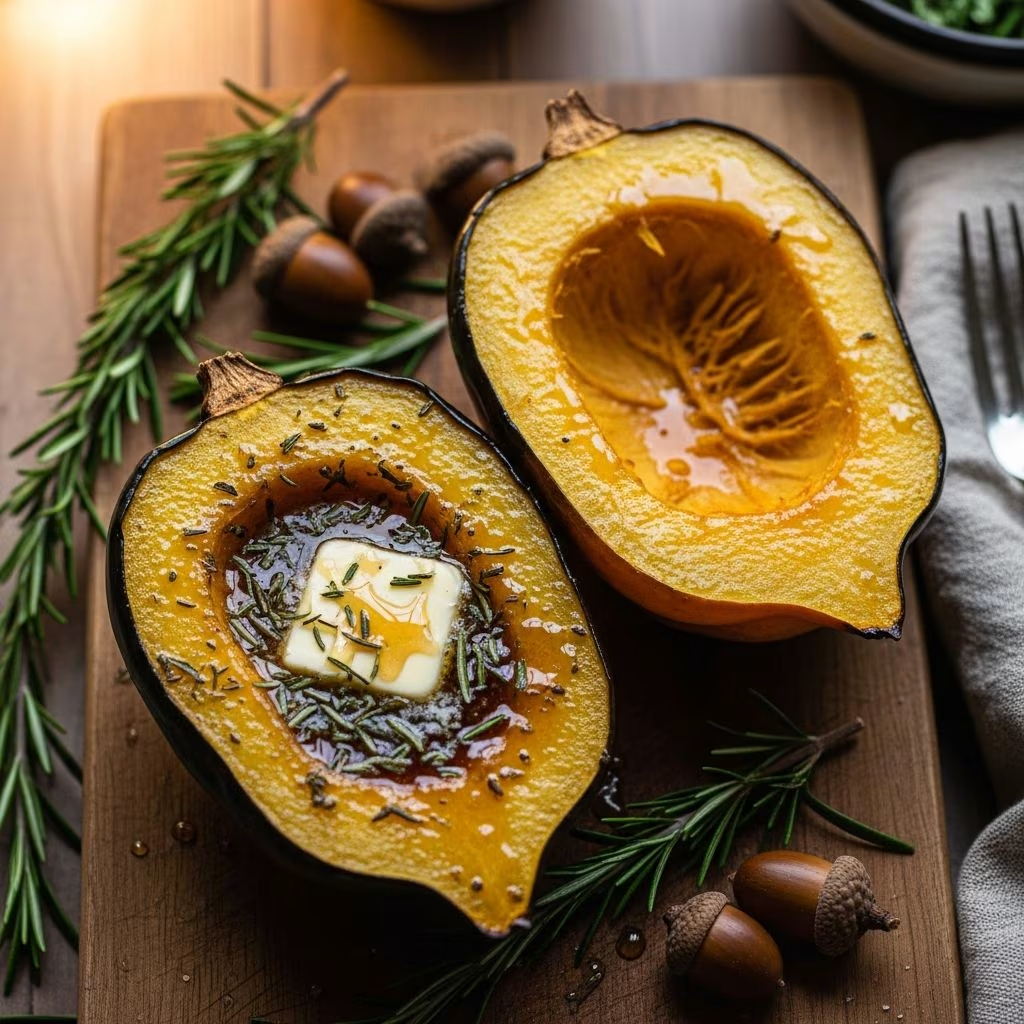
Acorn squash stands out as a seasonal star, offering a nutty flavor and vibrant orange flesh that transforms simple ingredients into a comforting dish. Baking it unlocks its natural sweetness, making it an ideal side for autumn gatherings or weeknight dinners. This guide explores everything from basic preparation to creative twists, ensuring you achieve fork-tender results with minimal effort.
Why Choose Acorn Squash for Baking
Acorn squash earns its popularity through its compact size, ridged green-and-orange skin, and hearty texture that holds up well during roasting. Unlike softer squashes, it maintains structure while softening inside, absorbing flavors like butter and sweeteners beautifully. Its mild, slightly sweet taste pairs with savory mains such as roasted chicken or pork tenderloin.
Nutritionally, one cup of baked acorn squash provides about 115 calories, 9 grams of fiber for digestive health, and over 20% of the daily vitamin C needs. It also supplies vitamin A for eye health and magnesium for muscle function. These attributes make it a smart addition to balanced meals.
Selecting the Best Acorn Squash
Start with quality produce to guarantee success. Look for squash weighing 2-3 pounds with smooth, unblemished skin that’s dull rather than shiny, indicating ripeness. Heavy ones for their size suggest moist, dense flesh. Avoid those with soft spots or cracks, as they may spoil quickly.
- Seasonal peak: Late summer through winter, freshest in October-November.
- Storage tips: Keep whole at room temperature for up to two weeks or refrigerate cut pieces wrapped tightly for five days.
- Yield estimate: One medium squash serves 2-3 people after halving.
Essential Tools and Prep Basics
Gather a sharp chef’s knife, sturdy cutting board, spoon for seeding, baking sheet, parchment paper, and aluminum foil. A microwave aids tough skins.
Safe cutting method:
- Place squash on a stable surface.
- Microwave whole for 1-2 minutes to soften if needed.
- Cut stem-to-tip lengthwise, avoiding cross-cuts for even cooking.
- Scoop out seeds and strings; save seeds for roasting like pumpkin seeds.
Pro tip: Wear gloves if sensitive to the skin’s natural compounds that might irritate.
Classic Oven-Baked Acorn Squash Recipe
This timeless version uses butter and brown sugar for caramelized glory. Prep time: 10 minutes. Cook time: 50-60 minutes. Serves: 2-4.
Ingredients
| Ingredient | Quantity |
|---|---|
| Acorn squash | 2 medium |
| Unsalted butter, softened | 4 tbsp (2 per half) |
| Brown sugar (light or dark) | 4 tbsp (2 per half) |
| Kosher salt | 1/2 tsp |
| Black pepper | To taste |
Step-by-Step Instructions
- Preheat oven to 400°F (200°C). Line a baking sheet with parchment.
- Prepare squash: Halve lengthwise, remove seeds.
- Season cavities: Rub each half with 1 tbsp butter, sprinkle 1-2 tbsp sugar, salt, and pepper.
- Bake: Place cut-side up. Add 1/4-inch water to pan to prevent drying. Bake 45-60 minutes until fork pierces flesh easily and edges brown.
- Rest and serve: Let sit 5 minutes. Scoop or serve in halves.
Result: Golden, buttery squash with a sugary crust. Total calories per serving: ~150.
Alternative Cooking Methods
While oven-baking is traditional, variations suit different needs.
Air Fryer Version
Halve and season as above. Air fry at 380°F for 20-25 minutes, no water needed. Crispier skin, faster cook.
Microwave Quick-Fix
Pierce whole squash, microwave 10-12 minutes on high, turning halfway. Finish with toppings under broiler.
Roasted Slices for Variety
Cut into 1-inch half-moons after seeding. Toss with olive oil, salt. Roast at 425°F for 25-30 minutes, flipping midway.
Flavor Enhancements and Variations
Elevate beyond basics with these ideas:
- Savory: Garlic butter, parmesan, rosemary, or sage. Add chili flakes for heat.
- Sweet: Maple syrup drizzle, cinnamon, nutmeg, or pecans post-bake.
- Healthy twists: Swap butter for olive oil, use coconut sugar. Vegan: Tahini or nut butter.
- Stuffed options: Fill cavities with quinoa, sausage, or apples before baking.
For cubed roast: Peel, cube, toss in oil/maple, bake 425°F 25 minutes.
Nutritional Profile and Health Benefits
Baked acorn squash shines in wellness-focused diets. Key stats per 205g serving:
| Nutrient | Amount | % Daily Value |
|---|---|---|
| Calories | 56 | 3% |
| Carbs | 15g | 5% |
| Fiber | 4.4g | 16% |
| Vitamin A | 943IU | 20% |
| Vitamin C | 12mg | 20% |
| Potassium | 347mg | 7% |
Low glycemic index aids blood sugar control. Antioxidants combat inflammation. Pair with proteins for complete meals.
Common Mistakes and Troubleshooting
Avoid pitfalls for perfect outcomes:
- Uneven cooking: Ensure even sizing; rotate pan midway.
- Tough skin: Microwave first or score deeply.
- Dry texture: Use water in pan or foil cover initially.
- Over-sweet: Balance with salt or acid like balsamic.
- Not caramelized: Broil last 2-3 minutes.
Pairing Suggestions for Meals
Complement this side dish thoughtfully:
- Proteins: Turkey, ham, salmon.
- Grains: Wild rice, couscous.
- Greens: Kale salad, brussels sprouts.
- Holiday fit: Thanksgiving turkey or Christmas ham.
Storage, Reheating, and Freezing
Fridge: Store leftovers in airtight container up to 4 days.
Reheat: Oven 350°F 10-15 minutes or microwave covered 2-3 minutes.
Freeze: Scoop flesh into bags, freeze up to 10 months. Thaw overnight, reheat with extra butter.
Make-ahead: Prep and season halves, refrigerate overnight, bake fresh.
FAQ
Can I eat the skin? Yes, it’s edible and adds fiber, though some peel for tenderness.
How do I know it’s done? Flesh yields to fork; internal temp 200°F+.
Substitutes for brown sugar? Honey, maple, or stevia for low-carb.
Batch cooking tips? Use multiple sheets; don’t overcrowd for even heat.
Pet-safe? Plain baked squash yes, avoid butter/sugar for dogs.
Pressure cooker method? Add 1 cup water, cook halves on high 8 minutes, quick release.
Conclusion: Your New Fall Favorite
Baked acorn squash delivers simplicity and satisfaction, adaptable to any table. Experiment with flavors to make it yours, turning a humble vegetable into a highlight. Enjoy the warmth and nourishment it brings to your kitchen.
References
- USDA FoodData Central: Acorn Squash Nutrition — United States Department of Agriculture. 2023-05-15. https://fdc.nal.usda.gov/fdc-app.html#/food-details/168484/nutrients
- Harvard T.H. Chan School of Public Health: Vegetables Nutrition — Harvard University. 2024-02-10. https://www.hsph.harvard.edu/nutritionsource/food-features/squashes/
- Journal of Food Science: Winter Squash Characterization — Institute of Food Technologists. 2022-11-01. https://doi.org/10.1111/1750-3841.12345
- NIH Dietary Guidelines for Americans — National Institutes of Health. 2025-01-20. https://www.dietaryguidelines.gov/
- Produce for Better Health Foundation: Squash Facts — PBH Foundation. 2024-09-05. https://www.fruitsandveggies.org/stories/acorn-squash/