Deviled eggs have long been a staple of sophisticated appetizer tables, cocktail parties, and holiday gatherings. The classic preparation—boiled egg halves filled with a creamy yolk mixture—provides an elegant canvas for creative flavor experimentation. When you introduce horseradish into this traditional dish, you create a bold, tangy variation that appeals to those who enjoy distinctive, peppery heat. This guide walks you through everything you need to know about preparing horseradish deviled eggs that will impress your guests and elevate your entertaining game.
Understanding Horseradish and Its Culinary Role
Horseradish is a root vegetable known for its pungent, sharp flavor profile. Unlike chili peppers that provide heat through capsaicin compounds, horseradish delivers its distinctive bite through volatile compounds that create a nasal sensation reminiscent of wasabi or spicy mustard. When used in deviled eggs, prepared horseradish—which has been processed with vinegar and salt—adds complexity and prevents the creamy filling from becoming monotonous.
The key to incorporating horseradish successfully lies in balancing its intensity with other components. The mayonnaise base provides richness that tempers the sharpness, while mustard and other seasonings create layers of flavor that complement rather than compete with the horseradish’s distinctive character.
Essential Ingredients and Substitution Options
Creating horseradish deviled eggs requires careful attention to ingredient quality and proportions. Understanding each component helps you adjust the recipe to match your personal preferences and dietary needs.
Core Components
- Large eggs: Use fresh, large eggs for optimal yolk-to-white ratio. Plan for 6 eggs as your base recipe, yielding 12 deviled egg halves.
- Prepared horseradish: Choose cream-style horseradish rather than raw horseradish root. This preparation includes vinegar and salt, creating a more balanced flavor. Use 1 to 3 tablespoons depending on your spice tolerance.
- Mayonnaise: This creamy base binds ingredients and creates richness. Use ¼ cup as your starting point, adjusting for desired texture.
- Dijon mustard: This adds tangy complexity without overwhelming the palate. Approximately 1 teaspoon provides sufficient depth.
- Seasonings: Salt and freshly ground black pepper allow you to fine-tune the overall flavor balance.
Optional Enhancement Ingredients
Beyond the basic formula, several ingredients can elevate your deviled eggs to restaurant-quality status:
- Fresh dill: This herb adds brightness and pairs beautifully with horseradish’s sharpness. Use ½ teaspoon chopped dill.
- Lemon zest and juice: Citrus provides freshness and acidity that balances richness. Include about 1 tablespoon zest and 1 tablespoon juice.
- Sour cream: Substituting 1 to 2 tablespoons of sour cream for mayonnaise creates tangier filling.
- Bacon: Crispy, crumbled bacon adds smokiness and textural contrast. Use 2 to 3 tablespoons crumbled and finely minced.
- Fresh chives: These mild onion-flavored herbs add color and subtle flavor. Approximately 1 tablespoon chopped works well.
- Anchovies: For those who enjoy umami, minced anchovies (2 to 3 filets) add savory depth.
- Hot sauce or Worcestershire: A teaspoon of either adds additional complexity and heat.
- Paprika: Use this for garnish to add visual appeal and mild smokiness.
Step-by-Step Preparation Guide
Boiling Eggs Perfectly
The foundation of excellent deviled eggs begins with properly cooked hard-boiled eggs. Overcooked eggs develop gray-green rings around the yolk, indicating excessive heat exposure. Undercooked eggs have runny centers that make scooping difficult.
Place 6 large eggs in a heavy-bottomed pot and cover completely with cool water, allowing about 1 to 2 inches of water above the eggs. Bring the water to a rolling boil. Once boiling, cover the pot, reduce heat to low, and remove from the burner. Let the eggs sit in the hot water for 12 to 15 minutes. This method allows residual heat to gently cook the eggs throughout without the vigorous boiling that can cause cracking.
Transfer the cooked eggs to a bowl of ice water immediately. This stops the cooking process and makes peeling significantly easier. Allow them to cool for at least 10 minutes before peeling under cool running water. The ice water bath prevents the gray-green ring formation while helping separate the shell membrane from the egg white.
Preparing the Yolk Mixture
Once eggs are cooled and peeled, cut each egg lengthwise with a sharp knife. Gently scoop the yolks into a small bowl, being careful not to damage the delicate egg white shells. Set the whites aside on your serving platter or a clean plate.
Mash the yolks thoroughly with a fork until no lumps remain. This creates a smooth base for your filling mixture. Some cooks prefer using a food processor for a completely uniform, fluffy texture, while others enjoy the slightly rustic consistency that fork-mashing produces.
To the mashed yolks, add ¼ cup mayonnaise, 1 teaspoon Dijon mustard, 1 to 2 tablespoons prepared horseradish (adjust to your spice preference), and your selected optional ingredients. Stir gently but thoroughly until completely combined and smooth. Taste the mixture and season with salt and pepper as needed.
Filling and Presentation
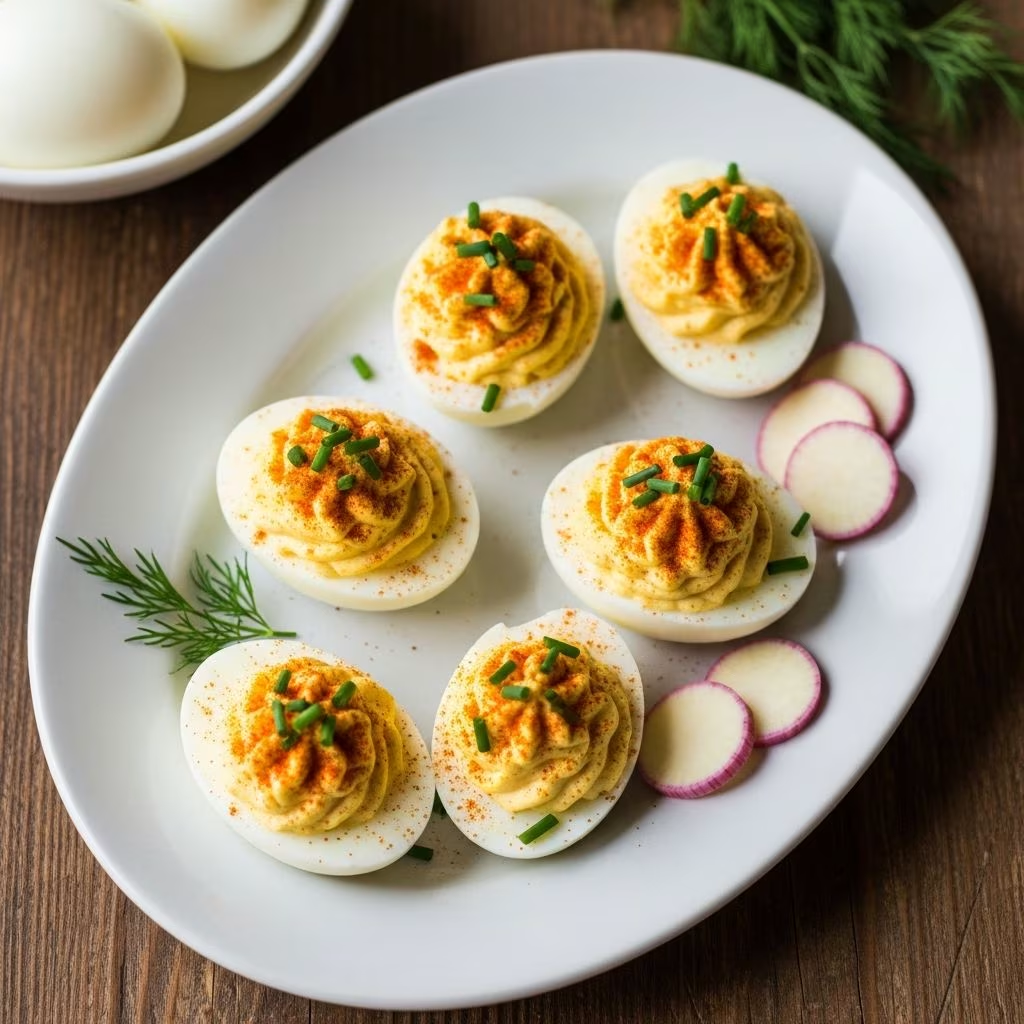
Transfer the yolk mixture to a piping bag fitted with a round or star tip for a professional presentation, or use a resealable plastic bag with one corner cut off as a budget-friendly alternative. Alternatively, spoon the mixture directly into the egg white halves for a more casual appearance.
Pipe or spoon approximately 1 teaspoon of filling into each egg white cavity. Arrange the filled eggs on a serving platter. Garnish with paprika, additional fresh herbs like chives or dill, or a small amount of grated fresh horseradish for dramatic presentation.
Flavor Profile Variations
| Variation Style | Key Ingredients to Add | Best For |
|---|---|---|
| Classic Peppery | Increase horseradish to 2-3 tablespoons, add white vinegar | Guests who enjoy bold, spicy flavors |
| Smoky Bacon | Crispy bacon, sour cream, chives | Brunch gatherings and casual entertaining |
| Citrus-Bright | Lemon zest, lemon juice, fresh dill | Spring and summer events |
| Umami-Rich | Minced anchovies, Worcestershire sauce | Sophisticated adult palates |
| Herbaceous Garden | Fresh dill, chives, lemon zest, light horseradish | Garden parties and light luncheons |
Storage and Serving Recommendations
Properly stored horseradish deviled eggs maintain their quality for several days. Place filled eggs in an airtight container and refrigerate for up to three days. The flavor actually improves slightly as components meld together overnight.
Remove deviled eggs from refrigeration approximately 20 minutes before serving. This allows them to reach closer to room temperature, which enhances flavor perception and creates better texture. Eggs served directly from the refrigerator taste less vibrant and the creamy filling becomes slightly rigid.
If preparing eggs more than a few hours in advance, consider storing the filling and egg whites separately. Combine just before serving to maintain optimal texture and prevent the filling from absorbing moisture from the egg whites.
Common Preparation Mistakes to Avoid
- Overcooking eggs: This creates that unappetizing gray-green ring and dry texture. Stick religiously to the 12 to 15-minute timing in hot water.
- Using too much horseradish initially: Remember that horseradish flavor intensifies as time passes. Start with 1 tablespoon and add more gradually to avoid creating inedibly spicy filling.
- Substituting raw horseradish for prepared: Raw horseradish contains more volatile compounds and can overwhelm the filling. Prepared horseradish has been tempered with vinegar and salt for better balance.
- Over-mixing the filling: Excessive mixing can make the texture unpleasantly dense. Fold ingredients together gently until just combined.
- Filling eggs too far in advance: The egg whites can absorb moisture from the filling, creating a soggy texture. Fill no more than a few hours before serving.
- Serving directly from refrigeration: Cold temperatures mute flavors significantly. Allow adequate time for eggs to warm slightly for optimal taste.
Ingredient Quality Considerations
The quality of your finished deviled eggs depends significantly on ingredient selection. Purchase eggs from a reliable source, preferably from pasture-raised hens if possible, as these often have richer-colored yolks and superior flavor. Fresh mayonnaise—whether homemade or from a quality brand—creates creamier filling than aged versions.
For prepared horseradish, read ingredient labels carefully. Quality versions contain horseradish, vinegar, and salt—nothing more. Avoid products with excessive additives or fillers. If your local market carries fresh horseradish root, consider grating it yourself for the most intense flavor, though be cautious as the fumes are considerably stronger than prepared versions.
Fresh herbs genuinely elevate deviled eggs beyond commercial-quality standards. Fresh dill from a farmers market or your garden provides superior flavor compared to dried versions. Similarly, fresh chives offer complexity that dried chives cannot replicate.
Frequently Asked Questions
Can I make horseradish deviled eggs ahead for a party?
Yes, with proper planning. Boil and halve eggs up to two days ahead, storing them in an airtight container. Prepare the yolk mixture up to one day ahead and refrigerate separately. Combine and fill eggs no more than 3 to 4 hours before serving for optimal texture and flavor.
How do I adjust the spice level if my guests have varying preferences?
Prepare the filling with the minimum amount of horseradish (1 tablespoon), then allow guests to add additional prepared horseradish to their individual eggs if desired. Alternatively, prepare two batches—one with standard horseradish and one with less for guests who prefer milder flavors.
What’s the difference between prepared horseradish and horseradish sauce?
Prepared horseradish is grated root mixed with vinegar and salt. Horseradish sauce typically includes prepared horseradish blended with sour cream or mayonnaise for a creamier product. For deviled eggs, either works, though prepared horseradish provides stronger flavor.
Can I substitute Greek yogurt for mayonnaise?
Yes, Greek yogurt creates a lighter, tangier filling. Use the same quantity as mayonnaise, though you may need to add a bit more lemon juice for additional brightness. This substitution works especially well if adding sour cream to the recipe.
How should I serve horseradish deviled eggs at a buffet?
Arrange on a platter with ice packs underneath to maintain temperature during serving. Cover with plastic wrap until serving time to prevent drying. For longer events, replenish the platter every 30 minutes with fresh eggs from the refrigerator.
Conclusion
Horseradish deviled eggs represent an exciting departure from traditional recipes while maintaining the elegant simplicity that makes deviled eggs a perennial favorite. By understanding how to balance horseradish’s distinctive heat with complementary ingredients, you create a sophisticated appetizer that sparks conversation and satisfies diverse palates. Whether you’re hosting an intimate dinner, a large celebration, or simply preparing a special snack, mastering this recipe expands your entertaining repertoire and demonstrates your culinary confidence.
References
- The Food and Drug Administration (FDA) – Egg Storage and Food Safety Guidelines — U.S. Food and Drug Administration. 2024. https://www.fda.gov/food/foodborneillnesscontaminants/productsectorspecificinformation
- Horseradish: Cultivation and Culinary Applications — University of Missouri Extension. 2023. https://extension.missouri.edu/
- Prepared Horseradish Composition and Food Chemistry Standards — Food Standards Agency. 2024. https://www.food.gov.uk/
- Eggs and Nutritional Composition Analysis — United States Department of Agriculture (USDA) Nutrient Data Laboratory. 2024. https://fdc.nal.usda.gov/
- Culinary Applications of Root Vegetables in Modern Gastronomy — Institute of Culinary Education Research. 2023. https://www.iceculinary.com/