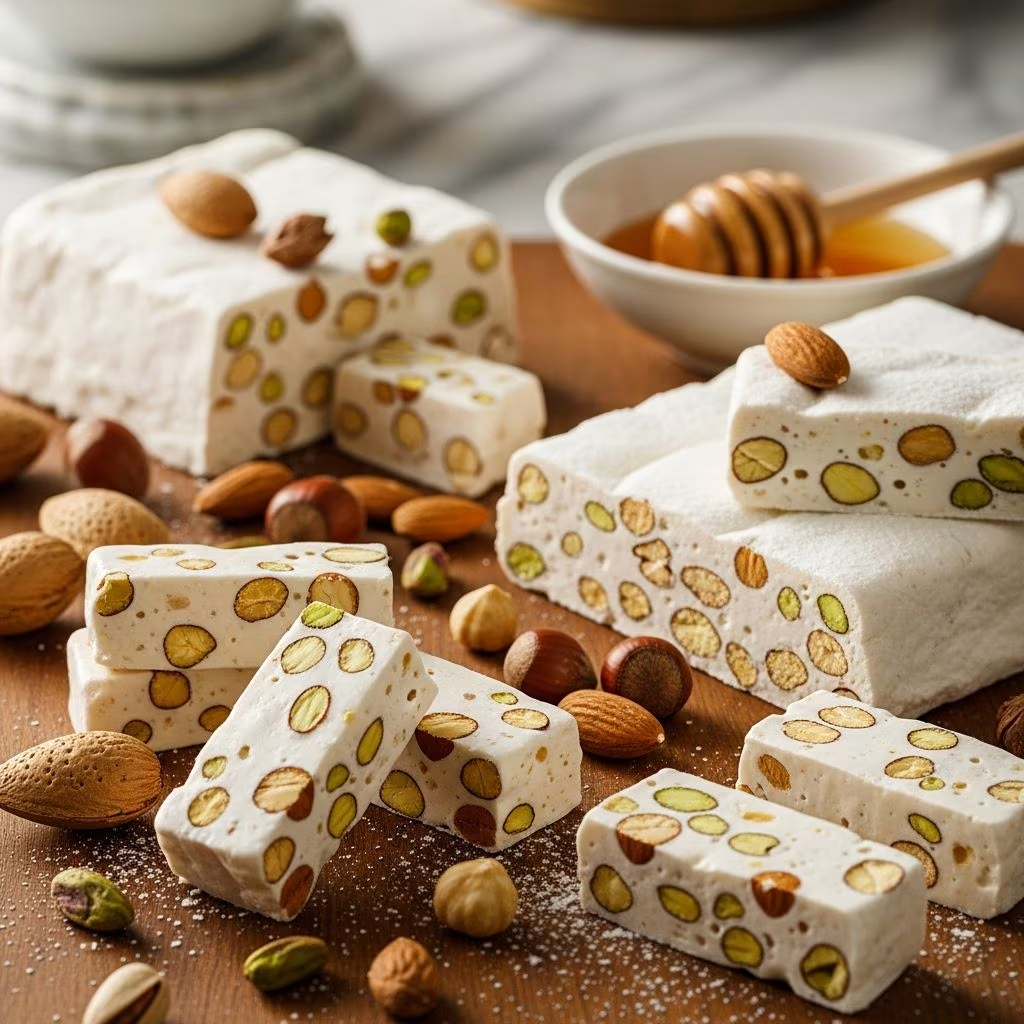
Immerse yourself in the rich tradition of torrone, Italy’s beloved nougat confection that combines chewy sweetness with crunchy nuts. This homemade version captures the essence of festive Italian sweets, using simple ingredients like honey, sugar, egg whites, and a mix of toasted nuts sandwiched between delicate edible wafers. Ideal for holidays, weddings, or any special occasion, torrone offers a satisfying texture and flavor profile that has endured for centuries.
The Allure of Italian Torrone
Torrone stands out as a cornerstone of Italian confectionery, particularly during Christmas season. Its name derives from the Italian word ‘torrone,’ evoking the tower-like shapes it was historically molded into for celebrations. Made primarily from honey and nuts, this treat dates back to ancient Roman times, evolving into the modern form enjoyed today. The soft, airy nougat base provides a perfect canvas for nuts such as almonds, pistachios, and hazelnuts, delivering a balance of chewiness and crunch.
What makes torrone irresistible is its versatility. While traditional recipes stick to classic nuts, contemporary makers experiment with pecans, walnuts, or even chocolate coatings. The key lies in the slow-cooked honey-sugar syrup, whipped with egg whites to achieve that signature fluffy yet sticky consistency. Paired with wafer paper—thin, edible rice sheets—it prevents sticking and adds a subtle crispness.
Essential Ingredients for Perfect Torrone
Gathering high-quality components is crucial for authentic results. Here’s a breakdown of what you’ll need:
- Honey: Opt for mild varieties like acacia for a light color and smooth flavor. About 12 ounces (1 cup) provides the primary sweetness and chew.
- Granulated Sugar: 1.5 to 1.75 cups, combined with honey for the syrup base that reaches hard-crack stage.
- Egg Whites: 2-3 at room temperature, whipped to stiff peaks for aeration. A pinch of salt stabilizes them.
- Nuts: 3-4 cups total of roasted almonds, pistachios, or hazelnuts. Toast them for enhanced flavor and warmth when mixing.
- Flavorings: Vanilla extract (1 tablespoon), lemon or orange zest for citrus brightness.
- Edible Wafer Paper: 2 sheets, cut to fit an 8×8 or 9×9 pan, for non-stick lining.
These ingredients yield about 12-25 servings, depending on cut size. Scale up for gifting by doubling the batch, but maintain ratios precisely.
Step-by-Step Guide to Crafting Torrone
Patience defines torrone-making; the process spans 1-2 hours of active cooking plus cooling time. Equip yourself with a candy thermometer, stand mixer, and heavy-bottomed pot.
- Prepare the Pan: Line an 8×8 or 9×9 inch pan with plastic wrap overhanging edges. Place one wafer sheet on the bottom.
- Whip Egg Whites: In a stand mixer, beat room-temperature egg whites with salt to soft or stiff peaks. Set aside.
- Cook the Syrup: Combine honey and sugar in a heavy pot. Heat over medium-low, stirring until sugar dissolves and mixture reaches 300°F (hard-crack stage). This takes 20-30 minutes; avoid rushing to prevent graininess.
- Incorporate Egg Whites: With mixer on low, slowly pour hot syrup into egg whites. Increase speed to whip until thick, white, and cooled (bowl touchable for 10 seconds), about 30-45 minutes total cooking.
- Add Flavor and Nuts: Mix in vanilla and zest. Fold in warm, toasted nuts quickly before mixture sets.
- Mold and Press: Spread into pan over bottom wafer. Top with second wafer, press flat using oiled parchment or a greased cup. Cool at room temperature for 2-4 hours or overnight.
- Cut and Serve: Unmold, remove wrap, and slice with a serrated knife into bars or squares.
Total time: 4-5 hours including cooling. Store in an airtight container for up to 2 weeks at room temperature.
Pro Tips for Flawless Torrone
Achieving professional results requires attention to detail:
- Use a reliable candy thermometer—syrup temperature is non-negotiable for proper set.
- Toast nuts at 350°F for 8-10 minutes until fragrant, ensuring they’re warm for even integration.
- Grease utensils with neutral oil to combat sticking as nougat firms up.
- Work in a low-humidity environment; moisture affects texture.
- If mixture thickens too fast, stir in nuts immediately and pour.
| Common Issue | Solution |
|---|---|
| Grainy texture | Cook syrup low and slow, stirring constantly until smooth. |
| Too sticky | Ensure syrup hits 300°F; use full wafer paper. |
| Doesn’t set | Whip longer post-syrup addition for full cooling. |
| Nuts uneven | Fold gently and warm nuts beforehand. |
Variations to Personalize Your Torrone
While classic torrone shines with almonds and pistachios, innovate freely:
- Chocolate-Dipped: Dip cooled pieces in melted dark chocolate for decadence.
- Mixed Nuts: Blend hazelnuts, pecans, or walnuts for variety.
- Hard Torrone: Cook syrup to 315°F for firmer bite.
- Flavored Twists: Add rose water, coffee extract, or dried fruit like cherries.
- Vegan Option: Replace egg whites with aquafaba, whipped similarly.
Regional Italian styles vary—Cremona’s is soft and abundant in almonds, while Sardinian versions are harder. Adapt to your taste.
Storing and Gifting Torrone
Fresh torrone keeps well. Wrap individual pieces in wax paper and store in airtight tins for 1-2 weeks. For longer, refrigerate up to a month, though texture may firm up—bring to room temp before serving. Freeze portions for 3 months, thawing slowly.
As gifts, package in decorative boxes with ribbon. Include a note on its Italian heritage for charm. Perfect for holiday platters alongside panettone or struffoli.
Nutritional Snapshot and Pairings
A 1-ounce piece offers roughly 200 calories, primarily from nuts and honey—rich in healthy fats, protein, and antioxidants. Pair with espresso, amaro, or sparkling wine to cut sweetness.
| Nutrient (per serving) | Amount |
|---|---|
| Calories | 205 kcal |
| Protein | 5g |
| Fat | 12g |
| Carbs | 22g |
Frequently Asked Questions (FAQs)
What is torrone made of?
Torrone is a nougat candy featuring honey, sugar, egg whites, nuts, and often wafer paper.
Can I make torrone without a candy thermometer?
Not recommended—precise temperature ensures correct texture. Use a tested digital model.
How long does homemade torrone last?
Up to 2 weeks at room temp, 1 month refrigerated, or 3 months frozen.
Is torrone gluten-free?
Yes, if using certified gluten-free wafer paper and nuts.
Why use wafer paper for torrone?
It provides structure, prevents sticking, and adds crispness without altering flavor.
Historical Roots and Cultural Significance
Torrone’s origins trace to 15th-century Cremona, Italy, legendarily created for the wedding of the Duke of Milan. Symbolizing a sturdy tower, it became a wedding and Christmas staple. Today, it’s produced industrially but homemade versions preserve authenticity. In Benevento, torrone festivals celebrate this heritage annually.
Across Italy, textures vary: soft in Lombardy, hard in Abruzzo. Nuts reflect local bounty—almonds in the south, hazelnuts north. This diversity underscores torrone’s adaptability while honoring tradition.
Experimenting with torrone connects you to generations of Italian artisans. Its labor-intensive process rewards with a confection that’s as beautiful as it is delicious, making every bite a celebration.
References
- Homemade Torrone Italian Nut Nougat — xoxoBella. Accessed 2026. https://xoxobella.com/homemade-torrone-italian-nougat/
- Torrone Recipe (Soft Italian Nougat and Nut Candy) — This Italian Kitchen. Accessed 2026. https://thisitaliankitchen.com/torrone/