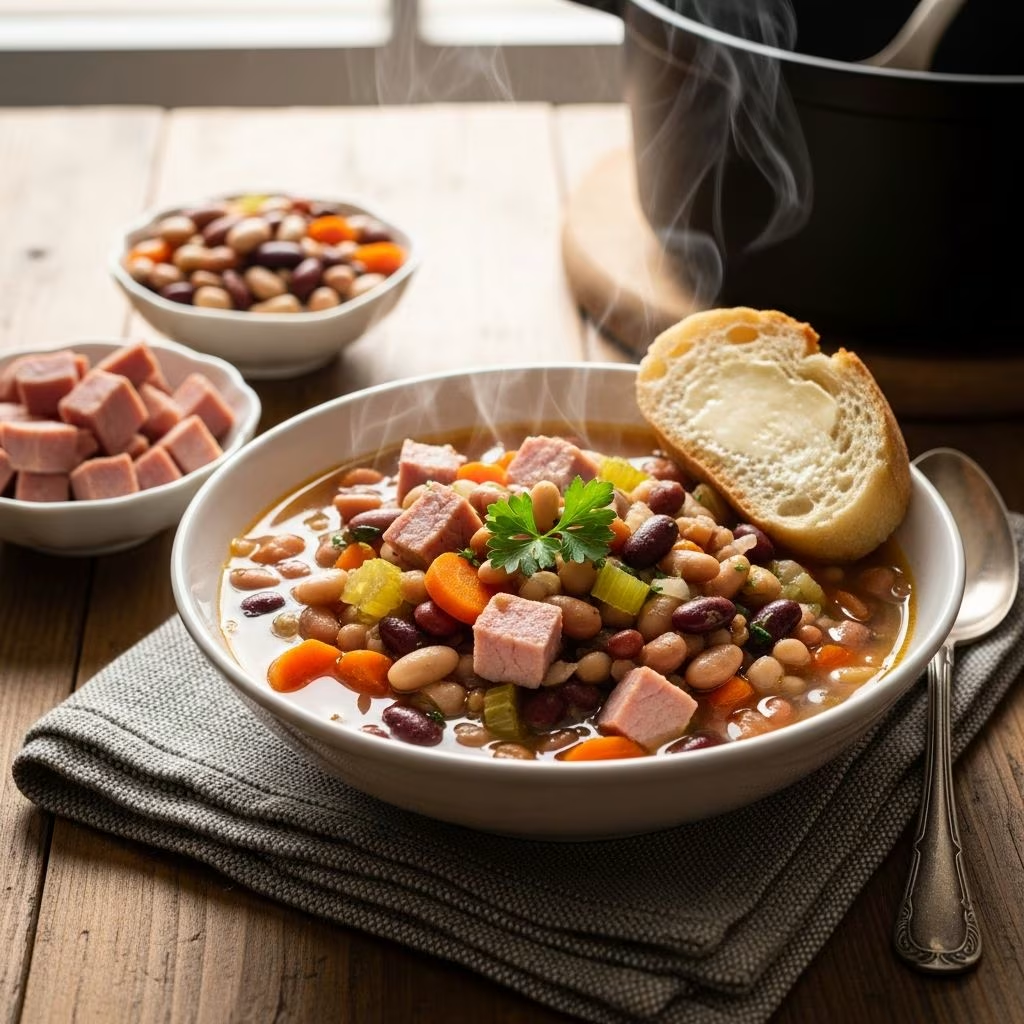
Bean and ham soup represents one of the most versatile and satisfying comfort dishes found in home cooking traditions across America. This humble combination of legumes, smoky meat, and aromatic vegetables creates a meal that is both economical and deeply nourishing. Whether you are repurposing holiday ham leftovers or starting with a fresh ham hock from your local market, this soup offers an accessible entry point into making substantial, flavorful broths that serve as centerpieces for weeknight dinners or casual gatherings with family and friends.
The beauty of this particular soup lies in its flexibility. Home cooks can prepare it using conventional stovetop methods or embrace modern conveniences like slow cookers and pressure cookers. The fundamental principles remain consistent: quality ingredients combined with patient cooking times allow natural flavors to develop and intensify, resulting in a dish that tastes far more complex than the effort required to produce it.
Understanding Your Ingredient Options
Selecting the Right Beans
The foundation of exceptional bean and ham soup begins with choosing appropriate bean varieties. Great Northern beans, navy beans, and cannellini beans all work effectively, each contributing slightly different textural and flavor characteristics to the final dish. Great Northern beans maintain their shape well during extended cooking, making them ideal for soups where you want distinct bean pieces throughout. Navy beans, being smaller, tend to break down more readily and create a naturally creamier texture without additional blending. Cannellini beans offer a subtle, delicate flavor that allows the ham to remain the dominant note.
Starting with dried beans rather than canned versions provides superior texture and allows greater control over the final consistency. To prepare dried beans, most recipes recommend soaking them in cold water for eight to ten hours or overnight. This pre-soaking step serves multiple purposes: it reduces cooking time, makes beans more digestible, and helps achieve uniform texture throughout the batch. After soaking, drain the beans thoroughly and rinse them under cold running water, discarding any that appear broken, discolored, or shriveled, as these can compromise the soup’s final quality.
Choosing Ham Products
The ham component dramatically influences the soup’s final flavor profile. Leftover ham from holiday meals delivers exceptional results because the bone retains substantial meat and contributes deep, complex flavors to the broth as it simmers. If you lack holiday ham leftovers, smoked ham hocks available at most grocery stores provide similar results and are designed specifically for long-cooking applications. The smoking process imparts characteristic flavor that develops further when simmered with beans and vegetables.
When using leftover ham, cut or cube approximately four cups of meat before adding to the soup, reserving the bone for the initial simmering stage. Some recipes call for adding ham only after removing the bone and shredding remaining meat, which allows the broth to develop ham flavor gradually and prevents meat from becoming overcooked and tough. Deli ham can substitute in these recipes, though it typically produces milder flavor since it lacks the bone that creates richness and body in the broth.
Aromatic Vegetables and Seasonings
The aromatic vegetable base provides essential depth and complexity. Celery, carrots, and onions form the traditional supporting cast, with garlic added for additional pungency. These vegetables should be chopped into uniform pieces so they cook evenly and integrate smoothly into the finished soup. Some recipes include fresh herbs like thyme and parsley, which add subtle herbal notes that complement both the ham and beans without overpowering either ingredient.
Seasoning requires careful attention because ham bones and cured ham products already contain significant salt. Most experienced cooks recommend tasting the soup near the end of cooking before adding salt, allowing natural saltiness to develop from the meat and broth. Apple cider vinegar or fresh lemon juice added near completion brightens flavors and cuts through the richness, while fresh ground pepper provides gentle heat. Some regional variations incorporate ground cumin or crushed red pepper for additional complexity.
Traditional Stovetop Preparation Method
The Initial Preparation Phase
Begin by heating two tablespoons of olive oil in a large Dutch oven or heavy-bottomed soup pot over medium-high heat. Once the oil shimmers, add the diced onions, celery, carrots, and minced garlic, sautéing for five to eight minutes until the vegetables soften and become fragrant. This sautéing step builds a foundational flavor layer that will permeate the entire finished soup. The aromatic vegetables release their natural sugars during this process, creating a sweeter, more developed base than raw vegetables would provide.
Combining Ingredients and Building Broth
Pour the drained beans into the pot containing the softened vegetables, stirring to combine them thoroughly. Add the ham bone or ham hock, positioning it in the center of the bean mixture if possible, which allows maximum surface area contact with the developing broth. Pour in the chicken stock or water—typically eight to ten cups depending on desired final consistency—along with fresh thyme, bay leaves, and pepper.
Bring the mixture to a full rolling boil over high heat, then immediately reduce the heat to maintain a gentle simmer. Partially cover the pot with a lid, leaving a small gap to allow steam to escape while preventing excessive evaporation. This cooking stage typically requires sixty to ninety minutes, though some recipes suggest up to two hours for particularly dense bean varieties or when using unsoaked beans.
Monitoring and Adjusting During Cooking
During simmering, check the pot periodically to ensure adequate liquid remains. If the mixture becomes too thick or threatens to scorch on the bottom, add additional broth or water as needed. Stir occasionally to ensure even cooking and prevent beans from sticking to the pot bottom. The beans are finished cooking when they are entirely tender but maintain their shape—they should yield easily to a fork without crumbling or becoming mushy.
When beans have reached full tenderness, remove the ham bone from the pot carefully using tongs or a slotted spoon. Once the bone has cooled slightly, use a fork or knife to shred any remaining meat, discarding the bone and any gristle. Return the shredded ham to the pot, stirring to distribute it evenly throughout the soup.
Modern Slow Cooker Method
For cooks who prefer longer, gentler cooking times, slow cookers offer a hands-off alternative that produces equally flavorful results. Begin by adding soaked and drained beans to the slow cooker along with the ham bone or hock, diced onion, celery, garlic, thyme, salt, and pepper. Pour in enough water or broth to cover all ingredients by at least one inch, as slow cooking creates minimal evaporation and insufficient liquid will produce a stew rather than a soup.
Cook on low for approximately six hours if using pre-soaked beans, or nine hours if using unsoaked beans. At the five-hour mark, stir in carrots, which require less cooking time than beans and will remain more tender if added midway through cooking. After the designated cooking time, the beans should be completely tender and the soup will have developed rich, complex flavors.
Remove the ham bone, shred any remaining meat, and return it to the slow cooker. If the soup appears too thin for your preference, leave it uncovered on high for thirty minutes to allow some liquid to evaporate. Conversely, if the soup seems too thick, add additional broth or water gradually until achieving the desired consistency.
Texture Modifications and Finishing Touches
Achieving Desired Thickness
Home cooks often have distinct preferences regarding soup consistency, and several techniques allow for customization. If you prefer a brothier soup, simply add extra liquid in the final minutes of cooking. For a creamier, thicker consistency without adding cream or dairy products, remove approximately one cup of finished soup and puree it using an immersion blender, then stir the pureed portion back into the pot. This technique adds body and richness while maintaining the rustic character of the soup.
Alternatively, use a fork or wooden spoon to mash some beans directly against the side of the pot, breaking them down and allowing starches to naturally thicken the broth. This method requires patience but produces gradual, controllable thickening without requiring special equipment or additional ingredients.
Final Seasoning and Flavor Enhancement
Once the beans have reached desired tenderness and any texture modifications are complete, taste the soup and adjust seasonings accordingly. At this stage, add salt gradually while tasting between additions, as the ham already contributes saltiness that may have intensified during cooking. Grind fresh black pepper over the surface, add apple cider vinegar or fresh lemon juice to brighten flavors, and incorporate any additional herbs if desired.
Some cooks add fresh spinach or other hearty greens immediately before serving, stirring them gently into the hot broth until they begin to wilt. This final addition provides fresh vegetable character and nutritional enhancement while maintaining visual appeal.
Storage and Make-Ahead Strategies
Bean and ham soup stores exceptionally well, making it ideal for meal preparation or batch cooking. Refrigerate finished soup in airtight containers for three to four days. The flavors actually intensify during storage, so soup prepared a day or two in advance often tastes better than soup served immediately after cooking.
For longer storage, freeze finished soup in airtight containers or freezer bags for four to six months. Thaw frozen soup overnight in the refrigerator before reheating gently on the stovetop over low heat, adding additional broth if needed to reach desired consistency. The freezing and thawing process may soften beans slightly, but this rarely negatively impacts the final dish.
Frequently Asked Questions
Can I Make This Soup Without Pre-Soaking Beans?
Yes, though cooking time will increase significantly. Unsoaked beans require approximately nine hours in a slow cooker or two and a half to three hours on the stovetop. Starting beans in boiling water for two minutes, then allowing them to soak for one hour (quick-soak method) provides a middle ground requiring less advance planning than overnight soaking while still reducing cooking time compared to completely unsoaked beans.
What If I Don’t Have Ham or Ham Bone?
Smoked sausage, bacon, or smoked turkey can substitute for ham in a pinch. The final flavor profile will differ, but these alternatives provide similar smoke and saltiness. Additionally, vegetable broth combined with smoked paprika creates acceptable results for vegetarian versions, though the soup’s character shifts significantly without meat.
Is This Soup Suitable for Freezing?
Absolutely. Cooled soup freezes beautifully in rigid containers or freezer bags. Leave approximately one inch of headspace in containers to allow expansion during freezing. Thaw overnight in the refrigerator and reheat gently.
How Can I Make a Vegetarian Version?
Omit the ham and ham bone, increasing vegetables and adding smoked paprika, cumin, or liquid smoke to achieve depth. Some vegetarian cooks add mushrooms for umami richness that partially compensates for the absence of meat.
References
- Best Bean Soup with Ham Recipe — Mary’s Nest. Accessed April 2026. https://marysnest.com/best-bean-soup-with-ham-recipe/
- Ham and Bean Soup — Art and the Kitchen. Accessed April 2026. https://www.artandthekitchen.com/ham-and-bean-soup/
- Ham and Bean Soup Recipe — The Real Food Dietitians. Accessed April 2026. https://therealfooddietitians.com/ham-and-bean-soup/
- Navy Bean Ham Bone Soup — A Spicy Perspective. Accessed April 2026. https://www.aspicyperspective.com/nanas-epic-navy-bean-ham-bone-soup/
- Hearty Ham and Bean Soup — Sip and Feast. Accessed April 2026. https://www.sipandfeast.com/ham-and-bean-soup/
- Old-Fashioned Ham and Bean Soup — The Kitchen Girl. Accessed April 2026. https://thekitchengirl.com/ham-and-bean-soup/