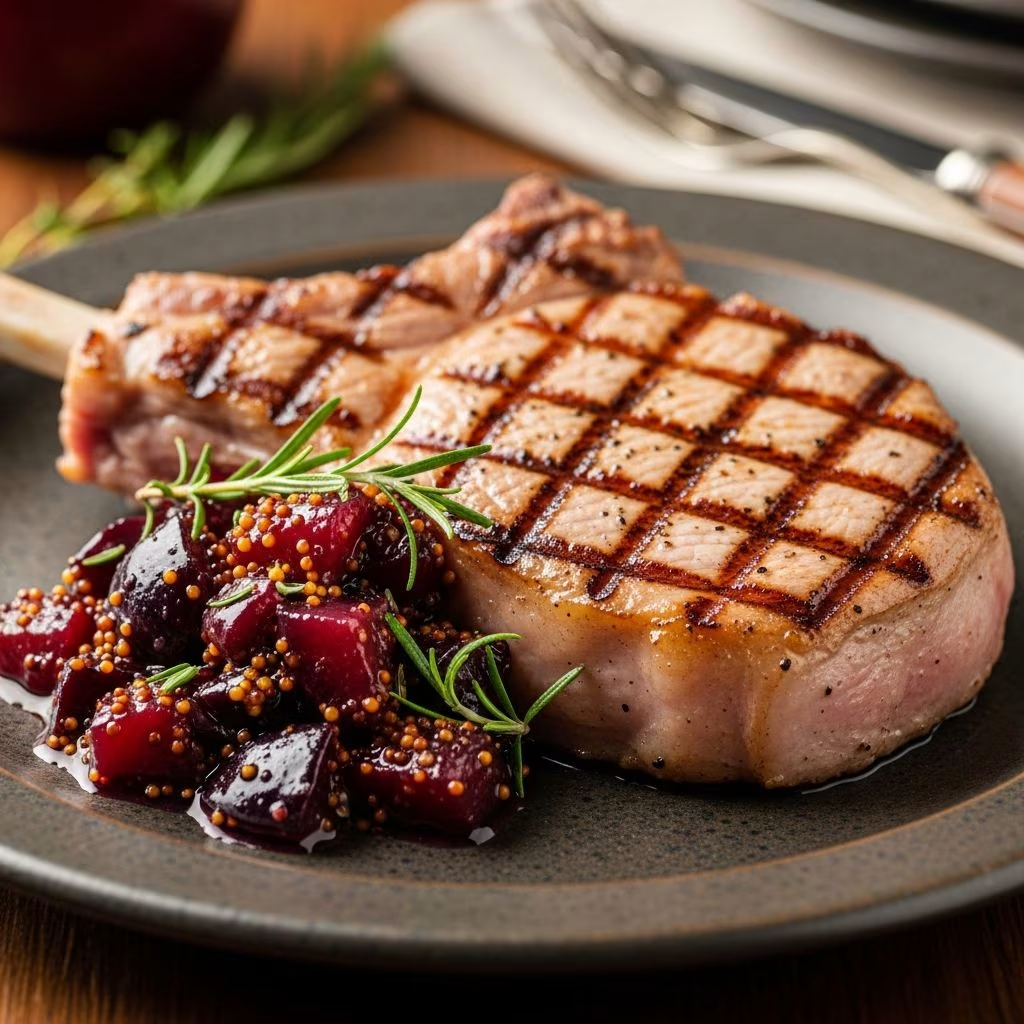
Grilling season offers the perfect opportunity to explore sophisticated flavor combinations that elevate everyday proteins into memorable meals. One such preparation pairs tender, bone-in pork chops with a vibrant plum-based mostarda—a classic Italian condiment that transforms fresh fruit into a complex, multi-layered accompaniment. This dish represents the intersection of rustic grilling techniques and refined culinary sensibilities, making it an ideal centerpiece for both casual weeknight dinners and more formal gatherings.
Understanding Mostarda: A Culinary Foundation
Mostarda occupies a unique position in the Italian culinary tradition, distinct from both jam and relish. The term derives from the Italian word “mosto,” referring to grape must, the freshly pressed juice of grapes. Traditionally, mostarda combines fresh fruit with mustard seeds and vinegar, creating a condiment that is simultaneously sweet, sharp, and piquant. This balance of flavors makes mostarda exceptionally versatile—equally at home accompanying charcuterie boards, rich meats, or creamy cheeses.
The plum-based variation featured in this preparation showcases how seasonal fruits can be adapted to the mostarda formula. Plums bring natural acidity and slight earthiness to the condiment, while their delicate sweetness prevents the mustard and vinegar components from becoming overwhelmingly harsh. When grilled, plums develop caramelized notes that add depth and complexity to the final condiment.
Selecting and Preparing Your Pork Chops
The foundation of this dish relies on high-quality pork chops of adequate thickness. One-inch-thick bone-in rib chops represent an excellent choice, as the bone conducts heat efficiently while the surrounding fat provides moisture and flavor. Bone-in cuts also offer superior presentation compared to boneless alternatives, creating visual interest on the plate.
When purchasing pork, look for meat with a pale pink color and white (rather than yellow) fat, indicating freshness. The ribs should be clearly defined, suggesting proper butchering and careful handling. Allow pork chops to reach room temperature approximately 30 minutes before grilling—this promotes even cooking throughout the meat and reduces the likelihood of a cold center paired with an overcooked exterior.
Constructing the Herb-Infused Vinaigrette
The vinaigrette component of this dish serves dual purposes: it acts as a base for the finished mostarda while also functioning as a dressing for the accompanying arugula salad. Creating a proper vinaigrette requires understanding emulsification—the process by which oil and vinegar combine into a stable, cohesive liquid through the mechanical action of whisking.
Begin by combining finely minced shallots with red wine vinegar and two types of mustard: whole grain and Dijon. The whole grain mustard contributes texture and visual interest, while Dijon provides smooth, penetrating heat and acts as an emulsifying agent. A small quantity of sugar balances the vinegar’s acidity, creating the foundation for sweet-savory complexity. Fresh oregano adds an herbaceous dimension that complements both the pork and fruit components.
When gradually streaming extra-virgin olive oil into the vinegar mixture while whisking vigorously, the emulsifier (mustard) temporarily prevents the oil from separating, creating a suspension. The vigorous whisking action breaks the oil into microscopic droplets, allowing them to remain suspended throughout the vinegar. Proper emulsification results in a smooth, glossy vinaigrette rather than a separated, oily appearance.
The Grilling Process: Technique and Temperature Management
Successful grilling begins with proper equipment preparation. A clean, well-oiled grate prevents sticking and promotes attractive caramelization. Establish medium-high heat, allowing the grill to reach approximately 400-450°F. This temperature range provides sufficient heat for developing a flavorful crust while allowing adequate time for the pork’s interior to reach the desired doneness without excessive surface charring.
Grill the plum halves cut-side down for approximately two minutes, allowing the exposed flesh to contact the heat source directly. This brief exposure creates light charring and enables the natural sugars to caramelize. The short cooking time ensures the plums remain structurally intact while developing depth of flavor. Transfer grilled plums to a cutting board and allow them to cool before cutting into wedges and incorporating into the vinaigrette.
Season the pork chops generously with kosher salt and freshly ground pepper immediately before placing them on the grill. This timing prevents salt from drawing moisture out of the meat before cooking begins. Sprinkle with light brown sugar and smoked paprika, which create a flavorful crust through the Maillard reaction—the browning process that generates complex flavors when proteins and sugars combine under high heat.
Grill the pork chops for 10-12 minutes total, turning occasionally to develop even browning on both sides and across the edge. Monitor internal temperature using an instant-read thermometer, targeting 140°F at the thickest point near the bone. At this temperature, the meat will continue cooking slightly during the resting period, reaching 145°F—the USDA-recommended safe temperature for pork. This residual cooking, known as carryover cooking, occurs as heat distributes from the hot exterior toward the cooler interior.
The Resting Period: A Critical Step
After removing the pork chops from the grill, allow them to rest for approximately 10 minutes on a serving platter. During this period, the meat’s muscle fibers relax and reabsorb the juices that were driven to the surface during cooking. Cutting into the meat before adequate resting results in rapid juice loss, yielding dry, less flavorful results. The resting period, though seemingly simple, represents one of the most impactful techniques for ensuring a successful final product.
Creating the Plum Mostarda: Final Assembly
While the pork chops rest, complete the mostarda by cutting the cooled grilled plums into wedges and folding them gently into the reserved vinaigrette. The goal is coating each piece thoroughly while maintaining the plums’ structural integrity—rough handling at this stage can result in an unappealingly mushy condiment. Taste and adjust seasoning with salt and pepper as needed, recognizing that flavors may have developed or shifted during the grilling process.
Building the Complete Plate: Salad Components and Presentation
Mature arugula with tough stems removed provides peppery contrast to the sweet plum mostarda and rich pork. Toss a portion of the arugula with some plum mostarda, allowing the vinaigrette to coat the delicate leaves. Transfer this to serving plates as a foundation, creating visual height and texture variation. Place the rested pork chops alongside or atop the arugula salad, then spoon additional plum mostarda over the meat. This presentation approach allows diners to control the ratio of mustard to pork in each bite.
Key Ingredient Considerations
Olive Oil Quality: Extra-virgin olive oil contributes fruity, peppery notes that enhance the overall flavor profile. Reserve premium bottles for the vinaigrette rather than using them for grill oiling, as heat degrades their delicate characteristics.
Plum Selection: Choose plums that yield slightly to gentle pressure, indicating ripeness without excessive softness. Underripe plums lack adequate sweetness, while overripe specimens may disintegrate during grilling.
Mustard Varieties: The combination of whole grain and Dijon mustard creates textural and flavor complexity. Substituting with a single mustard type results in a less interesting condiment.
Herb Freshness: Fresh oregano provides bright, aromatic qualities that dried versions cannot replicate. If fresh oregano is unavailable, reduce the quantity of dried oregano by approximately two-thirds.
Timing and Practical Considerations
This dish can be executed within 30-40 minutes from start to table. The vinaigrette can be prepared up to 24 hours in advance, allowing flavors to meld. Grilled plums should be prepared shortly before serving to maintain their textural integrity, though they can rest at room temperature for up to an hour. The complete mostarda, however, is best assembled within 15 minutes of serving to prevent excessive softening of the plums.
Frequently Asked Questions
Can boneless pork chops be substituted for bone-in cuts?
While boneless chops can be prepared using this method, bone-in varieties offer superior flavor and moisture retention. If using boneless chops, reduce grilling time by approximately 2-3 minutes and monitor temperature closely, as they cook faster than bone-in cuts.
What if fresh plums are unavailable?
Other stone fruits such as peaches, nectarines, or apricots can be substituted with slight adjustments to seasoning. Adjust sugar quantities based on the fruit’s natural sweetness to maintain the mostarda’s flavor balance.
Can this dish be prepared without a grill?
A cast-iron skillet heated to medium-high temperature can replicate the grilling process, though the characteristic charred appearance may be less pronounced. Plums can be caramelized in the same skillet before cooking the pork chops.
How should leftover mostarda be stored?
Refrigerate in an airtight container for up to five days. The mostarda pairs excellently with cheeses, cured meats, roasted vegetables, or as a complement to poultry dishes.
Flavor Development and Palatal Experience
This preparation succeeds because each component plays a defined role in the overall sensory experience. The pork chops provide a neutral canvas—tender and mildly flavored—that allows the condiment’s complexity to shine. The smoked paprika and brown sugar create surface caramelization that contributes savory depth. The plum mostarda delivers simultaneous waves of sweetness, vinegary sharpness, and mustard’s characteristic heat, creating dynamic flavor evolution as you progress through each bite.
The arugula salad provides textural contrast, its peppery bite complementing the rich pork while its delicate structure contrasts with the meat’s density. Together, these elements create a balanced plate that satisfies without overwhelming, sophisticated without requiring advanced technical skills.
Variations and Adaptations
The foundational techniques presented here accommodate various interpretations. The vinaigrette ratio can be adjusted to personal preference—additional vinegar intensifies sharpness, while more oil creates a milder profile. Herb selections can expand to include basil, thyme, or fennel fronds depending on seasonal availability and personal taste. The mostarda concept extends beyond plums, making this preparation adaptable to whatever stone fruits are at peak ripeness during your grilling season.
References
- USDA Food Safety and Inspection Service – Pork from Farm to Table — United States Department of Agriculture. 2024. https://www.fsis.usda.gov/food-safety/safe-food-handling-and-preparation/meat/pork-farm-table
- The Art of French Cooking — Julia Child and Simone Beck. Knopf, 1970. (Classic reference on emulsification techniques)
- Italian Regional Cooking — Giuliano Hazan. Knopf, 2009. (Authoritative source on mostarda and Italian condiment traditions)
- On Food and Cooking: The Science and Lore of the Kitchen — Harold McGee. Scribner, 2004. (Scientific explanation of the Maillard reaction and carryover cooking)