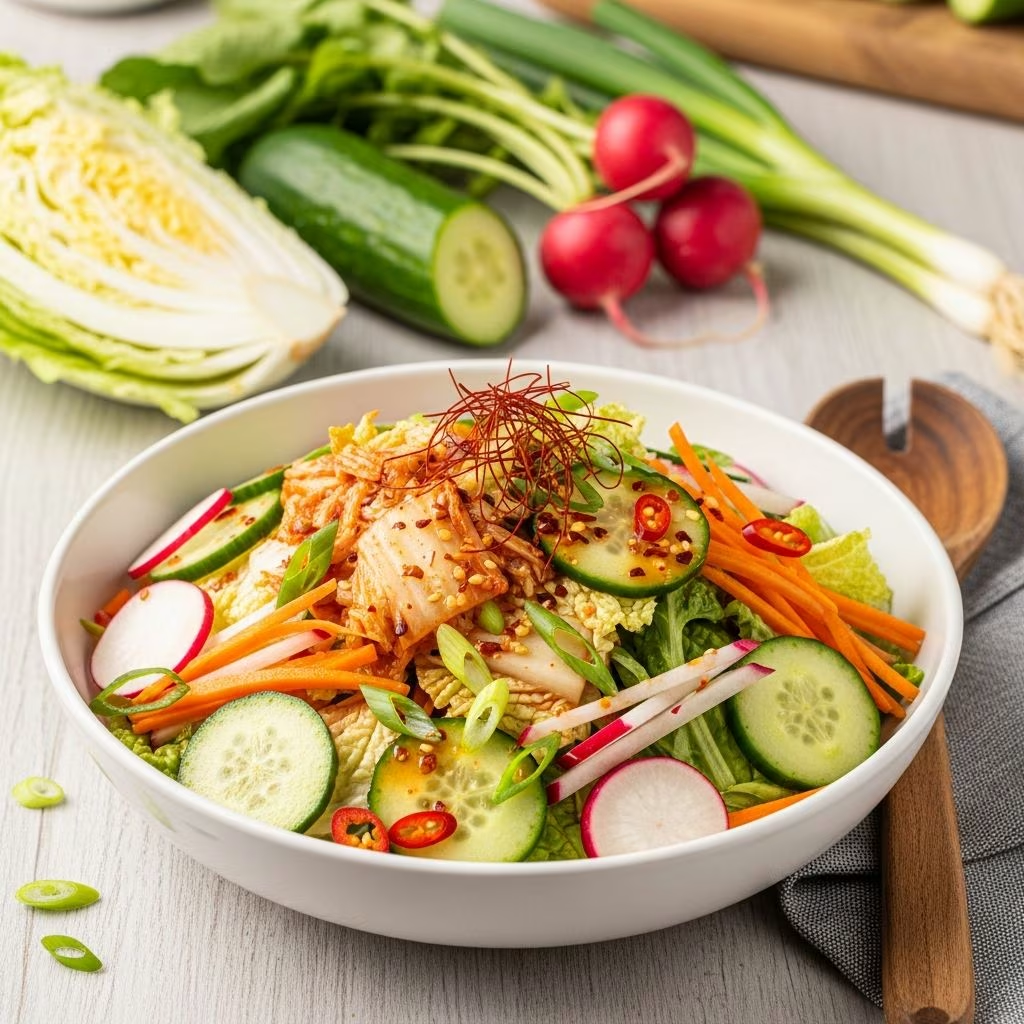
Kimchi salad offers a vibrant, spicy twist on traditional Korean flavors without the lengthy fermentation process. These fresh preparations, often called geotjeori in Korean cuisine, combine crisp vegetables with bold seasonings for dishes ready in minutes. Ideal as side dishes or light meals, they bring heat, crunch, and tang to any table.
The Appeal of Fresh Kimchi Salads
Fresh kimchi salads differ from fermented kimchi by skipping the pickling stage, allowing immediate enjoyment. They highlight seasonal produce like cucumbers, napa cabbage, or spring cabbage, tossed in sauces featuring gochugaru chili flakes, garlic, and sesame. This approach preserves natural textures while delivering authentic taste profiles.
These salads pair excellently with grilled meats, rice bowls, or noodles. Their quick prep suits busy cooks seeking healthy, probiotic-light options with punchy flavors. Variations allow customization for spice levels or added proteins like tuna.
Essential Ingredients for Kimchi Salads
Core components revolve around fresh vegetables and a harmonious sauce. Common veggies include:
- English cucumbers: Thinly sliced for crispness.
- Napa or spring cabbage: Torn or chopped for tenderness.
- Korean radish or daikon: Julienned for subtle sweetness.
- Green onions and onions: Sliced for aroma.
Sauce staples feature:
- Gochujang or gochugaru: For spicy depth.
- Sesame oil and seeds: For nutty richness.
- Rice vinegar and sugar: For balanced acidity and sweetness.
- Garlic, ginger, soy, or fish sauce: For umami.
These elements create a symphony of flavors—spicy, sweet, sour, and savory.
Simple Cucumber Kimchi Salad
This ultra-fast version uses cucumbers as the star, mimicking quick Korean banchan. Prep takes 10 minutes for 6 servings.
Ingredients
| Ingredient | Quantity |
|---|---|
| English cucumber, sliced | 3 cups |
| Green onions, diced | 3 |
| Granulated sugar | 2 tsp |
| Rice vinegar | 1 tsp |
| Sesame oil | 1 tsp |
| Minced garlic | 2 tsp |
| Gochujang | 3 tsp |
Preparation Steps
- Combine sliced cucumbers and diced green onions in a medium bowl.
- Add sugar, rice vinegar, sesame oil, garlic, and gochujang.
- Mix thoroughly until vegetables are evenly coated.
- Cover and chill briefly before serving.
The result is a refreshing, spicy salad with cucumber’s hydration balancing the heat. Serve cold alongside barbecues or stir-fries.
Spicy Napa Cabbage Kimchi Salad
A heartier option using napa cabbage, this recipe serves 10+ and involves a short salting step for flavor infusion without full fermentation.
Ingredients
| Ingredient | Quantity |
|---|---|
| Napa cabbage | 820g (1.8 lbs) |
| Korean radish, julienned | 240g (8.5 oz) |
| Brown onion, sliced | 50g (1.8 oz) |
| Green onion | 40g (1.4 oz) |
| Rock salt | 2/3 cup |
| Gochugaru chili flakes | 1/4 cup |
| Minced garlic | 1 Tbsp |
| Minced ginger | 1/2 tsp |
| Soy sauce | 1/2 Tbsp |
| Korean fish sauce | 1/2 Tbsp |
| Sugar | 1.5 Tbsp |
| Roasted sesame seeds | 1 Tbsp |
Step-by-Step Method
- Tear napa cabbage into bite-sized pieces; slice radish, onion, and green onion.
- Salt cabbage with water, weigh down, and let sit 1 hour, mixing every 20 minutes.
- Rinse, drain, and squeeze excess water from cabbage.
- Whisk sauce ingredients; toss with vegetables.
This salad’s texture shines post-salting, with cabbage softening slightly while staying crisp. It’s a staple for larger gatherings.
Tuna Kimchi Salad with Mixed Greens
For a protein-packed meal, incorporate tuna into a greens-based salad. Ready in 10 minutes for 4 servings.
Ingredients
| Ingredient | Quantity |
|---|---|
| Solid white tuna, drained | 12 oz |
| Cucumber, thinly sliced | 1 small |
| Carrots, matchsticks | 1 cup |
Dressing: Mayonnaise, rice vinegar, soy sauce, gochujang, sesame oil, sugar (whisk to taste).
Assembly
- Prepare dressing in a small bowl.
- Toss salad ingredients in a large bowl.
- Drizzle dressing; garnish with black sesame seeds.
The tuna adds savoriness, contrasting fresh veggies and kimchi’s funk.
Customizing Your Kimchi Salad
Adapt these bases for preferences:
- Spice control: Reduce gochujang for mild versions.
- Veggie swaps: Use spring cabbage (bomdong) for tenderness; add anchovy sauce for depth.
- Protein boosts: Tofu, eggs, or shrimp.
- Make-ahead: Salads hold 1-2 days refrigerated; flavors intensify.
Experiment with vinegar types or sweeteners for unique profiles.
Health Benefits and Nutrition
Kimchi salads are nutrient-dense: Cucumbers hydrate, cabbage provides fiber and vitamin C, chilies offer antioxidants. Low-calorie (around 50-100 per serving), they’re gut-friendly sans full fermentation. Tuna versions add omega-3s.
| Nutrient (per serving) | Cucumber Salad | Cabbage Salad |
|---|---|---|
| Calories | ~60 | ~80 |
| Fiber (g) | 1 | 2 |
| Vitamin C (mg) | 5 | 40 |
Pairing Suggestions
• Bulgogi or grilled chicken.
• Steamed rice or bibimbap.
• Soups like doenjang jjigae.
Balance spice with cooling yogurt or beer.
Frequently Asked Questions
What is geotjeori?
Geotjeori is fresh kimchi salad, seasoned without fermentation for instant eating.
Can I make it vegan?
Yes, omit fish sauce/anchovy; use soy or salt.
How long does it last?
2-3 days in fridge; best fresh.
Substitute for gochujang?
Sriracha with chili flakes works, but flavor differs.
Is salting cabbage necessary?
For cabbage versions, yes—it draws out water, intensifying taste.
Storage and Serving Tips
Store in airtight containers; avoid sogginess by dressing just before serving. Serve chilled for maximum crunch. Scale up for potlucks—these salads travel well.
References
- Cucumber Kimchi Salad Recipe — Homemade Heather. Accessed 2026. https://homemadeheather.com/cucumber-kimchi-salad-recipe/
- Kimchi Salad — In the Kitch. Accessed 2026. https://inthekitch.net/kimchi-salad/
- Fresh Napa Cabbage Kimchi Salad (Baechu Geotjeori) — My Korean Kitchen. Accessed 2026. https://mykoreankitchen.com/fresh-napa-cabbage-kimchi-salad-baechu-geotjeori/
- Fresh Kimchi Salad with Spring Cabbage (Bomdong Geotjeori) — Kimchimari. Accessed 2026. https://kimchimari.com/fresh-kimchi-salad-with-spring-cabbage-bomdong-geotjeori/