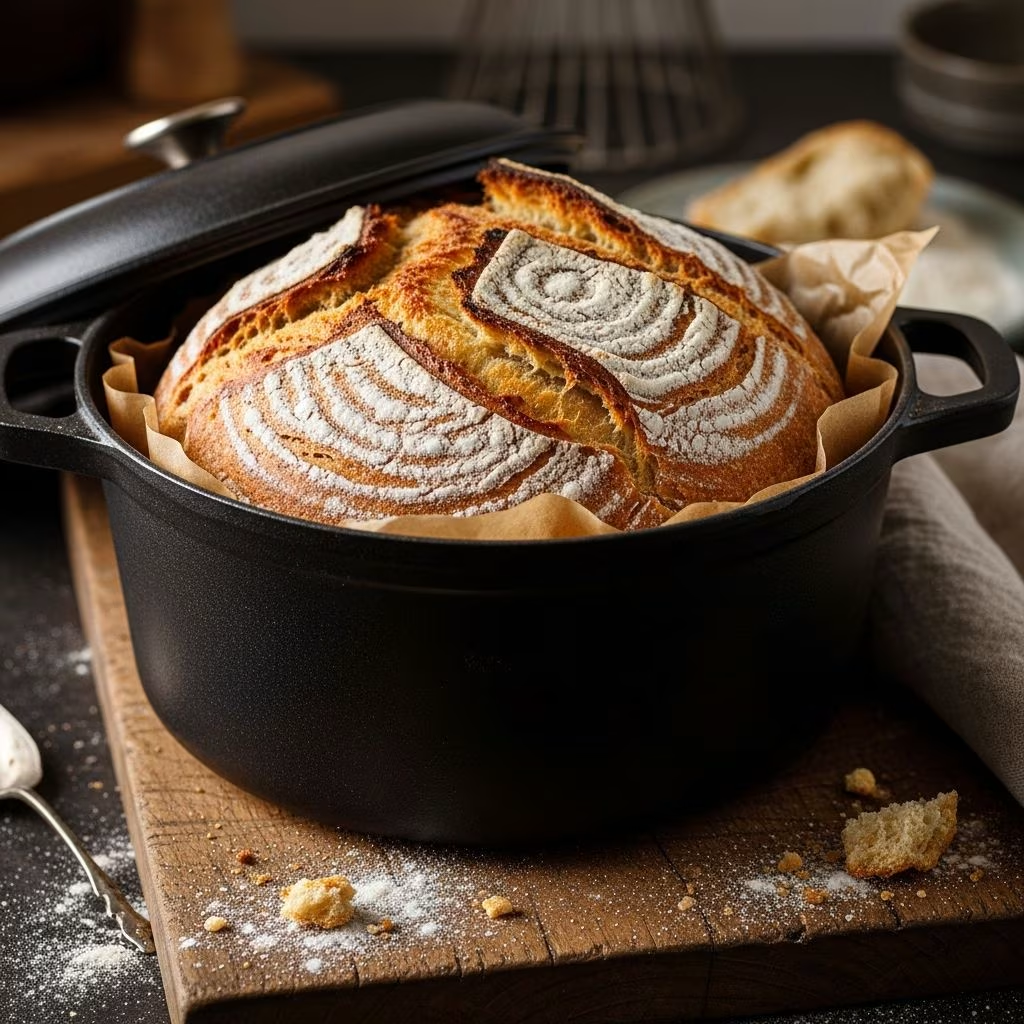
Creating bakery-quality bread at home has never been simpler than with the Dutch oven method. This technique produces a loaf with a shatteringly crisp exterior and a light, open crumb inside, all without the need for advanced skills or equipment. By trapping steam in a preheated cast-iron pot, you mimic professional ovens to elevate basic ingredients into something extraordinary.
Why Choose the Dutch Oven for Bread Baking
The magic of Dutch oven bread lies in its simplicity and science. Traditional artisan loaves require high heat and humidity for crust development, conditions perfectly replicated by a lidded cast-iron pot. The enclosed environment generates steam from the dough’s moisture, delaying crust formation and allowing the loaf to expand fully before setting. This results in a dramatic oven spring—the rapid rise during early baking—that gives the bread its signature height and airiness.
Unlike kneaded doughs, no-knead versions rely on long fermentation to develop gluten naturally. This slow process enhances flavor through lactic acid production and creates irregular holes in the crumb, hallmarks of high-end sourdough. Home bakers appreciate the hands-off approach: mix ingredients, wait, shape minimally, and bake.
Essential Ingredients for Success
Four pantry staples form the foundation: flour, water, salt, and yeast. Opt for bread flour with 11-13% protein for superior structure, though all-purpose works in a pinch. Instant or rapid-rise yeast activates quickly without proofing, ensuring reliable rises.
- Flour: 3-4 cups (360-480g), providing structure and chew.
- Water: 1.5-2 cups (lukewarm, around 100-125°F), hydrating the dough for a wet, sticky consistency ideal for steam generation.
- Salt: 1.5-2 tsp, enhancing flavor and controlling yeast activity.
- Yeast: 1-2 tsp instant yeast for a 2-12 hour rise, depending on schedule.
Optional add-ins like a pinch of sugar feed the yeast, or herbs/seeds for variety, but purists stick to basics for classic results. High hydration (around 70-75%) is key—expect a shaggy, batter-like dough.
Step-by-Step Preparation Process
Begin by whisking dry ingredients in a large bowl. Add water and stir until no dry spots remain; the mixture will be loose and sticky. Cover with plastic wrap or a lid and let ferment at room temperature.
- Mix the Dough: Combine 3 cups flour, 1.5 tsp salt, and 1/4 tsp yeast (for overnight rise) with 1.5 cups water. Stir 30-60 seconds.
- First Rise: Rest 12-18 hours until bubbly and doubled, developing deep flavor. For quicker results, use more yeast and 2-3 hours.
- Shape: Turn onto floured parchment, fold edges into center to form a ball. Cover and rest 30-60 minutes.
| Timeline | Action | Temperature |
|---|---|---|
| 0 min | Mix dough | Room temp |
| 2-18 hrs | Ferment | 70-75°F |
| Post-rise | Preheat oven + pot | 450°F |
| 30 min preheat | Shape & final rise | Room temp |
| 40-50 min | Bake | 450°F |
Mastering the Bake: Heat and Timing
Preheat your oven to 450°F with a 4-6 qt Dutch oven inside for 30 minutes. This superheats the pot for maximum sear. Transfer dough via parchment to avoid burns, cover, and bake 30-40 minutes. Remove lid for 10-15 more minutes to brown the crust. Internal temp should hit 205-210°F for doneness. Cool on a rack at least 30 minutes—slicing too soon releases steam, softening the crust.
Safety first: Use oven mitts and long tongs. Parchment prevents sticking and simplifies handling.
Troubleshooting Common Issues
Flat loaf? Check yeast freshness and rise time; under-proofed dough won’t expand. Pale crust means insufficient preheat or uncovered bake—extend lid-off time. Gummy interior signals underbaking; use a thermometer.
- Dense crumb: Too much flour or short fermentation.
- Stuck bread: Insufficient flour on parchment or cold pot.
- Cracked top: Normal from steam expansion; enhances rustic look.
Adjust hydration for humidity: drier climates need more water.
Variations to Elevate Your Loaf
Experiment once basics are mastered. Add 1/2 cup olives, cheese, or rosemary pre-shaping for Mediterranean flair. Whole wheat (up to 50%) adds nutty depth but may need extra water. For sourdough-style, reduce yeast and extend rise to 24 hours.
Split dough into two for baguettes using a long Dutch oven or baking stone alternative. Sweet versions with cinnamon or fruit suit breakfast.
Storage and Freezing Tips
Store cooled bread in a paper bag for 2-3 days to maintain crunch; plastic softens it. Freeze slices in bags up to 3 months—thaw and toast for freshness. Revive day-old loaves by sprinkling water and reheating at 350°F for 10 minutes.
Health Benefits and Nutrition
This bread offers complex carbs for sustained energy, with minimal additives. Per slice (1/8 loaf): ~188 calories, 36g carbs, 6g protein. Fermentation improves digestibility by breaking down gluten and phytic acid. Pair with soups, salads, or avocado for balanced meals.
Pairing Ideas for Your Fresh Bake
Serve with hearty stews where the crust dips perfectly. Top with garlic butter for bruschetta, or use in paninis. The neutral flavor complements cheeses, cured meats, or sweet spreads equally.
Frequently Asked Questions
Can I use active dry yeast instead?
Yes, proof it in warm water first, then add to flour.
What if I lack a Dutch oven?
Use a covered stockpot or baking stone with steam pan.
How do I know when it’s done?
Golden brown crust, hollow tap sound, 205°F internal.
Why is my dough so sticky?
High hydration is intentional for open crumb; handle with wet hands or floured tools.
Can I make it gluten-free?
Adapt with GF flour blends, but results vary; expect denser texture.
Scaling Up for Crowds
Double recipe for two loaves, using separate pots or baking sheets post-proof. Ideal for gatherings—prep dough night before.
References
- Dutch Oven No Knead Bread (with perfect crusty crust!) — Bowl of Delicious. 2023. https://www.bowlofdelicious.com/dutch-oven-bread/
- Easy Crusty French Bread (VIDEO) — Life As A Strawberry. 2022. https://www.lifeasastrawberry.com/easy-crusty-french-bread/
- Dutch Oven Crusty Bread — Alaska from Scratch. 2012-07-27. https://www.alaskafromscratch.com/2012/07/27/dutch-oven-crusty-bread/
- Easy Crusty No-knead Dutch Oven Bread — Chef Lola’s Kitchen. 2023. https://cheflolaskitchen.com/crusty-no-knead-dutch-oven-bread/
- No Need to Knead this Crusty Dutch Oven Bread! — Chef Alli. 2023. https://chefalli.com/dutch-oven-crusty-no-knead-bread/