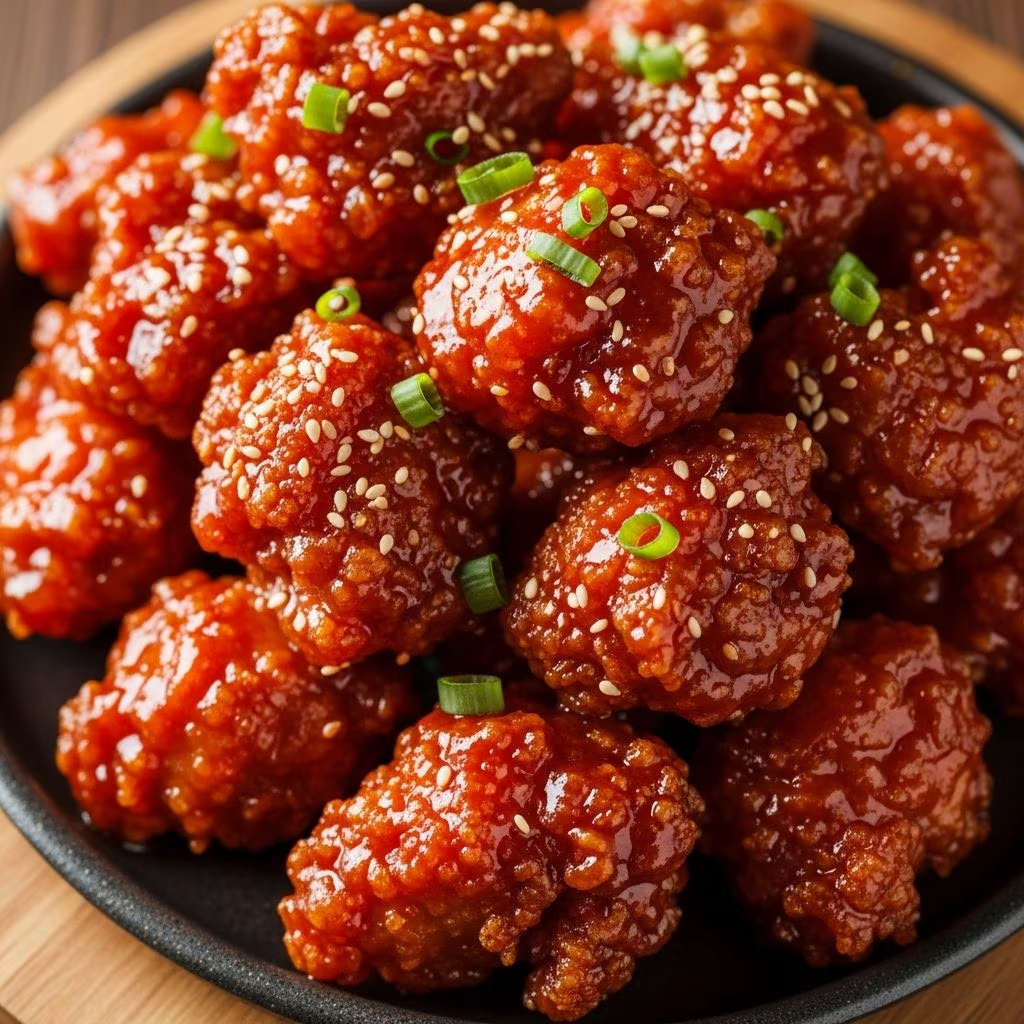
Korean fried chicken, known as dakgangjeong, stands out for its unparalleled crunch and glossy, sweet-spicy glaze. Unlike typical fried chicken, this dish achieves its signature texture through a double-frying method and a light starch coating, paired with a sticky sauce that clings perfectly to every piece. Popular as a street food snack or party dish, dakgangjeong combines tender, juicy meat with an addictive flavor profile.
The Allure of Dakgangjeong in Korean Food Culture
Dakgangjeong traces its roots to Korea’s vibrant street food scene, where vendors perfect the balance of crispy exteriors and bold sauces. The name breaks down to “dak” (chicken) and “gangjeong” (a traditional sweet rice treat), reflecting its fusion of savory frying and candy-like glaze. This dish gained global fame through K-pop culture and food trends, but its appeal lies in the contrast: shatteringly crisp skin against moist chicken, all enveloped in a sauce that’s sweet from syrups, spicy from chilies, and tangy from vinegar.
Modern home cooks appreciate dakgangjeong for its versatility. Use wings for classic portions or bite-sized boneless pieces for easy snacking. The double-fry technique—first at moderate heat to cook through, then high heat for crunch—sets it apart from Western fried chicken.
Essential Ingredients for Authentic Flavor
Selecting quality ingredients ensures dakgangjeong’s success. Focus on fresh chicken, neutral oil for frying, and pantry staples for the sauce.
Chicken and Coating Basics
- Chicken: 1-3.5 pounds boneless thighs or wings. Thighs offer juiciness; wings provide bone-in crunch. Cut into bite-sized pieces for even cooking.
- Milk soak (optional): ½ cup milk tenderizes meat, reduces gaminess, and adds moisture. Soak 30 minutes to 2 hours.
- Starch: ⅓-⅔ cup potato or cornstarch. Potato starch yields lighter crispiness; press it firmly onto chicken.
- Seasonings: Salt, pepper, minced ginger/garlic for marinade depth.
Sauce Components
The glaze defines dakgangjeong. Simmer these for a thick, clinging sauce:
- Sweeteners: 3-4 tbsp rice/corn syrup, honey, or oligo syrup for stickiness; 1-2 tbsp brown sugar.
- Savory base: ¼ cup soy sauce, 1 tsp minced garlic/ginger.
- Heat and tang: Dried red chilies, gochujang (optional, replace with ketchup for mild), 1 tbsp vinegar/mustard.
- Finishers: Sesame oil, sesame seeds, chopped peanuts for nutty crunch.
Step-by-Step Guide to Crispy Perfection
Follow these steps for restaurant-quality results. Total time: 40-60 minutes.
1. Prep the Chicken
- Cut chicken into uniform pieces (1-2 inches). Remove excess fat.
- Soak in milk (if using) with salt/pepper for 30+ minutes. Drain and pat dry.
- Mix with ginger, garlic, rice wine (if no milk). Let marinate 20 minutes.
- Dredge in starch, pressing to adhere. Shake off excess.
2. Master the Double Fry
Double frying is key: first fry cooks the chicken; second crisps the coating.
| Fry Stage | Oil Temp | Time | Purpose |
|---|---|---|---|
| First Fry | 330-340°F (165-170°C) | 5-8 minutes | Cook through, light golden |
| Rest | N/A | 5-10 minutes | Steam escapes for crispiness |
| Second Fry | 350-375°F (175-190°C) | 1-3 minutes | Ultra-crunchy shell |
- Heat 4 cups neutral oil (vegetable/canola) in deep pot. Test with chopstick—steady bubbles indicate readiness.
- Fry in batches to avoid crowding. Drain on wire rack/paper towels.
- Rest chicken 5-10 minutes. Reheat oil and fry again until deep golden.
3. Craft the Irresistible Sauce
- In skillet, heat 2 tbsp oil. Sauté garlic and chilies 30 seconds.
- Add soy sauce, syrup, vinegar, sugar. Simmer 3-4 minutes until thickened and bubbly.
- Toss hot fried chicken in sauce over low heat 1-2 minutes. Add nuts/seeds.
Serve immediately on a platter. The sauce hardens slightly for perfect bite-through crunch.
Tips for Next-Level Dakgangjeong
- Extra Crunch: Use potato starch exclusively; double-coat if desired.
- Oil Management: Maintain temp with thermometer. Narrow pot uses less oil.
- Sauce Tweaks: Mild? Swap gochujang for ketchup. Sweeter? Extra syrup. Vegan? Tofu or cauliflower.
- Make-Ahead: Fry ahead, sauce just before serving to preserve crispiness.
- Safety: Hot oil splatters—use long tongs, fry away from kids/pets.
Variations to Suit Every Palate
Customize dakgangjeong beyond the classic.
- Boneless Bites: Thighs/breasts for quick cooking, ideal for appetizers.
- Wing Edition: Separate flats/drums; yields 24-26 pieces from 3.5 lbs.
- Cheese Pull: Top with mozzarella post-sauce for viral cheese dakgangjeong.
- Gluten-Free: Tamari instead of soy; confirm starch purity.
- Air Fryer Hack: 400°F, 15-20 minutes, spray oil, flip halfway. Sauce after. (Less crisp but healthier.)
Pairing and Serving Suggestions
Dakgangjeong shines solo but elevates meals.
- Drinks: Crisp lager or soju cuts richness; iced green tea balances spice.
- Sides: Pickled radish, cucumber salad, or rice cakes for texture contrast.
- Occasions: Game nights, K-drama marathons, or holiday apps.
Store leftovers (rare due to popularity) in airtight container; reheat at 350°F oven 5 minutes to revive crunch. Avoid microwave.
Nutrition Snapshot
Per serving (4 pieces, ~250g): ~450 calories, 25g protein, 30g carbs, 25g fat. High in protein; moderation for fried foods. Milk soak adds calcium.
Frequently Asked Questions (FAQs)
What makes dakgangjeong crispier than regular fried chicken?
The potato starch coating and double-frying technique remove moisture, creating a shatterproof crust.
Can I skip the double fry?
Single fry works but sacrifices crunch. Double fry is worth the extra 5 minutes.
Potato starch vs. cornstarch?
Potato starch is lighter and crispier; cornstarch is fine substitute.
How spicy is the sauce?
Mild to medium; adjust chilies/gochujang. Kids love ketchup version.
Best oil for frying?
Vegetable, canola, or peanut—high smoke point, neutral flavor.
Conclusion: Your Path to Dakgangjeong Mastery
With practice, dakgangjeong becomes a go-to recipe. Experiment with sauces and cuts to personalize. Share your crispy triumphs—it’s Korea’s gift to fried chicken lovers worldwide.
References
- Dakgangjeong (Sweet & Spicy Korean Fried Chicken) — Chocolates and Chai. Accessed 2026. https://www.chocolatesandchai.com/dakgangjeong/
- Crispy crunchy Korean fried chicken (Dakgangjeong) — Maangchi.com. Accessed 2026. https://www.maangchi.com/recipe/easy-dakgangjeong
- Dakgangjeong (Sweet Crispy Korean Fried Chicken) — Korean Bapsang. Accessed 2026. https://www.koreanbapsang.com/dakgangjeong-sweet-crispy-chicken/