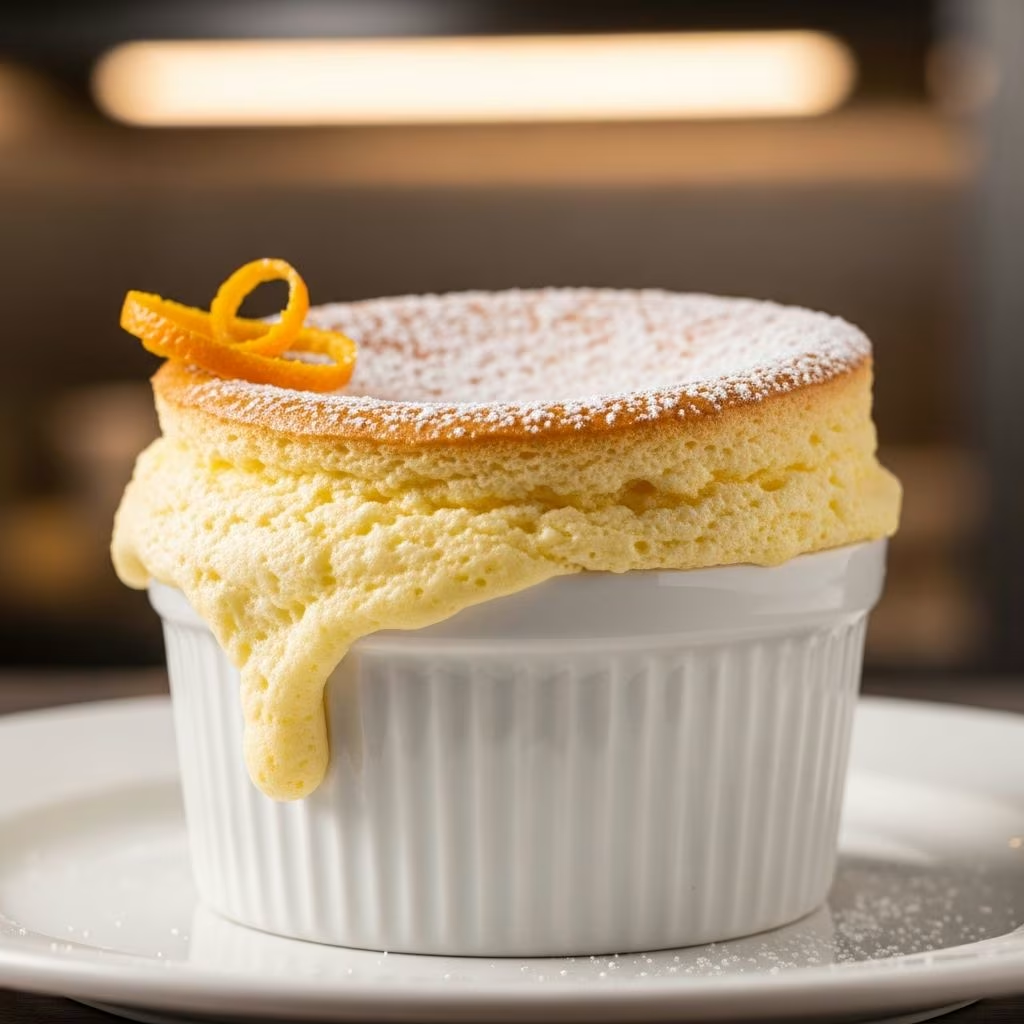
Grand Marnier soufflé stands as a pinnacle of French pastry artistry, offering a delicate balance of light, airy texture and profound citrus flavor. This dessert captivates with its dramatic rise in the oven, revealing a tender interior laced with the sophisticated notes of orange liqueur. Ideal for dinner parties or romantic evenings, it demands precision but rewards with unforgettable elegance.
The Allure of Grand Marnier in Soufflés
Grand Marnier, a premium cognac-based orange liqueur, infuses the soufflé with a complex aroma of bitter orange and warm spirits. Unlike simpler vanilla or chocolate versions, this variant evokes the sunny orchards of France, providing a refreshing contrast to richer desserts. Bakers prize it for enhancing the egg base without overpowering the meringue’s lift.
Historically, soufflés emerged in the 18th century, with chef Vincent La Chapelle credited for early innovations. The Grand Marnier twist gained popularity in the 20th century through upscale restaurants, where it became a signature flourish for fine dining experiences.
Essential Ingredients for Success
Selecting high-quality components is crucial for achieving the soufflé’s signature height and flavor profile. Focus on fresh eggs, premium liqueur, and precise measurements to ensure stability.
- Whole Milk: Provides creaminess for the pastry cream base; use full-fat for richness.
- Unsalted Butter: Builds the roux; soften extra for ramekin coating.
- All-Purpose Flour: Thickens the base without heaviness.
- Granulated Sugar: Sweetens and stabilizes egg whites.
- Eggs: Separated; yolks enrich the base, whites create volume.
- Grand Marnier: The star; adds citrus depth—opt for the Cuvée du Château for authenticity.
- Cream of Tartar: Stabilizes meringue for taller peaks.
- Orange Zest: Amplifies natural oils for brighter flavor.
Variations might include vanilla extract or orange oil for nuance, but stick to core elements for classic results.
Step-by-Step Preparation Guide
Timing is everything: prepare the base ahead, but whip whites just before baking. This recipe yields 8-10 individual servings, scalable for larger dishes.
1. Craft the Pastry Cream Base
Begin by heating 2 cups whole milk to a simmer in a saucepan. In another pan, melt 1/2 cup unsalted butter over medium heat, whisk in 1/2 cup flour to form a smooth roux, and cook for 2-3 minutes to eliminate raw taste. Gradually pour hot milk into the roux, whisking vigorously to prevent lumps. Add 3/4 cup sugar and cook until the mixture thickens and pulls from pan sides, forming a glossy dough-like ball—about 5 minutes.
Transfer to a stand mixer with paddle attachment; beat on low for 10 minutes to cool and aerate. Incorporate 8-9 egg yolks one at a time, ensuring each blends fully. Stir in 3-4 tablespoons Grand Marnier and 1 teaspoon orange zest. Chill the base up to 24 hours for convenience.
2. Prep Ramekins for Optimal Rise
Generously brush 8-10 (6-8 oz) ramekins with soft butter, reaching the rims. Dust with granulated sugar, tilting to coat evenly, then tap out excess. This ‘collar’ aids the soufflé’s climb. Chill prepared dishes for 15 minutes to set the coating.
3. Whip the Meringue to Perfection
In a spotless bowl, beat 8-9 egg whites with 1/2 teaspoon cream of tartar at medium speed until foamy. Gradually add 1/4 cup sugar, increasing to high speed for stiff, glossy peaks—about 5-7 minutes. Test by lifting beaters: peaks should hold without drooping.
4. Fold and Fill with Care
Gently fold one-third of meringue into the cooled base using a spatula, lightening the mixture. Add remaining whites in two batches, folding in broad strokes to preserve air. Fill ramekins to 3/4 full, smoothing tops with a thumb swipe along rims for even rising.
5. Bake to Golden Glory
Preheat oven to 375°F with rack in lower third. Bake 18-25 minutes until tops dome and brown lightly—do not peek early, as drafts deflate. Serve immediately with powdered sugar dust and optional crème anglaise.
Troubleshooting Common Pitfalls
Soufflés intimidate due to their fragility, but most issues stem from technique. Here’s a diagnostic table:
| Issue | Cause | Solution |
|---|---|---|
| Flat or Low Rise | Oven door opened too soon; overmixed batter | Preheat fully; fold minimally |
| Cracks or Lopsided | Uneven oven heat; overfilled ramekins | Use oven thermometer; fill to 3/4 |
| Weepy or Soggy | Undercooked; humid meringue | Bake until set; ensure dry bowl |
| Eggy Taste | Overbeaten yolks; low-quality eggs | Fresh eggs; balance sugar |
For best results, invest in an instant-read thermometer and convection oven if possible.
Flavor Enhancements and Variations
Customize your soufflé while honoring tradition:
- Chocolate-Orange: Fold in 4 oz melted dark chocolate to base.
- Berry Twist: Swirl raspberry coulis into batter before filling.
- Spice Infusion: Add cardamom or ginger to milk for warmth.
- Large Format: Use a 2-quart dish; increase bake time to 35-40 minutes.
Experiment sparingly—Grand Marnier’s profile shines brightest unadorned.
Perfect Pairings and Presentation
Serve soufflés tableside for theater: dust with powdered sugar, ignite with extra liqueur if flambéing, and pair with chilled crème anglaise poured into a poked crown. Complements include:
- Wines: Sauternes or late-harvest Riesling to match citrus.
- Coffees: Espresso cuts richness.
- Garnishes: Candied orange peel or mint sprigs.
Plate simply on white china to highlight the golden dome.
Storage and Make-Ahead Strategies
Fresh is best, but plan ahead: base refrigerates 2 days; assemble and bake same day. Leftovers deflate quickly—cover and reheat gently at 350°F for 5 minutes, though texture suffers. Freeze unbaked filled ramekins up to 1 month; thaw overnight before baking.
Frequently Asked Questions
Can I make soufflé without alcohol?
Yes, substitute orange juice concentrate or extract, though flavor mellows.
How do I know when it’s done?
Tops should jiggle lightly in center; toothpick inserted near edge emerges clean.
Why did my soufflé fall?
Cold drafts, overfolding, or delayed serving—act fast post-oven.
Scaling for crowds?
Double ingredients; use larger dishes but maintain egg ratios precisely.
Vegan alternatives?
Aquafaba meringue works, paired with coconut milk base, but rise varies.
Advanced Techniques from Pros
Chefs emphasize room-temperature eggs for volume and a water bath for even baking in large formats. Practice meringue stages: soft peaks for folding ease, stiff for structure. For ultra-light results, sift flour twice and triple-sift sugar into whites.
Mastering this demands patience—start with half-batches. Soon, your kitchen will produce restaurant-worthy heights, delighting guests with citrus-kissed clouds.
References
- Grand Marnier Soufflé Recipe — Chef Michael Salmon. 2023-05-15. https://chefmichaelsalmon.com/grand-marnier-souffle/
- Grand Marnier Soufflé — Williams Sonoma. 2024-02-10. https://www.williams-sonoma.com/recipe/grand-marnier-souffle.html
- How to Make the Best Souffle! Grand Marnier Souffle Recipe — Chef Vic Cuisine (YouTube). 2023-11-20. https://www.youtube.com/watch?v=LcgqDa2zbFM
- Grand Marnier Souffle — What A Girl Eats. 2022-12-05. https://whatagirleats.com/souffle-au-grand-marnier/
- Orange Soufflé (Grand Marnier Souffle Recipe) — Mon Petit Four. 2023-08-14. https://www.monpetitfour.com/orange-souffle/