When the weather turns crisp and leaves begin their colorful transformation, nothing warms the soul quite like a bowl of silky pumpkin soup. This classic autumn dish combines the natural sweetness of roasted pumpkin with aromatic spices and a velvety texture that makes it the ultimate comfort food. Unlike canned soup versions, homemade roasted pumpkin soup delivers complex flavors and a satisfying depth that captures the essence of the season.
Why Roasting Creates Superior Flavor
The foundation of exceptional pumpkin soup begins with the roasting process. When pumpkin is roasted in the oven rather than boiled, the exterior caramelizes while the interior becomes tender and concentrated. This caramelization process develops a rich, nuanced flavor profile that transforms the soup from simple to extraordinary. The dry heat of the oven concentrates the natural sugars within the pumpkin, creating a deeper, more sophisticated taste than you would achieve through any other cooking method.
Roasting also reduces the water content naturally present in raw pumpkin, which means the resulting soup has a fuller body and more intense pumpkin flavor. This technique requires minimal additional ingredients to achieve a restaurant-quality result, making it an efficient approach for home cooks seeking impressive outcomes with straightforward methodology.
Essential Ingredients and Their Roles
Building a well-rounded roasted pumpkin soup requires understanding each ingredient’s contribution to the final dish:
- Pumpkin: Choose sugar pumpkins or pie pumpkins rather than carving varieties. These smaller cultivars offer better texture and sweeter flesh suitable for soup preparation.
- Aromatics: Onions and garlic form the flavor foundation, becoming sweet and mellow during roasting before being blended into the soup base.
- Stock: Vegetable or chicken broth provides the liquid component and contributes savory depth that balances the pumpkin’s natural sweetness.
- Spices: Cinnamon, nutmeg, and allspice create warmth and complexity, while black pepper adds subtle heat. Some recipes incorporate cardamom for an unexpected aromatic note.
- Finishing Ingredients: Cream, coconut milk, or sour cream adds richness and silkiness, while maple syrup provides subtle sweetness and autumn character.
- Olive Oil: High-quality oil coats vegetables during roasting, facilitating even browning and caramelization.
Preparation: Setting Up for Success
Successful pumpkin soup begins with thoughtful preparation. Start by washing your pumpkins thoroughly under running water to remove any dirt or debris from the exterior. Using a sharp knife, carefully cut each pumpkin in half lengthwise, then scoop out seeds and stringy fibers using a sturdy spoon or ice cream scoop.
Arrange the pumpkin halves on a baking sheet cut-side down. Prep your aromatics by cutting onions into quarters and leaving the papery skin intact, which prevents them from drying out during roasting. For garlic, leave cloves unpeeled but slice the top off each bulb to expose the cloves slightly.
Distribute the onions and garlic around the pumpkin pieces on your baking sheet. Drizzle everything generously with olive oil and season with salt and pepper. This preparation step ensures even cooking and allows the natural flavors to develop fully during roasting.
The Roasting Process
Preheat your oven to 375-400°F (190-200°C) depending on your specific oven’s characteristics. The higher temperature range ensures proper caramelization while preventing the vegetables from becoming tough or dried out. Place your prepared baking sheet on the middle oven rack, which provides the most consistent heat circulation.
Roast for approximately 30-45 minutes, depending on pumpkin size and your oven’s characteristics. The pumpkin is done when the flesh easily pierces with a fork and the skin has darkened slightly. The onions should appear softened and slightly caramelized, while garlic cloves should squeeze easily from their papery skins.
Allow the roasted vegetables to cool for 10-15 minutes until they’re comfortable to handle. This cooling period makes transferring the cooked ingredients safer and easier. Once cooled sufficiently, use a spoon to scoop the pumpkin flesh from its skin, discard the skin, and transfer the flesh to a large stockpot.
Creating the Soup Base
Add your roasted onions and garlic to the pot with the pumpkin flesh. Pour in 4 cups of vegetable or chicken stock, then bring the mixture to a boil over medium-high heat. Reduce the heat to medium and allow the soup to simmer gently for 10-15 minutes, which allows the flavors to meld and develop further.
Using an immersion blender, puree the soup until completely smooth and creamy. If you don’t have an immersion blender, carefully work in batches using a standard blender, allowing steam to escape between pulses. Ensure the blender isn’t completely full, as hot liquids can cause dangerous splattering.
After blending, return the soup to medium heat and add your choice of cream, coconut milk, or sour cream for richness. Stir in spices gradually, tasting as you go to achieve your preferred flavor balance. Add maple syrup by the teaspoon, stirring well and tasting between additions to reach your desired sweetness level.
Flavor Development Through Spicing
The spice profile transforms this soup from good to memorable. Begin with half a teaspoon each of cinnamon, nutmeg, and allspice, then adjust based on your preferences. Cinnamon provides the dominant warmth, while nutmeg adds earthiness and complexity. Allspice contributes subtle warmth without overpowering the other spices.
For additional depth, consider incorporating cardamom, which pairs beautifully with pumpkin despite being unconventional. A squeeze of fresh lemon or lime juice brightens the flavors and cuts through richness, preventing the soup from feeling heavy or one-dimensional. Smoked paprika introduces a subtle smokiness that adds sophistication without making the soup taste smoky.
Season with fine sea salt and freshly ground black pepper, tasting frequently. Remember that salt levels can be adjusted easily, but over-salting requires dilution, so err on the side of caution during seasoning.
Texture Considerations and Adjustments
The ideal consistency for pumpkin soup falls between thick and pourable, allowing it to coat a spoon while remaining smooth and elegant. If your soup appears too thick after blending, add additional stock or water by the quarter-cup, stirring well and assessing the consistency before adding more.
Conversely, if your soup seems too thin, simmer it gently over medium heat uncovered for 10-15 minutes to allow excess moisture to evaporate and concentrate the flavors. You can also incorporate a cornstarch slurry (equal parts cornstarch and cold water mixed together) to thicken the soup without diluting flavors.
Serving and Presentation Strategies
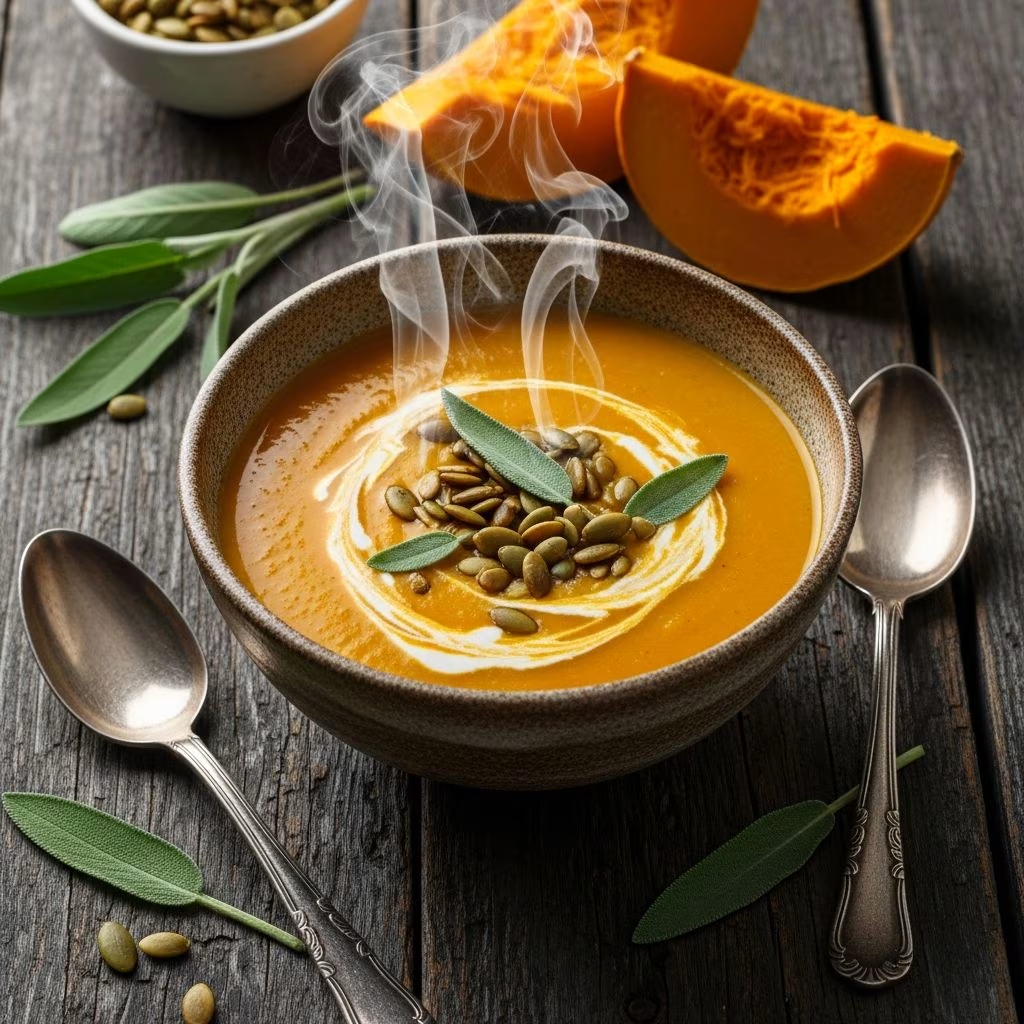
Presentation elevates a simple soup into an impressive dish worthy of entertaining. Ladle the hot soup into warmed bowls, which keeps it at the ideal temperature when served. Drizzle with brown butter, which adds nutty richness and visual appeal, or swirl a dollop of sour cream or Greek yogurt across the surface for contrast.
Garnish with toasted pumpkin seeds (pepitas), which provide textural interest and subtle earthiness. Crispy bacon pieces add savory contrast to the soup’s sweetness, while fresh herbs such as sage, thyme, or chives contribute freshness and visual color. For elegant entertaining, arrange garnishes thoughtfully rather than simply sprinkling them on top.
Consider serving alongside grilled cheese sandwiches, crusty bread, or a simple green salad for a complete meal. The soup pairs beautifully with rich, bold wines or your favorite cider.
Storage and Make-Ahead Instructions
This soup stores exceptionally well, making it ideal for meal planning and entertaining. Allow completely cooled soup to transfer to airtight containers and refrigerate for up to four days. For longer storage, freeze in portion-sized containers for up to three months. Thaw frozen soup in the refrigerator overnight, then reheat gently over low heat, stirring occasionally and adding additional stock if the soup has thickened during storage.
You can prepare the entire soup through the blending stage up to two days in advance, then add cream and final spice adjustments just before serving. Alternatively, roast the pumpkin and aromatics up to three days ahead, then complete the soup when ready to serve for maximum freshness and flavor.
Dietary Modifications and Variations
This recipe adapts beautifully to various dietary preferences without sacrificing quality or flavor. For dairy-free versions, substitute coconut milk or oat milk for traditional cream, which provides creaminess while maintaining the soup’s luxurious texture. Vegan preparations simply eliminate animal products while maintaining the same technique and flavor profile.
To reduce sodium, prepare homemade stock or select low-sodium commercial varieties, then taste and adjust seasoning before adding additional salt. For lower-calorie versions, reduce cream quantities or use a cream alternative, though this affects richness slightly. Those avoiding added sugars can omit maple syrup or use a small amount of date paste as a natural sweetener.
Frequently Asked Questions
What type of pumpkin works best for this soup?
Sugar pumpkins or pie pumpkins, typically weighing 2-4 pounds, offer superior texture and sweetness compared to large carving pumpkins. If these aren’t available, butternut squash or kabocha squash provide excellent substitutes with similar flavor profiles and cooking characteristics.
Can this soup be made in advance?
Yes, prepare the soup completely up to four days in advance and refrigerate, or freeze for up to three months. Reheat gently over low heat, stirring occasionally and adding stock if the soup has thickened during storage.
How can I make this soup less sweet?
Reduce or omit maple syrup entirely, and instead rely on the pumpkin’s natural sweetness. Adding a squeeze of lemon or lime juice, incorporating smoked paprika, or using savory-leaning spices like sage balances sweetness effectively.
What’s the best way to achieve a completely smooth texture?
Blend the soup for at least one to two minutes in batches, ensuring no chunks remain. For ultra-silky results, pass the blended soup through a fine-mesh sieve before adding cream and final seasonings, though this step is optional for most preferences.
Can I use canned pumpkin puree instead of roasting fresh pumpkin?
While canned puree works in a time-pinch situation, roasted fresh pumpkin delivers superior flavor and texture. If using canned puree, reduce liquid quantity since canned versions contain less moisture than fresh roasted pumpkin.
Conclusion
Roasted pumpkin soup represents the essence of autumn cooking, combining simple ingredients through thoughtful techniques to create something truly memorable. The roasting process transforms humble vegetables into flavor-concentrated components that require minimal additional ingredients to shine. Whether serving this soup at an intimate family dinner or an elegant gathering, it consistently impresses with its sophisticated flavor profile and comforting warmth. By understanding the technique and adapting ingredients to personal preferences, anyone can master this classic recipe and make it their own seasonal tradition.
References
- Roasted Pumpkin Soup Recipe — Natasha’s Kitchen. 2024. https://natashaskitchen.com/roasted-pumpkin-soup-recipe/
- Roasted Pumpkin Soup Recipe — Simple Home Edit. 2024. https://simplehomeedit.com/recipe/roasted-pumpkin-soup/
- Roasted Pumpkin Soup Recipe — Aline Made. 2024. https://www.aline-made.com/roasted-pumpkin-soup/
- Easy Roasted Pumpkin Soup Recipe — Healthy Fitness Meals. 2024. https://healthyfitnessmeals.com/roasted-pumpkin-soup-recipe/
- The Best Roasted Pumpkin Soup Recipe — Farmhouse on Boone. 2024. https://www.farmhouseonboone.com/roasted-pumpkin-soup-with-acorn-squash/
- Creamy Roasted Pumpkin Soup — Cookie and Kate. 2024. https://cookieandkate.com/creamy-vegan-pumpkin-soup/