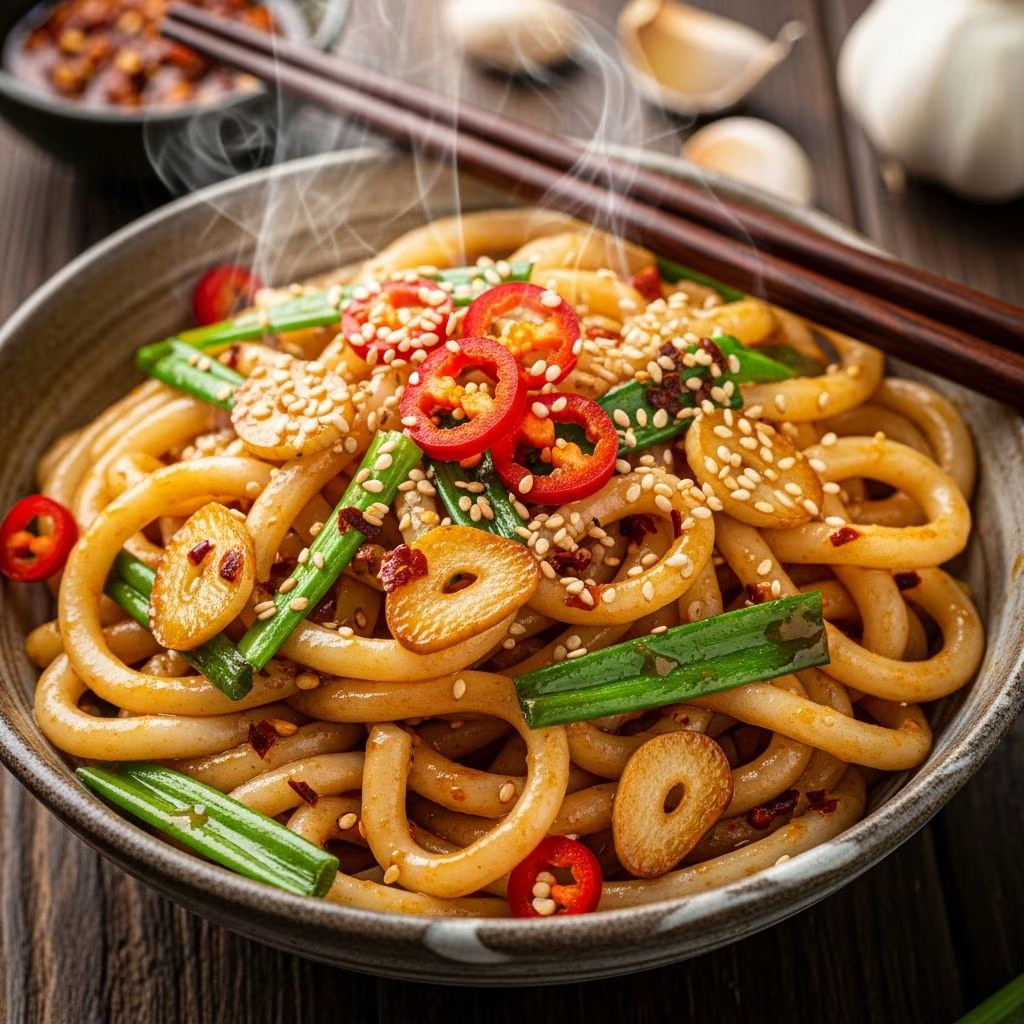
When weeknight hunger strikes and you need something satisfying fast, few dishes deliver the combination of speed, flavor, and universal appeal quite like spicy garlic udon noodles. This warming Asian-inspired dish comes together in approximately 15 minutes, making it ideal for busy schedules while still offering the depth of taste typically associated with takeout. The beauty of this recipe lies in its simplicity—a handful of pantry staples transforms into a restaurant-quality meal that satisfies cravings for bold, aromatic, and slightly fiery flavors.
Understanding Udon Noodles and Their Culinary Benefits
Udon noodles form the foundation of this dish, and understanding their characteristics helps explain why they work so well in this preparation. These thick, chewy Japanese noodles possess a substantial texture that holds up beautifully to vigorous stir-frying and absorbs sauce thoroughly without becoming mushy. The noodles’ neutral flavor profile makes them remarkably versatile, serving as a blank canvas for bold seasonings and aromatics.
Most home cooks benefit from purchasing pre-cooked packaged udon noodles, available in the international or Asian sections of most grocery stores. These convenient options eliminate the need for separate cooking and draining steps, streamlining preparation considerably. Fresh frozen udon noodles work equally well and may offer slightly superior texture compared to vacuum-sealed alternatives, though both deliver excellent results when prepared according to package directions.
The Essential Aromatic Foundation: Garlic and Its Preparation
Garlic serves as the aromatic anchor for this dish, and its preparation significantly impacts the final result. Fresh minced garlic provides superior flavor and intensity compared to pre-jarred alternatives, which often taste muted or metallic. A general guideline suggests using approximately 4 to 6 minced garlic cloves for a standard portion, though personal preference should guide the exact quantity.
The cooking technique for garlic requires attention and care. When garlic hits hot oil or sesame oil, it releases volatile compounds that create the characteristic fragrant aroma. However, high heat or extended cooking time causes garlic to burn, developing bitter, acrid flavors that spoil the entire dish. The ideal approach involves warming sesame oil over medium or medium-low heat, then adding minced garlic and cooking for just 1 to 2 minutes until fragrant, watching closely to prevent browning.
Crafting the Spicy-Savory Sauce
The sauce transforms individual ingredients into a cohesive, flavorful coating that clings to each noodle. This component can be assembled quickly and relies on common pantry items rather than obscure specialty products.
Core Sauce Components:
- Soy Sauce: Provides umami depth and saltiness, typically 2 to 4 tablespoons depending on sodium preferences
- Chili Oil or Chili Paste: Delivers the signature spice; chili oil offers milder heat while sambal oelek or gochujang paste creates more intense flavor
- Sesame Oil: Contributes nuttiness and richness, usually 1 to 2 teaspoons for balanced flavor
- Sweetener: Brown sugar, maple syrup, or honey counterbalance heat and saltiness, typically 1 to 2 tablespoons
- Acidic Component: Rice vinegar or regular vinegar brightens flavors, around 1 to 2 teaspoons
- Water: Creates appropriate sauce consistency for coating noodles, generally 2 to 3 tablespoons
The technique involves whisking all sauce components together before adding them to the hot pan. This pre-mixing ensures even distribution and prevents lumping, particularly important when using paste-based chili products like gochujang or miso. Once combined, the sauce requires only 1 to 2 minutes of gentle simmering to allow flavors to meld slightly.
Optional Vegetables and Texture Additions
While the core recipe demands only garlic for its aromatics, thoughtfully selected vegetables enhance both nutritional value and eating experience. Broccolini brings tender-crisp texture and mild vegetable flavor without overwhelming the spice profile. Sliced mushrooms, particularly shiitake varieties, contribute umami depth that complements garlic beautifully. Thinly sliced green onions or scallions add freshness and slight onion notes that brighten the overall dish.
These vegetables can be added directly to the cooking water with the noodles during the final 2 to 3 minutes of cooking, or sautéed separately in the oil before adding garlic, depending on cooking method preference. The former approach simplifies cleanup, while the latter provides more control over texture and prevents overcooking delicate vegetables.
Step-by-Step Preparation Method
Preparation Phase:
- Assemble all ingredients and equipment before beginning cooking
- Mince garlic cloves finely using a sharp knife or microplane grater
- Whisk together all sauce components in a small bowl
- Prepare any vegetables by slicing or chopping to appropriate sizes
- Fill a kettle or pot with water if using frozen udon noodles
Cooking Phase:
- Pour 1 to 2 tablespoons of sesame oil into a large skillet or wok and warm over medium heat
- Add minced garlic and cook for 1 to 2 minutes, stirring constantly until fragrant but not browned
- If using fresh vegetables, add them now and stir-fry for 2 to 3 minutes until beginning to soften
- Meanwhile, cook udon noodles according to package directions; drain thoroughly
- Pour the prepared sauce into the pan with garlic and stir well to combine
- Add the cooked noodles and any pre-cooked vegetables to the pan
- Toss vigorously for 2 to 3 minutes, ensuring all noodles contact the sauce
- Add 2 to 4 tablespoons of water if needed to reach desired consistency; noodles should glisten with sauce but not appear soupy
- Taste and adjust seasoning with additional soy sauce for saltiness or sesame oil for richness
- Remove from heat and serve immediately while hot
Finishing Touches and Garnishes
The final presentation impacts both visual appeal and eating experience. Sliced green onion, toasted sesame seeds, and red pepper flakes scattered over the warm noodles add visual contrast and textural interest. A light drizzle of additional sesame oil just before serving enhances the aroma and provides richness. These garnishes take mere seconds to add but elevate the dish from simple to thoughtfully prepared.
For those seeking additional crunch, crushed peanuts or cashews offer textural contrast and complement garlic flavors beautifully. Microgreens or fresh cilantro bring herbal brightness, particularly welcome when using more intensely spiced chili pastes.
Customization and Protein Variations
The versatile nature of this dish accommodates numerous protein additions without altering the core preparation method. Diced tofu, whether traditionally firm varieties or specialized tofu crumbles marketed as “tofu meat,” blends seamlessly into the spicy sauce. Chicken breast cut into bite-sized pieces or shrimp added during the final cooking stages absorbs sauce flavors while contributing satisfying protein.
Plant-based diets benefit from the natural heartiness of mushrooms or the addition of cooked legumes like chickpeas or edamame. Eggs, either scrambled into the mixture or fried separately and sliced atop the finished noodles, provide richness and familiarity that many find appealing. Leftover cooked proteins work admirably; simply warm them gently in the sauce to prevent overcooking.
Spice Level Management and Adjustments
The heat intensity in this dish depends entirely on the quantity and type of chili product used. For those with lower spice tolerance, begin with 1 teaspoon of chili oil or a small amount of chili paste, then increase in subsequent preparations as comfort level allows. Conversely, spice enthusiasts can double the chili component or supplement with fresh sliced hot peppers for increasing intensity.
Important note: adjusting spice after cooking proves difficult, as removing capsaicin-containing ingredients is impossible. Adding creaminess through a dollop of sour cream, coconut milk, or additional sesame oil can moderate heat if a dish becomes unexpectedly fiery. Serving with cool beverages—milk-based options work better than water for capsaicin management—helps balance intense spice.
Equipment and Kitchen Setup Considerations
Success with this recipe requires minimal specialized equipment. A large skillet or wok with relatively high sides prevents ingredients from scattering during vigorous tossing. While a wok provides traditional Asian cooking benefits through its sloped sides and concentrated heat, any large non-stick or stainless-steel skillet delivers comparable results. A pot for boiling water for noodles and a small mixing bowl for the sauce complete the equipment list.
Wooden spoons or silicone-coated utensils work well for tossing without scratching non-stick surfaces. A microplane grater or sharp knife handles garlic preparation more effectively than most pre-minced alternatives. Having all ingredients measured and ready before heat application—a technique called mise en place—prevents rushed mistakes and ensures even cooking.
Storage and Reheating Guidance
Leftover spicy garlic udon noodles store adequately in an airtight container in the refrigerator for up to 3 days, though the texture of noodles gradually becomes increasingly firm as they sit. Reheating can occur either via gentle warming in a non-stick skillet over medium heat with a splash of water to restore moisture, or in the microwave covered with a damp paper towel to prevent excessive drying.
The sauce components often separate slightly during storage; brief reheating and stirring recombine them. Some home cooks prefer storing sauce separately from noodles, reheating and recombining just before serving for superior texture. These noodles do not freeze successfully due to the high water content of cooked udon, which becomes unpleasantly mushy upon thawing.
Common Preparation Mistakes to Avoid
Several pitfalls can compromise this otherwise straightforward recipe. Overcooking garlic stands as the most frequent error, resulting in bitter, burnt flavors that permeate the entire dish. Resist the temptation to add garlic to already-hot oil; warming oil and garlic gradually together prevents burning while maximizing aromatic release.
Adding sauce to cold noodles prevents proper coating and flavor absorption. Ensuring both the pan and noodles remain hot when combining them allows sauce to adhere evenly. Using insufficient sauce creates dry noodles, while excessive sauce results in a soupy, unappetizing consistency. Starting conservatively and adding liquid gradually provides better control.
Neglecting to taste and adjust seasoning before serving misses the opportunity to customize the dish to personal preference. Soy sauce quantity affects saltiness substantially, and individual batches of garlic vary in intensity. A quick taste allows final calibration ensuring every serving exceeds expectations.
Nutritional Profile and Dietary Considerations
This noodle dish provides meaningful carbohydrates from udon along with modest fat from sesame oil and potential protein additions. The garlic and sesame components contribute antioxidants and minerals valued in many dietary approaches. Sodium from soy sauce can be moderated by using reduced-sodium varieties without sacrificing flavor significantly.
Naturally vegan when prepared without animal proteins or dairy, this recipe accommodates plant-based diets beautifully. Those managing blood sugar levels benefit from incorporating substantial vegetable portions and considering protein additions that slow glucose absorption. The recipe adapts readily for gluten-free diets through gluten-free tamari substituted for standard soy sauce and verification that used udon products contain no wheat.
Seasonal Adaptations and Availability
While this recipe functions equally well year-round, incorporating seasonal vegetables increases freshness and supports local agriculture. Spring preparations benefit from tender green peas or asparagus, while summer versions shine with zucchini or fresh corn kernels. Autumn preparations welcome mushroom varieties like king oyster or cremini, while winter tolerates hardier greens like kale or chard.
Fresh ginger, when available and preferred, complements garlic beautifully—add 1 teaspoon of minced ginger alongside garlic and follow the same cooking precautions. Seasonal availability rarely creates obstacles since garlic and soy sauce remain consistently available, and frozen udon provides year-round reliability.
Frequently Asked Questions
- Can I use regular spaghetti or other noodle varieties instead of udon?
- While technically possible, substitutions compromise texture since thinner noodles break easily during vigorous tossing and the chewiness central to udon’s appeal disappears. Asian noodles like ramen work better than Italian pasta, though udon remains the superior choice.
- What if I cannot find fresh garlic?
- Fresh garlic offers superior flavor, but minced jarred garlic works in emergencies; use approximately 1 teaspoon jarred garlic per fresh clove and recognize that results will be less vibrant.
- How do I make this recipe less spicy?
- Reduce chili oil or chili paste quantity substantially, increase sweetness through honey or brown sugar, and dilute with additional soy sauce or water to maintain volume. Add creaminess through sesame oil or coconut milk to further moderate heat.
- Can this dish be made ahead?
- Prepare components individually in advance—minced garlic, sauce mixture, prepped vegetables—but combine and cook only immediately before serving for optimal texture and flavor.
- What beverages pair well with spicy garlic udon noodles?
- Mild lagers, ginger ale, oolong tea, or simple cold water complement the spicy flavors. Avoid acidic wines that intensify heat perception.
References
- Stir-Fried Spicy Garlic Udon Noodles — The Foodie Takes Flight. Accessed 2026. https://thefoodietakesflight.com/spicy-garlic-udon-noodles/
- Spicy Chili Garlic Udon Noodles — Planted in the Kitchen. Accessed 2026. https://plantedinthekitchen.com/chili-garlic-noodles/
- 15-Minute Spicy Udon Vegetable Stir-Fry — Seasons and Suppers. Accessed 2026. https://www.seasonsandsuppers.ca/15-minute-spicy-udon-vegetable-stir-fry/
- Spicy Garlic Butter Udon — Jamie Oliver. Accessed 2026. https://www.jamieoliver.com/recipes/noodles/spicy-garlic-butter-udon/
- 10-Minute Chili Oil Garlic Udon Noodles — Eat Figs, Not Pigs. Accessed 2026. https://www.eatfigsnotpigs.com/10-minute-chili-oil-garlic-udon-noodles/
- Stir-Fried Garlic Chili Udon Noodles — Vegan Everytime. Accessed 2026. https://veganeverytime.com/garlic-chili-udon/
- Sesame Garlic Udon Noodles — The Salty Marshmallow. Accessed 2026. https://thesaltymarshmallow.com/udon-noodles/