Understanding the Appeal of Temperature-Controlled Pasta Dishes
When warm weather arrives, reaching for traditional hot meals becomes impractical. A refreshing chilled pasta preparation offers an ideal alternative that remains satisfying and flavorful while keeping your kitchen cool. Unlike standard hot pasta preparations, these dishes are constructed to be served cold, allowing flavors to meld and intensify over time. The combination of tender pasta, crisp vegetables, and tangy dressing creates a multi-textured experience that appeals to diverse palates. This preparation method has become a staple for family gatherings, casual outdoor entertaining, and weekday meal planning because it requires minimal kitchen time and produces impressive results.
Essential Components for Building Flavor Profiles
Selecting and Preparing Your Pasta Foundation
The pasta serves as your base structure, so choosing the right type matters considerably. Thin spaghetti works exceptionally well because it cools quickly and absorbs dressing efficiently without becoming mushy. When cooking your pasta, follow package directions precisely and aim for an al dente texture—pasta that still maintains slight resistance when bitten. Slightly undercooking is preferable to overcooking since the pasta will continue softening as it cools and mingles with dressing ingredients.
Proper cooling technique prevents the pasta from becoming gummy. Immediately after draining, rinse the pasta under cold running water while stirring gently with tongs or a fork. This stops the cooking process and removes excess starch that would otherwise cause clumping. Pat dry with paper towels if excess water remains, then transfer to your mixing bowl while the pasta is still slightly warm—this helps it absorb flavors more effectively.
Vegetable Selection and Preparation Methods
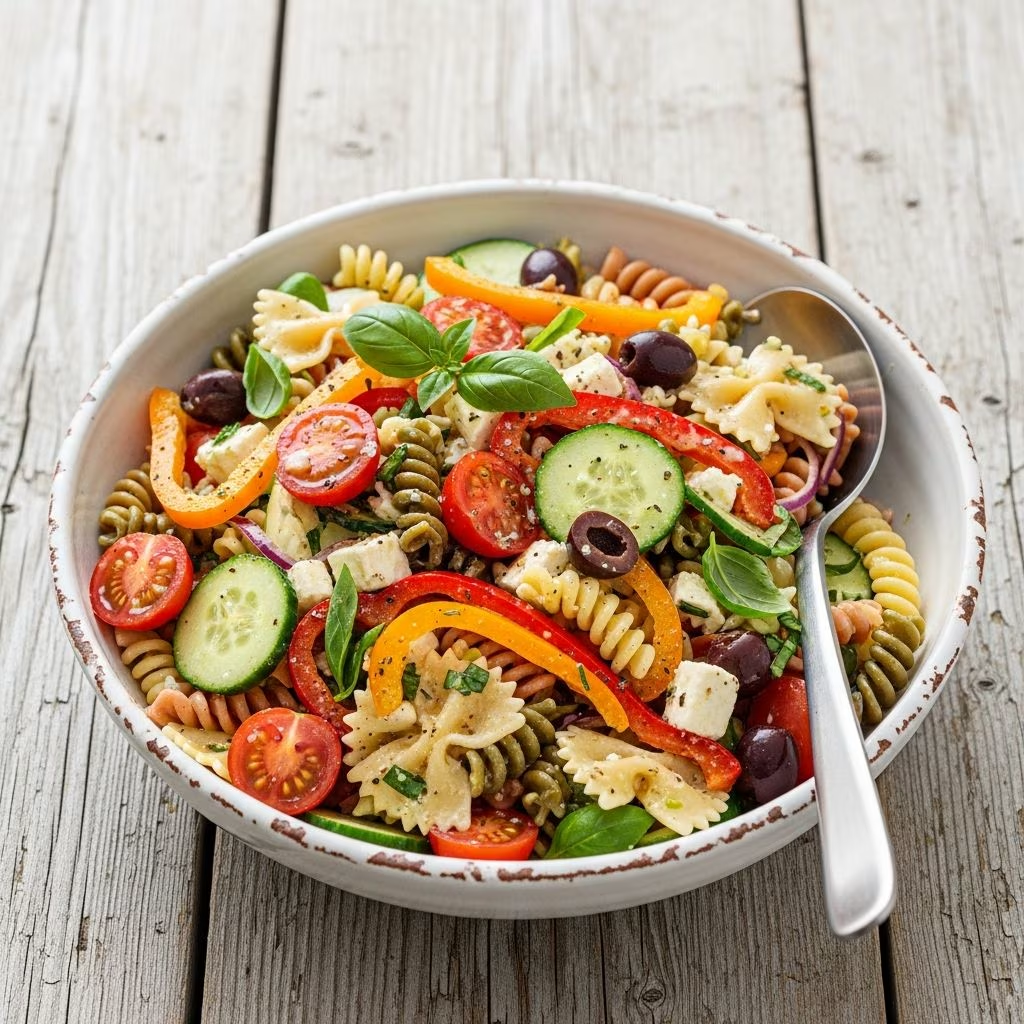
Fresh vegetables provide nutritional value, textural contrast, and visual appeal. The most versatile choices include cucumbers, cherry tomatoes, bell peppers, and red onions. Each vegetable should be prepared differently to optimize its contribution to the final dish.
Cucumbers should be diced into consistent quarter-inch pieces after seeding if using large specimens—this prevents excessive moisture from diluting your dressing. English cucumbers, which contain fewer seeds, reduce this concern significantly.
Tomatoes work best when halved if using cherry varieties or cut into bite-sized pieces if using larger heirloom types. Removing excess seeds and interior jelly prevents the salad from becoming watery during storage.
Bell peppers should be seeded and diced uniformly, creating small enough pieces to distribute evenly throughout the dish. Red, yellow, and orange varieties add sweetness and color, while green peppers contribute a slightly bitter note.
Red onions provide sharpness and crunch. Slice thinly or dice finely, then consider soaking in ice water for 15 minutes to mellow the harsh sulfur compounds slightly.
Additional vegetables to consider include zucchini, summer squash, black olives, artichoke hearts, and hearts of palm. The beauty of this dish lies in its adaptability—use what you have available or what your household prefers.
Protein Options and Integration
While vegetables provide the foundation, protein elements transform this dish from a simple side into a complete meal. Pepperoni and salami pieces offer bold, salty flavors that require no additional cooking. Mini pepperoni pieces integrate seamlessly into the pasta matrix, while larger chunks create more pronounced flavor bursts. For those preferring milder options, diced ham or bacon bits work effectively.
Mozzarella cubes or shredded parmesan cheese add richness and protein. Feta cheese crumbles contribute a tangy, distinctive flavor that complements vegetables beautifully. Cheddar cubes provide a sharper taste profile. The cheese melts slightly in the cold preparation, creating creamy pockets throughout the dish.
Dressing Strategies and Flavor Development
The dressing binds all components together while delivering the flavor foundation. Commercial Italian dressing offers convenience and consistent results, typically containing vinegar, oil, and Italian herbs that complement pasta perfectly. However, creating dressing from scratch using quality olive oil, vinegar, garlic, and dried herbs provides superior flavor control and fresher taste profiles.
The optimal dressing amount is approximately three-quarters to one cup per pound of pasta, though personal preference varies. Underdressing results in dry, bland salad, while overdressing creates an oily, soup-like consistency. Add dressing gradually, tossing thoroughly after each addition until the pasta achieves a lightly coated appearance.
Strategic Assembly and Preparation Sequence
Step-by-Step Assembly Process
Proper assembly sequence ensures even flavor distribution and optimal texture preservation. Begin by cooking pasta according to package directions, then cooling as described above. While pasta cools, prepare all vegetables by washing, cutting, and arranging them in separate small bowls or on a cutting board. This mise en place approach prevents scrambling during assembly.
Transfer cooled pasta to a large mixing bowl—large enough to accommodate vigorous tossing without spillage. Add prepared vegetables, cheese, and any protein elements. Toss thoroughly using salad tongs or two large forks, lifting and turning to combine ingredients uniformly. Pour dressing over the mixture gradually while continuing to toss. The goal is coating each pasta strand and vegetable piece without creating puddles of dressing at the bottom.
Timing Considerations for Maximum Flavor
Immediately after assembly, the components remain distinct and crunchy. However, allowing the mixture to chill in the refrigerator for 30 minutes to several hours permits flavors to meld and dressing to distribute thoroughly. During this rest period, the pasta absorbs dressing flavor while vegetables release their juices, creating a cohesive dish. For best results, prepare this salad 4-8 hours before serving, or even the day before.
If prepared far in advance, check the consistency before serving. If the salad appears dry, add additional dressing in small quantities and toss gently. If it seems overly wet, drain excess liquid carefully and add fresh croutons or crispy components to restore textural interest.
Customization Framework for Diverse Preferences
This preparation thrives on customization, making it perfect for households with varied tastes or dietary restrictions. Create a master ingredient list and allow guests to select preferred components, or prepare multiple versions simultaneously by dividing the cooled pasta among several bowls and varying the mix-ins in each.
For vegetarian preparations, eliminate all meat products and increase cheese quantities or add nuts like toasted pine nuts or sunflower seeds for crunch. For vegan options, use dairy-free cheese alternatives and ensure dressing contains no animal products. For those managing sodium intake, reduce cheese quantities and use low-sodium dressing. For spice lovers, incorporate red pepper flakes into the dressing or add fresh jalapeños to the vegetable mix.
Storage, Transportation, and Serving Strategies
Refrigeration and Longevity
Properly stored chilled pasta salad maintains quality for 3-4 days when kept in an airtight container in the refrigerator. The pasta continues absorbing dressing during storage, which can eventually result in a mushy texture if stored too long. Vegetables gradually release water, potentially creating an overly wet consistency after extended refrigeration.
To extend freshness when making this dish days in advance, prepare components separately and combine just before serving. Store cooled pasta, prepared vegetables, cheese, and dressing in separate sealed containers. Assemble as needed, starting with a smaller quantity that can be refreshed later if necessary.
Transportation for Events and Gatherings
The make-ahead nature of this dish makes it ideal for potlucks and outdoor gatherings. Transport in a sturdy container with a secure lid to prevent spillage. If traveling long distances or to warm locations, place the sealed container inside an insulated bag with ice packs. Avoid placing the salad directly on ice, as condensation and water can dilute the dressing.
Upon arrival at your destination, keep the salad refrigerated until serving time. Set it out 15-20 minutes before guests eat to allow flavors to brighten slightly as the temperature rises. Provide salad servers for easy portioning.
Nutritional Considerations and Dietary Adaptations
This pasta preparation offers nutritional balance when properly constructed. Whole wheat or legume-based pasta options increase fiber content and protein, benefiting those managing blood sugar levels. Vegetables contribute vitamins, minerals, and additional fiber. However, the dressing contributes significant calories from fat, so those monitoring caloric intake should measure dressing carefully or prepare a vinaigrette-based option with reduced oil content.
For gluten-free diets, substitute gluten-free pasta options that perform well in cold preparations. Many modern gluten-free pastas maintain appropriate texture without becoming overly soft when chilled. Similarly, those with egg allergies can confirm that standard dried pasta contains no eggs, making it suitable for their dietary needs.
Flavor Pairing Inspiration and Seasonal Variations
Spring and Early Summer Profile
When fresh spring vegetables arrive, incorporate tender asparagus pieces, fresh peas, and young radishes. Pair with a light lemon vinaigrette and fresh herbs like chives and parsley. Add crumbled goat cheese for tang and creaminess.
Mid-Summer Abundance
During peak season, take advantage of heirloom tomatoes, fresh basil, and zucchini. Create an Italian profile with fresh mozzarella, cherry tomatoes, basil chiffonade, and balsamic vinaigrette. Add roasted pine nuts for textural contrast.
Fall Transition
As temperatures cool, incorporate roasted red peppers, sun-dried tomatoes, and artichoke hearts. Add white beans for protein and heartiness. Use a garlic-herb dressing and finish with shaved parmesan.
Frequently Asked Questions
Can this salad be prepared without refrigeration time?
While not recommended, serving immediately after assembly is possible. However, refrigeration time allows flavors to develop and dressing to distribute evenly, significantly improving the final result. Minimum chilling time is 30 minutes for acceptable flavor integration.
What prevents the pasta from becoming mushy?
Cooking pasta to al dente, cooling it immediately under cold water, and avoiding excess dressing prevents mushiness. Additionally, serving within 2-3 days and not preparing too far in advance maintains pasta texture and integrity.
Can warm ingredients be added to cold salad?
All ingredients should be cooled before combining. Adding warm elements introduces heat that can wilt vegetables and cause dressing to separate. Prepare warm components ahead and cool completely before assembly.
How much dressing should be used?
Start with three-quarters cup per pound of pasta and adjust based on your preference and the salad’s moisture content. Account for vegetables releasing additional moisture during storage by erring toward less dressing initially, then adding more if needed.
Is this appropriate for meal prep?
This dish excels for meal prep preparation. Assemble completely and portion into individual containers for grab-and-go lunches throughout the week. Alternatively, maintain components separately and assemble fresh daily for optimal texture and flavor.
Presentation and Serving Suggestions
Serve this salad in a clear glass bowl to showcase the colorful vegetables and pasta throughout. Provide serving utensils that reach the bottom of the bowl to ensure even distribution of ingredients. Accompany with crusty bread, grilled proteins, or fresh fruit to create a complete meal experience.
For individual serving, use pasta bowls or shallow serving dishes that allow colors to remain visible. Garnish with fresh herbs like basil or parsley immediately before serving to add visual interest and aromatic freshness.
References
- On Sutton Place Cold Spaghetti Salad Recipe — On Sutton Place. Accessed April 2026. https://www.onsuttonplace.com/cold-spaghetti-salad-recipe/
- The Quicker Kitchen Cold Spaghetti Salad — The Quicker Kitchen. Accessed April 2026. https://thequickerkitchen.com/cold-spaghetti-salad/
- FoodieCrush Easy Italian Spaghetti Pasta Salad — FoodieCrush. Accessed April 2026. https://www.foodiecrush.com/easy-italian-spaghetti-pasta-salad/
- Fresh April Flours Cold Spaghetti Salad Recipe — Fresh April Flours. Accessed April 2026. https://freshaprilflours.com/spaghetti-salad/
- Julia’s Album Spaghetti Salad — Julia’s Album. Accessed April 2026. https://juliasalbum.com/spaghetti-salad/