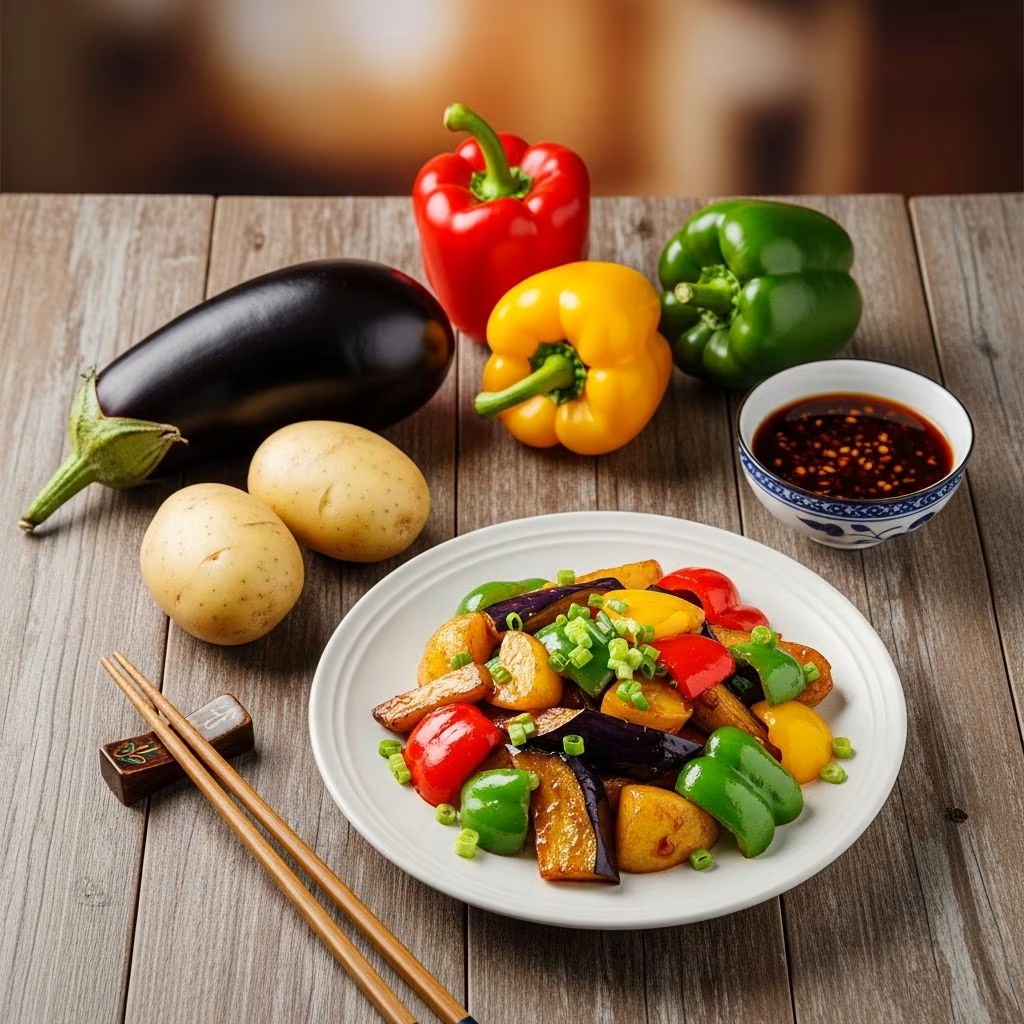
Di San Xian, translating to “Three Treasures from the Soil,” stands as a cornerstone of northern Chinese cooking, particularly from the Dongbei region in Northeast China. This dish transforms humble ingredients—eggplant, potatoes, and green bell peppers—into a symphony of textures and tastes through stir-frying and a glossy sauce. Prized for its simplicity and bold flavors, it captures the essence of harvest-season abundance, where everyday vegetables shine without meat or elaborate spices.
The Roots of Di San Xian in Chinese Culinary Tradition
Originating from the fertile plains of Northeast China, Di San Xian reflects the region’s hearty, no-fuss approach to food. In Dongbei cuisine, meals emphasize generous portions and rustic presentation, often served family-style to share. The name honors the potato, eggplant, and pepper as earth’s bountiful gifts, symbolizing the late-summer harvest when these crops peak in local markets. Families and restaurants alike feature it regularly, appreciating how basic stir-frying elevates plain produce into something crave-worthy.
Historically, such vegetable-forward dishes emerged from agricultural lifestyles, where potatoes provided starchiness, eggplants offered creaminess, and peppers added crunch and heat. Unlike southern Chinese fare with its delicate sauces, Dongbei style favors robust garlic and soy, making Di San Xian a comforting staple that pairs perfectly with steamed rice. Its vegetarian nature also aligns with occasional meatless meals in Chinese homes, proving flavor needs no animal protein.
Essential Ingredients for Authentic Di San Xian
At its core, Di San Xian relies on just three star vegetables, but quality matters for the best results. Select firm potatoes that hold shape when cooked, glossy eggplants with smooth skin, and vibrant green bell peppers for freshness.
- Eggplant (300-400g): Chinese or Japanese varieties work best due to thin skins and fewer seeds; regular globe eggplants require peeling to avoid bitterness.
- Potatoes (300g): Waxy types like Yukon Gold prevent mushiness; peel and cut into even chunks.
- Green Bell Peppers (2-3 large): Crisp and seedless, they provide color contrast and mild sweetness.
Supporting players include garlic (4-6 cloves, minced), scallions, soy sauces (light and dark for depth), cornstarch for thickening, and neutral oil for frying. Optional oyster sauce or black vinegar adds umami and tang.
Step-by-Step Guide to Mastering Di San Xian
Success hinges on technique: par-cooking vegetables separately before combining in sauce. This ensures crisp potatoes, tender eggplants, and snappy peppers without sogginess.
Preparation Tips
Start by prepping vegetables uniformly. For eggplant, cut into roll wedges: slice at a 45-degree angle, roll 180 degrees, and repeat for bite-sized pieces that cook evenly. Potatoes get peeled and chunked similarly. Core and slice peppers into medium strips. Mince garlic and scallions finely.
Make the sauce ahead: mix 1 tbsp light soy sauce, ½ tsp dark soy, 1 tsp sugar, 2 tsp cornstarch slurry with water, and a pinch of white pepper. This glossy coating clings beautifully.
Cooking Process
- Parboil Potatoes: Simmer peeled chunks in water 15-18 minutes until fork-tender but firm. Drain and pat dry to crisp later.
- Fry Eggplant: Coat lightly in cornstarch after salting and drying to draw out moisture. Shallow-fry skin-side down in hot oil (350-380°F) until golden, about 3-4 minutes per side. Drain on paper towels.
- Cook Potatoes and Peppers: Fry potatoes until crispy edges form, then quickly stir-fry peppers to retain crunch. Remove excess oil.
- Combine and Sauce: In the wok, sauté garlic and scallion whites until fragrant. Add veggies, pour in sauce, and toss over high heat until thickened and glazed. Finish with scallion greens and vinegar.
Total time: 45 minutes. Serves 4 as a side.
Texture Mastery: Crispy, Creamy, Crunchy
Di San Xian’s allure lies in contrast: eggplant melts softly, potatoes stay crisp outside and fluffy inside, peppers snap with freshness. Cornstarch coating on eggplant absorbs oil while crisping surfaces, preventing oil-logged results. Parboiling potatoes avoids raw centers post-frying. High-heat wok cooking chars edges subtly, building smoky depth without deep-frying everything.
| Vegetable | Texture Goal | Key Technique |
|---|---|---|
| Eggplant | Tender, silky | Salt soak + cornstarch coat |
| Potato | Crispy exterior, soft interior | Parboil then fry |
| Bell Pepper | Crisp, juicy | Quick high-heat stir |
Health Benefits and Nutritional Profile
This dish packs nutrition: potatoes offer potassium and vitamin C, eggplants provide fiber and antioxidants like nasunin for heart health, and peppers deliver vitamin A for immunity. Low-calorie at ~200 kcal per serving, it’s naturally vegan and gluten-free with tamari swaps. Frying adds fats, but shallow methods keep it balanced for everyday eating.
Customizations and Regional Twists
Adapt for preferences: add red bell peppers or chilies for color and heat. Protein boosts like tofu or mushrooms fit seamlessly. Healthier versions sauté in minimal oil using non-stick pans, extending cook time for softness. In some homes, oyster sauce enhances savoriness, while others stick to pure soy.
- Spicy Version: Include green chilies with peppers.
- Gluten-Free: Use tamari and potato starch.
- Oil-Light: Pan-fry slowly instead of deep-fry.
Perfect Pairings and Serving Ideas
Serve hot with jasmine rice to soak up sauce. Complement with steamed bok choy, mapo tofu, or cumin lamb for a feast. Beer or chilled green tea cuts richness. Leftovers reheat well, retaining texture if stir-fried briefly.
Frequently Asked Questions (FAQs)
What does Di San Xian mean?
It translates to “Three Treasures from the Soil,” celebrating potato, eggplant, and pepper.
Can I skip frying the eggplant?
Yes, roast or air-fry for lighter results, though traditional frying yields superior texture.
Best eggplant type for this recipe?
Chinese or Japanese; their thin skins stay tender without peeling.
How to store leftovers?
Refrigerate up to 3 days; reheat in a hot wok to revive crispness.
Is it spicy?
Mild by default; add chilies for heat.
Common Mistakes to Avoid
Crowding the wok leads to steaming, not crisping—cook in batches. Overcooking peppers makes them limp; add last. Skipping cornstarch results in watery eggplant. Use high smoke-point oil like peanut or canola.
With practice, Di San Xian becomes a go-to, proving simple ingredients yield profound satisfaction. Its enduring popularity underscores Chinese genius for vegetable cookery.
References
- Recipe: Di San Xian (Three Treasures of the Earth) — Sarah Nardi, Wixsite. Accessed 2026. https://sarahnardi.wixsite.com/mysite/post/recipe-di-san-xian-three-treasures-of-the-earth
- Three Treasures From Earth – Sautéed Eggplant Potato and Bell Pepper — Asian Cooking Mom. 2021-10-23. https://www.asiancookingmom.com/three-treasures-from-earth-sauteed-eggplant-potato-and-bell-pepper-%E5%9C%B0%E4%B8%89%E9%B2%9C-di-san-xian/
- The Best Chinese Eggplant Recipe (Di San Xian) — Curated Kitchenware / Souped Up Recipes. Accessed 2026. https://curatedkitchenware.com/blogs/soupeduprecipes/the-best-chinese-eggplant-recipe-di-san-xian-aka-three-treasures-from-the-ground
- Di San Xian (Stir Fried Eggplant, Potato and Pepper) — Omnivore’s Cookbook. Accessed 2026. https://omnivorescookbook.com/di-san-xian-recipe/