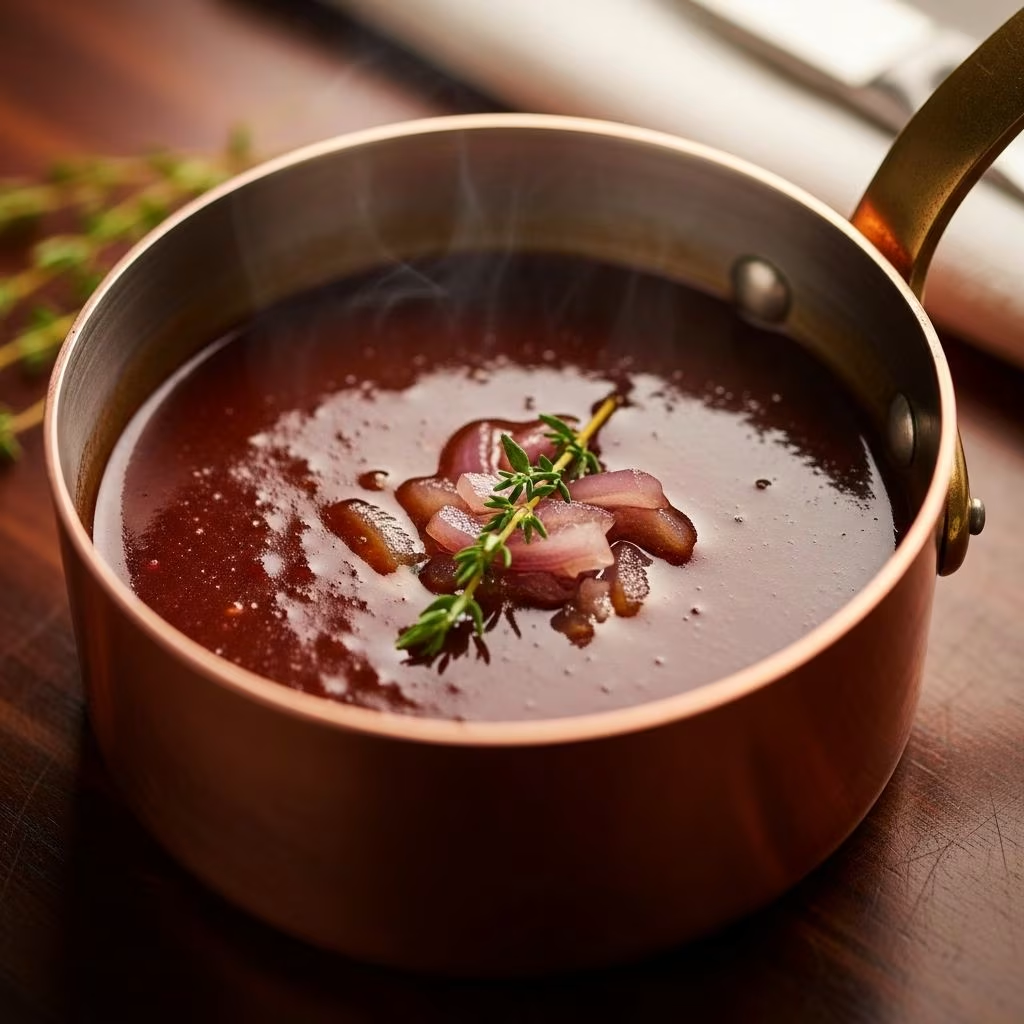
Bordelaise sauce stands as a cornerstone of French cuisine, renowned for its luxurious texture and profound depth of flavor. Originating from the Bordeaux region, this sauce transforms simple ingredients like red wine, shallots, and stock into a velvety accompaniment that elevates grilled meats, roasts, and even roasted vegetables. Unlike heavier cream-based sauces, Bordelaise relies on careful reduction and aromatic infusions to achieve its signature richness, making it a favorite in fine dining establishments worldwide.
At its core, Bordelaise captures the essence of Bordeaux wines—bold, tannic, and earthy—paired with savory stock reductions. Home cooks can replicate this elegance without specialized equipment, using everyday pantry staples and a bit of patience. This comprehensive guide dives into the history, essential ingredients, detailed preparation techniques, creative variations, and expert tips to ensure success. Whether you’re searing a ribeye or hosting a dinner party, mastering Bordelaise will impress your guests and refine your culinary skills.
Origins and Cultural Significance
The name ‘Bordelaise’ derives from Bordeaux, France, a region celebrated for its world-class red wines made primarily from Cabernet Sauvignon and Merlot grapes. Traditionally served with beef, this sauce emerged in the 19th century as a way to highlight local wines alongside roasted or grilled meats. French culinary tradition emphasizes sauce-making as an art form, with Bordelaise exemplifying the ‘mother sauce’ derivatives in classic Escoffier methodology.
Unlike its counterpart, Béarnaise (which uses white wine and tarragon), Bordelaise embraces the robustness of red wine, often incorporating bone marrow for added luxury—a nod to old-world butchery practices. Today, it’s a staple in steakhouses globally, adapted for modern palates while preserving its heritage. Understanding this background helps appreciate why precise technique matters: it’s not just a topping, but a harmonious blend of regional terroir.
Key Ingredients Breakdown
Selecting high-quality components is crucial for an authentic Bordelaise. Here’s a detailed look at the building blocks:
- Red Wine: Opt for a dry Bordeaux, Cabernet Sauvignon, or Merlot. Avoid sweet varieties; the wine reduces to concentrate tannins and fruit notes, forming the sauce’s backbone.
- Shallots: Finely minced for subtle oniony sweetness. Their mild flavor caramelizes beautifully without overpowering.
- Beef Stock or Demi-Glace: Demi-glace provides intense umami, but quality beef bone broth works as a substitute. Reduce stock heavily for body.
- Herbs and Spices: Fresh thyme, bay leaf, peppercorns, and garlic infuse complexity. Crush peppercorns to release oils.
- Butter: Unsalted for finishing; cold cubes create a glossy emulsion. Bone marrow butter elevates traditionality.
- Flour or Roux (Optional): For thickening when using stock alone; beurre manié (kneaded butter-flour) integrates seamlessly.
Quantities for a standard batch serving 4-6: 1 cup wine, ½ cup shallots, 2-4 cups stock/demi-glace, 1-2 tbsp butter, plus aromatics. Proportions ensure balance—wine for acidity, stock for savoriness.
Step-by-Step Preparation Method
Crafting Bordelaise demands low-and-slow simmering to build layers. Follow this foolproof process:
Prepare Aromatics: In a saucepan over medium heat, melt 1 tbsp butter. Add minced shallots (½ cup), smashed garlic (1 clove), and crushed peppercorns (12-15). Sauté 3-8 minutes until golden, stirring to prevent burning. Low heat caramelizes for deeper flavor (20-30 minutes optional).
Reduce the Wine: Pour in 1 cup dry red wine. Increase heat to medium-high, boiling until reduced by 75% (about ¼ cup left, 10-15 minutes). This deglazes and intensifies flavors.
Incorporate Stock: Add 2-4 cups beef stock or demi-glace, thyme sprig, and ½ bay leaf. Simmer low-medium 15-20 minutes, reducing by half. Skim impurities for clarity.
Thicken if Needed: For stock versions, whisk in beurre manié (1 tbsp soft butter + 1 tbsp flour) or reduce further. Simmer 5-10 minutes until coats a spoon.
Strain and Finish: Remove from heat. Strain through fine mesh or cheesecloth, pressing solids. Off-heat, whisk in 1-2 tbsp cold butter for shine. Season with salt; pepper to taste.
Total time: 35-50 minutes. Yield: 1-1½ cups. The result is a silken sauce with glossy sheen and clingy texture.
Ingredient Comparison Table
| Ingredient | Traditional | Modern Substitute | Impact on Flavor |
|---|---|---|---|
| Stock Base | Demi-Glace | Beef Bone Broth | Rich umami vs. lighter savoriness |
| Wine | Bordeaux | Cabernet/Merlot | Earthy tannins vs. fruit-forward |
| Thickener | Reduction | Beurre Manié | Intense vs. quicker body |
| Finisher | Bone Marrow Butter | Unsalted Butter | Decadent vs. clean gloss |
This table highlights flexibility without compromising essence.
Variations and Creative Twists
Adapt Bordelaise for diverse dishes:
- Vegetarian Version: Swap beef stock for mushroom or vegetable broth; add porcini powder for umami.
- Spiced Infusion: Include juniper berries or clove for game meats.
- White Wine Adaptation: Use Sauvignon Blanc for poultry, mimicking a lighter ‘Bordelaise blanche’.
- Pan Sauce Shortcut: Deglaze steak pan drippings directly into reduction for amplified beefiness.
- Make-Ahead: Prepare 3 days ahead; reheat gently with splash of stock.
These tweaks maintain tradition while innovating.
Perfect Pairings and Serving Suggestions
Bordelaise shines with:
- Steaks: Ribeye, filet mignon, or hanger—drizzle post-resting.
- Roasts: Beef tenderloin, venison, or lamb.
- Sides: Pommes frites, roasted potatoes, or asparagus to cut richness.
- Wine Matches: The same Bordeaux used in sauce; Pinot Noir for versatility.
Serve warm, never boiling, to preserve emulsion.
Storage, Reheating, and Troubleshooting
Storage: Refrigerate in airtight container up to 5 days; freeze 3 months (thaw overnight).
Reheating: Low heat in saucepan; thin with water/stock if needed. Avoid microwave to prevent separation.
Common Issues:
- Too Thin: Simmer longer or add slurry.
- Broken Emulsion: Whisk vigorously off-heat with cold butter.
- Bitter Taste: Shallots over-browned—use lower heat next time.
Nutrition and Dietary Notes
Per 2 tbsp serving: ~80 calories, 5g fat, 4g carbs, 2g protein. Gluten-free if skipping flour; keto-friendly in moderation. High sodium—adjust stock.
Frequently Asked Questions (FAQs)
What is the difference between Bordelaise and Au Poivre?
Bordelaise uses wine reduction; Au Poivre features brandy and green peppercorns.
Can I make Bordelaise without wine?
Substitute stock with balsamic or pomegranate juice, but flavor shifts dramatically.
How do I achieve restaurant gloss?
Mount with cold butter off-heat while whisking briskly.
Is demi-glace necessary?
No—reduce stock extensively or buy prepared.
Pairing for non-beef proteins?
Works with duck, pork tenderloin, or wild boar.
Advanced Techniques for Pros
For next-level results: Infuse marrow roasted from bones into butter. Use veal demi-glace for purity. Double-strain for ultra-smoothness. Age sauce 24 hours for melded flavors.
Experiment with micro-reduced wine glace as base for intensity.
References
- Bordelaise Sauce Recipe (Classic French!) — Chef Billy Parisi. 2023-05-15. https://www.billyparisi.com/bordelaise-sauce/
- Easy Bordelaise Sauce Recipe — Platings and Pairings. 2022-11-10. https://www.platingsandpairings.com/bordelaise-sauce-recipe/
- Red Wine Bordelaise — Coley Cooks. 2023-08-20. https://coleycooks.com/bordelaise-sauce/