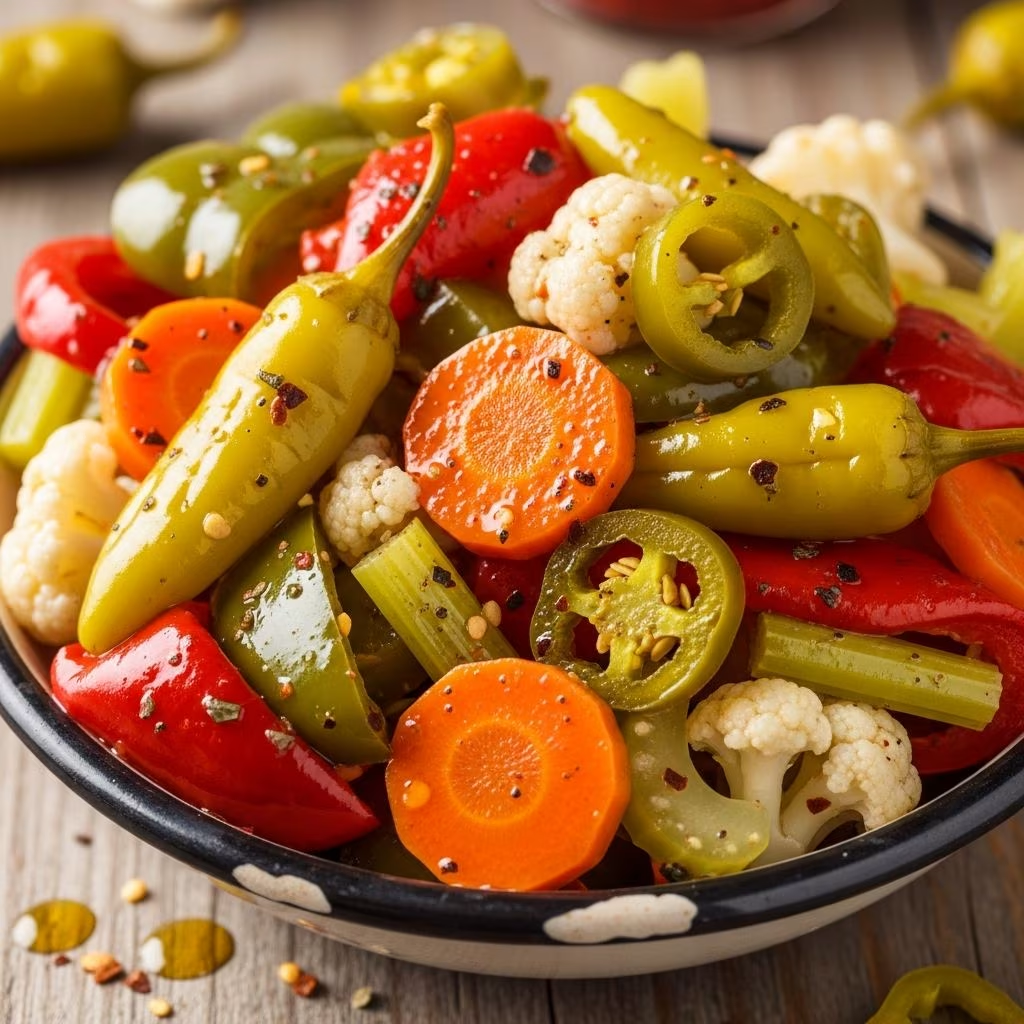
Chicago-style giardiniera stands as a bold emblem of the city’s vibrant food culture, blending Italian heritage with local innovation to create a crunchy, fiery condiment that’s essential for authentic Italian beef sandwiches.
Roots in Italian Immigration
The story of giardiniera in Chicago begins with waves of Italian immigrants arriving in the mid-19th century, particularly from Sicily, who brought preservation techniques to extend garden harvests through harsh winters. Traditional Italian giardiniera, meaning ‘gardener’ in Italian, involved pickling vegetables like cauliflower, carrots, celery, and bell peppers in vinegar for antipasti platters. In Chicago’s Italian-American neighborhoods, this evolved by incorporating oil— a Sicilian twist— and emphasizing hot peppers, transforming it into a spicier, oil-submerged relish suited to the city’s sandwich-centric eats.
By the early 20th century, as Italian communities thrived, giardiniera became intertwined with Chicago’s street food scene. Sicilian settlers, who formed a significant portion of Chicago’s Italian population, introduced oil to the brine, distinguishing it from vinegar-only versions elsewhere in Italy. This adaptation cemented its place, especially atop thinly sliced beef soaked in jus, where the tangy heat cuts through richness.
Key Ingredients That Define the Flavor
Chicago giardiniera derives its signature punch from a precise balance of vegetables, spices, and preservatives. Hot peppers like serranos or jalapeños dominate, providing intense heat, while supportive players like carrots, celery, red bell peppers, onions, and cauliflower add crunch and subtle sweetness.
- Hot Peppers: Serranos or sport peppers for fiery kick, often the star ingredient.
- Vegetables: Diced carrots, celery, cauliflower, red bell peppers, and onions for texture and color.
- Olives: Pimento-stuffed green olives sliced thick, contributing briny depth and reserved liquid.
- Seasonings: Garlic, oregano, black pepper, and optional red pepper flakes for aromatic layers.
- Liquids: White wine or distilled vinegar for tang, followed by grapeseed or olive oil for preservation and richness.
This combination yields a relish that’s spicy yet balanced, with oil carrying flavors that vinegar alone can’t achieve.
Step-by-Step Homemade Recipe
Making Chicago giardiniera at home requires a multi-day process of brining, pickling, and oil-marinating to mimic commercial versions. Yields about 4-5 pints; scale as needed.
Ingredients
| Category | Ingredients | Quantity |
|---|---|---|
| Vegetables | Red bell peppers, seeded/diced | 1 lb |
| Carrots, peeled/diced | ¾ lb | |
| Celery, diced | ½ lb | |
| White onion, diced | ½ lb | |
| Jalapeños or serranos, diced | ½-1 lb (adjust heat) | |
| Brine | Kosher salt | 1 cup |
| Water (to cover) | As needed | |
| Pickle/Marinade | White wine vinegar | 5 cups |
| Pimento-stuffed olives, sliced + liquid | 12 oz + 1 cup | |
| Garlic, minced | 2 tbsp | |
| Dried oregano | 3 tbsp | |
| Black pepper, cracked | 2 tsp | |
| Grapeseed or canola oil | 3½ cups |
Instructions
Prep Vegetables: Dice all vegetables into ¼-½ inch pieces for uniform pickling. Combine in a large non-reactive bowl.
Salt Brine: Sprinkle 1 cup salt over vegetables, cover with cold water. Stir to dissolve, cover, and refrigerate 8-24 hours. This draws out moisture and crisps.
Rinse and Vinegar Soak: Drain, rinse thoroughly under cold water. Return to bowl, cover with vinegar (add garlic, oregano, pepper flakes if desired). Refrigerate another 8-24 hours.
Final Mix: Drain vinegar. Add sliced olives, olive liquid, minced garlic, oregano, black pepper. Stir in oil until vegetables are submerged.
Jar and Process: Pack into sterilized pint jars, leaving ½-inch headspace. Wipe rims, seal with lids. Process in boiling water bath 15-20 minutes for shelf stability.
Age: Cool jars; store in cool, dark place 1-2 weeks for flavors to meld. Refrigerate after opening.
Tips: Don’t skip salt—it’s crucial for texture. For milder version, reduce hot peppers.
Signature Uses in Chicago Cuisine
Giardiniera shines as more than a topping; it’s a flavor enhancer across Chicago’s diverse eats.
- Italian Beef Sandwiches: Piled high on juicy, herb-crusted beef with sweet peppers and provolone.
- Hot Dogs: Chicago-style dogs get extra zing dragged through the garden with giardiniera.
- Pizza and Snacks: Sprinkled on deep-dish or eaten straight from the jar.
- Modern Twists: In martini olives, matzo ball soup, or charcuterie.
Its oil base clings to foods, delivering spice without sogginess.
Variations: Hot vs. Mild and Beyond
While spicy dominates, mild giardiniera swaps hot peppers for more bell peppers and carrots. Oil vs. vinegar versions cater to preferences: oil for richness, vinegar for tang. Sicilian influence adds olives; some recipes include cauliflower florets for extra crunch. Commercial brands vary, but homemade allows customization.
| Style | Key Difference | Best For |
|---|---|---|
| Hot Chicago | Serrano-heavy, oil-marinated | Italian beef, bold dishes |
| Mild | Bell peppers dominant | Kids, subtle flavoring |
| Italian Traditional | Vinegar-only, chunkier veggies | Antipasti boards |
Preservation Science and Safety
The double-process—salt brine then vinegar/oil—creates an acidic, anaerobic environment inhibiting bacteria. Oil seals out air, extending shelf life up to a year unopened. Always use clean jars and proper canning to avoid botulism risks.
Health Benefits and Nutrition
Low-calorie (about 50 per ¼ cup serving), giardiniera packs probiotics from fermentation-like brining, plus vitamins A and C from peppers and carrots. Its spice boosts metabolism, but high sodium calls for moderation.
Frequently Asked Questions
What makes Chicago giardiniera different from Italian?
Chicago version uses oil post-vinegar pickling, more hot peppers, and finer dice for sandwiches; Italian is vinegar-only with chunkier veggies.
How long does homemade giardiniera last?
Processed jars last 12-18 months unopened; refrigerate after and use within 2 months.
Can I make it without canning?
Yes, refrigerate the oil-marinated mix; consumes within 2 weeks.
Is giardiniera gluten-free?
Typically yes, as it’s vegetables, oil, and vinegar—check olives for additives.
Where did Chicago giardiniera originate?
From Sicilian immigrants in late 1800s Chicago, evolving for local beef sandwiches.
References
- Chicago’s Very Own Giardiniera Recipe — Dr. Lohi Journal. 2022-04-01. https://drloihjournal.blogspot.com/2022/04/chicago-style-spicy-giardiniera-recipe.html
- Chicago-Style Hot Giardiniera Recipe — Eat Sleep Wild. N/A. https://eatsleepwild.com/chicago-style-hot-giardiniera-recipe/
- Why is giardiniera a Chicago thing? — Hott Brands. N/A. https://thehottsauce.com/blogs/history-and-facts/why-is-giardiniera-a-chicago-thing
- Spotlight Series: All About Giardiniera — DeLallo. N/A. https://www.delallo.com/blog/what-is-giardiniera/
- How Giardiniera Became A Chicago Staple — Tasting Table. N/A. https://www.tastingtable.com/1641594/chicago-giardiniera-origin/
- 125 Years Of Chicago’s Giardiniera — YouTube (Stories From The 78). N/A. https://www.youtube.com/watch?v=OA0TcUfOYFc
- Everything There Is To Know About Giardiniera — Giadzy. N/A. https://giadzy.com/blogs/tips/everything-there-is-to-know-about-giardiniera