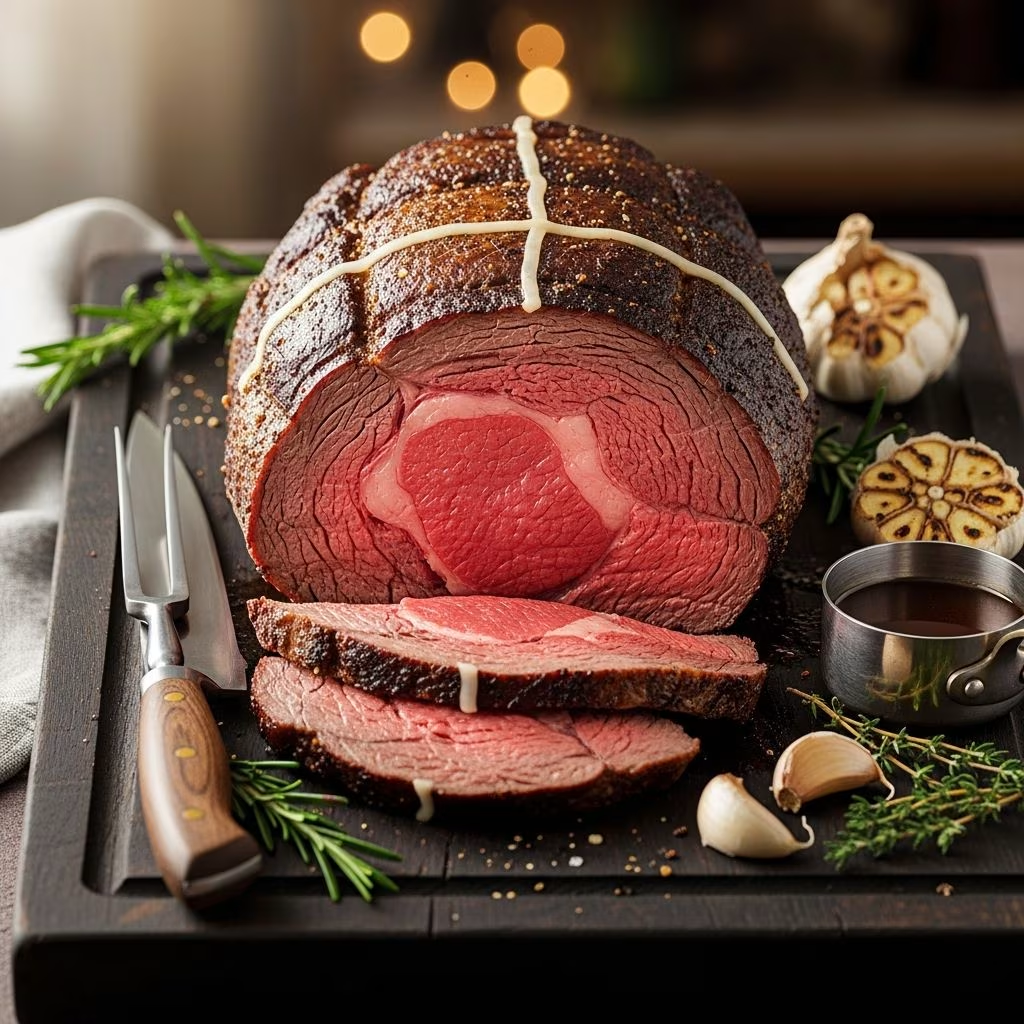
Prime rib roast stands as one of the most luxurious cuts of beef, prized for its rich marbling and bold flavor. Achieving restaurant-quality results at home requires understanding the cut, precise preparation, and controlled cooking. This guide draws from proven methods to deliver a tender, evenly cooked roast with a flavorful crust.
Understanding the Prime Rib Cut
The prime rib, also known as standing rib roast, comes from the rib primal of the cow, typically bones 6 through 12. This section offers exceptional tenderness due to its location surrounded by fat and muscle that moves little during the animal’s life. Bone-in roasts provide extra flavor and moisture during cooking, while boneless versions are easier to carve.
Select a roast with even marbling for optimal juiciness. Aim for USDA Prime or Choice grades. A 5-8 pound roast serves 8-12 people, calculating about 1 pound per person pre-cooking to account for bone weight and shrinkage.
Essential Ingredients for Success
Great prime rib shines with simple, high-quality ingredients that enhance its natural taste. Focus on fresh herbs, coarse salts, and oils for rubs.
- Prime Rib Roast: 5-8 lb bone-in or boneless, tied if needed.
- Kosher Salt: 1-2 tbsp per 5 lbs for dry brining.
- Fresh or Dried Herbs: Rosemary, thyme (1-2 tbsp each).
- Garlic: 3-4 cloves sliced for inserting.
- Black Pepper: Freshly cracked, 1 tbsp.
- Onion/Garlic Powder: 1 tbsp each for depth.
- Olive Oil: 2-3 tbsp to bind seasonings.
Optional additions include wasabi powder or herbs de Provence for unique twists.
Preparation Steps: From Fridge to Ready
Proper prep ensures even cooking and maximum flavor infusion.
- Temper the Meat: Remove from fridge 3-4 hours before cooking to reach room temperature. This promotes uniform doneness.
- Dry Brine: Pat dry, apply kosher salt generously. Refrigerate uncovered overnight or season just before cooking.
- Flavor Infusion: Make slits across the fat cap, insert garlic slices. Mix rub: herbs, powders, pepper, oil. Coat evenly.
- Setup: Place bone-side down on rack over onions or directly in pan for drippings.
Patience here prevents a tough exterior or undercooked center.
Mastering the Cooking Process
Two primary methods dominate: high-heat sear followed by low roast, or reverse sear. Both yield excellent results with a meat thermometer essential for precision.
High-Heat Start Method
Popular for crust development.
- Preheat oven to 450-500°F.
- Roast 15-60 minutes until browned (depends on size).
- Reduce to 325-350°F, cook 10-12 min/lb for medium-rare.
- Target internals: 120°F rare, 130°F medium-rare (accounts for carryover).
Low-and-Slow Method
For even doneness throughout.
- Sear on stovetop first in hot pan with oil.
- Roast at 250°F until desired temp.
- Rest and serve.
| Doneness | Internal Temp (Remove) | Final After Rest |
|---|---|---|
| Rare | 115-120°F | 120-125°F |
| Medium-Rare | 125-130°F | 130-135°F |
| Medium | 135-140°F | 140-145°F |
Use an instant-read thermometer in thickest part, avoiding bone.
Resting and Carving Techniques
Resting redistributes juices for supreme tenderness. Tent with foil 20-30 minutes; temp rises 5-10°F.
Carve by slicing between bones if bone-in, or against grain in ½-inch slices for boneless. Serve fat-side up initially for self-basting.
Perfect Sides and Sauces
Complement with Yorkshire pudding, roasted veggies, or mashed potatoes. For au jus:
- Deglaze pan with water/beef stock.
- Strain fat, simmer.
- Horseradish cream: Sour cream, horseradish, salt.
Common Mistakes and Pro Tips
Avoid these pitfalls:
- No Thermometer: Guessing leads to overcooking.
- Skipping Rest: Juices escape on cutting.
- Oven Too Low: No crust forms.
Tips: Use heavy roasting pan. Baste if pan dries. For crowds, plan 12-15 min/lb total at adjusted temps.
Storage and Reheating
Refrigerate leftovers up to 4 days. Reheat slices in 250°F oven to 110°F internal to avoid drying. Freezes well wrapped tightly for 3 months.
Frequently Asked Questions
How long to cook prime rib per pound?
10-12 min/lb at 325°F after high-heat sear for medium-rare.
Bone-in or boneless?
Bone-in for flavor, boneless for ease.
Can I cook without a rack?
Yes, on onions to elevate and flavor drippings.
What’s the best internal temperature?
130°F for medium-rare post-rest.
How to get crispy fat?
High initial heat and score fat lightly.
Advanced Variations
Experiment with coffee rubs or smoked paprika for twists. Sous-vide then sear for ultimate control.
This comprehensive approach ensures your prime rib becomes a showstopper. Practice timing for perfection.
References
- Melt-in-Your-Mouth Garlic Herb Prime Rib Recipe — Foodie and Wine. 2023. https://foodieandwine.com/melt-in-your-mouth-prime-rib-recipe/
- Perfect Prime Rib Roast — The Woks of Life. 2022. https://thewoksoflife.com/perfect-prime-rib-roast/
- Perfect Prime Rib Recipe — Tastes Better from Scratch. 2024. https://tastesbetterfromscratch.com/prime-rib/
- Restaurant style prime rib recipe — Wildflour’s Cottage Kitchen. 2014-01-14. https://wildflourskitchen.com/2014/01/14/restaurant-style-prime-rib/
- Best Restaurant-Style Prime Rib Roast Ever! — Just A Pinch Recipes. N/A. https://www.justapinch.com/recipes/main-course/beef/best-restaurant-style-prime-rib-roast-ever.html
- Restaurant-Style Prime Rib Roast — The Hungry Mouse. 2011-03-22. https://www.thehungrymouse.com/2011/03/22/restaurant-style-prime-rib-roast/