Few desserts command attention quite like cherries jubilee, a theatrical creation that combines visual spectacle with sophisticated flavors. This iconic dish features succulent cherries bathed in a rich sauce and dramatically ignited with spirits before being spooned over creamy vanilla ice cream. Whether you’re preparing a special dinner or seeking to impress guests with something memorable, understanding the nuances of this dish transforms it from an intimidating challenge into an achievable culinary accomplishment.
Understanding the Heritage and Significance of This Iconic Dessert
The story behind cherries jubilee traces back to the late 19th century and the legendary French chef Auguste Escoffier. Escoffier created this distinctive dessert as a tribute to Queen Victoria during her Diamond Jubilee celebration in 1897. The Queen held a particular fondness for cherries, and Escoffier developed this sweet and tart combination to honor her milestone occasion. The name itself derives from this historic connection—the term “jubilee” reflecting the celebratory nature of the moment for which it was conceived.
The original preparation differed somewhat from modern interpretations. Escoffier’s version involved poaching cherries in simple syrup, thickening it with arrowroot, and then adding a small amount of heated kirsch before igniting it at the table. This flaming presentation became the signature element that distinguished the dish from other cherry preparations, making it a centerpiece of elegant dining experiences.
Interestingly, September 24th has been designated as National Cherries Jubilee Day, cementing the dish’s place in culinary culture. The theatrical flambéing technique has remained a consistent element throughout the dish’s evolution, even as specific ingredient choices and proportions have varied among contemporary chefs.
Essential Ingredients and Ingredient Variations
Creating cherries jubilee requires careful selection of quality components. The foundation begins with the cherries themselves, which can be sourced in multiple forms depending on your preferences and availability.
Primary Components
- Cherries: Both fresh and canned varieties work effectively. Fresh cherries offer bright, natural flavor when in season, while canned or frozen options provide year-round accessibility and consistent quality. Some preparations use jarred sour cherries in light syrup to maintain optimal texture.
- Sweetening agents: Brown sugar and granulated sugar both appear in different recipes, each contributing slightly different flavor profiles. Brown sugar introduces molasses notes, while white sugar allows other flavors to shine more prominently.
- Acidic elements: Lemon or orange juice brightens the dish and balances the sweetness. Orange zest adds an additional aromatic dimension that complements the fruit.
- Spirits: Brandy, kirsch, dark rum, and bourbon all appear in various preparations. Kirsch, a cherry-based liqueur, provides authentic flavor alignment, while brandy offers warmth and depth. Some modern versions incorporate bourbon to echo old-fashioned cocktail profiles.
- Vanilla ice cream: The cool, creamy contrast serves as the perfect complement to the warm, flaming cherries and their rich sauce.
Optional Enhancements
Citrus zests, vanilla extract, cold butter for finishing, Angostura bitters, and even cornstarch for sauce thickening can elevate the basic preparation. These additions allow for personalization while maintaining the dish’s essential character.
Preparation Techniques and Step-by-Step Instructions
The preparation process, while appearing complex due to the flaming element, actually unfolds quite rapidly once components are organized. Most versions require only five to ten minutes of active cooking time.
Initial Setup and Ingredient Preparation
Begin by ensuring all ingredients are measured and ready before heating commences. If using fresh cherries, pit them using a cherry pitter to remove the stones. For canned varieties, drain thoroughly while reserving the syrup, as this liquid becomes crucial to sauce development. Zest citrus fruits and combine dry ingredients if your recipe calls for this step. Having everything prepared prevents scrambling during the cooking phase and ensures the flaming moment proceeds smoothly.
The Cooking Sequence
In a large skillet or chafing dish, combine the prepared cherries with sugar and lemon or orange juice over medium heat. Stir occasionally as the cherries begin releasing their natural juices and the sugar dissolves into the mixture. This phase typically requires two to three minutes. The cherries will gradually soften and create a syrup as their pectin breaks down with heat.
Once the mixture achieves a syrup-like consistency and the sugar has fully dissolved, add the selected spirits to the pan and increase the heat slightly. Allow the mixture to warm through—this step is critical because igniting cold alcohol may not produce the desired flaming effect and can result in raw alcohol flavor remaining in the finished dish.
The Flaming Technique
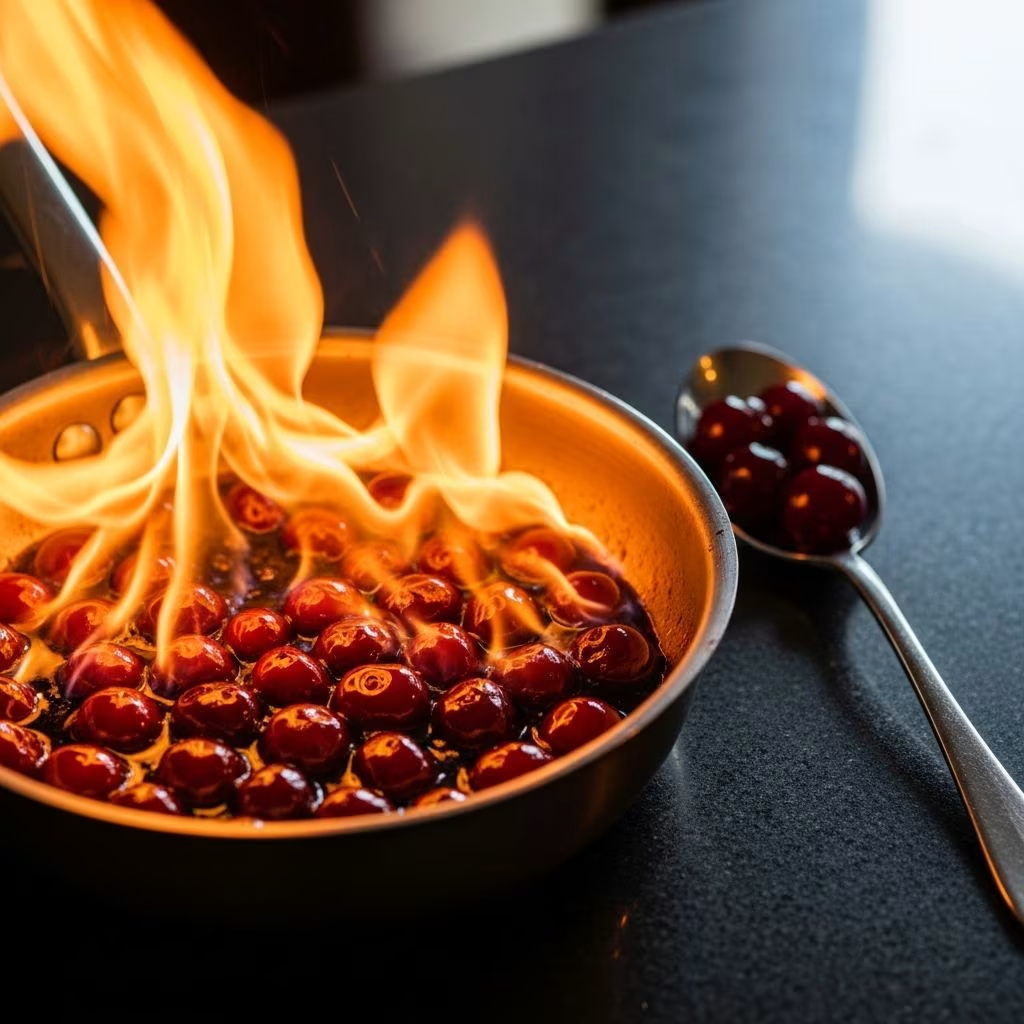
Lighting the mixture requires confidence and proper safety precautions. Use a long-handled lighter or long fireplace match to keep your hand at a safe distance from the flame. Ignite the warmed alcohol mixture carefully, watching as the blue flames consume the alcohol. Once lit, gently shake the pan back and forth, keeping the cherries in motion without splashing them out. This movement exposes more of the alcohol to the flame, ensuring thorough combustion.
The flames will gradually subside as the alcohol burns off. Do not attempt to extinguish the flame prematurely—allow it to burn itself out naturally. This process typically lasts only thirty seconds to a minute. After the flames disappear completely, immediately spoon the cherries and sauce over individual servings of vanilla ice cream.
Variations and Creative Interpretations
While the classic formula has remained largely consistent, contemporary chefs have developed interesting adaptations that honor the original while adding personal touches.
| Variation Type | Key Characteristics | Best Uses |
|---|---|---|
| Traditional Approach | Kirsch and brandy, minimal additional flavoring, pure cherry focus | Classic dining experiences, formal occasions |
| Orange-Forward Interpretation | Orange juice, orange zest, citrus brightness emphasized | Lighter presentations, spring and summer serving |
| Cocktail-Inspired Version | Bourbon incorporation, Angostura bitters, old-fashioned elements | After-dinner service, modern entertaining |
| Chocolate-Paired Option | Served alongside chocolate cake or chocolate elements | Chocolate-loving audiences, café settings |
Safety Considerations and Practical Warnings
Flambéing, while visually spectacular, requires respect and attention to safety protocols. Never leave the pan unattended once ignited. Ensure long sleeves or loose clothing are secured away from the flame. Keep hair tied back securely. Place the skillet on a stable, heat-resistant surface away from kitchen cabinets or curtains.
Some home cooks prefer practicing the ignition technique without guests present first, allowing them to become comfortable with the process. Others choose to omit the flaming element entirely, instead letting the alcohol burn off on the stovetop without open flame. Both approaches produce delicious results—the flaming serves primarily as theatrical presentation rather than flavor development.
Serving Strategies and Presentation Ideas
Beyond the basic presentation over vanilla ice cream, cherries jubilee adapts well to various serving contexts. Ladyfinger cookies provide an elegant textural contrast when accompanied by the cherry sauce. Angel food cake offers a light, fluffy foundation that allows the cherries to remain the star. Cheesecake provides a rich, creamy base that complements the tartness of the cherries.
For dinner parties, preparing the cherry mixture in advance and refrigerating it allows for reheating and flaming just before service. This approach reduces stress during entertainment and ensures you can focus on guests. Individual servings can be prepared, with each plate receiving a scoop of ice cream topped with the warm cherry mixture, creating an elegant presentation that feels restaurant-quality.
Sourcing Quality Ingredients
The quality of your finished dish depends significantly on ingredient selection. When choosing cherries, prioritize varieties specifically grown for dessert applications—dark sweet cherries provide excellent flavor and visual appeal. Canned versions packed in light syrup rather than heavy syrup allow the cherry flavor to remain prominent.
For spirits, select brands you would drink independently. The alcohol will concentrate during cooking, so quality matters. Vanilla ice cream should genuinely taste of vanilla rather than featuring vanilla merely as a label claim. Some recipes specify “best-quality” vanilla ice cream for this reason.
Frequently Asked Questions
Can I prepare cherries jubilee without the flaming component?
Absolutely. Simply allow the alcohol to burn off through heat on the stovetop rather than using an open flame. The finished dish tastes virtually identical, with the visual spectacle being the primary difference.
How far in advance can I prepare this dish?
The cherry mixture can be prepared several hours ahead and refrigerated. Reheat gently before serving. Flaming should occur just before plating to maintain the theatrical element and proper temperature contrast with ice cream.
What if I prefer not to use alcohol?
Some versions use broth or additional fruit juice to replace spirits, though this significantly alters the traditional flavor profile. Consider this a different dish rather than an adaptation of classic cherries jubilee.
Can I use fresh cherries exclusively?
Yes, though you’ll need to pit them and may need to add additional liquid to create sufficient sauce, as fresh cherries release less syrup than canned versions. The cooking time may extend slightly.
Is this dessert suitable for dietary restrictions?
The alcohol burns off during preparation, though traces may remain for those with strict alcohol concerns. Those avoiding sugar can explore reduced-sugar recipe versions, though this affects both flavor and the caramelization process.
Mastering the Technique Through Practice
Most home cooks find that cherries jubilee becomes noticeably easier with repeated preparation. The timing, ingredient ratios, and flaming technique all become intuitive after attempting the dish a few times. Many chefs report that their first experience feels overwhelming while subsequent preparations feel almost casual.
The most challenging aspect for many home cooks involves building confidence with the flaming component. Once you’ve ignited the mixture successfully once, subsequent attempts lose their intimidation factor. Some culinary instructors suggest this is precisely why cherries jubilee retains its status as a restaurant favorite—the dramatic presentation creates an impression of difficulty that masks the actual simplicity of preparation.
Whether you’re seeking to master a classic technique, create a memorable dining experience, or simply enjoy an exceptional dessert, cherries jubilee delivers on multiple levels. The combination of historical significance, theatrical presentation, and genuine deliciousness makes it worthy of a place in any home cook’s repertoire.
References
- Flaming Cherries Jubilee – Classic Recipe — Oregon Fruit. https://oregonfruit.com/blogs/recipes/flaming-cherries-jubilee-classic-recipe
- Easy Cherries Jubilee Recipe — Sugar Geek Show. https://sugargeekshow.com/cherries-jubilee/
- Cherry Jubilee Recipe — Kenneth Temple. https://kennethtemple.com/cherry-jubilee-recipe/
- Auguste Escoffier’s Classic Dessert: Cherries Jubilee — Escoffier School of Culinary Arts. https://www.escoffier.edu/blog/recipes/auguste-escoffiers-classic-dessert-cherries-jubilee/
- Cherries Jubilee Recipe by Claire Saffitz — Dessert Person. https://www.youtube.com/watch?v=Mboq8IRzkkg