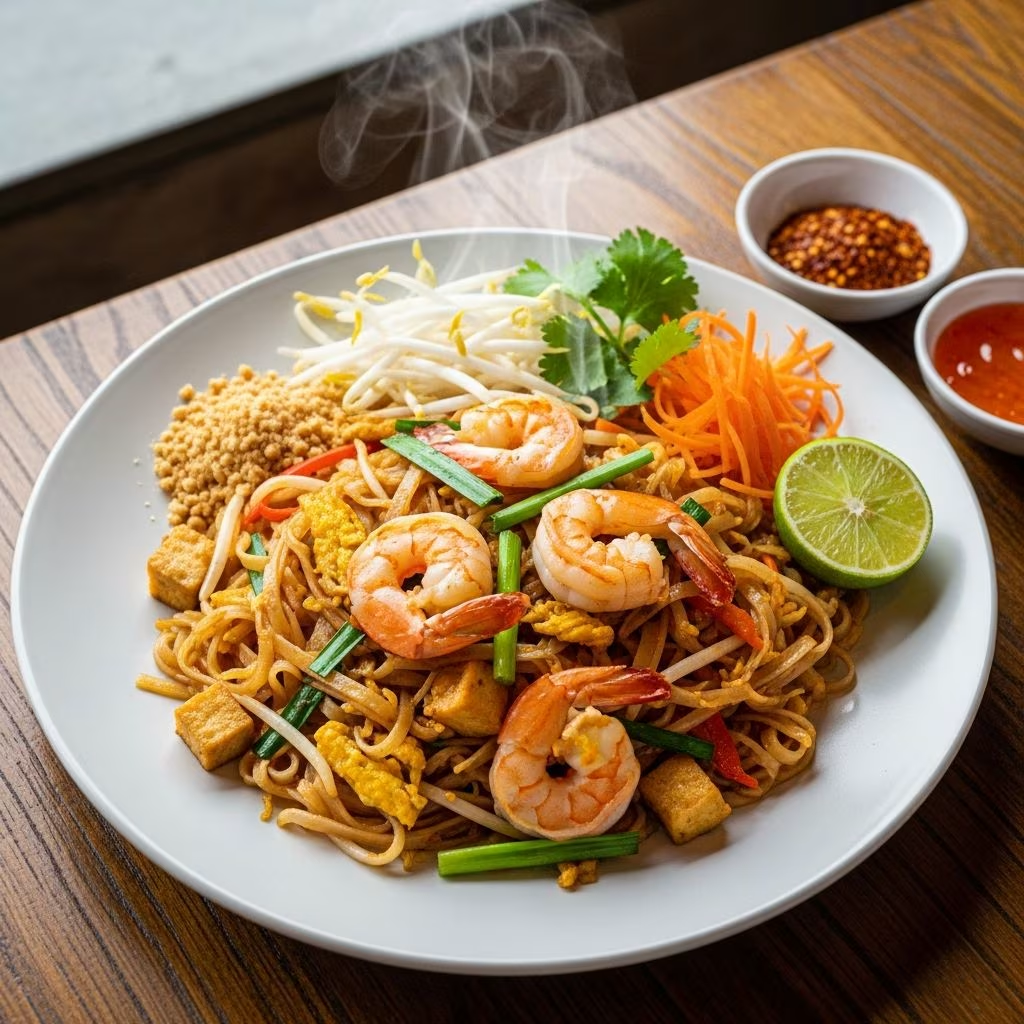
Pad Thai stands as one of the world’s most beloved noodle dishes, originating from Thailand’s bustling street food scene. This stir-fried masterpiece combines chewy rice noodles with proteins, fresh vegetables, eggs, and a tangy-sweet sauce, all finished with crunchy peanuts and lime. Home cooks can replicate this iconic flavor profile with accessible ingredients and straightforward methods. This guide draws from time-tested recipes to help you achieve balance in every bite, whether you’re a novice or refining your skills.
Understanding Pad Thai’s Core Elements
The magic of Pad Thai lies in its harmony of flavors: sweet from sugar, sour from tamarind or lime, salty from fish sauce, and umami from proteins and aromatics. Rice noodles provide the chewy base, while bean sprouts and herbs add crisp freshness. Mastering these components ensures success.
- Rice Noodles: Use flat, medium-width dried rice noodles (about 1/8-inch thick). Soak in room-temperature water for 1 hour until pliable but firm—they finish cooking in the wok.
- Proteins: Shrimp, chicken, tofu, or pork offer flexibility. Medium shrimp cook quickly; extra-firm tofu holds shape when pressed and cubed.
- Aromatics: Garlic, shallots, and sometimes dried shrimp build depth. Chop finely for even distribution.
- Eggs: Scrambled ribbons add richness and color.
- Vegetables: Bean sprouts and garlic chives provide crunch; bell peppers or carrots work as substitutes.
- Garnishes: Crushed peanuts, lime wedges, chili flakes, and cilantro elevate the dish.
Perfecting the Signature Sauce
The sauce defines Pad Thai. It must balance four tastes without overpowering the noodles. Traditional versions caramelize palm sugar for complexity, but brown sugar approximates it well.
| Ingredient | Quantity (for 4 servings) | Role |
|---|---|---|
| Palm or Brown Sugar | 3-5 Tbsp | Sweetness and caramel notes |
| Fish Sauce | 2-3 Tbsp | Salty umami |
| Tamarind Paste/Puree | 2-4 Tbsp | Tangy sourness (Thai-sourced preferred) |
| Lime Juice or Rice Vinegar | 1-2 Tbsp | Acidity balance |
| Sriracha or Cayenne | 1 tsp to 1 Tbsp | Heat |
| Peanut Butter (optional) | 1-2 Tbsp | Creaminess |
To prepare: Chop sugar and melt in a pan over medium heat until it darkens and bubbles. Add water (3 Tbsp) to deglaze, then stir in remaining ingredients. Simmer until dissolved. Taste and adjust—aim for sweet-tangy dominance with subtle salt.
Step-by-Step Cooking Process
High heat and quick stirring are key to prevent sogginess. Use a wok or large skillet.
- Prep Noodles: Soak 8 oz dried rice noodles in room-temp water for 1 hour. Drain; they should bend but not break.
- Mix Sauce: Prepare as above and set aside.
- Heat Wok: Add 2-3 Tbsp neutral oil (peanut or vegetable) over high heat.
- Cook Aromatics: Sauté 3 minced garlic cloves, 1/4 cup chopped shallots, and 2 Tbsp chopped dried shrimp (if using) for 30 seconds until fragrant.
- Add Protein: For shrimp (8 oz), cook 1-2 minutes until pink. For chicken or tofu (8-12 oz), stir-fry until browned and cooked through (3-5 minutes).
- Scramble Eggs: Push contents aside, add 2 beaten eggs, and scramble into soft curds. Mix with proteins.
- Incorporate Noodles: Add drained noodles and pour in sauce. Toss vigorously for 2 minutes until coated and sauce thickens.
- Finish with Veggies: Add 2 cups bean sprouts, garlic chives (1/2 cup chopped), and half the peanuts (1/4 cup crushed). Toss 1 minute off heat to wilt slightly.
- Serve: Plate immediately with lime wedges, extra peanuts, chili flakes, and sugar for customization.
Total time: 30-40 minutes. Serves 4. Pro tip: Cook in batches if your wok is small to maintain heat.
Customizing for Different Diets
Pad Thai adapts easily. Here’s how:
- Vegetarian: Skip fish sauce (use soy or mushroom sauce); use tofu and extra veggies. Add scrambled eggs or omit for vegan.
- Gluten-Free: Rice noodles and tamari (gluten-free soy) ensure compliance.
- Spice Levels: Mild: Omit cayenne. Hot: Double Sriracha or add fresh chilies.
- Protein Swaps: Pork, beef, or scallops shine; marinate meats briefly in sauce for flavor.
- Noodle Alternatives: Shirataki or zucchini noodles for low-carb versions.
Common Mistakes and Fixes
Avoid these pitfalls for pro results:
- Soggy Noodles: Don’t over-soak or boil; wok-fry briefly.
- Imbalanced Sauce: Taste before adding to dish. Tamarind from Thailand/Vietnam yields better sourness than Indian varieties.
- Overcooked Protein: Shrimp turns rubbery—add last if using with other items.
- Lack of Wok Hei: Use carbon steel wok on high flame for smoky essence.
- Missing Crunch: Fresh sprouts and peanuts are non-negotiable.
Ingredient Sourcing and Substitutions
Asian markets stock essentials like pressed tofu and Thai tamarind. Online works too.
| Hard-to-Find | Substitution |
|---|---|
| Tamarind Paste | Rice vinegar + lime juice (2:1) |
| Palm Sugar | Light brown sugar |
| Pressed Tofu | Extra-firm tofu, pan-fried |
| Garlic Chives | Green onions + cilantro |
| Dried Shrimp | Extra fish sauce or omit |
Fish sauce: Choose Thai brands like Red Boat for purity.
Pairing and Serving Suggestions
Serve hot with iced Thai tea or singha beer. Side cucumber salad cuts richness. Leftovers reheat well with a splash of water.
Frequently Asked Questions
What makes authentic Pad Thai different from American versions?
Authentic uses tamarind for sourness, caramelized palm sugar, and pressed tofu; avoids ketchup or excessive sweetness.
Can I make Pad Thai ahead?
Prep ingredients and sauce yes; cook fresh for best texture.
Is tamarind essential?
Yes for true flavor, but vinegar-lime mix approximates.
How spicy should it be?
Mild-medium traditionally; adjust with condiments at table.
Freezer-friendly?
Noodles toughen; best eaten same day.
Advanced Techniques for Chefs
For restaurant quality: Use a well-seasoned wok, single-source proteins, and garnish with banana blossom or preserved radish. Experiment with wok-tossed eggs for fluffiness. Scale sauce precisely—3:2:2:1 ratio (sugar:fish sauce:tamarind:other).
Pad Thai’s versatility keeps it timeless. Practice yields perfection; soon you’ll crave your homemade version over takeout.
References
- Easy Homemade Pad Thai — Tastes Better from Scratch. 2023. https://tastesbetterfromscratch.com/pad-thai/
- Best Pad Thai Recipe — Delish. 2023. https://www.delish.com/cooking/recipe-ideas/a53823/easy-pad-thai-recipe/
- Authentic Pad Thai Recipe — Hot Thai Kitchen. 2023. https://hot-thai-kitchen.com/best-pad-thai/