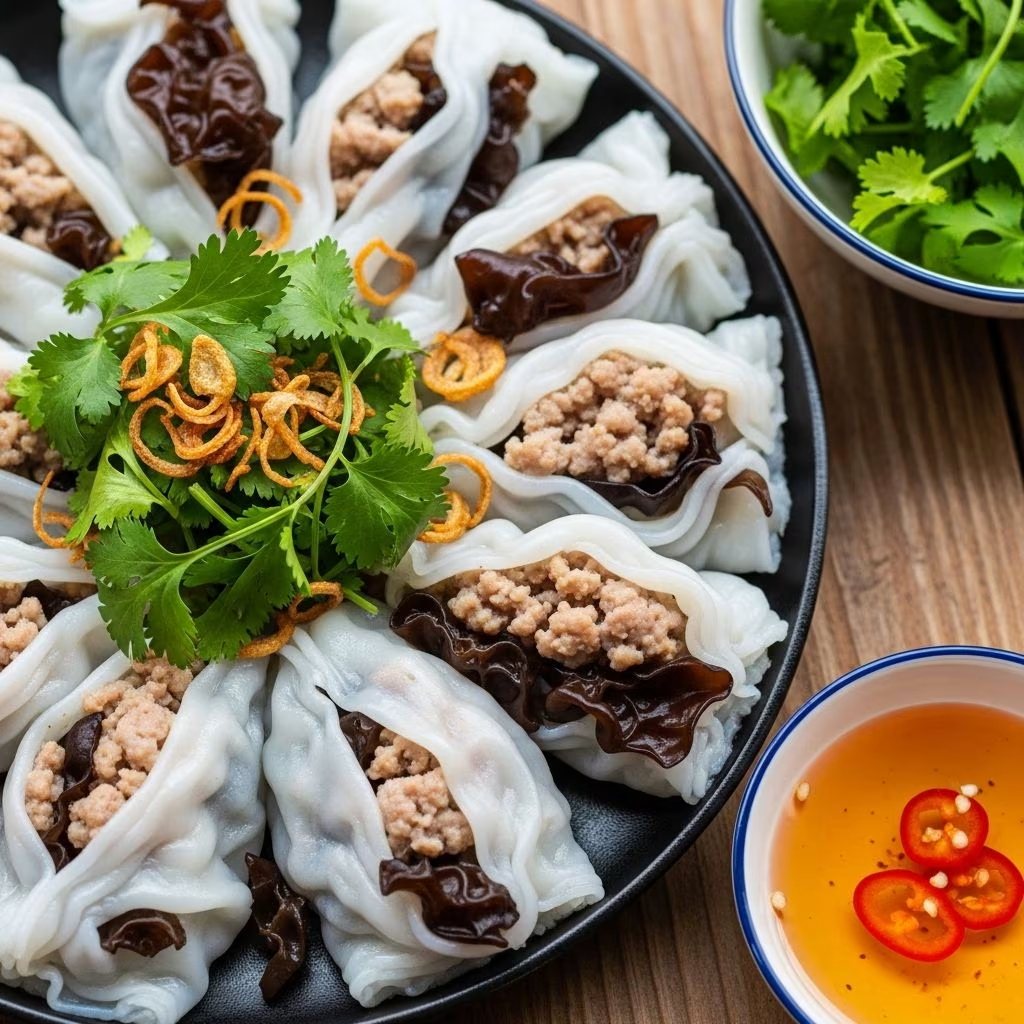
Delicate, translucent steamed rice sheets rolled around a savory filling define **banh cuon**, a beloved Vietnamese dish that captures the essence of street food elegance. These rolls combine silky textures with bold flavors, making them a staple in Vietnamese culinary tradition. Home cooks can replicate this specialty using basic kitchen tools, achieving restaurant-quality results with practice.
The Allure of Banh Cuon in Vietnamese Culture
Banh cuon originated in northern Vietnam, where vendors steam fresh rolls to order, filling them with seasoned pork and mushrooms. The dish’s appeal lies in its contrast: soft, nearly transparent wrappers encasing crunchy elements like wood ear mushrooms and fresh herbs. Typically enjoyed for breakfast or as a light meal, it pairs perfectly with nuoc cham, a versatile dipping sauce blending fish sauce, lime, sugar, and garlic for tangy umami depth.
Its popularity extends beyond Vietnam, appearing in diaspora communities worldwide. The rolls’ versatility allows variations, such as vegetarian fillings or additions like jicama for extra crunch. Mastering banh cuon at home brings the bustling market vibe into your kitchen, offering a rewarding project for those who enjoy hands-on cooking.
Essential Ingredients for Authentic Banh Cuon
Gathering the right components ensures success. Focus on fresh, high-quality items for the best texture and taste.
- Batter Base: Rice flour provides the primary structure, while tapioca flour or starch adds elasticity and translucency. Potato starch can enhance chewiness in some recipes.
- Filling Staples: Ground pork forms the hearty core, marinated with fish sauce, sugar, pepper, and sometimes MSG for depth. Wood ear mushrooms contribute crunch after rehydration and chopping.
- Aromatics and Add-Ins: Onions, green onions, and garlic build flavor layers. Optional jicama offers subtle sweetness and texture.
- Garnishes and Sides: Sliced cucumbers, bean sprouts, mint leaves, fried shallots, and cha lua (Vietnamese pork sausage) elevate presentation and freshness.
- Sauce Essentials: Nuoc cham requires fish sauce, lime juice, sugar, water, garlic, and chili for balance.
Quantities vary by recipe scale; a standard batch for 4 servings uses about 1-2 cups each of rice and tapioca flour, 1 lb ground pork, and 1/2 cup rehydrated mushrooms. Premixed batter flours are available at Asian markets for convenience.
Step-by-Step Batter Preparation
The batter is the foundation, requiring precise ratios for thin, steamable sheets.
- Combine 1 cup rice flour, 1 cup tapioca flour, 1 tsp salt, 1 tbsp vegetable oil, and 4 cups room-temperature water in a large bowl. Whisk until smooth, avoiding lumps.
- Let rest for 30 minutes to 8 hours (or overnight for advanced texture). This hydrates the flours, promoting even steaming.
- For overnight methods, discard half the soaking water after resting to concentrate flavors without diluting.
A well-rested batter flows thinly, coating pans evenly for translucent results. If too thick, add water sparingly; test consistency by ladling onto a hot surface.
Crafting the Savory Filling
The filling’s balance of savory, sweet, and umami elements shines through the delicate wrapper.
- Rehydrate wood ear mushrooms in hot water for 20-30 minutes, then chop finely. Squeeze out excess moisture.
- Marinate 1 lb ground pork with 2 tsp fish sauce, 1 tsp sugar, 1 tsp pepper (and optional 1/2 tsp MSG) for 10 minutes.
- Heat 1 tbsp oil in a pan over medium-high. Sauté minced onions (1/2 yellow onion) for 30 seconds, add pork and mushrooms, cooking until browned and dry, about 3-5 minutes.
- Cool completely before rolling to prevent sogginess.
This yields about 2 cups of filling, enough for 20-30 rolls. Leftovers pair excellently with rice.
Steaming Techniques Without Fancy Equipment
Traditional setups use specialized trays, but home hacks work wonders.
Pan-Flip Method: Heat an 8-inch nonstick pan over low. Ladle 1/8 cup batter, spread thinly, cover, and steam 1-2 minutes until translucent. Invert onto a greased surface for easy release.
Steamer Pot Alternative: Use a pot with boiling water and a flat, heat-safe tray or inverted plate. Pour batter, cover, and steam briefly.
Practice yields perfection; initial sheets may tear, but rhythm develops quickly. Cool each sheet 10 seconds before filling with 1 tbsp pork mixture, rolling tightly like spring rolls.
| Method | Pros | Cons | Best For |
|---|---|---|---|
| Pan-Flip | Quick, no steamer needed | Practice required | Beginners |
| Steamer Pot | Even cooking | Setup time | Batch cooking |
Assembling and Plating with Flair
Plating transforms rolls into a vibrant dish.
- Arrange 6-8 rolls on a plate.
- Drizzle scallion oil (fried green onions in oil).
- Top with sliced cha lua, cucumber matchsticks, blanched bean sprouts, chopped mint, and fried shallots.
- Serve with nuoc cham on the side or drizzled over.
Nuoc cham recipe: Mix 1/4 cup fish sauce, 1/4 cup lime juice, 2 tbsp sugar, 1/2 cup water, minced garlic, and chili. Adjust for taste.
Recipe Card: Classic Banh Cuon for 4
Ingredients
- Batter: 1 cup rice flour, 1 cup tapioca flour, 4 cups water, 1 tbsp oil, 1 tsp salt.
- Filling: 1 lb ground pork, 1/2 cup wood ears, 1/2 onion, 2 tsp fish sauce, 1 tsp sugar, 1 tsp pepper.
- Garnishes: Cha lua, cucumber, mint, fried shallots, nuoc cham.
Instructions Summary
Prep batter and rest. Make filling. Steam sheets, fill, roll. Plate with toppings. Total time: 1.5-2 hours.
Troubleshooting Common Challenges
Batter tears: Too thin—add flour. Too thick—add water. Ensure low heat and full coverage.
Sticking sheets: Oil pan lightly; use nonstick.
Dry filling: Cook fully to evaporate moisture.
Storage: Refrigerate rolls up to 2 days; reheat by steaming. Freeze uncooked batter.
Variations to Elevate Your Banh Cuon
- Vegetarian: Swap pork for crumbled tofu or mushrooms, season similarly.
- Seafood Twist: Use ground shrimp with scallions.
- Spicy Kick: Add sliced Thai chilies to filling or sauce.
- Jicama Crunch: Incorporate finely chopped, squeezed jicama for texture.
Health and Nutritional Insights
Banh cuon offers a light meal: low in fat, gluten-free from rice base. A serving provides protein from pork, fiber from mushrooms. Pair with veggies for balance. Customize with lean meats or plants.
Pairing Suggestions and Serving Ideas
Serve warm as appetizer or main with iced coffee or green tea. For parties, prep ahead and steam to order.
Frequently Asked Questions (FAQs)
What if I can’t find wood ear mushrooms?
Substitute shiitake or omit; they add unique crunch.
Can I make banh cuon ahead?
Yes, steam and roll, refrigerate, re-steam before serving.
Is a steamer necessary?
No, pan method works excellently at home.
How do I achieve translucent sheets?
Use tapioca flour and thin batter layers.
What’s the best oil for batter?
Neutral vegetable oil prevents flavor interference.
Conclusion: Your Path to Banh Cuon Mastery
With patience, banh cuon becomes a kitchen triumph, blending technique and tradition. Experiment to make it yours.
References
- My Grandma’s Banh Cuon – Cooking Therapy — Becca Du. 2023. https://www.cooking-therapy.com/banh-cuon-recipe/
- Bánh Cuốn / Bánh Ướt Recipe (Vietnamese Rice Rolls) — Hungry Huy. 2023. https://www.hungryhuy.com/banh-cuon/
- How to Make: Authentic Banh Cuon At Home Without A Steamer — YouTube (Video Transcript). 2023. https://www.youtube.com/watch?v=xiqcI6nbxQc