Arugula salads have become increasingly popular among health-conscious home cooks and restaurant patrons alike, offering a delicious combination of peppery greens and complementary flavors. Arugula, also known as rocket in European cuisine, is a leafy green cruciferous vegetable that brings distinctive character to any dish. When paired with the bright, zesty notes of a citrus vinaigrette, this green creates a salad that feels both refreshing and satisfying. The beauty of this particular combination lies in its versatility—it can serve as a light appetizer, a palate cleanser between courses, or a substantial side dish alongside protein.
Understanding Arugula and Its Nutritional Profile
Before diving into the recipe itself, it’s worthwhile to understand what makes arugula such a valuable ingredient in contemporary cooking. Arugula is high in fiber, folate, phytochemicals and antioxidants, demonstrating nutritional qualities comparable to other cruciferous vegetables like broccoli, kale, and Brussels sprouts. This nutrient density means that choosing arugula for your salad base isn’t merely about flavor—you’re also making a health-conscious decision that nourishes your body.
When selecting arugula at the market, look for leaves that display a vibrant green color and maintain their structural integrity. Baby arugula tends to offer a milder peppery flavor compared to mature leaves, making it an excellent choice if you prefer a more delicate taste profile. Wilted, yellowing, or discolored leaves should be avoided, as they indicate age and reduced nutritional value.
Essential Components: Citrus Selection and Preparation
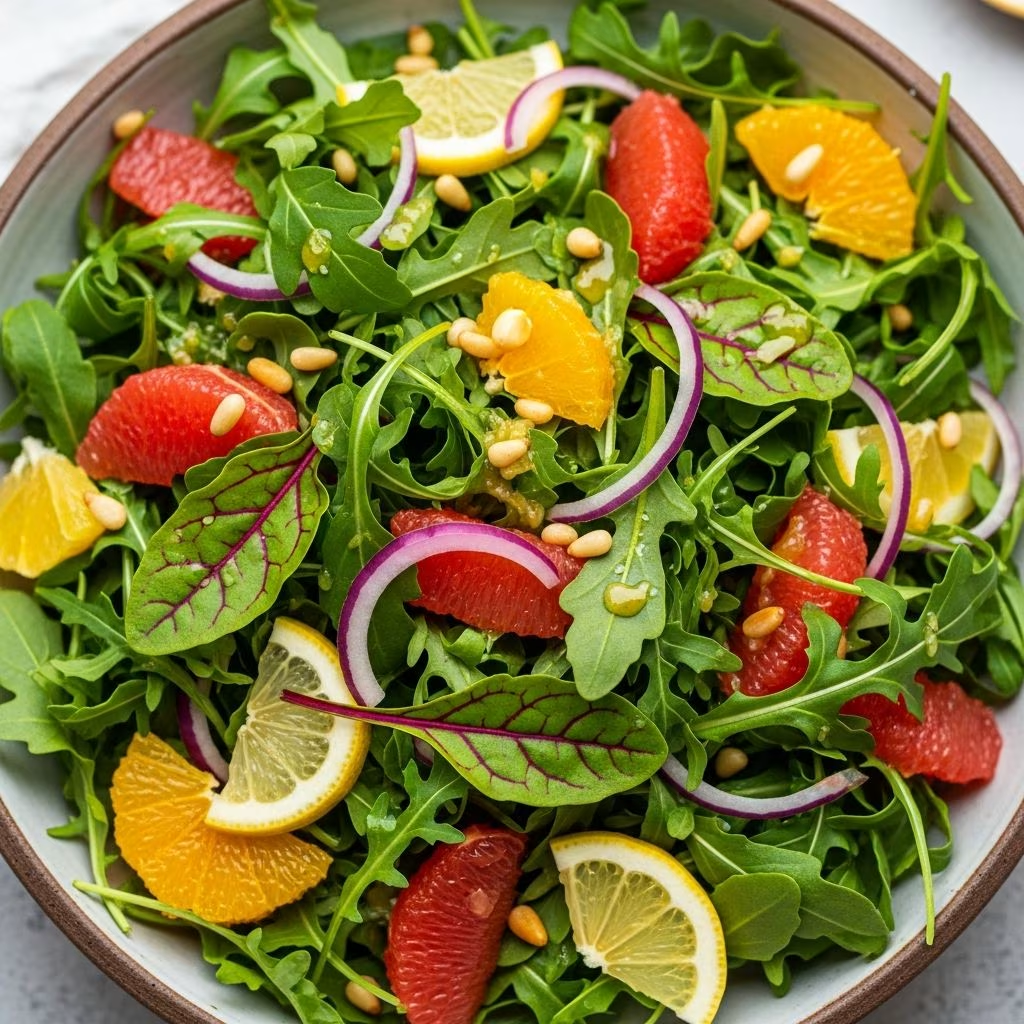
The foundation of an exceptional citrus vinaigrette rests on your choice of citrus fruits. Rather than limiting yourself to a single variety, consider exploring the diverse flavor profiles available throughout different seasons. Tangelos, blood oranges, and ruby red grapefruits each contribute unique taste dimensions—tangelos offer sweetness, blood oranges provide subtle earthiness, while grapefruits deliver a pleasantly tart contrast.
The process of preparing citrus for your salad requires a technique known as supreming, which involves carefully removing the fruit segments while discarding the white pith and membranes. This method not only improves the eating experience but also allows you to collect the precious juice that forms the backbone of your vinaigrette. To supreme citrus:
- Cut a thin slice from both the top and bottom of the fruit to create stable surfaces
- Using a sharp knife, carefully remove the colored skin and white pith in vertical strips, following the fruit’s natural curve
- Working over a bowl to catch all juices, angle your knife along the membrane lines and gently remove each segment, allowing it to fall into the bowl
- Once all segments are removed, squeeze the remaining membranes to extract every drop of juice
This technique, while requiring some practice, transforms the eating experience and ensures none of the flavorful juice goes to waste.
Crafting the Perfect Citrus Vinaigrette
A well-balanced vinaigrette serves as the flavor bridge between your peppery arugula and sweet citrus elements. The traditional approach combines acidic and fatty components in a ratio that creates equilibrium on the palate. Extra virgin olive oil, citrus juice, vinegar, and select seasonings work in concert to produce a dressing that enhances rather than overwhelms.
The fundamental technique involves whisking your acidic elements—citrus juice and vinegar—with olive oil, garlic, mustard, and honey to create an emulsified mixture. The mustard and honey serve dual purposes: they add flavor while also helping to stabilize the emulsion, preventing the oil and acidic components from separating. A simple pinch of salt and fresh black pepper rounds out the profile.
Vinaigrette Recipe Framework
| Component | Quantity | Function |
|---|---|---|
| Extra virgin olive oil | ¼ cup | Creates richness and carries flavors |
| Fresh citrus juice | 1-2 tablespoons | Provides acidity and bright flavor |
| Vinegar (white balsamic) | 2 tablespoons | Adds depth and additional acidity |
| Dijon mustard | ½ teaspoon | Aids emulsification and adds complexity |
| Honey | ½ teaspoon | Balances acidity with subtle sweetness |
| Salt and pepper | To taste | Enhances all flavors |
Building Layers of Flavor and Texture
While arugula and citrus form the foundation of this salad, additional components introduce textural variety and complementary flavors. Thinly sliced sweet onions contribute a subtle bite that intensifies the peppery notes of the greens. Fennel, when sliced paper-thin, offers an unexpected anise-like quality that pairs surprisingly well with citrus. These aromatic vegetables should be incorporated with care, as their potent flavors can easily overwhelm if used excessively.
Shaved Parmesan cheese adds a savory, umami dimension that balances the salad’s brightness. Using a vegetable peeler to create curls rather than grating produces a more elegant presentation and allows the cheese to showcase its complex flavors. For those seeking additional textural contrast and nutritional benefits, toasted nuts—whether pistachios, pine nuts, or walnuts—provide satisfying crunch and healthy fats.
Step-by-Step Assembly Process
Proper assembly technique ensures even distribution of dressing and optimal flavor in every bite. Begin by creating your base with the arugula, distributing it evenly across your serving vessel or individual plates. The order in which you add remaining components matters, as it affects both visual presentation and the final tasting experience.
- Prepare the foundation: Wash and thoroughly dry your arugula to prevent excess moisture from diluting your dressing
- Create your vinaigrette: In a small bowl, whisk together all dressing ingredients until fully combined and emulsified
- Arrange the base: Place dried arugula in your serving bowl or on individual plates
- Add citrus components: Distribute supremed citrus segments across the arugula, allowing them to settle into the greens
- Layer supporting vegetables: Add thinly sliced onions, fennel, or other aromatics in a balanced manner
- Apply dressing strategically: Drizzle approximately half the prepared vinaigrette over the components, reserving excess for additional servings
- Toss gently: Using salad servers or utensils, gently toss the salad to ensure all elements are coated with dressing
- Finish with cheese and nuts: Top with shaved Parmesan and your chosen nuts immediately before serving to maintain their textural integrity
Serving Suggestions and Timing Considerations
This salad achieves optimal flavor and texture when consumed immediately after assembly. Citrus vinaigrette-based salads do not maintain their quality well when stored with dressing already applied, as the greens will gradually soften and the overall composition becomes less appealing. For make-ahead scenarios, store the components separately and assemble only when ready to serve.
The versatility of this dish allows it to function in multiple contexts within a meal. Served as a light starter, it cleanses the palate and prepares diners for richer main courses. When accompanied by grilled seafood—particularly salmon—or roasted chicken, it provides a refreshing contrast to heavier proteins. For vegetarian presentations, the substantial protein content from nuts and cheese allows the salad to serve as a complete meal.
Seasonal Variations and Ingredient Substitutions
While the core formula remains consistent, this salad welcomes creative variations based on seasonal availability and personal preference. Winter months call for the rich flavors of blood oranges and grapefruits, while spring and summer benefit from sweeter citrus varieties. Fresh herbs such as mint add brightness and complement the existing flavor profile without overshadowing delicate arugula notes.
For those with vinegar preferences, white wine vinegar provides a lighter touch than balsamic, allowing citrus flavors to remain prominent. Red wine vinegar adds robustness suitable for heartier preparations. The honey component can be adjusted based on the natural sweetness of your chosen citrus, with sweeter fruits requiring less additional honey.
Frequently Asked Questions
What is the best way to clean and store fresh arugula?
Arugula requires gentle handling to prevent bruising. Rinse under cool water just before use, then spin or pat dry thoroughly with paper towels. Store unwashed arugula in an airtight container with paper towels to absorb excess moisture, keeping it in the coldest section of your refrigerator for up to five days.
Can I prepare components in advance?
Yes, individual components maintain quality when stored separately. Supreme your citrus fruits up to two days ahead, storing segments and juice in separate airtight containers. Prepare your vinaigrette up to three days in advance. Assemble only when ready to serve to maintain optimal texture and flavor.
What proteins pair well with this salad?
The bright, refreshing nature of this salad complements most proteins. Grilled salmon, seared scallops, roasted chicken breast, and even plant-based proteins like grilled tofu all work excellently. The salad’s acidity cuts through rich, fatty proteins while enhancing lean meats.
How much dressing should I use?
The vinaigrette recipe provided typically yields approximately three ounces, which dresses four servings as a side or two generous main-course portions. Most recipes require only half to three-quarters of prepared dressing, as arugula requires less coating than heartier greens to avoid becoming soggy.
Are there gluten-free considerations?
This recipe is naturally gluten-free when using certified gluten-free mustard and ensuring all other ingredients are uncontaminated. Standard Dijon mustard, olive oil, citrus, honey, and arugula contain no gluten, making this an excellent option for those with gluten sensitivity.
Mastering Emulsification Techniques
Understanding emulsification elevates your vinaigrette from adequate to exceptional. An emulsion exists when oil and acidic liquids combine into a stable, cohesive mixture rather than separating into distinct layers. Mustard acts as an emulsifying agent—its natural compounds help hold these otherwise incompatible ingredients together. Whisking vigorously while adding oil gradually introduces the oil in tiny droplets, allowing the emulsifier to coat and suspend each one.
Temperature affects emulsification success; room-temperature ingredients combine more readily than cold components straight from refrigeration. If your vinaigrette breaks or separates, simply whisk it again with an additional small amount of vinegar or mustard to re-establish emulsification.
References
- Arugula Citrus Salad with Pistachios — Monica Nedeff. Retrieved from https://www.monicanedeff.com/arugula-citrus-salad/
- Arugula Salad With Lemon Vinaigrette — Ali in the Valley. 2023-08-01. Retrieved from https://aliinthevalley.com/2023/08/01/arugula-salad-with-lemon-vinaigrette/
- Easy Arugula Salad and Lemon Vinaigrette — Last Ingredient. Retrieved from https://www.lastingredient.com/arugula-salad-with-lemon-vinaigrette/
- 15-Minute Refreshing Citrus Salad with Arugula — Our Salty Kitchen. Retrieved from https://oursaltykitchen.com/citrus-salad/
- Arugula Citrus Salad — On The Bias. Retrieved from https://onthebias.nyc/arugula-salad-with-orange-vinaigrette/
- Arugula Salad with Lemon Vinaigrette — Wholesome Made Easy. Retrieved from https://wholesomemadeeasy.com/arugula-salad-with-lemon-vinaigrette/