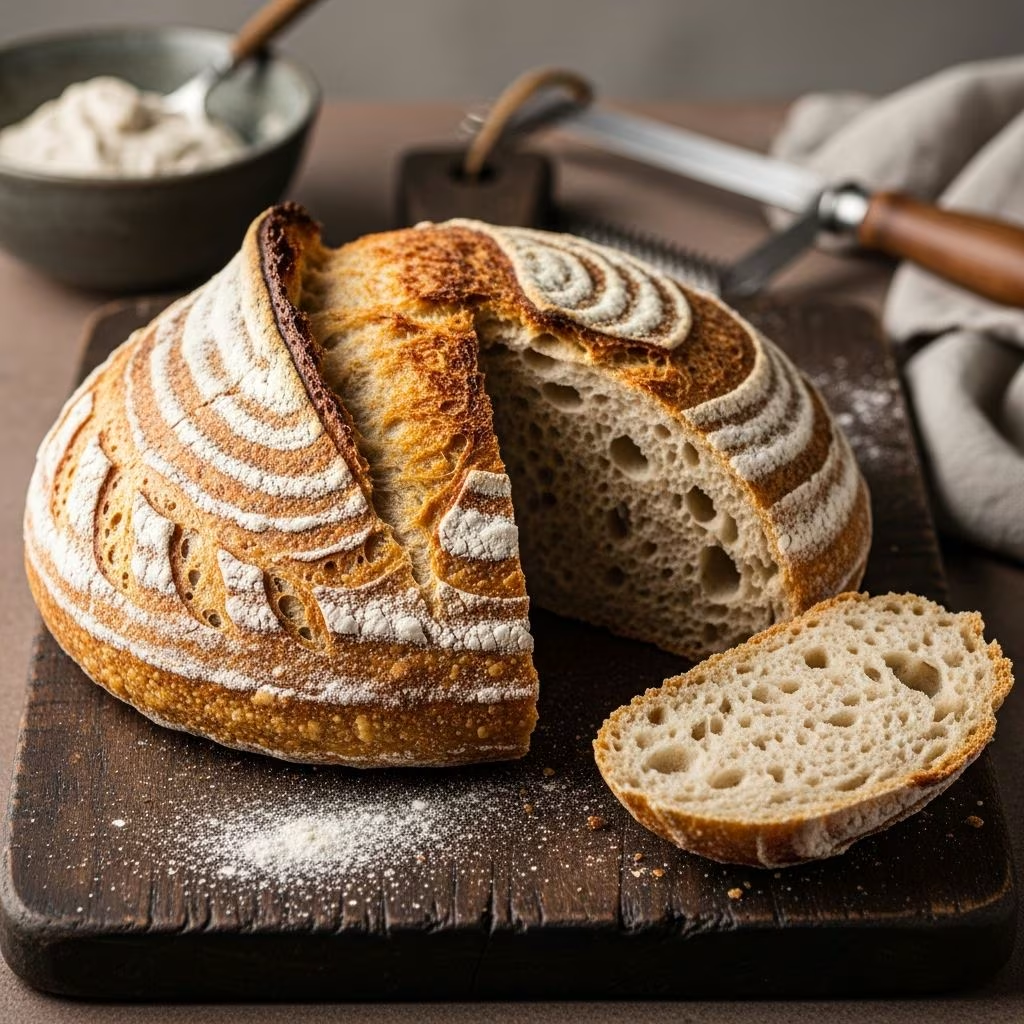
Creating bakery-style sourdough bread without kneading is achievable for anyone with a basic sourdough starter. This method relies on long fermentation to develop structure and flavor, requiring just minutes of active time for a loaf boasting a crackly crust and tender, hole-filled interior.
Why Choose No-Knead Sourdough?
No-knead techniques simplify bread making by letting time and natural enzymes do the work of gluten development. Ideal for busy home bakers, this approach yields results rivaling professional bakeries through extended rising periods that enhance taste and texture.
- Time-saving: Only 10-20 minutes hands-on over 24 hours.
- Foolproof: Minimal intervention reduces common errors.
- Flavor-packed: Slow fermentation builds complex tangy notes.
Essential Ingredients for Success
High-quality components ensure optimal rise and taste. Focus on hydration levels around 70-75% for that signature open crumb.
| Ingredient | Amount | Purpose |
|---|---|---|
| Ripe Sourdough Starter | 100g (about 1/2 cup) | Leavening and flavor base; must be active and bubbly. |
| Filtered Water (lukewarm, 90°F) | 350g (1.5 cups) | Hydrates flour; use filtered to avoid chlorine inhibiting yeast. |
| Bread Flour or All-Purpose | 500g (4 cups) | Provides strong gluten structure; bread flour preferred for chewiness. |
| Sea Salt | 10g (2 tsp) | Enhances flavor and controls fermentation. |
Pro tip: Build your starter the night before by mixing 25g mature starter with equal parts flour and water, letting it peak for peak activity.
Preparing Your Sourdough Starter
A vigorous starter is the foundation. Test readiness by dropping a teaspoon in water—if it floats, it’s primed.
- Evening prior: Combine 25g starter, 75g flour, 75g warm water in a jar.
- Rest 8-12 hours at 70°F until doubled and bubbly.
- Use 100g of this ripe levain for the dough.
In cooler kitchens, extend rest time; warmer spots may need shortening to prevent over-fermentation.
Step-by-Step Mixing and Fermentation
Mixing takes under 5 minutes. The dough starts shaggy and wet—embrace the stickiness for superior results.
Day 1: Mixing
- Dissolve 100g ripe starter in 350g lukewarm water.
- Add 500g flour and 10g salt; stir until no dry spots remain. Use a wooden spoon or wet hands.
- Cover and rest 30 minutes (autolyse) to hydrate flour.
- Perform 4-6 stretch-and-folds every 30 minutes: grab an edge, stretch up, fold over center. Rotate bowl.
Bulk Fermentation
Let dough rise at room temperature (70-75°F) for 4-8 hours until doubled, bubbly, and jiggly. Colder rooms extend this; mark bowl level to track progress.
Shaping the Dough Loaf
Gentle handling preserves air pockets for crumb structure.
- Lightly flour counter and hands.
- Turn dough out; fold edges to center to form a loose ball.
- Rest 20 minutes covered.
- Tension surface by rotating and tucking underside.
Place seam-side up in a floured proofing basket or towel-lined bowl. Refrigerate overnight (8-12 hours) for flavor depth and easier scoring.
Baking to Golden Perfection
A preheated Dutch oven traps steam for crust development—no need for ice cubes or sprays.
- Preheat oven to 450°F with 5-6 qt Dutch oven inside for 45-60 minutes.
- Turn dough onto parchment; score top with a lame or sharp knife (1/2-inch deep slash).
- Lift into hot pot, cover, bake 20 minutes.
- Uncover, bake 20-25 more minutes until deep golden (internal 205-210°F).
Cool on rack 2+ hours before slicing to set crumb.
Troubleshooting Common Issues
Even simple recipes have pitfalls—here’s how to fix them.
| Problem | Cause | Solution |
|---|---|---|
| Flat loaf | Weak starter | Float test; feed and wait for peak activity. |
| Gummy crumb | Underbaked | Bake longer uncovered; check temp. |
| Dense texture | Low hydration or rushed rise | Increase water slightly; allow full fermentation. |
| Pale crust | Insufficient preheat | Extend preheat; bake hotter initially. |
Customizing Your Sourdough
Experiment once basics are mastered.
- Seeds/Nuts: Add 1/2 cup soaked seeds or chopped nuts post-autolyse.
- Whole Grains: Substitute 100g bread flour with whole wheat for nuttier flavor.
- Herbs/Olives: Fold in during shaping for savory twists.
- Sweet Loaf: Include 50g honey and cinnamon swirl.
Maintain hydration; denser add-ins absorb moisture.
Storage and Freezing Tips
Proper storage preserves freshness.
- Room temp: Wrap in cloth bag; lasts 3-4 days.
- Freezer: Slice, freeze in bags up to 3 months; toast from frozen.
- Revive stale: Spritz water, oven at 350°F for 10 minutes.
Health Benefits of Sourdough
Sourdough’s natural fermentation predigests starches and phytic acid, improving digestibility and nutrient absorption compared to commercial yeast breads.
Frequently Asked Questions
Can I use all-purpose flour?
Yes, though bread flour yields better structure. All-purpose works fine for beginners.
What if my kitchen is cold?
Place bowl in off oven with light on or use proofing box at 75°F. Expect 10-12 hour bulk ferment.
Do I need a Dutch oven?
Ideal for steam, but use baking stone with steam pan alternative.
How do I know my starter is ready?
Doubled in size, passes float test, domed and bubbly after feeding.
Can I speed up the process?
Avoid rushing; warmth shortens slightly, but flavor peaks with patience.
This method transforms novices into confident bakers, delivering consistent, craveable loaves. Practice refines intuition for timing and feel.
References
- How to make no-knead sourdough bread — King Arthur Baking. 2020-04-27. https://www.kingarthurbaking.com/blog/2020/04/27/how-to-make-no-knead-sourdough-bread
- No-Knead Sourdough Bread — Winding Creek Ranch. N/A. https://www.windingcreekranch.org/no-knead-sourdough-bread/
- Easy No-Knead Sourdough Bread Recipe — Homestead and Chill. N/A. https://homesteadandchill.com/simple-sourdough-bread-recipe/
- Beginner Sourdough Bread — Amy Bakes Bread. N/A. https://amybakesbread.com/no-knead-rustic-sourdough/
- Almost No-Knead Sourdough Bread — The Splendid Table. 2017-01-23. https://www.splendidtable.org/story/2017/01/23/almost-no-knead-sourdough-bread