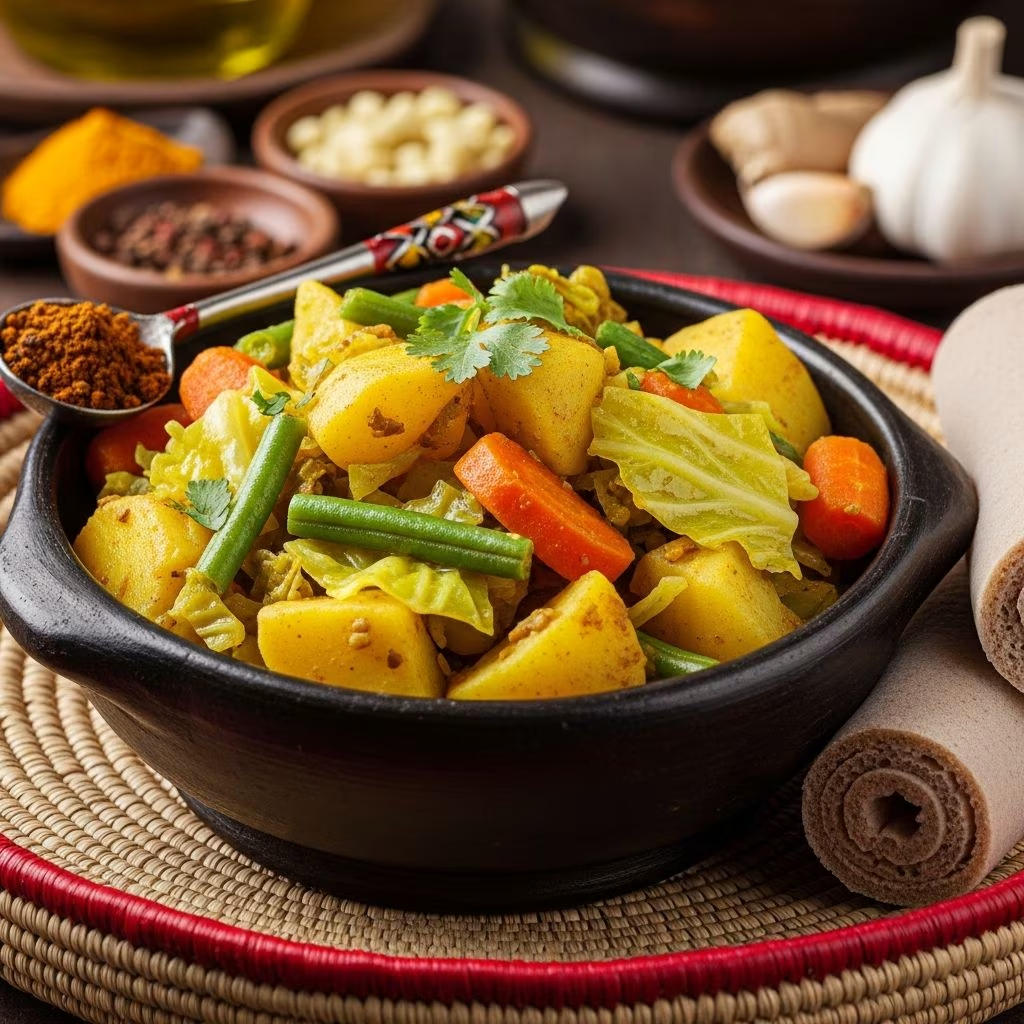
Ethiopian cuisine offers a rich tapestry of flavors, and among its most accessible and satisfying dishes stands alicha denich. This mild yet deeply flavorful vegetable medley represents the heart of Ethiopian home cooking, combining humble vegetables with warming spices to create a dish that nourishes both body and spirit. Whether you’re exploring African cuisine for the first time or deepening your culinary knowledge, understanding how to prepare alicha denich opens doors to authentic flavors and time-honored cooking traditions.
Understanding Alicha Denich: Foundation and Significance
Alicha denich translates to a mild stew featuring potatoes, embodying the Ethiopian philosophy of balancing bold spices with gentler preparations. Unlike its spicier counterpart, misir wot, alicha dishes showcase turmeric’s earthy warmth rather than the heat of berbere spice blends. The name itself breaks down elegantly: “alicha” refers to the mild preparation method, while “denich” means potatoes in Amharic, the primary language of Ethiopia.
This dish holds cultural significance throughout Ethiopian communities, appearing at family tables, communal gatherings, and religious observances. Its versatility allows cooks to adapt recipes based on seasonal vegetables and household preferences while maintaining the essential character that makes alicha denich instantly recognizable across generations.
Essential Ingredients and Their Roles
Creating authentic alicha denich requires understanding how each component contributes to the final dish’s flavor profile and texture. The ingredient list appears deceptively simple, yet each element serves a specific purpose in building complexity and satisfaction.
Primary Vegetables
- Cabbage: Serves as the aromatic foundation, becoming tender and slightly sweet during cooking. Green cabbage works well, though red cabbage or napa varieties offer interesting textural variations.
- Potatoes: Red potatoes are preferred for their faster cooking time and ability to maintain shape throughout the stewing process, preventing the dish from becoming mushy or falling apart.
- Carrots: Add natural sweetness and vibrant color while providing textural contrast. Cutting them into appropriate sizes ensures they cook alongside potatoes rather than becoming overly soft.
Aromatic and Flavor Components
- Onions: White onions are traditionally used, creating a mild base that won’t overpower the turmeric’s delicate flavor. They require careful attention during initial cooking to prevent burning.
- Garlic and Ginger: These aromatics provide warmth and complexity, their pungency softening as they cook into the vegetable mixture.
- Turmeric: The signature spice defining alicha dishes, turmeric brings earthy, slightly bitter notes that distinguish this preparation from spicier Ethiopian stews.
- Jalapeños (Optional): For those preferring some heat, fresh jalapeños add gentle warmth without overwhelming the delicate balance the recipe achieves.
Supporting Ingredients
- Olive Oil: Traditional Ethiopian cooking uses niter kibbeh, clarified butter infused with spices, but olive oil serves as an accessible alternative that works effectively.
- Salt and Black Pepper: Essential seasonings adjusted to taste, these ingredients allow individual cooks to fine-tune flavor intensity according to preference.
- Optional Protein Additions: Chickpeas provide plant-based protein and interesting texture, transforming the dish into a more substantial meal option.
Cooking Methods: Slow Cooker Versus Stovetop
The Slow Cooker Approach
Modern cooking demands often require convenient preparation methods that don’t sacrifice authenticity or flavor. The slow cooker method adapts alicha denich beautifully to contemporary kitchens, allowing hands-off cooking that develops deep, integrated flavors.
This method involves combining all prepared vegetables, aromatics, and seasonings directly into the slow cooker vessel. The vegetables release their natural moisture while absorbing the turmeric-infused oil and spice blend throughout the cooking process. Setting the cooker to high heat produces results within three hours, while the low setting over six hours creates even more developed, mellow flavors. Stirring every hour or two ensures even cooking and prevents any vegetables from becoming overly soft while others remain firm.
The slow cooker method proves particularly valuable for busy cooks, allowing preparation in the morning and meal readiness by evening without active supervision or stirring requirements.
The Stovetop Technique
Traditional stovetop preparation maintains greater control over cooking progression and allows the cook to develop layers of flavor through careful sequencing. This method begins by heating olive oil and sautéing onions until they soften slightly without reaching full caramelization. Adding turmeric at this stage perfumes the oil and prevents the spice from burning or developing bitter notes.
Continuing the stovetop method, carrots and potatoes enter the pan next, cooking briefly in the spiced oil before liquid addition and vegetable incorporation. The intermediate cooking period allows these slower-cooking vegetables to reach partial tenderness before the quick-cooking cabbage joins the mixture. Fresh jalapeños, garlic, and ginger integrate at appropriate moments, their flavors dispersing throughout without overwhelming delicate vegetable textures.
Step-by-Step Preparation Guide
Ingredient Preparation
Successful alicha denich begins before anything touches heat. Wash all vegetables thoroughly, removing any dirt or debris. Cut potatoes into uniform chunks, approximately one-inch cubes, ensuring they cook evenly. Red potatoes’ thinner skins mean you can leave them unpeeled, contributing both nutrition and rustic authenticity. Slice carrots into half-moons or diagonal cuts, creating visual appeal and manageable cooking pieces. Chop cabbage into bite-sized chunks, removing the dense core and reserving leaves for even cooking.
Mince or grate garlic and ginger according to preference, as finely chopped pieces integrate more thoroughly into the stew while larger chunks provide concentrated flavor bursts. Slice jalapeños lengthwise if you prefer easier seed removal, or keep them intact for those who enjoy the additional heat the seeds provide.
Cooking Sequence
Whether using slow cooker or stovetop methods, the cooking sequence determines whether the finished dish achieves ideal texture and flavor integration. For stovetop preparation, begin by heating olive oil over medium-high temperature. Add sliced onions, cooking for two to three minutes until they soften slightly and begin releasing their aromatic compounds. Reduce heat to medium and add turmeric, stirring constantly for approximately one minute to bloom the spice and prevent scorching.
Introduce potatoes and carrots, stirring them into the spiced oil to coat evenly. Cook this mixture for five to eight minutes, allowing the outer surfaces to begin softening slightly while the oil’s flavor penetrates. If the vegetables appear to be sticking, add a small amount of water to prevent burning while maintaining the cooking process’s momentum.
Add cabbage along with minced garlic and ginger, stirring thoroughly to combine all ingredients. At this point, the pot will appear quite full, but vegetables shrink considerably as they release moisture. Cook uncovered or partially covered for five to ten minutes, stirring occasionally, until steam rises and the vegetable mixture becomes more compact. Add salt, black pepper, and fresh jalapeños if using, tasting and adjusting seasonings as needed.
Continue cooking for an additional fifteen to twenty minutes, stirring occasionally, until all vegetables achieve the desired tenderness. Some cooks prefer a firmer texture with vegetables maintaining distinct shapes, while others enjoy a softer, more integrated stew. Either approach is entirely valid and depends on personal preference and regional tradition.
Flavor Development and Seasoning Adjustments
Creating balanced alicha denich requires understanding how individual components contribute to the overall flavor profile. Turmeric’s earthy, slightly bitter notes should remain noticeable without overwhelming other ingredients. If turmeric flavor seems too strong, a squeeze of lemon juice or small amount of sugar can balance the intensity. If the spice flavor seems muted, additional turmeric can be stirred in during the final cooking minutes, though addition later in cooking develops less integrated results than earlier incorporation.
Salt plays a crucial role beyond simple seasoning, allowing vegetable flavors to emerge and shine. Begin with conservative amounts, adding gradually as cooking progresses, since slow evaporation concentrates salt flavors. Freshly ground black pepper adds gentle heat and complexity that pre-ground versions struggle to provide.
The optional jalapeños or other fresh chiles should add warmth without overwhelming the dish’s fundamental mildness. Removing seeds and white pith reduces heat considerably while maintaining the chile’s aromatic contribution. Conversely, leaving seeds intact for spice enthusiasts creates a noticeably warmer final dish.
Serving Suggestions and Accompaniments
Alicha denich reaches its full potential when thoughtfully served alongside complementary dishes. Traditional Ethiopian meals feature injera, a spongy sourdough flatbread that serves as both plate and utensil. The bread’s slight tanginess complements alicha denich’s gentle warmth beautifully, while its absorbent texture captures the stew’s flavorful liquid.
Fresh herb garnishes, particularly chopped cilantro or parsley, add brightness and visual appeal. These aromatic herbs provide a fresh counterpoint to the long-cooked vegetables, offering textural contrast with their crisp leaves. A final drizzle of high-quality olive oil just before serving adds richness and emphasizes the dish’s satisfying nature.
Alicha denich serves well alongside other Ethiopian dishes including misir wot, a spicier red lentil preparation, creating balanced meals with contrasting heat levels. The mild stew also pairs excellently with split pea preparations, providing variety without overwhelming diners with excessive spice.
Storage and Make-Ahead Strategies
One of alicha denich’s greatest advantages lies in its improved flavor after a day or two of refrigeration, as ingredients continue melding and spices deepen their presence. Store the stew in airtight containers for up to five days, making this an excellent candidate for meal preparation. The stew freezes successfully for up to three months, though vegetables may develop slightly softer textures after thawing. Freeze in portion-sized containers for convenient future meals that require minimal reheating.
Reheating alicha denich gently over medium heat or in the microwave with a covered container prevents vegetable further breakdown. Adding a small amount of water if the mixture has thickened considerably during storage restores the desired consistency without diluting flavors.
Frequently Asked Questions
Can I substitute vegetables in this recipe?
Yes, alicha denich welcomes vegetable variations based on seasonal availability and personal preference. Red cabbage offers beautiful color and slightly different flavor profile. Brussels sprouts cut in half provide interesting texture and taste alternative. Other root vegetables including turnips or parsnips work well alongside potatoes, while green beans or other legumes can supplement or replace portions of traditional vegetables. The key to successful substitutions involves maintaining similar cooking times to ensure everything reaches optimal doneness simultaneously.
What if I don’t have turmeric?
While turmeric’s distinctive flavor defines alicha denich, small amounts of cumin or coriander can provide warming spice alternatives. However, the resulting dish will taste noticeably different from traditional versions. Turmeric’s unique earthy flavor cannot be perfectly replicated, though gentle experimentation with other warming spices may yield results you enjoy.
How can I make this dish spicier?
Adding more jalapeños or other fresh chiles with seeds intact increases heat effectively. Incorporating berbere spice blend, a complex mixture of chiles and warming spices central to Ethiopian cuisine, transforms alicha denich toward spicier wot territory. Red pepper flakes offer another option for heat-seeking cooks. Begin with conservative additions, tasting frequently to achieve your preferred spice level.
Is this recipe vegan-friendly?
The basic vegetable-only version is naturally vegan when prepared with olive oil rather than niter kibbeh. The addition of chickpeas increases protein content and satisfies more completely for plant-based diets. Ensuring all seasonings remain vegan-appropriate, particularly checking curry blends for animal products, maintains this dish’s accessibility for various dietary practices.
Conclusion
Alicha denich represents more than simply another vegetable stew; it embodies Ethiopian culinary traditions emphasizing balance, flavor development, and accessible ingredients. Whether prepared using modern slow cooker convenience or traditional stovetop techniques, this gentle yet satisfying dish offers opportunities for creative adaptation while maintaining its essential character. As you prepare alicha denich, you’re participating in culinary traditions spanning generations and communities, bringing authentic African flavors to your table with straightforward techniques and readily available ingredients.
References
- Slow Cooker Alicha Denich (Cabbage and Potatoes) — Food Revolution Network. 2024. https://foodrevolution.org/recipes/slow-cooker-alicha-denich-cabbage-and-potatoes/
- How to make Alicha Denich! Simple Ethiopian Recipe — Abiy’s Homemade Recipes. YouTube. https://www.youtube.com/watch?v=LCBW96fiqeY
- Ethiopian Potatoes, Cabbage & Carrots (Alicha) — Classy Cuisine with Chef Azra. YouTube. https://www.youtube.com/watch?v=zsiauFvn1fM
- Ethiopian Recipes In English | Lamb & Potato Stew | dinich besiga — How To Cook Great. YouTube. https://www.youtube.com/watch?v=uWeQyP_uLvg