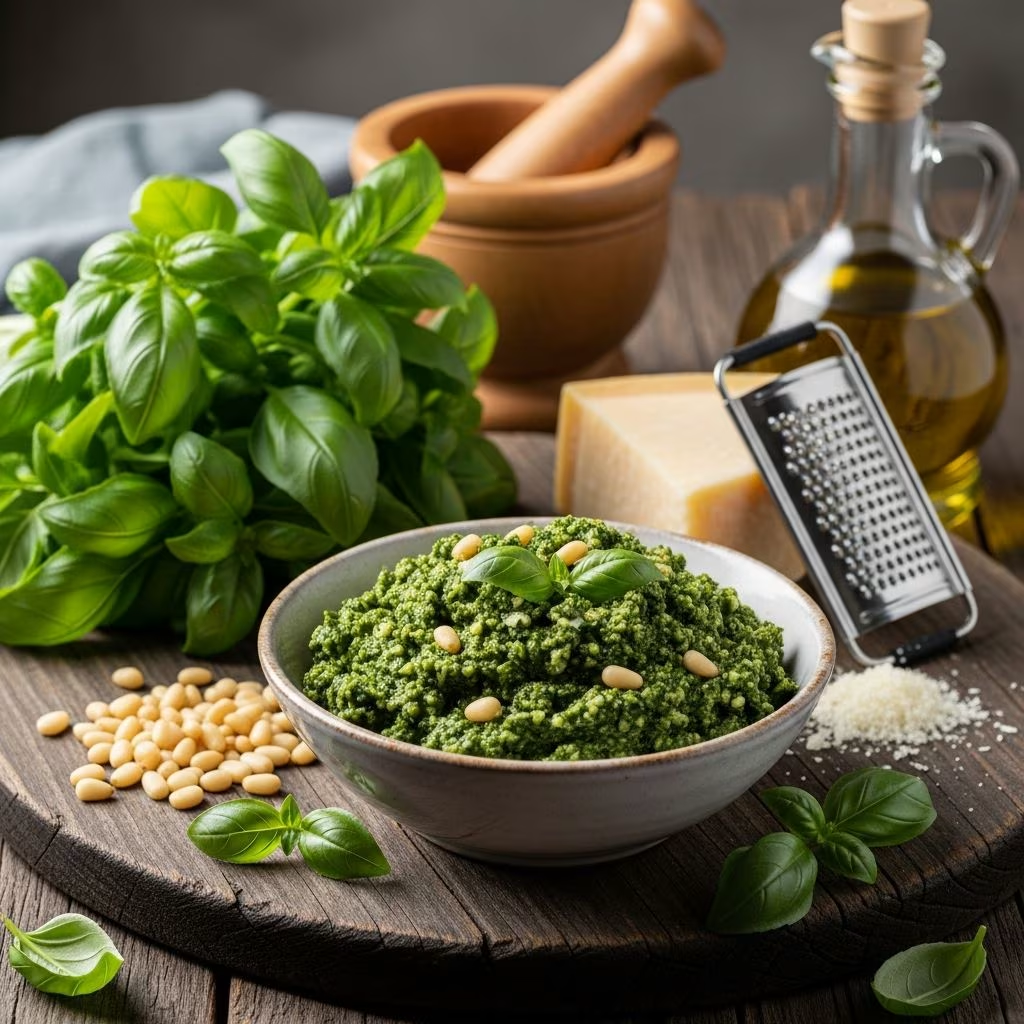
Nothing beats the vibrant green hue and bold flavor of freshly made pesto. This iconic Italian sauce, originating from Genoa, transforms simple ingredients into a versatile condiment that elevates everything from pasta to grilled meats. In this comprehensive guide, we’ll explore everything you need to know to create restaurant-quality pesto in your own kitchen, including ingredient selection, preparation methods, customization options, and practical uses. Whether you’re a novice cook or a seasoned chef, mastering pesto opens up endless culinary possibilities.
Understanding the Essence of Pesto
Pesto’s magic lies in its balance of fresh, aromatic ingredients. At its core, traditional pesto genovese combines basil leaves, garlic, pine nuts, Parmesan cheese, Pecorino Romano, olive oil, and a touch of salt. The key is freshness—wilted herbs or low-quality oil can dull the sauce’s brilliance. This emulsion-style sauce clings beautifully to pasta, adding nutty, herbaceous depth without overpowering other flavors.
Historically, pesto evolved from ancient Ligurian pestare (to pound), where mortar and pestle ground ingredients into a paste. Today, food processors make it accessible, but the principles remain: minimal heat to preserve volatile oils in basil that deliver that signature perfume.
Selecting Premium Ingredients for Superior Flavor
Start with the freshest basil possible. Opt for young, tender leaves from Genovese or sweet basil varieties—avoid large, tough ones that taste bitter. Look for bright green leaves without black spots; farmers’ markets are ideal.
- Basil: 2–3 cups packed leaves (about 2 oz), stems removed.
- Nuts: Pine nuts for authenticity (1/4 cup toasted), or substitutes like walnuts for earthiness or almonds for affordability.
- Cheese: Freshly grated Parmigiano-Reggiano and Pecorino Romano (1/2 cup each) for umami punch.
- Garlic: 1–2 cloves, mild and fresh to avoid harshness.
- Oil: Extra-virgin olive oil (1/2–3/4 cup), fruity and robust.
- Salt: Coarse sea salt to taste.
Toasting nuts enhances their flavor—spread on a baking sheet at 350°F for 5–7 minutes until golden. Grate cheese finely for smooth integration.
Step-by-Step Pesto Preparation Techniques
Blending pesto requires finesse to avoid a watery or overly processed texture. Here’s a foolproof method:
- Prep ingredients: Wash and dry basil thoroughly with a salad spinner or paper towels—excess moisture dilutes flavor.
- Pulse dry base: In a food processor, add garlic, nuts, and salt. Pulse 5–10 times until coarsely chopped.
- Add basil: Toss in basil leaves and pulse 10–15 times, scraping sides, until finely chopped but not pureed.
- Incorporate cheese: Add grated cheeses and pulse 3–5 times to combine.
- Stream in oil: With the motor running, slowly drizzle olive oil through the feed tube until emulsified and creamy. Stop before it turns soupy—adjust with more oil if needed.
- Taste and adjust: Season with extra salt, lemon juice for brightness, or pepper.
For mortar-and-pestle purists: Crush garlic and salt first, add nuts, then basil by hand-bruising to release oils gently, followed by cheese and oil. This yields a chunkier, more aromatic result.
| Method | Texture | Time | Best For |
|---|---|---|---|
| Food Processor | Smooth, even | 5 minutes | Beginners, large batches |
| Blender | Creamier | 7 minutes | No food processor |
| Mortar & Pestle | Rustic, chunky | 20 minutes | Authentic flavor |
Storage and Preservation Tips
Fresh pesto lasts 3–5 days in the fridge, covered with a thin layer of olive oil to prevent oxidation (that unsightly browning). For longer storage, freeze in ice cube trays—pop out cubes for single servings, up to 6 months. Thaw in the fridge or under cool water. Avoid reheating directly; stir into warm dishes to preserve vibrancy.
Pro tip: Blanch basil in boiling water for 10 seconds, then ice bath, before processing. This deactivates enzymes that cause browning, extending fridge life to a week.
Creative Variations to Suit Every Palate
While classic pesto shines, experimentation keeps it exciting:
- Sun-Dried Tomato Pesto: Swap half the basil for sun-dried tomatoes; add chili flakes for heat.
- Kale Pesto: Use massaged kale for a nutrient-packed green version, perfect for vegan diets (nutritional yeast instead of cheese).
- Cilantro Pesto: Mexican twist with cilantro, pepitas, lime, and cotija cheese—great on tacos.
- Winter Pesto: Arugula or spinach with hazelnuts and goat cheese for seasonal adaptability.
- Vegan Pesto: Omit cheese, use miso or extra nuts for savoriness.
Each variation maintains the emulsion technique but tweaks ratios for balance—test small batches first.
Perfect Pairings: How to Use Pesto in Your Meals
Pesto’s versatility makes it a kitchen staple. Toss with hot pasta (reserve starchy water to loosen sauce), or mix 1:1 with mayo for sandwiches. Dollop on pizza, swirl into soups, or marinate chicken before grilling.
Pasta Night Essential: For trofie or linguine, use 1/4 cup pesto per pound of pasta. Add cherry tomatoes and mozzarella for insalata di pasta.
Breakfast Boost: Stir into scrambled eggs or spread on avocado toast.
Salad Star: Thin with oil and vinegar for dressing over grilled veggies or grains.
Common Mistakes and How to Avoid Them
Bitter pesto? Overprocessed basil or poor-quality oil is often the culprit—use gentle pulses and premium EVOO. Too oily? Add more cheese or nuts. Browned sauce? Store properly or blanch leaves.
Don’t boil pesto; heat gently to retain essential oils. Scale recipes carefully—flavors intensify in larger batches.
Nutritional Profile and Health Benefits
A 2-tablespoon serving offers about 200 calories, healthy fats from olive oil and nuts, vitamins A, C, K from basil, and calcium from cheese. It’s anti-inflammatory thanks to polyphenols in EVOO and antioxidants in herbs. Use in moderation for heart-healthy Mediterranean diets.1
FAQs
What can I substitute for pine nuts in pesto?
Walnuts, almonds, or sunflower seeds work well; toast them for best flavor.
Can I make pesto without a food processor?
Yes, use a blender or mortar and pestle for a traditional texture.
How do I prevent pesto from turning brown?
Blanch basil briefly and top with olive oil when storing.
Is pesto gluten-free?
The sauce is naturally gluten-free; pair with GF pasta.
How long does homemade pesto last?
3–5 days in fridge, 6 months frozen.
Conclusion: Elevate Your Cooking with Pesto Mastery
Homemade pesto is more than a sauce—it’s a gateway to bold, fresh flavors that impress with minimal effort. Experiment confidently, store smartly, and integrate it into diverse dishes. Your kitchen adventures just got a whole lot greener and tastier.
References
- USDA FoodData Central: Basil, fresh — United States Department of Agriculture. 2023-05-15. https://fdc.nal.usda.gov/fdc-app.html#/food-details/169425/nutrients
- Olive Oil and Health — International Olive Council. 2024-02-20. https://www.internationaloliveoil.org/what-is-evoo/olive-oil-and-health/
- Mediterranean Diet and Cardiovascular Health — New England Journal of Medicine (PMID: 34482480). 2021-09-02. https://www.nejm.org/doi/full/10.1056/NEJMoa2104842
- Traditional Ligurian Pesto Genovese — Academia Barilla. 2023-11-10. https://www.academiabarilla.com/en/recipes/pesto-genovese/