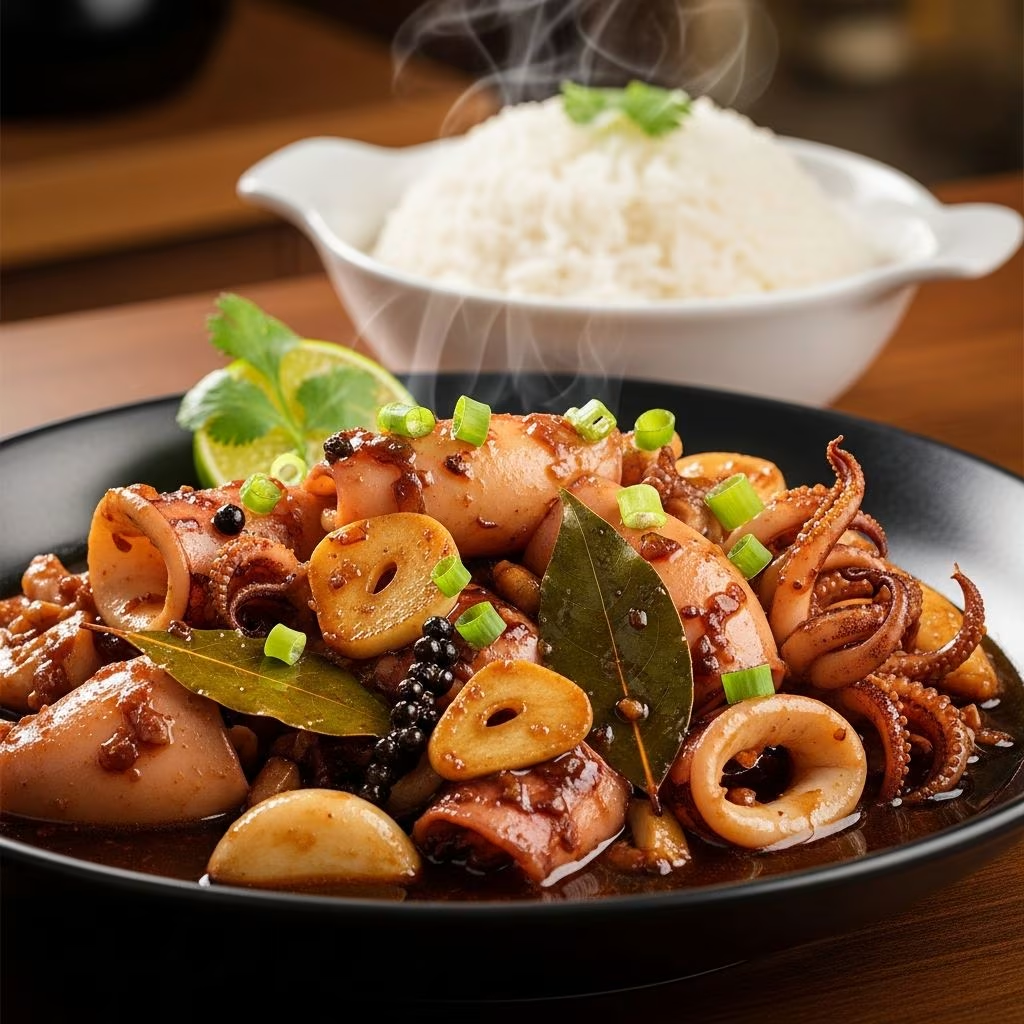
Adobong Pusit, or squid adobo, stands as a cornerstone of Filipino culinary tradition, blending the sea’s bounty with the bold, tangy profile of the adobo cooking method. This dish transforms fresh squid into a tender, flavorful masterpiece by simmering it in a harmonious mix of vinegar, soy sauce, and aromatics. Unlike meat-based adobos, the seafood version highlights the natural brininess of squid, often enriched with its own ink for deeper color and taste. Home cooks appreciate its quick preparation time, making it ideal for weeknight dinners or special gatherings.
The Essence of Adobo in Seafood Form
The adobo technique, central to Filipino cooking, relies on acid from vinegar and saltiness from soy sauce to preserve and flavor proteins. When applied to squid, it tenderizes the flesh while infusing it with savory notes. Recipes vary by region, but core elements include garlic, onions, and pepper, with squid ink adding a unique umami twist in many versions. This preparation not only preserves the squid’s delicate texture but also elevates its mild flavor to bold heights.
Selecting and Preparing the Perfect Squid
Quality squid forms the foundation of exceptional Adobong Pusit. Opt for fresh, medium to large specimens with clear eyes, firm bodies, and a fresh ocean scent. Avoid those with a strong ammonia smell, indicating staleness. Cleaning involves removing the beak, eyes, and innards while preserving the ink sac if using it.
- Cleaning steps: Rinse under cold water. Pull out the quill from the body tube. Cut off the tentacles just above the eyes and discard the head.
- Ink extraction: Carefully remove the ink sac and store in a small bowl with warm water to dissolve.
- Slicing: For large squid, slice bodies into 1-inch rings or scores to prevent curling. Smaller squid can be left whole.
Pro tip: Adding baking soda during cleaning can tenderize the squid further, reducing chewiness. Pat dry before cooking to ensure even browning.
Core Ingredients for Authentic Flavor
While recipes differ slightly, these staples create the signature taste:
| Ingredient | Quantity (for 4 servings) | Role |
|---|---|---|
| Squid (cleaned) | 1-2 lbs | Main protein, provides brininess |
| Soy sauce | ¼ – ½ cup | Saltiness and color |
| Vinegar (white or cane) | ¼ – ½ cup | Tanginess and tenderizing |
| Garlic (minced) | 4-6 cloves | Aromatic base |
| Onion (chopped) | 1 medium | Sweetness and depth |
| Tomatoes (chopped) | 1-2 | Acidity and body (optional) |
| Cooking oil | 2-3 tbsp | Sautéing medium |
| Sugar | ½ – 1 tsp | Balances acidity |
| Black pepper | To taste | Heat and spice |
| Squid ink (optional) | ¼ cup | Rich color and umami |
Variations include fish sauce for extra savoriness or chilies for heat.
Step-by-Step Cooking Guide
Mastering Adobong Pusit requires attention to timing to keep squid tender. Total cook time: 20-30 minutes.
- Marinate: Combine squid with soy sauce, vinegar, salt, and pepper. Let sit 10-15 minutes. This infuses flavor and starts tenderizing.
- Sauté aromatics: Heat oil over medium. Brown garlic first (1-2 minutes), then add onions and tomatoes until softened (3 minutes). Toasting garlic enhances nutty notes.
- Boil initial mixture: Add marinade to the pan, cover, and simmer 3 minutes. This develops the sauce base.
- Add squid: Introduce squid (and ink if using). Simmer covered 2-3 minutes until opaque. Overcooking toughens it.
- Reduce sauce: Remove squid, then boil sauce to half volume for thickness. Add sugar. Return squid, stir, and heat 1 minute.
- Rest and serve: Let sit off-heat 5 minutes for flavors to meld.
For ink-inclusive versions, crush sacs into warm water before adding late to preserve color.
Variations to Suit Your Taste
Filipino cooking thrives on adaptation. Try these twists:
- Spicy version: Incorporate finger chilies or bell peppers during sauté.
- With vegetables: Add celery or green chilies for crunch.
- Oil-free boil-first: Simmer squid in vinegar-water mix before sautéing to minimize oil.
- Baby squid: Use small ones whole for quicker cooking and delicate texture.
- Modern fusion: Blend with oyster sauce or ginger for extra depth.
These keep the dish versatile for dietary needs or pantry staples.
Expert Tips for Squid Success
Avoid common pitfalls with these strategies:
- Cook squid briefly: 2-3 minutes max per stage to retain tenderness.
- Use fresh vinegar: Cane vinegar adds authentic sweetness; white works for sharpness.
- Don’t stir vinegar early: Let it boil undisturbed to prevent bitterness.
- Balance flavors: Taste sauce before final simmer; adjust sugar or pepper.
- Storage: Refrigerate up to 2 days; reheat gently to avoid toughness.
Pair with steaming rice to soak up the glossy sauce. For low-carb, serve over cauliflower rice.
Nutritional Profile and Health Notes
Adobong Pusit offers lean protein from squid (high in omega-3s) and minimal carbs. A 4-oz serving provides ~150 calories, 20g protein, low fat. Vinegar aids digestion; soy sauce adds sodium, so moderate for hypertension. Squid ink boasts antioxidants, potentially anti-inflammatory. Customize with less oil for heart-healthy meals.
Pairing and Serving Suggestions
This dish shines with simple sides:
- Classic: Hot white rice or garlic fried rice.
- Vegetables: Stir-fried kangkong or ensaladang talong.
- Beverages: Iced calamansi juice cuts richness; beer complements brininess.
- Occasions: Family dinners, potlucks, or Lent-friendly protein.
Garnish with green onions or fried garlic for crunch.
Frequently Asked Questions
Can I use frozen squid?
Yes, thaw completely and pat dry. Fresh yields better texture, but frozen works if pre-cleaned.
Why does my squid get tough?
Overcooking is the culprit. Limit simmering to 3 minutes total.
Is squid ink safe to eat?
Absolutely; it’s a delicacy in many cuisines, adding iron and flavor without harm.
Vegetarian substitute?
Mushrooms or tofu mimic texture; use the same adobo sauce.
How to store leftovers?
Air-tight container in fridge up to 2 days. Freeze sauce separately for 1 month.
Conclusion: A Timeless Filipino Treasure
Adobong Pusit captures the heart of Filipino home cooking—simple ingredients yielding profound taste. Whether you’re a seafood aficionado or adobo fan, this recipe delivers comfort in every bite. Experiment confidently, drawing from tradition to create your signature version.
References
- Easy Adobong Pusit — Panlasang Pinoy. Accessed 2026. https://panlasangpinoy.com/easy-adobong-pusit/
- Adobong Pusit Recipe — Panlasang Pinoy. Accessed 2026. https://panlasangpinoy.com/adobong-pusit-recipe/
- Adobong Pusit — Foxy Folksy. Accessed 2026. https://www.foxyfolksy.com/adobong-pusit/
- Easy-to-follow Adobong Pusit Recipe! | Chef Tatung — YouTube (Simpol PH). Accessed 2026. https://www.youtube.com/watch?v=1MYnQyHOmCo
- Adobong Pusit — Ang Sarap. 2014-09-29. https://www.angsarap.net/2014/09/29/adobong-pusit/
- Adobong Pusit: A Classic Filipino Squid Recipe — YouTube (Yummy Kitchen). Accessed 2026. https://www.youtube.com/watch?v=oI5owIe5aMQ
- Adobong Pusit (Squid Adobo) — Busog Sarap. 2010-04. https://www.busogsarap.com/2010/04/baby-squid-adobo-adobong-pusit.html