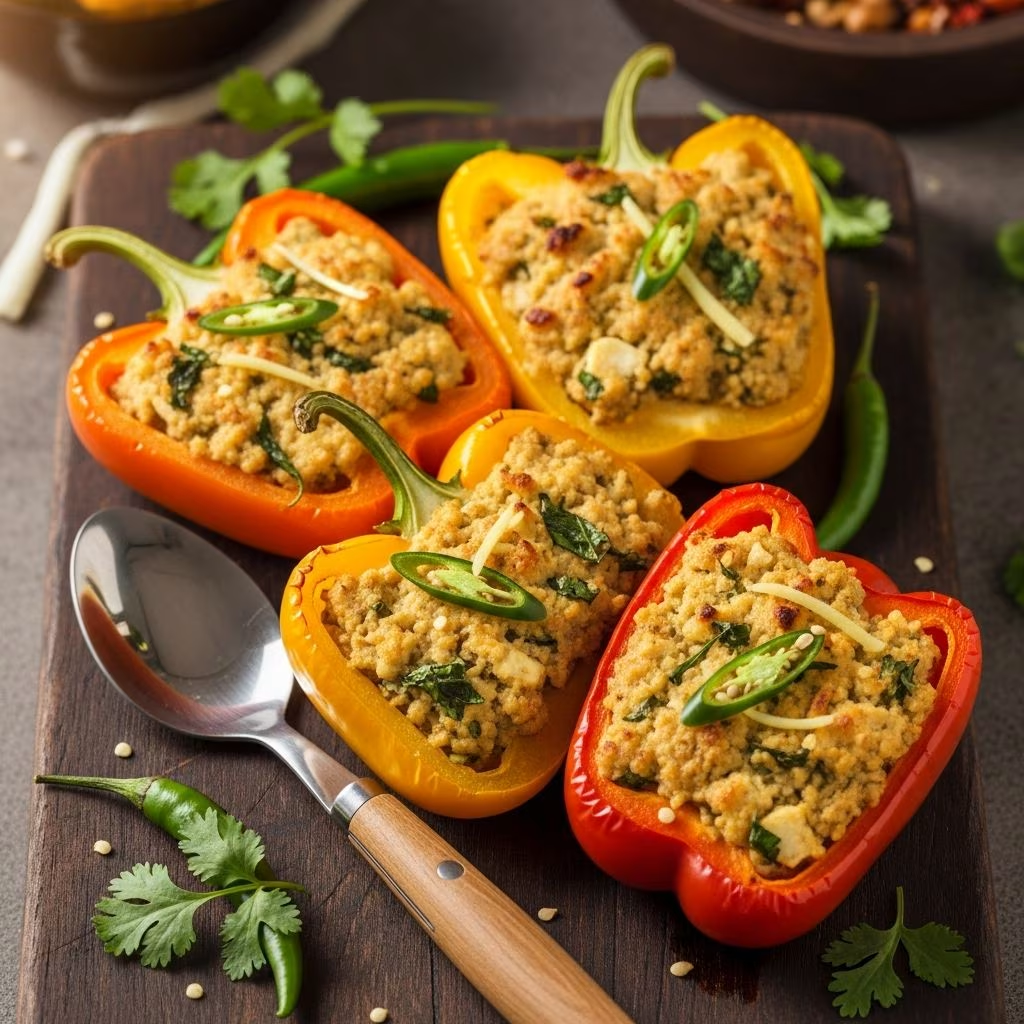
Paneer stuffed peppers represent a delightful intersection of Indian culinary traditions and contemporary vegetarian cuisine. This versatile dish features hollow bell peppers filled with a savory paneer mixture, offering a nutritious meal that works equally well as a main course or appetizer. The combination of tender peppers, crumbly paneer cheese, and aromatic spices creates a harmonious flavor profile that appeals to both experienced home cooks and those new to Indian cooking.
Understanding the Foundation: Paneer and Its Role
Paneer, often described as Indian cottage cheese, serves as the cornerstone of this dish. Unlike aged cheeses that develop complex flavors over time, paneer is a fresh cheese with a mild, slightly tangy taste and a firm yet crumbly texture. This characteristic makes it ideal for stuffing applications because it maintains its shape while distributing throughout the pepper cavity without melting excessively. The neutral flavor profile of paneer acts as a canvas, allowing the accompanying spices and vegetables to shine while providing protein and calcium to the overall dish.
When selecting paneer for this recipe, look for blocks that are firm to the touch and free from excessive moisture. Fresh paneer should have a clean dairy aroma without any sour or off-putting smells. Many specialty grocers and Indian markets offer freshly made paneer, which typically has superior texture compared to vacuum-sealed varieties, though both options work adequately for this preparation.
Selecting and Preparing Bell Peppers
The choice of bell peppers significantly impacts both the visual appeal and practical aspects of this dish. While traditional recipes often employ red, yellow, or orange peppers for their sweetness and vibrant appearance, green peppers offer a slightly more robust, earthy flavor. The size of the pepper matters considerably—medium peppers provide the ideal balance between easy handling and adequate filling capacity.
Preparation begins with careful cleaning under running water to remove any dirt or residue. There are two primary approaches to hollowing peppers. The first involves cutting horizontally near the top and removing the stem, then scooping out the seeds and white membrane using a small spoon. The second technique requires cutting the pepper in half lengthwise, which creates a larger surface area for the filling and allows for more even cooking. Some cooks prefer removing only the tail end while keeping the pepper intact, which helps contain the filling and creates an attractive presentation.
Preparing Peppers for Maximum Success
- Rinse peppers thoroughly and pat dry with paper towels
- Cut carefully to avoid piercing the exterior walls
- Remove all white pith, which can impart bitterness
- Consider brief blanching in boiling water if you prefer softer peppers before stuffing
- Allow peppers to cool completely before filling to prevent the cheese mixture from becoming too soft
Crafting the Filling: Core Components and Technique
The filling represents the flavor engine of this dish, combining grated paneer with vegetables and spices. Begin by crumbling approximately 200 grams of paneer into small, even pieces. The goal is achieving a texture that’s neither too fine nor too chunky—pieces roughly the size of peas work optimally. This granular consistency allows the cheese to distribute evenly throughout the filling while maintaining its structural integrity during cooking.
Fresh vegetables form the second pillar of the filling. Finely shredded cabbage and carrots create a coleslaw-like base that adds moisture, texture, and nutritional value. These vegetables contain natural sugars that caramelize during cooking, contributing subtle sweetness that balances the spice profile. Red onions, minced to very fine dimensions, contribute aromatic compounds and a slight pungency. Fresh ginger, grated finely, introduces warmth and complexity that enhances the overall spice profile.
Essential Aromatics and Spices
| Ingredient | Typical Quantity | Function |
|---|---|---|
| Cumin Seeds | ½ teaspoon | Provides earthy, nutty undertones |
| Red Chili Powder | ½ teaspoon | Adds heat and color |
| Roasted Cumin Powder | 1 teaspoon | Deepens savory flavor profile |
| Dried Mango Powder | 1 teaspoon | Introduces tanginess without acidity |
| Dried Fenugreek Leaves | ½ teaspoon | Imparts subtle bitter-sweet complexity |
| Fresh Cilantro | Handful | Provides fresh, herbaceous finish |
The spice combination creates a balanced flavor profile that’s aromatic without being overwhelming. Dried mango powder, known as amchur, provides tanginess reminiscent of lemon juice but with added complexity. Dried fenugreek leaves, or kasoori methi, contribute an unexpected depth that distinguishes well-executed versions of this dish from more basic preparations.
Assembly and Cooking Methodology
Once all components are prepped, combine the paneer, vegetables, and spices in a mixing bowl. Rather than serving the mixture raw, many cooks prefer pre-cooking the filling briefly in oil before stuffing. This technique allows the paneer to develop a slightly golden exterior, intensifies the spice flavors through toasting, and helps eliminate excess moisture that might make the final dish soggy.
Heat two to four tablespoons of oil in a heavy-bottomed pan over medium-high heat. Add the filling mixture and stir continuously for three to four minutes. The goal is achieving light golden coloration on the paneer pieces while releasing the aromatic oils from the spices. This intermediate cooking step represents the difference between a mediocre and exceptional final dish, so avoid skipping it despite the added time investment.
Once the filling has cooled slightly, carefully spoon it into each prepared pepper cavity, pressing gently to ensure even distribution without crushing the peppers. Overstuffing is a common mistake—leave slightly compressed filling rather than heaping servings that will fall out during cooking.
Achieving Perfect Cook Texture Through Pan-Frying
Pan-frying delivers superior results compared to baking for this particular application. The direct heat contact with the pepper exterior creates attractive caramelization and charring while the interior remains tender. Heat oil in a large skillet over medium-high temperature. Arrange the stuffed peppers in a single layer, preferably with the filled side facing down initially.
Cook undisturbed for five to seven minutes until the exterior develops golden-brown coloring and the pepper skin begins charring slightly. These visual cues indicate that the vegetable has softened adequately. Gently flip the peppers and cook the opposite side for another three to five minutes, depending on pepper thickness and desired doneness level. Some cooks prefer leaving the peppers in a covered pan for the final minutes to ensure complete softening while maintaining color.
The finished peppers should be tender enough to pierce easily with a fork while maintaining their structural integrity. The filling should be hot throughout and slightly caramelized at the edges where it contacts the pan.
Serving Suggestions and Complementary Accompaniments
Paneer stuffed peppers pair exceptionally well with Indian breads that can be used to scoop up filling and sauce. Roti, the most traditional accompaniment, provides neutral flavor that allows the peppers to take center stage. Parantha, a flaky layered bread, offers richer texture and subtle buttery notes. Naan, particularly garlic-infused varieties, introduces aromatic complexity that elevates the entire meal.
For those preferring rice-based accompaniments, basmati rice prepared with whole spices like bay leaves and cardamom creates an elegant pairing. Yogurt raita, a cooling condiment made from yogurt and cucumber, provides textural contrast and temperature variation that balances the warm spices of the stuffed peppers.
Frequently Asked Questions
Can I prepare stuffed peppers in advance?
Yes, stuffed peppers can be filled and refrigerated for up to 24 hours before cooking. Allow them to reach room temperature for approximately 15 minutes before pan-frying to ensure even cooking. The filling may release some liquid during storage, which should be drained before cooking.
What are suitable substitutions for paneer?
While paneer is ideal, cottage cheese offers a similar texture though slightly higher moisture content. Tofu, particularly firm varieties, works well for vegan adaptations. Some cooks use crumbled feta cheese, which provides tanginess but less structural integrity.
How can I adjust the spice level?
Red chili powder controls the heat level—reduce quantity for milder versions or add additional amounts for increased pungency. Fresh green chilis can be minced and incorporated for different heat characteristics and a fresher flavor profile.
What if peppers become too soft during cooking?
Over-cooked peppers develop an unpleasant mushy texture. To prevent this, reduce heat to medium-low and monitor cooking time carefully. Using larger peppers also provides more surface area that can tolerate longer cooking without becoming overly soft.
Can this dish be made without cooking oil?
While oil facilitates browning and development of complex flavors, the dish can be prepared with minimal oil or using cooking spray. Alternatively, baking at 375°F (190°C) for 20-25 minutes produces acceptable results, though the textural characteristics differ from pan-fried versions.
Variations and Creative Adaptations
This foundational recipe welcomes numerous modifications. Some cooks incorporate corn kernels or peas into the filling for added sweetness and textural variety. Minced mushrooms contribute umami depth and an earthy undertone. A small amount of coconut cream stirred into the filling just before cooking creates richness and subtle sweetness.
For those seeking heat intensity, whole dried chilis can be toasted and ground into the spice mixture. Incorporating grated cheese such as mozzarella or paneer mixed with cheddar creates a more indulgent version, though this departs from traditional preparations.
Finishing the cooked peppers with a squeeze of fresh lemon juice brightens the overall flavor profile and cuts through richness from the paneer and oil. A sprinkle of fresh cilantro added immediately after cooking enhances visual appeal and introduces fresh herbal notes.
Nutritional Considerations and Health Benefits
Paneer stuffed peppers offer impressive nutritional density. Paneer provides protein and calcium essential for bone health and muscle maintenance. Bell peppers contain vitamin C, which supports immune function, and capsaicin, a compound with potential anti-inflammatory properties. The inclusion of vegetables ensures adequate fiber intake and provides various micronutrients including potassium, manganese, and vitamin A.
The relatively modest cooking oil requirement keeps saturated fat content reasonable while achieving desirable textural outcomes. This dish readily accommodates vegetarian and lacto-vegetarian dietary approaches and can be adapted for vegan consumption through ingredient substitution.
References
- Paneer: Traditional Indian Cottage Cheese — National Dairy Development Board (India). 2023. https://www.nddb.coop/
- Nutritional Composition of Bell Peppers — USDA Food Data Central. 2024. https://fdc.nal.usda.gov/
- Indian Spices and Their Health Benefits — Indian Council of Medical Research. 2023. https://icmr.gov.in/
- Food Safety Guidelines for Fresh Produce — Food Standards Authority (UK). 2024. https://www.food.gov.uk/
- Vegetable Cooking Methods and Nutrient Retention — Institute of Medicine, National Academies. 2023. https://www.nationalacademies.org/