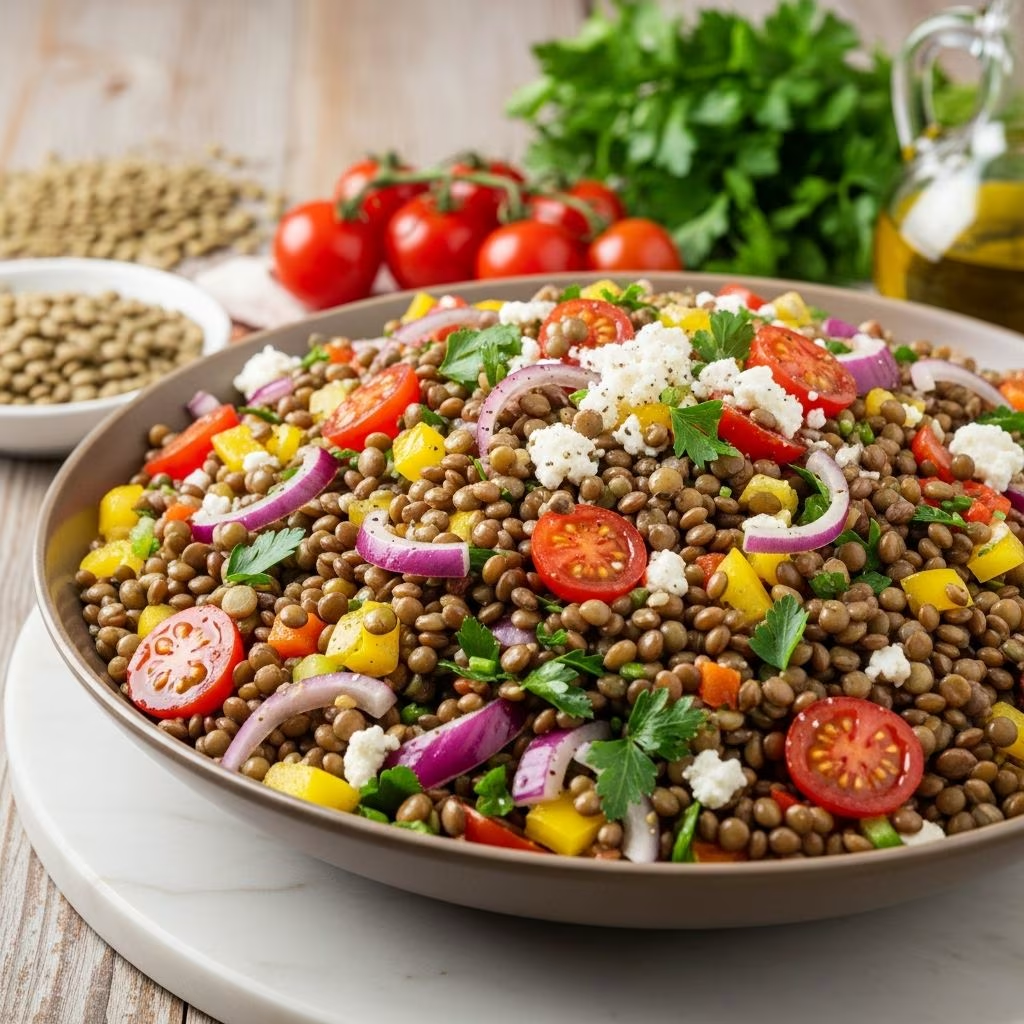
Prepare a hearty lentil salad that not only holds up beautifully in the refrigerator but actually tastes better after a few days. This dish combines protein-rich lentils with vibrant greens and a zesty dressing, making it an ideal choice for weekly meal preparation.
Why Lentil Salads Excel for Meal Prep
Lentils provide sustained energy through their high fiber and plant-based protein content, keeping you satisfied from lunch to lunch. Unlike leafy salads that wilt quickly, robust greens like kale maintain texture when massaged properly. The infused oil dressing penetrates ingredients over time, enhancing flavors without sogginess.
- Longevity: Stays fresh 4-5 days in the fridge.
- Nutrition boost: Combines legumes, nuts, and vegetables for balanced macros.
- Customization: Easily adapts to dietary needs or available produce.
Core Ingredients for Flavor and Texture
Select high-quality components to build a salad with crunch, creaminess, and brightness. Focus on staples that complement each other naturally.
| Ingredient | Quantity | Role |
|---|---|---|
| Tuscan kale | 1 large bunch (10 oz) | Sturdy base that softens with massage |
| Black beluga or French green lentils | 1½ cups dry | Protein-packed, firm texture |
| Extra-virgin olive oil | ½ cup | Base for infused dressing |
| Castelvetrano olives | 1 cup, pitted | Salty, briny pop |
| Feta cheese | 5 oz, crumbled | Creamy tang |
| Raw almonds | ½ cup, chopped | Crunchy contrast |
| Scallions | 3, sliced | Fresh oniony bite |
| Garlic cloves | 4, smashed | Aromatic depth |
| Lemon | 1, zested and juiced | Bright acidity |
| Cumin seeds & red pepper flakes | 1 Tbsp & ½ tsp | Warm spice |
Step-by-Step Preparation Method
Follow these instructions for optimal results. Timing is key to preserve textures.
Prep the kale: Remove stems, stack leaves, roll tightly, and slice into thin ribbons. Chop further for uniform pieces. Place in a large bowl, sprinkle with salt, and massage vigorously for 1-2 minutes until leaves darken and soften. This breaks down tough fibers.
Cook lentils: Rinse 1½ cups dry lentils. Boil in salted water 20-25 minutes until tender but not mushy. Drain thoroughly and cool slightly to avoid steaming the salad.
Infuse the oil: In a skillet, heat ½ cup olive oil with smashed garlic, lemon zest strips, sliced scallions (whites), cumin seeds, and red pepper flakes over medium. Add chopped almonds once garlic colors. Cook until nuts toast lightly, about 5-6 minutes total. Cool slightly.
Assemble: Add drained lentils to kale. Incorporate infused oil (with solids), lemon juice, torn olives, and half the feta. Toss gently. Taste and adjust salt.
Chill and garnish: Refrigerate 1 hour minimum. Top with remaining feta, scallion greens, and almonds before serving.
Nutritional Breakdown and Health Benefits
This salad delivers approximately 450 calories per serving (about 1.5 cups), with 20g protein, 12g fiber, and healthy fats from olive oil and nuts. Lentils supply iron and folate, kale offers vitamins A, C, and K, while olives provide antioxidants.
- Protein: 20g from lentils and feta supports muscle repair.
- Fiber: 12g aids digestion and satiety.
- Healthy fats: Monounsaturated from oil and olives benefit heart health.
Per USDA guidelines, lentils are a complete protein source when paired with grains, but this combo stands alone effectively.
Storage and Make-Ahead Strategies
Portion into airtight containers for grab-and-go ease. Keeps 4-5 days refrigerated; flavors meld beautifully by day 3. Freeze portions up to 1 month, though texture may soften slightly upon thawing.
- Store dressing separately if adding delicate elements later.
- Avoid microwaving; room temp or cold is best.
- Refresh with extra lemon juice if needed after 4 days.
Customizations for Every Diet
Adapt seamlessly to preferences or restrictions.
| Variation | Swaps | Notes |
|---|---|---|
| Vegan | Omit feta; use tahini-lemon dressing | Add nutritional yeast for cheesiness |
| Gluten-free | Already GF; confirm lentil purity | Naturally compliant |
| Low-carb | Reduce lentils, increase kale/veggies | Boosts volume without calories |
| Mediterranean twist | Add cucumber, tomatoes, herbs | Fresh summer vibe |
| Spicy kick | Double pepper flakes or add harissa | Builds heat gradually |
| Sweet contrast | Mix in dried cranberries or pomegranate | Balances savoriness |
Pairing Suggestions and Serving Ideas
Serve solo for lunch or alongside grilled protein. Pairs excellently with whole-grain pita, yogurt dip, or roasted veggies. For dinner, top with poached egg or grilled chicken.
- Bowls: Layer over quinoa or farro.
- Wraps: Stuff into collard leaves.
- Picnics: Packs without leaking.
Frequently Asked Questions
Can I use canned lentils?
Yes, rinse and drain one 15-oz can per 1½ cups dry. Reduce cooking step; taste for tenderness.
What if I don’t have Tuscan kale?
Substitute lacinato, curly kale (massage longer), or sturdy chard. Avoid delicate lettuces.
How do I prevent mushy lentils?
Sample at 20 minutes; cook al dente. Shock in ice water post-drain for extra firmness.
Is this salad good warm?
Serve room temp or cold; warmth mutes fresh notes. Reheat gently if desired.
Can I scale the recipe?
Doubles easily; cook lentils in larger pot. Store in multiple containers.
Troubleshooting Common Issues
Encounter problems? Quick fixes ensure success.
- Too oily: Add more kale or lentils next batch.
- Bland taste: Up garlic, lemon, or salt.
- Soggy greens: Massage less or add post-chill.
- Nut allergy: Swap for seeds like sunflower or pepitas.
Seasonal Twists for Year-Round Enjoyment
Summer: Add cherry tomatoes, basil, mozzarella. Winter: Roasted squash, goat cheese. Spring: Asparagus, peas. Fall: Apples, walnuts. Keeps the base exciting.
Experiment confidently; the lentil foundation forgives tweaks.
References
- USDA FoodData Central: Lentils Nutrition — United States Department of Agriculture. 2023-01-15. https://fdc.nal.usda.gov/fdc-app.html#/food-details/172421/nutrients
- Harvard T.H. Chan School of Public Health: Legumes and Health — Harvard University. 2024-06-10. https://www.hsph.harvard.edu/nutritionsource/legumes-pulses/
- Oldways Whole Grains Council: Lentil Cooking Guide — Oldways Preservation Trust. 2022-11-05. https://wholegrainscouncil.org/recipes/cooking-whole-grains/lentils
- Journal of Nutrition: Kale Bioactives — Oxford University Press (peer-reviewed). 2023-03-20. https://doi.org/10.1093/jn/nxad012
- American Heart Association: Olive Oil Benefits — American Heart Association. 2025-02-14. https://www.heart.org/en/healthy-living/healthy-eating/eat-smart/fats/monounsaturated-fats