When it comes to satisfying a chocolate craving quickly and efficiently, few desserts rival the appeal of homemade brownies. The beauty of modern baking lies in its ability to strip away unnecessary complexity while maintaining exceptional flavor and texture. This guide explores how five fundamental ingredients—butter, chocolate, eggs, sugar, and flour—combine to create a dessert that tastes far more elaborate than its ingredient list suggests.
Understanding the Foundation: Why These Five Ingredients Matter
The ingredient selection for minimalist brownies reflects decades of baking science and culinary refinement. Each component serves a specific purpose in achieving that coveted fudgy texture and rich chocolate flavor that defines great brownies.
The Role of Quality Chocolate
Chocolate forms the backbone of any exceptional brownie recipe. When working with a streamlined ingredient list, the quality of your chocolate becomes paramount. Selecting bittersweet chocolate with approximately 70% cocoa content provides the perfect balance between sweetness and chocolate intensity. This particular percentage contains enough cocoa solids to deliver authentic chocolate flavor while maintaining sufficient cocoa butter for that signature fudgy mouthfeel. The cocoa butter contributes to the brownie’s moisture and prevents the final product from becoming dry or crumbly.
Butter: Building Richness and Texture
Salted butter works exceptionally well in this recipe for multiple reasons. Beyond adding richness and contributing to the brownie’s tender crumb structure, salted butter includes sodium that enhances chocolate flavor perception. This minor seasoning element means you can achieve a perfectly balanced brownie without adding separate salt to the ingredient list. If you only have unsalted butter available, simply incorporate half a teaspoon of fine sea salt into your dry ingredients to compensate for the missing sodium.
Eggs: The Binding Agent and Texture Creator
Eggs perform a crucial structural role in brownie recipes. They bind the ingredients together while contributing moisture and richness to the final product. The proteins in eggs also create the characteristic slightly crispy exterior that gives way to a chewy, fudgy interior. Using eggs at room temperature ensures they incorporate more smoothly into the batter, creating a more uniform texture throughout the brownie.
Sugar: Sweetness and Shine
Granulated sugar dissolves more readily than brown sugar during the mixing process, which is particularly important when making minimal-ingredient brownies. The faster dissolving crystals create that attractive shiny top surface that indicates proper technique. If you have access to superfine or caster sugar, this even finer granulation will produce superior results and an even glossier finish.
Flour: Structure Without Heaviness
All-purpose flour provides the structure necessary to hold the brownie together while baking. Using unbleached flour, which typically has less processing, contributes to a denser, more satisfying texture that brownie enthusiasts prefer. The flour quantity remains deliberately modest to maintain that characteristic fudgy quality rather than creating a cake-like consistency.
Precision Ingredient Measurements
| Ingredient | Quantity (Standard) | Quantity (Metric) | Notes |
|---|---|---|---|
| Bittersweet Chocolate (70% cocoa) | 6 ounces | 170 grams | Chopped into uniform pieces for even melting |
| Salted Butter | 7 tablespoons | 100 grams | Use cold butter, cut into pieces |
| Large Eggs | 2 | N/A | Room temperature for better incorporation |
| Granulated Sugar | 1 cup | 200 grams | Standard white granulated sugar works best |
| All-Purpose Flour | ½ cup | 71 grams | Unbleached preferred; measure by weight when possible |
Equipment You’ll Need
While this recipe emphasizes simplicity in ingredients, having the right equipment makes the process more straightforward:
- One 8×8-inch square baking pan (or similar size)
- Parchment paper for easy removal and cleanup
- Small saucepan or heat-safe bowl for melting chocolate
- Large mixing bowl for combining ingredients
- Whisk or mixing spoon for combining elements
- Baking thermometer (optional but helpful for oven accuracy)
- Skewer or toothpick for testing doneness
Mastering the Preparation Phase
Oven Preheating and Pan Preparation
Begin by preheating your oven to 350°F, allowing at least 15 minutes for the heating element to reach a stable temperature. While the oven preheats, prepare your baking pan by lining it with parchment paper. Position the parchment so it creates a 2-inch overhang on at least two sides—this extends beyond the pan edge, providing handles for easy brownie removal after cooling. This preparation step prevents frustration later and ensures your brownies emerge intact from the pan.
Chocolate and Butter Melting Technique
The method you choose for melting chocolate and butter significantly impacts the final texture. For those concerned about chocolate scorching, the double-boiler method provides the safest approach. Place your chopped chocolate and butter in a heat-safe bowl, then position this bowl over a saucepan containing gently simmering water. Stir frequently as the mixture melts, ensuring even heat distribution. This indirect heat method prevents the chocolate from reaching temperatures high enough to burn.
Alternatively, microwave melting offers convenience. Use 30-second bursts at 50% power, stirring between each interval until the chocolate reaches a smooth consistency. Never let the mixture sit in the microwave after melting, as residual heat can cause scorching.
Regardless of your melting method, allow the chocolate-butter mixture to remain warm but not hot before proceeding to the next step. This temperature ensures it combines smoothly with the egg mixture without cooking the eggs.
Executing the Mixing Process
The Critical Egg and Sugar Stage
This step establishes the foundation for your brownie’s texture. Crack both eggs directly into your large mixing bowl, then begin gradually adding the sugar while whisking simultaneously. Continue whisking for one to two minutes until the mixture becomes noticeably paler and thicker. This pale, thick appearance indicates that sugar crystals are beginning to dissolve into the eggs.
You don’t need to achieve stiff peaks or triple the volume—that would indicate overworking the mixture. Instead, aim for a creamy, pale yellow mixture that falls in ribbons from the whisk. This stage creates the framework for the characteristic brownies crackly top through controlled aeration of the eggs.
Incorporating the Melted Chocolate
Once your egg-sugar mixture reaches the proper consistency, pour the warm chocolate-butter combination into the bowl. Whisk gently but thoroughly until the batter becomes smooth and glossy in appearance. The mixture will noticeably tighten and develop a shiny sheen once the chocolate fully incorporates. This visual change signals proper emulsification between the fat-rich chocolate and the egg-based mixture.
Final Ingredient Integration
Sprinkle the measured flour over the chocolate batter, then use a rubber spatula or wooden spoon to fold the flour in gently. The folding motion—lifting from the bottom and bringing the mixture over the top—incorporates flour evenly without deflating the aerated eggs. Continue folding until no streaks of flour remain visible, but avoid overmixing, which develops gluten and creates a tougher texture rather than the desired fudgy consistency.
From Batter to Baked Perfection
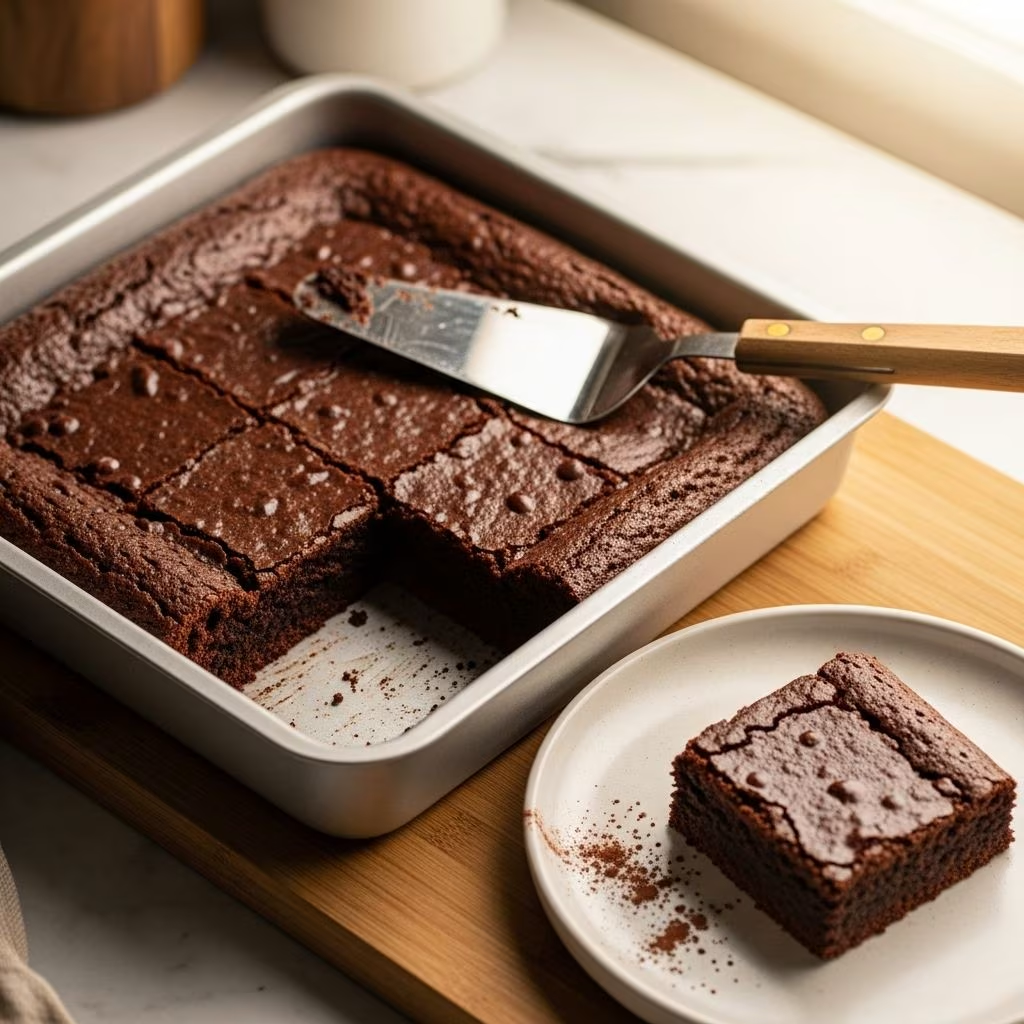
Pour your completed batter into the prepared baking pan, spreading it into an even layer. Bake for 20 to 25 minutes, checking for doneness around the 20-minute mark. Insert a wooden skewer or toothpick into the center of the brownies—it should emerge with a few moist, sticky crumbs attached. Wet batter means additional baking time is needed, while a completely clean skewer indicates you’ve overbaked and the brownies won’t achieve their optimal fudgy texture.
Remove the brownies from the oven and allow them to cool completely in the pan. This cooling period, though requiring patience, is essential for proper structure formation. Attempting to remove warm brownies often results in breaks and crumbles. Once fully cooled, use those parchment paper overhangs to lift the brownie block from the pan, then slice into 12 equal portions or your preferred size.
Storage and Longevity
Store cooled brownies in an airtight container at room temperature for up to five days. For extended storage, freeze individual brownies wrapped in plastic wrap and aluminum foil for up to three months. Thaw at room temperature for approximately one hour before serving. This storage flexibility makes the recipe particularly valuable for advance preparation or managing sudden chocolate cravings throughout the week.
Customization Possibilities Within the Framework
While the five-ingredient base creates exceptional brownies on its own, you can introduce variations without abandoning the simplicity philosophy. Adding up to one cup of chocolate chips, chopped nuts, or mini marshmallows after incorporating the flour maintains the ingredient spirit while expanding flavor profiles. Fold these additions in gently to distribute them evenly throughout the batter.
Common Questions About Minimal-Ingredient Brownies
Can I substitute the chocolate type?
While 70% bittersweet chocolate produces optimal results, you can experiment with 65% or 72% cocoa content with minimal texture changes. Milk chocolate creates brownies that are less chocolatey and more sweet. Avoid white chocolate entirely, as it lacks cocoa solids and won’t deliver the desired chocolate flavor.
What if I don’t have salted butter?
Unsalted butter works perfectly with the addition of half a teaspoon of fine salt stirred into the flour before folding. This substitution doesn’t compromise the brownie quality—it simply requires an extra step.
How do I achieve that prized crackly top?
The vigorous whisking of eggs and sugar creates the crackly top through incorporated air bubbles. Additionally, granulated sugar creates this effect better than brown sugar because it dissolves faster during mixing. Using room-temperature eggs also helps achieve this texture.
Can I make these brownies in a larger pan?
A 9×9-inch pan works well with this recipe, though it produces slightly thinner brownies. Adjust baking time accordingly, checking for doneness a minute or two earlier than the standard time.
Why aren’t my brownies fudgy?
Overbaking represents the primary culprit. Remember that a skewer should emerge with some moist crumbs. Additionally, ensure you’re using the specified chocolate percentage and not reducing the butter quantity.
References
- Fudgy 5 Ingredient Brownies — Scientifically Sweet. 2023. https://scientificallysweet.com/5-ingredient-brownies/
- Best-Ever 5 Ingredient Brownies (easy recipe!) — Blue Bowl Recipes. 2023. https://bluebowlrecipes.com/best-ever-5-ingredient-brownies/