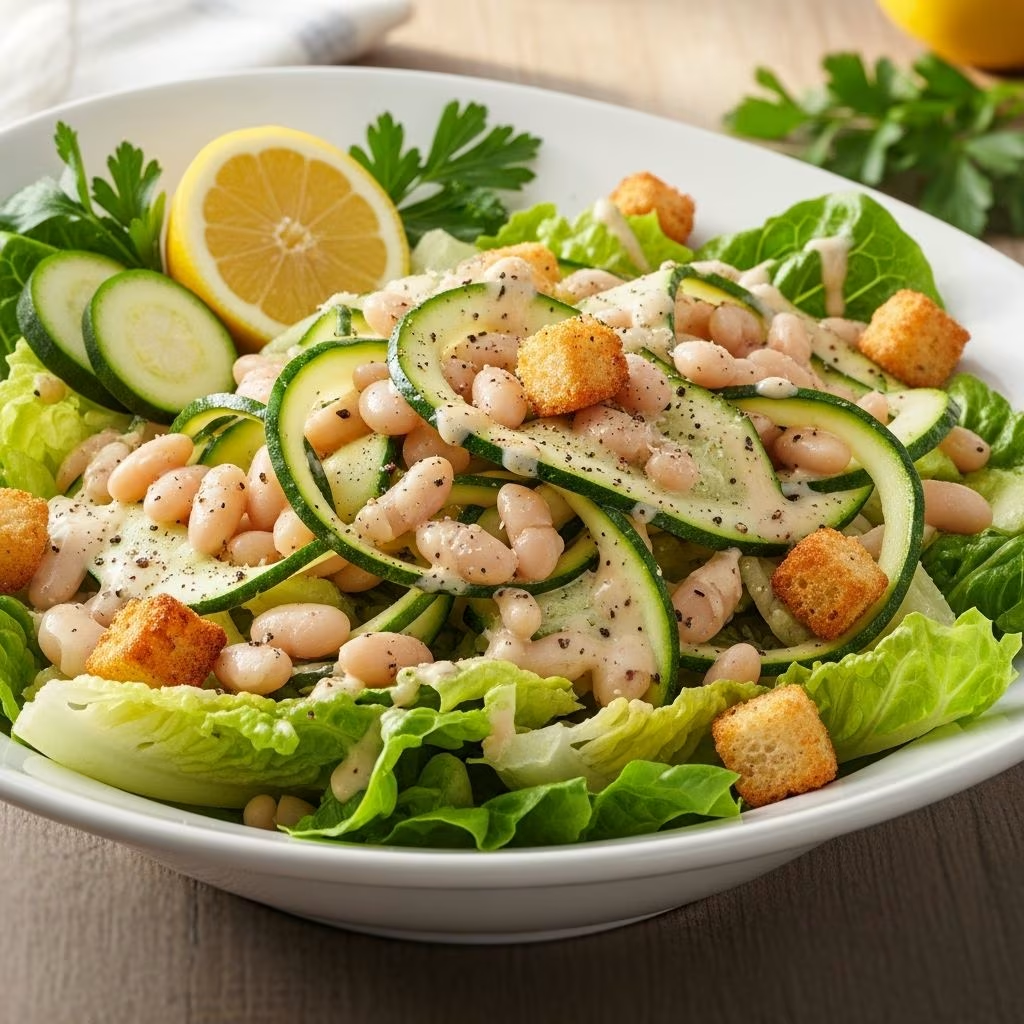
The Caesar salad has long held a place of honor in the culinary world, celebrated for its bold flavors, crisp textures, and satisfying depth. However, contemporary cooking increasingly embraces fresh interpretations that honor tradition while embracing modern nutritional awareness and ingredient availability. A vibrant alternative combines the delicate appeal of zucchini ribbons with creamy white beans, creating a dish that feels both light and substantially nourishing.
Understanding the Core Components
This reimagined salad distinguishes itself through thoughtful ingredient selection that respects the essence of Caesar preparations while introducing vegetables and legumes that add nutritional value and textural variety. The foundation rests on three primary elements: the vegetables, the protein component, and the dressing that ties everything together cohesively.
The Vegetable Base: Zucchini Preparation Techniques
Zucchini serves as the primary vegetable component, transformed from its ordinary form into delicate ribbons that mimic pasta-like strands. This preparation method dramatically changes how the vegetable presents itself on the palate. Rather than chunks or slices, ribbon-cut zucchini offers an elegant, almost ethereal quality that pairs beautifully with creamy dressings.
To achieve proper ribbons, select medium-sized zucchini that have not yet reached full maturity, as these contain fewer seeds and offer a more delicate flavor profile. A standard vegetable peeler serves as the ideal tool, drawn lengthwise along the zucchini’s surface to create long, thin strips. Some preparations incorporate both green and yellow varieties, creating visual interest and suggesting seasonal abundance.
The texture of raw zucchini ribbons remains tender yet maintains structural integrity when dressed, unlike cooked preparations that might become mushy or lose their character. This raw presentation preserves the fresh vegetable’s natural sweetness while allowing the dressing to coat and flavor each strand thoroughly.
Legume Integration: White Beans as Protein
Cannellini beans, the traditional white bean variety used in Italian cuisine, contribute substantial nutritional density to this salad preparation. These legumes provide plant-based protein that transforms the dish from a simple vegetable salad into a more complete nutritional offering suitable as a standalone lunch or substantial side dish.
Proper bean preparation begins with thorough rinsing and draining of canned varieties, which removes excess sodium and starch that might otherwise cloud the dressing or create an unpleasant mouthfeel. Home-cooked beans offer superior flavor complexity and allow cooks to control sodium content entirely, though they require advance planning and cooking time.
The mild, creamy character of white beans complements rather than overwhelms the other salad components. Their neutral flavor profile allows them to absorb and reflect the dressing’s characteristic notes while maintaining textural contrast against the tender zucchini ribbons.
Constructing the Dressing: Modern Caesar Approaches
The dressing represents the element most subject to interpretation and dietary accommodation, offering pathways to vegan, traditional, and health-conscious variations without compromising flavor satisfaction.
Traditional Dressing Foundation
A classic Caesar dressing framework builds upon tangy, umami-forward elements that create complexity through a relatively short ingredient list. The core components typically include:
- Fresh lemon juice providing acidity and brightness
- Dijon mustard contributing both tang and emulsifying properties
- Capers offering briny, concentrated flavor notes
- Parmesan cheese delivering savory depth and richness
- Garlic creating pungent aromatic undertones
These ingredients combine through either mortar-and-pestle work or gentle blending to create a cohesive dressing that coats vegetables without requiring extensive emulsification techniques. The resulting sauce maintains slight texture variations rather than achieving complete smoothness, which preserves the individual character of component flavors.
Vegan Adaptations and Dairy-Free Options
Those seeking plant-based alternatives can construct equally compelling dressings by substituting traditional dairy components with complementary alternatives. Tahini paste, derived from ground sesame seeds, provides the creamy mouthfeel traditionally offered by Parmesan cheese while contributing distinct nutty undertones.
A vegan version maintains all the acidic, briny, and aromatic elements while relying on tahini’s natural emulsifying properties to create proper binding. The proportions shift slightly to accommodate tahini’s different fat content and flavor intensity, but the fundamental structure remains recognizable as Caesar-inspired.
Creating Textural Interest: Parmesan Crisps
Beyond the dressing, textural complexity emerges through the addition of baked Parmesan cheese crisps, which provide crispy, concentrated umami elements that contrast with the tender vegetables and creamy beans.
Preparation Method for Optimal Results
Creating successful Parmesan crisps requires specific attention to cheese quality and baking technique. Freshly grated cheese from whole Parmesan blocks contains moisture and structural properties that allow proper melting and crisping during brief oven exposure. Pre-packaged shredded varieties, which contain anti-caking agents and other additives, generally fail to achieve the desired crispy texture and instead become greasy or burn unevenly.
The preparation process involves:
- Preheating the oven to 400 degrees Fahrenheit
- Lining a baking sheet with parchment paper to prevent sticking
- Arranging small mounds of freshly grated Parmesan approximately one inch apart
- Gently pressing each mound with the back of a spoon to create even thickness
- Baking for three to five minutes until golden brown throughout
- Cooling completely before handling to allow proper crisping
The result creates shards of intensely flavored cheese that shatter pleasantly between the teeth, providing both textural and flavor contrast within each bite.
Assembly and Serving Considerations
Composition Strategy
Thoughtful salad assembly ensures that each portion receives balanced representation of all components. Begin by placing zucchini ribbons in a serving bowl, followed by the drained and rinsed white beans, allowing these primary ingredients to form the foundation.
Dressing addition requires restraint and judgment, as the vegetables will release additional moisture during storage and service. Adding dressing conservatively and tossing gently ensures thorough coating without creating a soggy preparation. Additional dressing can always be offered on the side for individual preference adjustments.
Plating and Presentation
Individual plating presents an opportunity to showcase the salad’s visual appeal. Arrange ribbons artfully on each plate, creating height and movement, then scatter white beans throughout and top with one or two Parmesan crisps for elegant visual impact.
Finishing touches such as lemon zest gratings provide both visual brightness and aromatic enhancement. Fresh herbs such as basil or parsley, when available, add color and subtle flavor notes that complement the salad’s fundamental character.
Nutritional Profile and Health Considerations
| Component | Nutritional Benefit |
|---|---|
| Zucchini | Low calorie, high water content, contains vitamins K and C |
| White Beans | Plant-based protein, fiber, complex carbohydrates, minerals |
| Parmesan Cheese | Calcium, protein, B vitamins, though higher in sodium and saturated fat |
| Lemon Juice | Vitamin C, antioxidants, aids iron absorption |
| Olive Oil | Monounsaturated fats, antioxidants, supports heart health |
This salad preparation naturally delivers substantial dietary fiber through both vegetables and legumes, supporting digestive health and providing sustained satiety. The protein contribution from white beans, ranging from six to eight grams per half-cup serving, approaches levels typically associated with animal proteins, making this preparation suitable for those following plant-based dietary approaches.
The balance of nutrients creates a naturally satisfying dish that can serve as a complete meal when accompanied by whole grain bread or as a substantial side component within a larger meal structure.
Adaptations and Seasonal Variations
Ingredient Flexibility
While the core preparation maintains consistency, thoughtful cooks can introduce variations based on seasonal availability and personal preference. Bell peppers, both raw and roasted, add sweetness and textural variation. Fresh basil or mint leaves contribute aromatic complexity and suggest season-specific presentations.
Black olives scattered throughout introduce briny notes that echo the capers in the dressing, while additional fresh herbs such as parsley or dill create variations on the fundamental flavor profile. Even the choice between green and yellow zucchini, or mixing varieties, alters visual presentation and subtle flavor characteristics.
Make-Ahead and Storage
This salad performs well when components are prepared in advance and assembled shortly before serving. Zucchini ribbons and prepared beans can be stored separately for up to two days, while the dressing maintains quality refrigerated for approximately three to four days.
The ideal approach involves storing dressed salad for no longer than thirty minutes before service, as extended contact between dressing and vegetables results in moisture accumulation and textural degradation. The Parmesan crisps should remain separate until the final moment before serving to preserve their crispy character.
Frequently Asked Questions
- Can this salad be prepared entirely vegan?
- Yes, by substituting dairy-free Parmesan alternatives and using tahini-based dressing instead of anchovy-containing varieties, the salad becomes entirely plant-based while maintaining flavor complexity and satisfaction.
- What tool best creates even zucchini ribbons?
- A standard vegetable peeler produces excellent results for home cooks, though mandoline slicers with ribbon attachments or spiralizers offer alternatives that some find more efficient.
- How far in advance can this salad be prepared?
- Components can be prepared one day ahead and stored separately, but the salad should be dressed and assembled no more than thirty minutes before serving for optimal texture and flavor.
- Are there substitute vegetables that work similarly to zucchini?
- Yellow summer squash, cucumber, or even lightly blanched asparagus can substitute for zucchini while maintaining the salad’s essential character and appeal.
References
- Zucchini White Bean Caesar Salad — Just A Pinch Recipes. Accessed April 7, 2026. https://www.justapinch.com/recipes/salad/other-salad/zucchini-white-bean-caesar-salad.html
- White Bean Zucchini Salad — Key Lime Coconut. Accessed April 7, 2026. https://keylimecoconut.com/recipe/white-bean-zucchini-salad/
- Zucchini and White Bean Salad with Feta and Mint — Andrea Buckett. Accessed April 7, 2026. https://andreabuckett.com/zucchini-and-white-bean-salad-with-feta-and-mint/
- White Bean Caesar-Style Salad with Garlicky Broccoli — Bold Bean Co. Accessed April 7, 2026. https://boldbeanco.com/blogs/beanspo-recipes/white-bean-caesar-style-salad-with-garlicky-broccoli