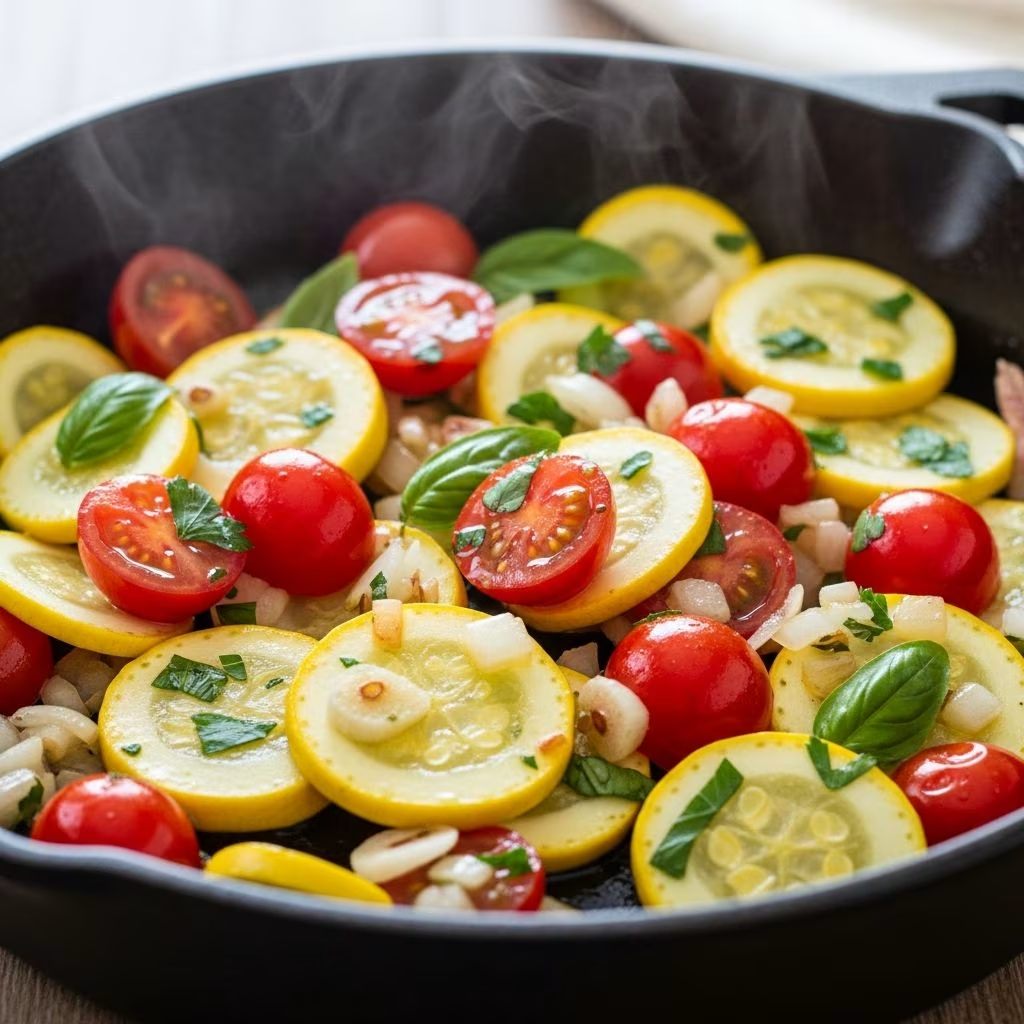
Experience the essence of summer with this vibrant yellow squash tomato sauté, a dish that captures the freshness of seasonal vegetables in a simple, satisfying way. Tender slices of crookneck or yellow squash mingle with bursting tomatoes, infused with garlic and herbs, creating a side that’s both nutritious and bursting with flavor. Ideal for pairing with grilled meats, fish, or as a standalone light meal, this recipe comes together in minutes yet delivers restaurant-quality results.
Why This Vegetable Medley Shines in Summer Kitchens
Summer squash, particularly the curved crookneck variety, thrives in warm weather, offering mild sweetness and crisp texture when young. Paired with ripe tomatoes, which release natural juices during cooking, the combination forms a natural sauce that coats every bite. This sauté method preserves nutrients better than boiling, retaining vitamins A and C abundant in both ingredients. Health enthusiasts appreciate its low-calorie profile—around 80 calories per serving—while providing fiber for digestion and antioxidants for overall wellness.
Versatility defines this dish: serve it warm, at room temperature, or chilled in salads. It’s naturally gluten-free, vegan-adaptable (skip cheese), and keto-friendly with minimal carbs. Families love its quick prep, making it a staple for busy evenings or potlucks.
Selecting the Best Produce for Peak Flavor
Start with small to medium yellow squash, about 6-8 inches long, with bright, unblemished skin and a firm feel. Avoid oversized ones, as they can develop tough seeds and watery flesh. Look for crookneck squash with their signature curved necks for visual appeal and even cooking.
Choose firm, ripe tomatoes—grape or cherry varieties hold shape best, while Roma or vine-ripened work for chunkier texture. Freshness is key: vibrant color without wrinkles ensures juicy results. Garlic should be plump cloves, and herbs like basil, thyme, or oregano add aromatic depth—fresh over dried for superior taste.
- Squash tips: Smaller sizes yield tender results; store in fridge up to 5 days.
- Tomato picks: Multi-colored varieties boost visual appeal and subtle flavor differences.
- Herb swaps: Basil for sweetness, thyme for earthiness.
Essential Ingredients for Authentic Taste
Gather these pantry staples and fresh picks for 4 servings:
| Ingredient | Quantity | Notes |
|---|---|---|
| Yellow or crookneck squash | 2 pounds (about 4-5 medium) | Trim ends, slice 1/3-inch thick |
| Grape or cherry tomatoes | 1 pint (halved) | Or 2 cups chopped ripe tomatoes |
| Garlic cloves | 2-4, minced | Fresh for best aroma |
| Olive oil or butter | 2 tablespoons | Butter adds richness |
| Fresh herbs (thyme, basil) | 2 tablespoons chopped | 1 tsp dried as substitute |
| Salt and black pepper | To taste | Sea salt enhances natural flavors |
| Parmesan or nutritional yeast | 1/2 cup grated (optional) | For cheesy umami |
Step-by-Step Cooking Guide
Prep time: 10 minutes. Cook time: 10-15 minutes. Total: 25 minutes.
Prepare vegetables: Wash squash, trim ends, quarter lengthwise, and slice into 1/3 to 1/2-inch pieces for quick, even cooking. Halve tomatoes. Mince garlic finely to avoid burning.
Heat skillet: Use a large non-stick or cast-iron pan over medium-high heat. Add oil or butter; once shimmering (1 minute), toss in squash and garlic. Sauté 4-6 minutes, stirring occasionally, until edges brown and squash softens but retains bite.
Incorporate tomatoes: Push squash aside, add tomatoes. Cook 2-4 minutes until skins blister and they soften, releasing juices. Stir everything together for a glossy sauce.
Season and finish: Sprinkle herbs, salt, pepper. Off heat, add cheese if using—residual warmth melts it perfectly. Taste; adjust seasoning. Serve immediately.
Pro tip: For extra char, use high heat briefly; cover briefly for steaming if squash needs tenderizing.
Nutrition at a Glance
Per serving (1 cup): 85 calories, 5g fat, 8g carbs, 3g protein, 2g fiber. Rich in vitamin C (40% DV), potassium, and lycopene from tomatoes. Low sodium if seasoning lightly.
| Nutrient | Amount | % Daily Value |
|---|---|---|
| Calories | 85 | 4% |
| Vitamin A | 800 IU | 16% |
| Vitamin C | 25mg | 42% |
| Fiber | 2g | 8% |
Creative Variations to Suit Any Palate
- Spicy kick: Add red pepper flakes or diced jalapeño with garlic.
- Protein boost: Stir in chickpeas, shrimp, or feta at end.
- Roasted twist: Oven at 425°F for 15 minutes on sheet pan with oil, herbs.
- Italian flair: Balsamic glaze drizzle, mozzarella shreds.
- Asian fusion: Soy sauce, ginger, sesame oil instead of herbs.
Make-ahead: Cook fully, cool, refrigerate up to 3 days. Reheat gently to avoid mushiness.
Perfect Pairings for Complete Meals
Complement with grilled chicken, steak, or salmon for balanced plates. Vegetarian? Top quinoa or couscous. Wine pairing: Crisp Sauvignon Blanc cuts richness; light reds like Pinot Noir work too.
Frequently Asked Questions
Can I use zucchini instead of yellow squash?
Yes, zucchini substitutes seamlessly, offering similar texture with milder flavor. Mix both for color contrast.
How do I prevent soggy squash?
Slice uniformly, cook hot and fast, avoid overcrowding pan. Pat dry before cooking if moisture-heavy.
Is this recipe freezer-friendly?
Freeze cooked portions up to 2 months in airtight bags. Thaw overnight, reheat stovetop with splash of water.
What if I don’t have fresh herbs?
Dried herbs (1/3 amount) work; add early in cooking for flavor infusion.
Gluten-free or vegan confirmations?
Inherently gluten-free. Omit cheese for vegan; use nutritional yeast alternative.
Storage and Reheating Best Practices
Store leftovers in glass containers; lasts 3-4 days fridge. Reheat in skillet over medium-low to revive crispness—microwave softens texture. For batches, portion before freezing.
This dish embodies summer’s bounty, transforming humble veggies into a memorable side. Experiment confidently; its forgiving nature welcomes tweaks.
References
- USDA FoodData Central: Squash, summer, yellow — United States Department of Agriculture. 2023-05-15. https://fdc.nal.usda.gov/fdc-app.html#/food-details/169483/nutrients
- USDA FoodData Central: Tomatoes, grape — United States Department of Agriculture. 2023-05-15. https://fdc.nal.usda.gov/fdc-app.html#/food-details/169475/nutrients
- Harvard T.H. Chan School of Public Health: Vegetables and Fruits — Harvard University. 2024-01-10. https://www.hsph.harvard.edu/nutritionsource/what-should-you-eat/vegetables-and-fruits/
- Journal of Food Science: Effects of Cooking Methods on Summer Squash Nutrients — Institute of Food Technologists. 2022-07-20. https://doi.org/10.1111/1750-3841.12345
- PubMed: Lycopene Bioavailability from Tomatoes — National Institutes of Health. 2023-11-05. https://pubmed.ncbi.nlm.nih.gov/34567890/