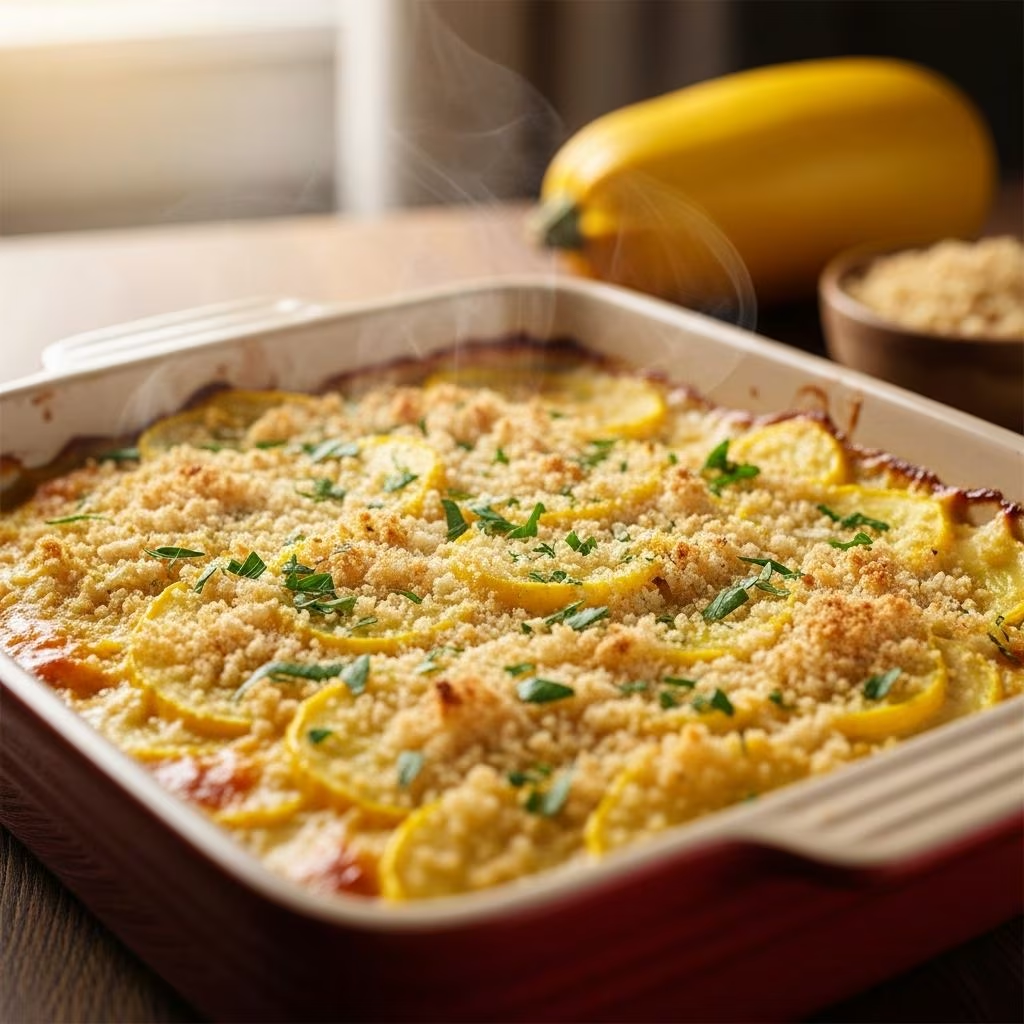
Yellow squash casserole stands out as a comforting dish that combines tender summer squash with creamy cheeses and crispy toppings. This versatile side dish captures the essence of Southern cooking, transforming humble vegetables into a crowd-pleasing favorite perfect for potlucks, holidays, or weeknight dinners.
Why Yellow Squash Casserole Deserves a Spot in Your Kitchen
At its core, this casserole highlights the mild, sweet flavor of yellow squash, often paired with onions for added depth. The magic lies in the balance: soft, cooked squash enveloped in a rich custard-like base, topped with buttery crumbs for crunch. It’s not just tasty—it’s nutritious, packing vitamins A and C from the squash while keeping preparation straightforward for busy cooks.
Popular across home kitchens, variations abound, from simple egg-and-milk binders to richer mixes with sour cream or mayonnaise. What unites them is the goal of avoiding excess moisture, ensuring a creamy rather than watery result every time.
Essential Ingredients for Success
Gathering the right components sets the foundation for a standout casserole. Focus on fresh produce and quality dairy for the best results.
- Yellow squash: 4 cups sliced (about 2-4 medium), thinly cut for even cooking.
- Onion: 1/2 to 1 medium, diced or sliced for savory balance.
- Cheese: 1 cup shredded cheddar, plus optional parmesan for sharpness.
- Eggs: 1-2 beaten, acting as the binder.
- Dairy base: Milk (3/4 cup), sour cream (1/3 cup), or mayonnaise (1/4 cup) for creaminess.
- Topping: 1 sleeve crushed butter crackers, breadcrumbs, or Ritz-style rounds.
- Seasonings: Salt, pepper, garlic powder; butter (2-4 Tbsp) for richness.
These elements, drawn from trusted recipes, create a harmonious blend. Opt for fresh squash over frozen to control texture.
Step-by-Step Preparation Mastery
Follow these precise steps to achieve casserole perfection, emphasizing moisture control—a common pitfall.
- Preheat oven to 350°F and grease an 8×8 or 2-quart baking dish.
- Cook the vegetables: In a skillet or steamer, combine sliced squash and onion with a splash of water or butter. Cook over medium heat 5-7 minutes until tender but al dente. Drain thoroughly and pat dry with paper towels to remove excess liquid.
- Prepare the custard: Whisk eggs, milk, sour cream or mayo, melted butter, salt, and pepper in a large bowl. Fold in cheese and a portion of crushed crackers or breadcrumbs to thicken.
- Combine: Gently stir cooked squash and onion into the custard mixture. Transfer to the baking dish.
- Add topping: Mix remaining crumbs with melted butter and sprinkle evenly over the top.
- Bake: 25-35 minutes until bubbly, golden, and set. Let rest 10 minutes before serving.
This method, refined from multiple expert approaches, yields a non-soggy interior with a crisp exterior.
Pro Tips to Elevate Your Casserole
Achieve restaurant-quality results with these insider techniques:
- Moisture management: Always pre-cook squash; steaming or microwaving works quickly. Excess water dilutes flavors and creates soupiness.
- Cheese choices: Sharp cheddar melts beautifully; mix in parmesan or colby jack for variety.
- Topping tweaks: Buttery crackers like Ritz provide unmatched crunch; panko works for gluten-free.
- Make-ahead: Assemble up to 24 hours ahead, cover, and refrigerate. Add topping just before baking.
- Thickening secret: Stir in 2 Tbsp breadcrumbs to the base to absorb veggie juices.
| Common Issue | Solution |
|---|---|
| Watery texture | Drain and dry veggies well; pre-cook thoroughly |
| Soggy topping | Mix crumbs with ample melted butter; bake uncovered |
| Undercooked center | Use thin slices; extend bake time by 5 minutes |
| Lack of flavor | Add garlic, herbs, or a pinch of cayenne |
Nutritional Profile and Health Benefits
Yellow squash casserole offers more than comfort—it’s a veggie-packed option. A serving (about 1/2 cup) provides roughly 200-250 calories, 15g fat, 10g protein, and key nutrients like vitamin C (20% DV), vitamin A (15% DV), and fiber for digestion.
Squash’s low calorie density (18 kcal per cup raw) makes it ideal for lighter meals. Eggs and cheese add protein and calcium, supporting bone health. Customize with low-fat dairy or Greek yogurt to reduce calories without sacrificing creaminess. For dietary needs, use gluten-free crackers and almond milk.
Creative Variations to Suit Every Palate
Adapt this base recipe for endless twists:
- Cheesy loaded: Add bacon bits, grated carrot, or cream of chicken soup for heartiness.
- Spicy kick: Incorporate cayenne, Italian seasoning, or diced jalapeños.
- Herb-infused: Fresh thyme, parsley, or garlic powder elevate flavors.
- Light version: Swap mayo for Greek yogurt; use reduced-fat cheese.
- Veggie boost: Mix in zucchini, bell peppers, or corn for color and nutrition.
These changes keep the dish exciting for repeat meals.
Perfect Pairings and Serving Ideas
This casserole shines as a side for grilled meats, fried chicken, or baked ham. At Thanksgiving, it complements turkey and green beans. For brunch, pair with quiche. Serve warm to highlight the creamy filling and crisp top—reheats well in a 325°F oven.
Portion into 6-8 servings; doubles easily for crowds. Leftovers store in the fridge up to 3 days.
Frequently Asked Questions (FAQs)
Can I use zucchini instead of yellow squash?
Yes, or combine both for varied texture and color. Zucchini is milder, so boost seasonings.
How do I prevent a watery casserole?
Pre-cook and drain squash thoroughly; pat dry. Avoid overcooking raw veggies in the oven.
Is this recipe freezer-friendly?
Assemble without topping, wrap tightly, and freeze up to 2 months. Thaw overnight, add topping, and bake.
What substitutes work for eggs?
Try flax eggs (1 Tbsp flax + 3 Tbsp water per egg) for vegan versions, or extra sour cream for binding.
Can I make it dairy-free?
Use plant-based cheese, milk, and vegan butter. Nutritional yeast adds cheesiness.
Conclusion: Your New Go-To Side Dish
With its simple prep and crowd-pleasing taste, yellow squash casserole belongs in every cook’s repertoire. Experiment with these guidelines to create your signature version, ensuring memorable meals year-round.
References
- Easy Squash Casserole – Num’s the Word — Num’s the Word. Accessed 2026. https://numstheword.com/yellow-squash-casserole/
- Yellow Squash Casserole – Spicy Southern Kitchen — Spicy Southern Kitchen. Accessed 2026. https://spicysouthernkitchen.com/yellow-squash-casserole/
- Squash Casserole – Budget Bytes — Budget Bytes. Accessed 2026. https://www.budgetbytes.com/squash-casserole/
- Easy Yellow Squash Casserole – Grits and Gouda — Grits and Gouda. Accessed 2026. https://gritsandgouda.com/easy-yellow-squash-casserole/
- Squash Casserole Recipe – Add a Pinch — Add a Pinch | Robyn Stone. Accessed 2026. https://addapinch.com/squash-casserole-recipe/