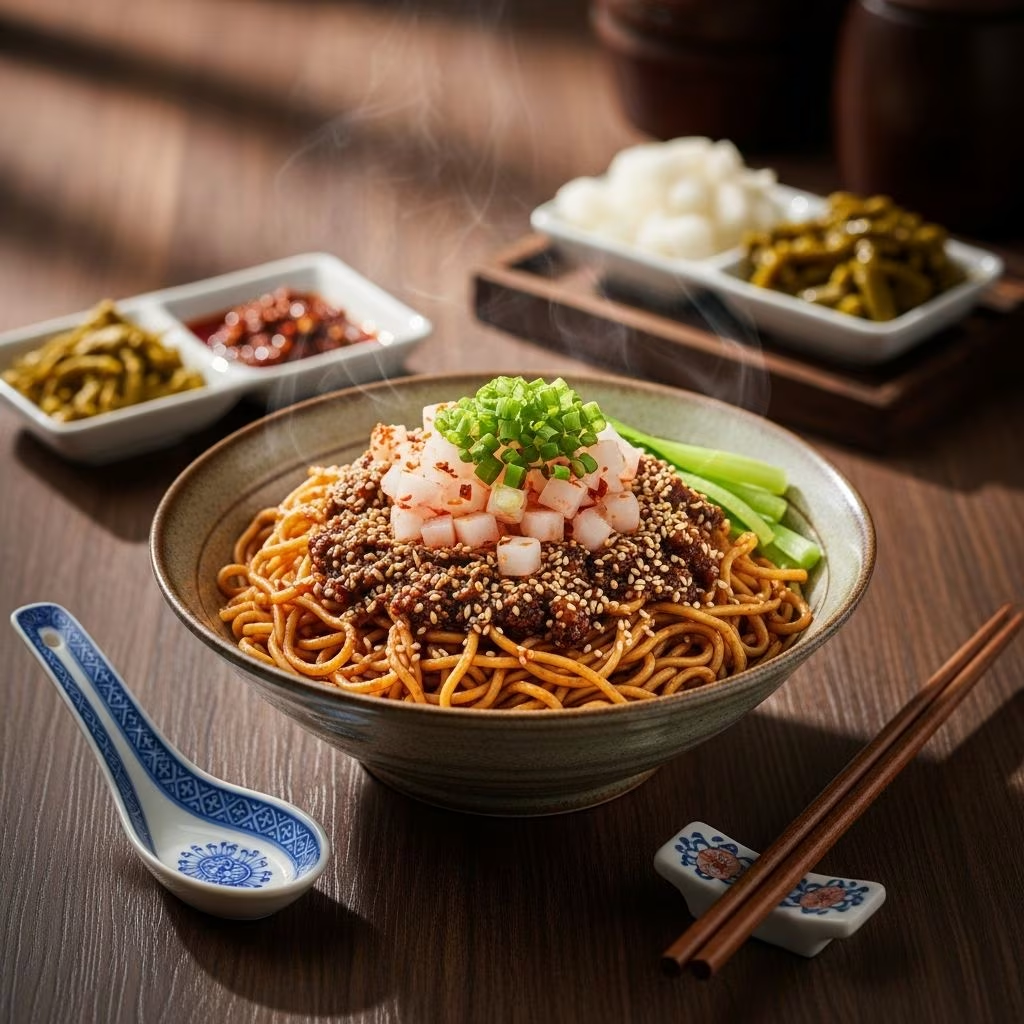
Wuhan hot dry noodles, known as rè gān miàn in Mandarin, represent one of China’s most cherished street foods. Originating from the bustling city of Wuhan in Hubei province, this dish combines chewy alkaline noodles with a rich sesame-based sauce, pickled toppings, and a signature chili oil kick. Unlike soupy noodle dishes, its “hot-dry” name refers to the steaming hot temperature and dry, sauce-cloaked texture that clings perfectly to each strand.
The Origins and Cultural Significance
Hot dry noodles trace their roots to the early 1930s in Wuhan. Legend credits a street vendor named Bao Li with its accidental invention. Overwhelmed by a rush of customers at his noodle stand, Li spilled sesame oil onto a batch of prepared noodles. With no time to start over, he boiled them anyway, added seasonings like shallots, and served them up. Diners raved about the unexpected flavor, and the dish quickly gained fame.
Beyond the folklore, practical needs shaped the recipe. Wuhan’s sweltering summers accelerate food spoilage, prompting early cooks to add alkali to noodles for preservation. This created the bright yellow, springy texture essential to the dish. Today, rè gān miàn is Wuhan’s unofficial emblem, a breakfast staple devoured by locals and a symbol of Hubei cuisine nationwide.
The dish’s popularity has spread far beyond Wuhan, with vendors in major Chinese cities adapting it while preserving core elements. It’s celebrated for its simplicity yet demands precise technique to balance flavors and textures.
Essential Ingredients for Authentic Flavor
Mastering hot dry noodles starts with quality ingredients. The foundation is alkaline wheat noodles (碱面), which give the signature chewiness and yellow hue from kansui (lye water). Fresh is ideal, but dried works if par-cooked correctly.
- Sesame paste or oil: Black sesame paste is traditional in Wuhan for nutty depth; tahini substitutes well abroad.
- Soy sauces: Light for salinity, dark for color and umami.
- Pickled vegetables: Radish, carrots, or beans add crunch and tang.
- Aromatics: Garlic chives, green onions, smashed garlic.
- Chili oil: Provides heat without soupiness.
- Extras: Five-spice powder, sugar, rice vinegar for balance.
Proportions matter: sesame paste dilutes with warm water to coat without sogginess. Peanuts, crushed for texture, and cilantro elevate authenticity.
Step-by-Step Recipe for Home Cooks
This recipe serves 2-4 and takes about 1 hour. Focus on cooling noodles properly to prevent sticking.
Ingredients Table
| Ingredient | Quantity | Purpose |
|---|---|---|
| Alkaline wheat noodles | 200g (fresh or dried) | Base |
| Sesame oil | 3 tbsp | Coating and flavor |
| Sesame paste | 2 tbsp | Sauce base |
| Light soy sauce | 1 tbsp | Umami |
| Dark soy sauce | 1 tbsp | Color and depth |
| Pickled radish/veggies | 1/2 cup, diced | Crunch |
| Garlic chives/green onions | 2 stems, chopped | Freshness |
| Chili oil | 2 tsp per bowl | Heat |
| Warm water | 6 tbsp | Sauce thinning |
| Salt, sugar, five-spice | To taste | Balance |
Preparation Steps
Par-cook noodles: Boil dried noodles 4-5 minutes until al dente. Drain, toss with 2 tbsp sesame oil to coat and cool for 10 minutes. This prevents clumping.
Prep toppings: Dice pickled radish, chop green onions and garlic chives. Smash 2 garlic cloves, soak in 6 tbsp warm water for infusion.
Make sesame sauce: Whisk 2 tbsp sesame paste with 1 tbsp sesame oil until smooth. Gradually add soy sauces, 4 tbsp warm garlic water, 1/8 tsp five-spice, 1/2 tsp salt, pinch of sugar. Adjust consistency.
Reheat noodles: Bring pot to boil, dip oiled noodles for 20 seconds using a strainer. Drain immediately.
Assemble: Per bowl: noodles + 2 tbsp sauce + 1/4 tsp rice vinegar + 1 tsp garlic water + 2 tsp chili oil + toppings. Toss vigorously for even coating. Serve hot.
For advanced versions, prepare lushui (spiced braising liquid) with beef bones, star anise, and soy for deeper savoriness.
Techniques for Perfect Texture and Taste
The hallmark of great hot dry noodles is dry-yet-sauced noodles that resist sogginess. Key techniques include:
- Oil coating: Essential post-first boil to create a barrier.
- Par-boiling: Brief second dip keeps chew (Q) without overcooking alkaline noodles.
- Sauce dilution: Warm water thins paste to cling, not pool.
- Tossing method: Shake and lift noodles during cooling for starch release and sauce grip.
“Hot” means temperature, not spice level—adjust chili oil accordingly. Alkaline noodles’ yellow from kansui reacts for springiness; substitutes like thick ramen approximate it.
Variations and Modern Twists
While purists stick to basics, innovations abound:
- Protein boosts: Add beef from lushui or crushed peanuts.
- Spice levels: From mild (no chili) to fiery.
- Vegan adaptations: Skip beef, use veggie lushui.
- Fusion: Tahini for Middle Eastern nod, or black sesame for intensity.
In Wuhan stalls, noodles arrive in paper bowls post-dip, sauce poured tableside for freshness. Home cooks can scale for batches, freezing extra sauce.
Health Benefits and Nutritional Notes
Hot dry noodles offer balanced macros: carbs from wheat, healthy fats from sesame, veggies for fiber. Alkaline processing aids digestion in hot climates. Portion control tempers sodium from soy; opt for low-sodium versions.
Pairing and Serving Suggestions
Serve immediately to capture heat. Pair with hot tea or doujiang (soy milk) for breakfast. In Wuhan, it’s often with youtiao (fried dough) for dipping.
Frequently Asked Questions (FAQs)
What makes hot dry noodles ‘dry’?
The sauce coats noodles without excess liquid, creating a dry texture despite bold flavors.
Can I use regular noodles?
Alkaline or ramen best; spaghetti works but lacks chew.
How spicy is it traditionally?
Mild-medium; chili oil is adjustable.
Storage tips?
Keep components separate; re-dip and sauce fresh.
Where to find ingredients?
Asian markets for alkaline noodles, sesame paste; online for black sesame.
Hot dry noodles embody Wuhan’s vibrant food scene—simple ingredients yielding profound taste. Experiment to find your perfect bowl.
References
- The Story Behind Wuhan’s Famous Hot-Dry Noodles — Untour Food Tours. Accessed 2026. https://untourfoodtours.com/the-story-behind-wuhans-famous-hot-dry-noodles/
- The Hirshon Chinese Wuhan Hot Dry Noodles – 热干面 — The Food Dictator. Accessed 2026. https://www.thefooddictator.com/the-hirshon-chinese-wuhan-hot-dry-noodles-%E7%83%AD%E5%B9%B2%E9%9D%A2/