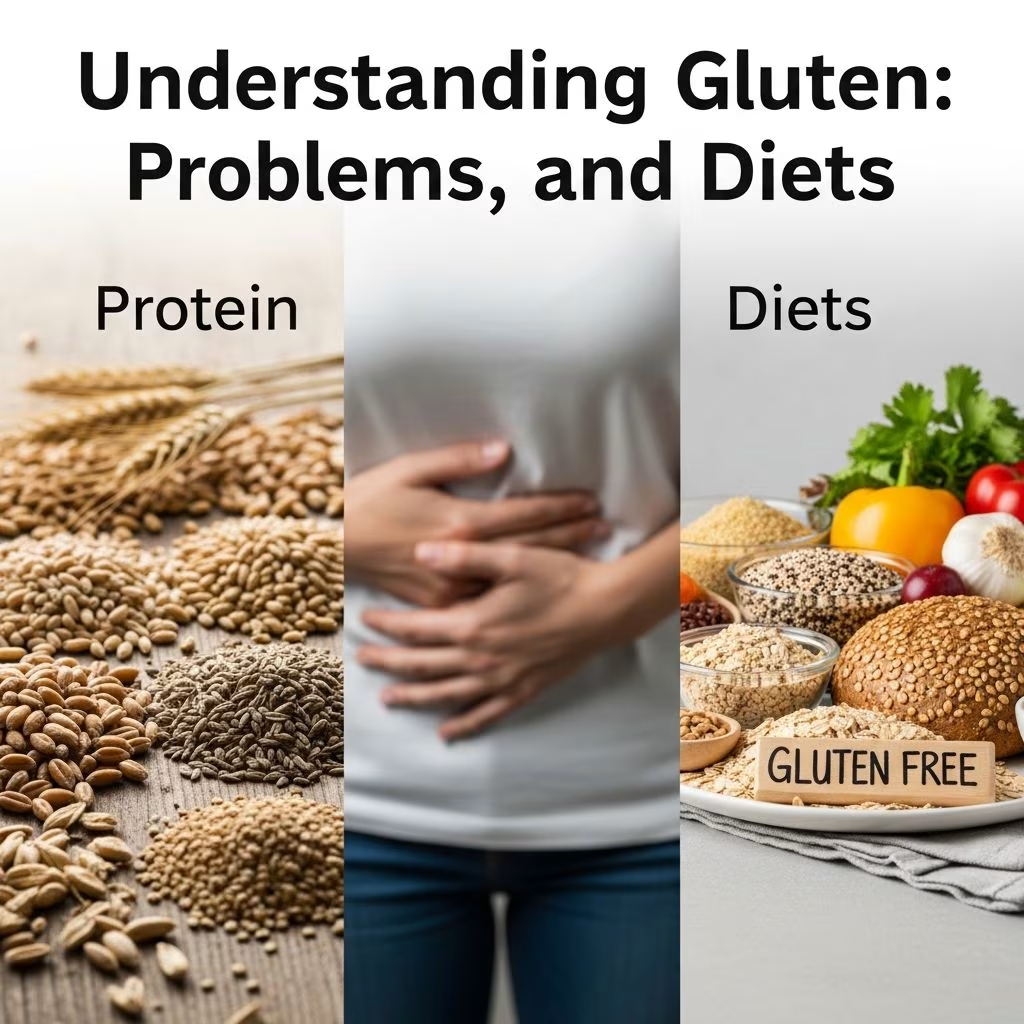
Gluten is a group of proteins found in certain grains that gives dough its elasticity and helps baked goods maintain structure. While harmless for most people, it triggers serious health issues in others, including autoimmune reactions and digestive distress. This article delves into gluten’s composition, dietary presence, associated conditions, and strategies for those who must avoid it.
The Science Behind Gluten
Gluten comprises prolamins and glutelins, primarily in wheat (gliadin and glutenin), barley (hordein), and rye (secalin). These proteins form a network when hydrated, trapping gases for bread’s rise. Triticale, a wheat-rye hybrid, also contains gluten. Oats may have trace amounts but are often cross-contaminated; pure oats are tolerable for many with sensitivities.
During digestion, protease enzymes partially break down gluten, leaving fragments that reach the small intestine. For most, this poses no issue, but in susceptible individuals, it sparks immune responses or fermentation of associated carbs like FODMAPs.
Gluten in Everyday Foods
Gluten hides in breads, pastas, cereals, cakes, and beers from wheat, barley, or rye. It’s also in processed items via additives like malt flavoring or wheat starch. Surprisingly, it’s in soups, sauces, dressings, and medications as thickeners or binders.
- Common sources: Bread, pizza, pasta, crackers, beer, soy sauce.
- Hidden sources: Processed meats, candy, ice cream, communion wafers.
- Gluten-free grains: Rice, corn, quinoa, millet, buckwheat, certified oats.
Reading labels is crucial; U.S. FDA mandates <20 ppm gluten for ‘gluten-free’ claims, protecting those with celiac disease.
Health Conditions Linked to Gluten
Four main disorders involve gluten: celiac disease, non-celiac gluten sensitivity (NCGS), wheat allergy, and gluten ataxia[10]. Each differs in mechanism and symptoms.
| Condition | Mechanism | Key Symptoms | Prevalence |
|---|---|---|---|
| Celiac Disease | Autoimmune attack on intestine | Diarrhea, bloating, anemia, osteoporosis | ~1% globally |
| NCGS | Intolerance without autoimmunity | Bloating, fatigue, headaches, brain fog | ~6% in U.S. |
| Wheat Allergy | IgE-mediated allergy | Hives, swelling, anaphylaxis | Less common |
| Gluten Ataxia | Neurological autoimmunity | Balance issues, coordination loss | Rare |
Celiac Disease: The Autoimmune Threat
Affecting up to 3 million Americans, celiac disease causes the immune system to attack the small intestine upon gluten ingestion, flattening villi and impairing nutrient absorption. This leads to anemia, delayed growth in children, osteoporosis, diabetes, thyroid issues, and rarely intestinal cancers. About 83% remain undiagnosed. No cure exists; a strict gluten-free diet is essential.
Non-Celiac Gluten Sensitivity
NCGS mimics celiac symptoms without intestinal damage or celiac antibodies. Triggers include bloating, abdominal pain, fatigue, depression, and skin issues. FODMAPs in wheat may contribute. Diagnosis is by exclusion after ruling out celiac and allergies.
Wheat Allergy and Beyond
Wheat allergy involves IgE response to proteins, causing immediate hives, breathing issues, or anaphylaxis—not specific to gluten. Gluten ataxia, rarer, attacks brain tissue, impairing movement; gluten avoidance helps.
Symptoms That Signal a Problem
Gluten reactions vary widely:
- Digestive: Diarrhea, constipation, bloating, pain.
- Systemic: Fatigue, anemia, weight loss, headaches.
- Neurological: Brain fog, anxiety, depression, numbness.
- Skin/Bone: Rashes, osteoporosis.
Silent celiac exists, with no gut symptoms but nutrient deficits.
Diagnosing Gluten Issues
Consult a doctor before cutting gluten, as it skews tests. Celiac screening starts with blood tests for tTG-IgA antibodies, followed by biopsy if positive. NCGS lacks biomarkers; trial elimination diets under guidance confirm it[10]. Allergy tests identify wheat reactions.
Thriving on a Gluten-Free Diet
For diagnosed individuals, gluten avoidance reverses damage. Focus on whole foods: fruits, veggies, meats, dairy, gluten-free grains.
- Stock staples: Rice, quinoa, gluten-free oats, almond flour.
- Baking swaps: Xanthan gum for elasticity.
- Dining out: Ask about cross-contamination.
FDA labeling ensures safety.
Potential Pitfalls of Gluten-Free Eating
Processed gluten-free products often lack fiber, raising heart disease risk via reduced whole grains. They may spike blood sugar or cause deficiencies. A 2017 study of 100,000+ found no gluten-heart link in non-celiacs; avoidance might harm. Balance with nutrients.
Debunking Gluten Myths
Myth 1: Gluten causes weight gain. Reality: Processed foods, not gluten, are culprits.
Myth 2: Everyone benefits from gluten-free. Reality: Unnecessary for most; whole grains protect health.
Myth 3: Gluten-free = healthier. Reality: Many products are ultra-processed.
Frequently Asked Questions (FAQs)
What foods naturally lack gluten?
Fresh produce, eggs, meat, fish, dairy, and grains like rice and quinoa.
Can I eat oats on a gluten-free diet?
Certified gluten-free oats yes; others risk contamination.
Is gluten inflammatory for everyone?
No, only for sensitive people.
How soon do symptoms appear?
Hours to days.
Does gluten cause brain fog?
Possible in undiagnosed celiac/NCGS.
Building a Sustainable Lifestyle
Gluten-free living requires vigilance but enables health recovery. Educate family, use apps for scanning, join support groups. Research advances treatments, but diet remains gold standard. For non-sensitive, enjoy grains mindfully.
References
- ‘Gluten-Free’ Means What It Says — FDA. 2023-06-07. https://www.fda.gov/consumers/consumer-updates/gluten-free-means-what-it-says
- What Is Gluten? Definition, Foods, and Side Effects — Penn State Health. 2024-01-15. https://prowellness.childrens.pennstatehealth.org/what-is-gluten-definition-foods-and-side-effects/
- What Is Gluten and What Does It Do? — Johns Hopkins Medicine. 2023-11-20. https://www.hopkinsmedicine.org/health/wellness-and-prevention/what-is-gluten-and-what-does-it-do
- Gluten: A Benefit or Harm to the Body? — Harvard T.H. Chan School of Public Health. 2024-02-10. https://nutritionsource.hsph.harvard.edu/gluten/
- Do you need to say goodbye to gluten? — Mayo Clinic Health System. 2023-09-12. https://www.mayoclinichealthsystem.org/hometown-health/speaking-of-health/do-you-need-to-say-goodbye-to-gluten
- Everything You Need To Know About Gluten — Henry Ford Health. 2018-09-01. https://www.henryford.com/Blog/2018/09/Everything-You-Need-To-Know-About-Gluten
- Gluten-free diet — Mayo Clinic. 2024-03-05. https://www.mayoclinic.org/healthy-lifestyle/nutrition-and-healthy-eating/in-depth/gluten-free-diet/art-20048530
- Gluten Intolerance: Symptoms and Treatment — Cleveland Clinic. 2023-07-18. https://my.clevelandclinic.org/health/diseases/21622-gluten-intolerance
- What is Gluten? — Celiac Disease Foundation. 2023-05-22. https://celiac.org/gluten-free-living/what-is-gluten/
- Gluten-Associated Medical Problems — NCBI StatPearls. 2023-10-15. https://www.ncbi.nlm.nih.gov/books/NBK538505/