Few dishes capture the spirit of 1970s American culture quite like Watergate Salad, a vibrant green concoction that has sparked curiosity and debate among food historians for decades. This peculiar combination of pistachio pudding, canned pineapple, whipped topping, nuts, and marshmallows represents more than just a recipe—it embodies an era defined by convenience, cultural upheaval, and the rise of processed food in American kitchens. The very name raises questions: Was it truly connected to the nation’s most infamous political scandal? Did the Watergate Hotel actually create it? What makes this dish so memorable that it continues to appear at potlucks decades after its peak popularity? Understanding Watergate Salad requires delving into both culinary history and the cultural moment that shaped its identity.
Tracing the Roots: Before the Famous Name
The story of Watergate Salad begins long before Richard Nixon’s presidency and the scandal that would inadvertently give the dish its memorable name. The conceptual foundation for such a dessert emerged in the early twentieth century with the widespread adoption of instant gelatin products. This innovation fundamentally changed how Americans approached home cooking, particularly in the realm of desserts and cold dishes. One early precursor appeared in 1925 when Helen Keller published a recipe titled “Golden Gate Salad” that featured similar components—fruit, cream-based toppings, nuts, and marshmallows—though it predated the availability of pistachio pudding mix. This historical precedent demonstrates that the architectural blueprint for Watergate Salad existed well before the 1970s, with home cooks experimenting with combinations of cold, sweet components served in individual portions or molded presentations.
Throughout the mid-twentieth century, the Jell-O salad movement gained tremendous momentum in American households. Women’s magazines, church cookbooks, and community recipe collections popularized these jiggly, colorful creations as convenient options for entertaining and potluck contributions. The accessibility of ingredients, minimal preparation requirements, and visually striking results made these dishes particularly appealing to busy homemakers navigating the demands of post-war domestic life. When pistachio instant pudding mix began appearing on grocery store shelves in the mid-1970s, it provided the missing ingredient that would crystallize this particular flavor profile into a distinct culinary creation.
The Pivotal 1970s: When Convenience Met Cultural Timing
The emergence of Watergate Salad as a recognizable recipe coincided precisely with the availability of pistachio pudding mixes and the intense media coverage surrounding the Watergate scandal. Recipes under various names—”Pistachio Pineapple Delight,” “Pistachio Salad,” and variants—began appearing in newspaper food sections and handwritten recipe cards circulating among neighborhoods around 1973 and 1974. The formula proved irresistible from a culinary convenience standpoint: no baking, no cooking, minimal ingredients, bright visual appeal, and easy replication at scale. These characteristics aligned perfectly with the broader cultural embrace of processed foods and time-saving kitchen solutions that defined the era.
The pistachio pudding mix itself represented the pinnacle of 1970s food innovation. Kraft Foods introduced their pistachio pudding formulation in 1975, just as the Watergate scandal was dominating newspaper headlines and television broadcasts. The timing created an ideal marketing environment where a novel ingredient could be paired with a culturally resonant name. Whether intentionally conceived or organically evolved, the connection between the dish and the political crisis proved commercially and socially brilliant. The name “Watergate Salad” became increasingly common, though the exact moment and mechanism of this transition remains shrouded in culinary mystery.
Unraveling the Naming Mystery
Multiple origin stories have circulated regarding why this particular pistachio pudding creation acquired the Watergate designation. The most frequently repeated narrative claims that a version of this salad was served in the kitchens of the Watergate Hotel itself, and that the name subsequently spread through popular culture after Nixon’s scandal dominated the news cycle. This romantic origin story found its way into print when the Denver Post published an account in 1976 asserting that a sous chef at the Watergate Hotel in Washington had developed the recipe. However, hotel staff members have stated there is no documented evidence of such a creation occurring within their kitchens, and articles predating the Denver Post publication already referenced Watergate Salad without the hotel connection explanation.
An alternative theory suggests that the name transfer occurred through cultural wordplay and coincidental timing rather than any direct hotel connection. Around the same period that Watergate Salad emerged, recipes for “Watergate Cake”—a pistachio-flavored baked dessert—also appeared in newspapers and recipe collections. It’s plausible that the name spread from one preparation to the other, or that both emerged independently as dishes capitalizing on the notoriety of the scandal. The scandal had become such a pervasive cultural phenomenon that any product or creation bearing its name automatically captured public attention and imagination.
What remains undeniable is that once people began calling this pistachio pudding creation “Watergate Salad,” the name possessed tremendous staying power. The original designations—”Pistachio Pineapple Delight” and similar descriptive names—faded from common usage. The scandal provided the dish with an unforgettable hook, transforming a convenience recipe into a cultural artifact. Kraft Foods, recognizing this shift, officially renamed their packaged version to “Watergate Salad” in 1993, though the company has acknowledged they cannot substantiate the specific origin story or definitively explain why consumers began requesting the recipe under this name.
Essential Components and Flavor Profile
| Ingredient | Purpose | Traditional Amount |
|---|---|---|
| Pistachio Pudding Mix | Flavor base and color | 1 package (instant) |
| Canned Pineapple | Moisture and sweetness | 20 oz (including juice) |
| Whipped Topping | Fluffy texture | 8-12 oz |
| Marshmallows | Sweetness and chewiness | 10-16 oz |
| Nuts (Pecans or Walnuts) | Crunch and richness | 1 cup (chopped) |
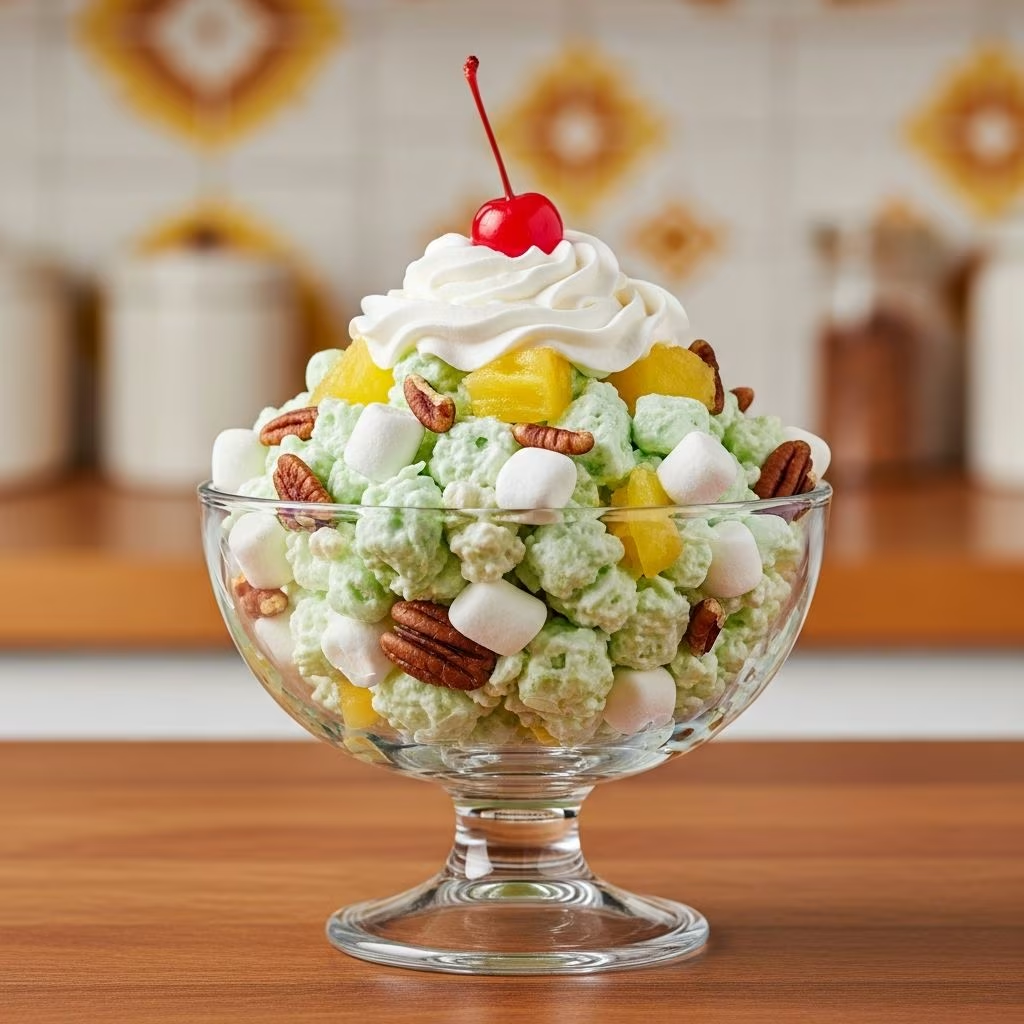
The sensory experience of Watergate Salad combines multiple textures and flavors in a single spoonful. The pistachio pudding mix imparts a distinctive nutty sweetness and the dish’s signature pale green hue. The canned pineapple contributes moisture, acidity, and fruity notes that prevent the overall composition from becoming cloying. The whipped topping—typically Cool Whip or similar products—creates an ethereal, cloud-like texture that dominates the overall mouthfeel. Mini marshmallows add pockets of gummy sweetness and provide textural contrast, while nuts contribute a subtle crunch and deeper flavor dimension that grounds the otherwise extremely sweet profile. Together, these components create an intentionally over-the-top dessert experience designed to appeal to those with pronounced sweet preferences.
Cultural Impact and Potluck Prevalence
Watergate Salad achieved particular prominence in regions and communities where potluck gatherings constituted a significant social tradition. Church suppers, school events, family reunions, and neighborhood celebrations provided ideal venues for this dish’s proliferation. The preparation simplicity made it accessible to cooks of varying skill levels, while the transportability and ability to be prepared well in advance suited the logistical demands of communal dining events. The dish’s bright color and distinctive appearance ensured it commanded visual attention on crowded buffet tables, distinguishing itself among the casseroles, salads, and other potluck staples.
The 1970s and 1980s represented Watergate Salad’s zenith of popularity. It appeared with remarkable frequency at gatherings across middle America, particularly in the Midwest and South where Jell-O-based salads maintained especially strong cultural resonance. Regional recipe collections, church cookbooks, and women’s magazines featured variations and serving suggestions. The dish became synonymous with a particular era of American entertaining, representing the intersection of technological convenience, cultural nostalgia, and democratic accessibility of ingredients.
Modern Status and Nostalgic Reassessment
Today, Watergate Salad occupies an unusual cultural position. It rarely appears on restaurant menus or in contemporary recipe collections aimed at modern home cooks. Food writers and culinary professionals often treat it with bemused irony, positioning it as a humorous artifact of past decades rather than a dish deserving genuine culinary respect. Yet simultaneously, a growing wave of food nostalgia has prompted renewed interest in retro recipes and forgotten dishes from previous generations. Watergate Salad has benefited from this reassessment, attracting attention from those seeking to recreate period-authentic menus or explore the foods that shaped American domestic culture.
The dish’s reputation improved somewhat through ironic appreciation rather than genuine culinary advocacy. Food bloggers, humor writers, and cultural commentators have documented Watergate Salad with a tone that balances genuine historical curiosity with lighthearted mockery. This dual perspective has introduced the dish to younger generations who discover it through cultural commentary rather than family tradition. Some contemporary cooks approach Watergate Salad as a bold statement, deliberately embracing its unfashionable status as a form of retro kitsch entertainment.
Preparation and Service Considerations
Creating Watergate Salad requires approximately ten minutes of active preparation time, with most of the effort devoted to measuring and combining ingredients rather than any complex cooking techniques. The process begins by combining the dry pistachio pudding mix with the canned pineapple and its juice, whisking until the pudding reaches proper consistency. The whipped topping is then folded in gently to maintain its airy texture and volume. Mini marshmallows and chopped nuts are incorporated last, ensuring even distribution throughout the mixture. The completed salad requires at least one hour of refrigeration before serving, allowing the pudding to set properly and the flavors to meld.
Traditional serving presentations involve transferring the chilled mixture to a decorative bowl or individual dishes, often garnished with additional nuts or a maraschino cherry positioned prominently. The dish’s bright green color requires minimal additional decoration, as it commands immediate visual attention. Portion sizes tend toward generous quantities, reflecting the dish’s intended function as a shareable, communal creation rather than an individually portioned dessert. Watergate Salad maintains its optimal texture and flavor when consumed within a day or two of preparation, though it stores adequately in the refrigerator for up to three days.
Frequently Asked Questions
Was Watergate Salad actually served at the Watergate Hotel? Despite the popular origin story, hotel staff members report no documented evidence that this dish was created within the Watergate Hotel’s kitchens. The name likely emerged from cultural wordplay and timing rather than any direct hotel connection.
What makes pistachio pudding salads different from Jell-O salads? Pistachio pudding-based salads use instant pudding mixes as their primary thickening and flavoring agent, whereas traditional Jell-O salads rely on gelatin for structure. This distinction creates different textures and flavor profiles, though both represent the broader category of cold, molded dessert salads.
Can Watergate Salad be made with alternative ingredients? Cooks have experimented with substitutions including different pudding flavors, fresh or frozen pineapple instead of canned, and homemade whipped cream rather than commercial whipped topping. However, traditional recipes adhere closely to the original components.
Why did the dish remain popular for decades? The combination of extreme convenience, visual appeal, affordability, and nostalgic familiarity sustained Watergate Salad’s popularity across generations. Its function at potlucks and family gatherings ensured continued exposure and cultural transmission.
Broader Context Within American Food History
Watergate Salad exemplifies larger historical patterns in post-war American domestic culture. It represents the embrace of processed foods and convenience products that liberated homemakers from certain time-intensive kitchen tasks. It demonstrates how commercial innovation—in this case, pistachio pudding mix—can catalyze entirely new culinary creations. It shows how cultural moments and media saturation can bestow names and meaning upon otherwise anonymous recipes. Finally, it illustrates how food functions as cultural memory, carrying within it references to specific historical periods and social conditions.
The legacy of Watergate Salad extends beyond its specific ingredients or even its amusing connection to political scandal. It represents a democratized approach to entertaining where commercial products and simplified techniques enabled broader participation in social food traditions. It captures a moment when American cuisine embraced maximalism and sweetness to unprecedented degrees. For contemporary food historians and cultural analysts, Watergate Salad functions as a fascinating case study in how foods become iconic, how names take root in popular imagination, and how culinary artifacts preserve memories of particular eras.
References
- The Original Watergate Salad Recipe — Eats History. Accessed April 2026. https://eatshistory.com/the-original-watergate-salad-recipe/
- Watergate salad — Wikipedia. Accessed April 2026. https://en.wikipedia.org/wiki/Watergate_salad
- Jell-O Journalism: Investigating the Origins of Watergate Salad — Mental Floss. Accessed April 2026. https://www.mentalfloss.com/food/watergate-salad-recipe-history
- The Real Reason It’s Called Watergate Salad — Tasting Table. Accessed April 2026. https://www.tastingtable.com/949291/the-real-reason-its-called-watergate-salad/
- Watergate Salad — Atlas Obscura. Accessed April 2026. https://www.atlasobscura.com/foods/watergate-salad