When autumn arrives and Concord grapes reach peak ripeness, few desserts capture the essence of the season quite like a homemade grape pie. This classic American dessert combines the subtle tartness and complex flavor profile of Concord grapes with a buttery crust and optional crumb topping. Unlike commercially available pie fillings, a freshly made Concord grape pie showcases the natural characteristics of the fruit while allowing bakers to control sweetness and texture to their preferences.
The journey from selecting quality grapes to presenting a finished pie involves several important steps and techniques that separate a mediocre result from an exceptional one. Understanding the unique properties of Concord grapes and how they behave during cooking will help you achieve the ideal consistency and flavor balance that makes this dessert memorable.
Understanding Concord Grapes and Why They Matter
Concord grapes are not interchangeable with the table grapes commonly found in produce sections year-round. These grapes possess thicker skins, a higher seed content, and a distinctly more robust flavor compared to varieties bred for fresh eating. The juice contains natural pectin and other compounds that contribute to a naturally thickened filling when cooked properly, making Concord grapes ideal for pie preparation.
The distinction matters because using regular table grapes or seedless varieties will result in a thin, watery filling that fails to hold its shape when sliced. Concord grapes typically arrive at farmers’ markets and specialty grocers during late August through September, marking the brief window when bakers can source this ingredient at its best.
When shopping for Concord grapes, look for firm fruits that feel heavy for their size, indicating good juice content. Avoid grapes with soft spots or signs of mold, as these will compromise the filling quality. Plan to use grapes soon after purchase, as they do not store as long as other grape varieties.
Ingredient Selection and Preparation
The Foundation: Crust Options
A quality pie begins with a proper crust. You may choose to prepare a traditional double-crust pie, where both top and bottom are pastry, or opt for a single crust with a decorative topping. Some bakers prefer a crumb topping made from flour, butter, and sugar, which adds textural contrast and reduces the complexity of managing a top crust while the filling cooks.
For the pastry itself, you’ll need all-purpose flour, cold unsalted butter, salt, and ice water. The key to a flaky crust lies in keeping all ingredients cold and avoiding overworking the dough. Cut cold butter into flour until the mixture resembles coarse cornmeal before gradually adding ice water until the dough just comes together. Divide into two portions, wrap individually, and refrigerate for at least two hours before rolling.
The Filling Components
The fundamental ingredients for Concord grape pie filling remain simple: grapes, sugar, a thickening agent, lemon juice, butter, and salt. The proportions vary slightly between recipes, but a common ratio uses approximately 5 to 6 cups of fresh Concord grapes with 1 cup of sugar and 3 to 4 tablespoons of thickening agent.
The choice of thickener significantly impacts the final texture. Cornstarch is popular because it creates a glossy, translucent filling. Flour produces a more opaque result but remains reliable and forgiving. Tapioca offers a distinct texture that some bakers prefer. Quick-cooking tapioca pearls require no pre-mixing and dissolve seamlessly into the filling as it cooks. Experiment with different thickeners to determine your preference, keeping in mind that cornstarch requires less quantity than flour to achieve similar thickening power.
Fresh lemon juice brightens the filling and balances the grape’s natural sweetness. Butter enriches the filling and adds subtle depth. Salt, though used sparingly, enhances the overall flavor profile without adding noticeable saltiness.
Essential Preparation Techniques
Separating Skins from Pulp
The most labor-intensive aspect of preparing Concord grape pie involves separating the grape skins from the pulp. This step is crucial because the filling requires both components but at different stages of preparation.
Begin by washing and de-stemming your grapes. Work over a bowl or large saucepan and gently squeeze each grape between your fingers. The pulp, which contains the juice and seeds, will slip out easily into your container while the skin remains in your hand. Place the skins in a separate bowl. This process requires patience but is straightforward and does not demand special equipment.
After separating approximately 5 to 6 cups of grapes, you should have roughly 3 cups of pulp and a similar volume of skins. Some liquid loss during this process is normal and accounts for the slight difference in total volume.
Cooking the Pulp
Transfer the grape pulp to a medium saucepan and bring it to a boil over medium heat without adding water. The natural juice content in the pulp provides sufficient liquid. Once boiling, reduce the heat, cover the pan, and simmer for 5 to 10 minutes until the pulp softens and begins breaking down.
After simmering, strain the cooked pulp through a fine mesh sieve into the bowl containing the grape skins. Press firmly on the solids with the back of a spoon to extract all liquid and pulp while discarding the seeds and any remaining solids. Allow the mixture to cool completely before proceeding with the filling preparation. This cooling step is important because it allows you to accurately measure and combine the remaining ingredients without heat affecting measurements or consistency.
Preparing and Baking the Pie
Combining Filling Ingredients
Once the grape mixture has cooled, combine it with your chosen thickening agent, sugar, lemon juice, and salt. Mix thoroughly to ensure the thickener distributes evenly throughout the filling and prevents lumping during baking. Add a small amount of melted butter and stir to incorporate. The mixture should have a uniform consistency with no visible streaks of dry thickener remaining.
Assembly and Baking
Preheat your oven to 400 to 425 degrees Fahrenheit, depending on your recipe preference. A higher temperature creates a more golden crust while potentially cooking the filling more quickly. Lower temperatures cook everything more evenly but may result in a paler crust.
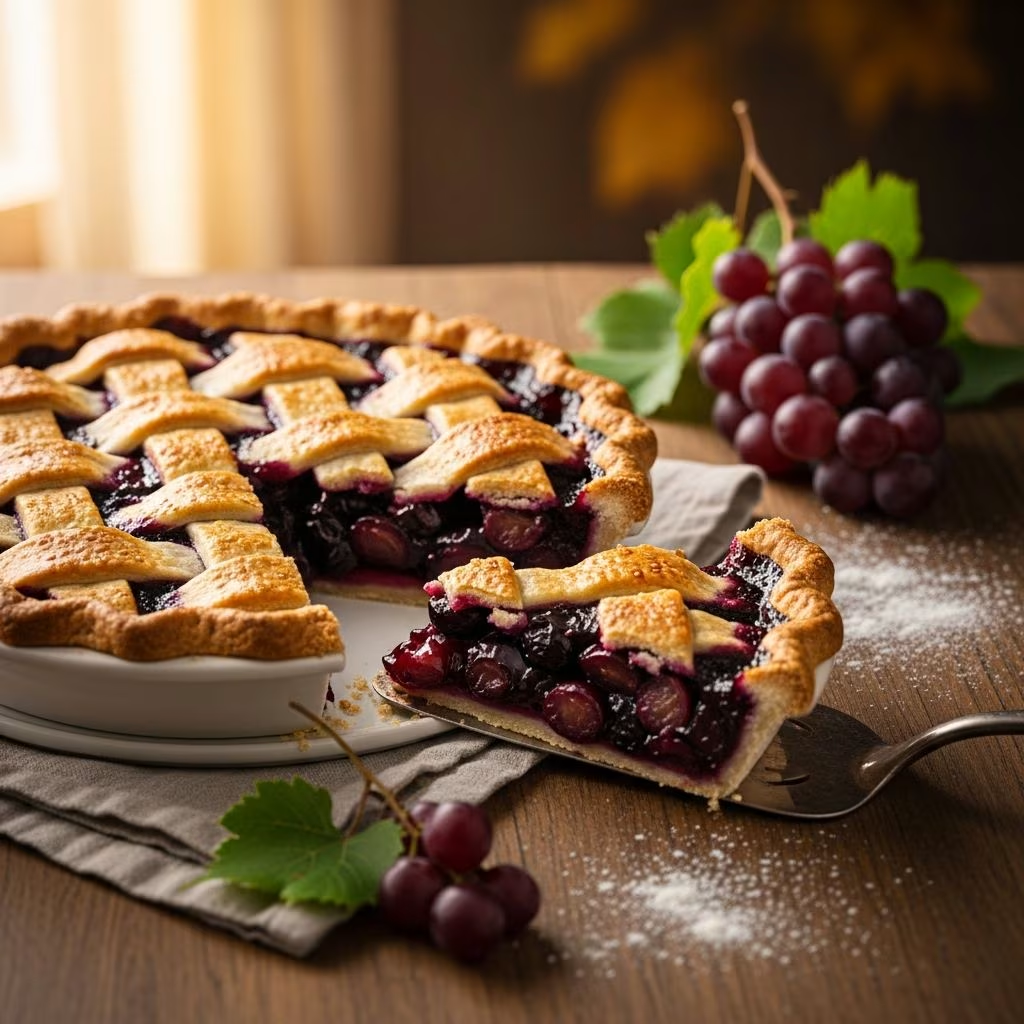
Roll out your first pastry disc and carefully transfer it to a 9-inch pie pan. Pour the cooled grape filling into the crust. If using a double crust, roll out the second disc and either place it whole over the filling or cut it into strips for a lattice pattern. Crimp the edges firmly to seal and cut several small slits in the top crust to allow steam to escape during baking. If using a crumb topping instead, simply sprinkle the topping over the filling without a top crust.
Bake for 40 to 50 minutes until the crust is golden brown and the filling bubbles at the edges. If the crust edges brown too quickly, cover them with foil during the final portion of baking. Remove from the oven and allow the pie to cool at room temperature for several hours before slicing. This cooling period allows the filling to set properly and ensures clean slices rather than a runny filling.
Troubleshooting Common Issues
Addressing Overly Wet Filling
The most frequent challenge when baking Concord grape pie is managing the filling’s moisture content. Grape pie filling is inherently wet, and without proper thickening and adequate cooling, the result becomes a soupy mess rather than a sliceable dessert.
Solutions include increasing the thickening agent slightly, ensuring complete cooling before slicing, and baking at a temperature that allows the filling to set properly. Some experienced bakers recommend blind baking the bottom crust for 10 minutes before adding the filling, which can help prevent a soggy bottom crust while allowing the filling to cook adequately.
Preventing a Soggy Bottom Crust
Place your pie on a baking sheet before putting it in the oven. This creates air circulation underneath and helps the bottom crust bake more evenly. Additionally, ensure your oven temperature is accurate by using an oven thermometer. Incorrect temperatures can result in uneven baking and compromised crust texture.
Managing Filling Overflow
Place the pie pan on a baking sheet before filling to catch any overflow. This prevents drips in your oven and makes cleanup easier. If your filling appears to be overflowing significantly during baking, your pan was likely overfilled. Future batches should use slightly less filling, reserving the excess to serve alongside slices if desired.
Serving and Storage Recommendations
Presentation Ideas
Concord grape pie is best served slightly warm or at room temperature, accompanied by vanilla ice cream or freshly whipped cream. The temperature contrast between cold ice cream and the tart filling creates a memorable eating experience. Some bakers dust the finished pie with powdered sugar just before serving for added visual appeal.
Storage Guidelines
Store leftover pie covered loosely with foil at room temperature for up to two days. For longer storage, refrigerate for up to five days or freeze for up to three months. When freezing, wrap the entire pie tightly in plastic wrap followed by foil to prevent freezer burn. Thaw in the refrigerator overnight before serving. Reheating a slice in a 325-degree oven for 10 to 15 minutes restores optimal texture.
Frequently Asked Questions
Can I use frozen Concord grapes?
Frozen Concord grapes work reasonably well when fresh ones are unavailable, though the texture of the finished filling may be slightly different. Thaw frozen grapes completely and drain excess liquid before following standard preparation procedures. The thawing process breaks down cell walls, potentially affecting the final consistency slightly, but the flavor remains excellent.
What if I cannot find Concord grapes?
While not ideal, you may substitute with other dark grape varieties such as black grapes or muscat grapes, though the flavor profile will differ. Avoid using red grapes or green grapes, as their more delicate flavor and higher water content do not produce satisfactory results. Some adventurous bakers have experimented with blackberries or boysenberries as alternatives, though these create a distinctly different dessert.
How thick should the filling be when cooked?
The filling should be thick enough to hold its shape when sliced but still moist enough that each slice releases easily from the pie pan. When cooled completely, a spoon drawn through the filling should leave a brief trail that gradually closes. If the filling is too thick, add a small amount of grape juice; if too thin, simmer uncovered for a few additional minutes to reduce moisture.
Can I make this pie ahead of time?
Yes, Concord grape pie actually improves after one or two days as the flavors continue to meld and develop. Prepare the pie up to three days in advance and store covered at room temperature. You may also assemble an unbaked pie, freeze it, and bake directly from the frozen state, adding 10 to 15 minutes to the baking time.
Variations and Creative Adaptations
Once you master the basic Concord grape pie, numerous variations become possible. Adding a crumb topping made from flour, brown sugar, oats, and butter provides textural contrast. Including a small amount of vanilla extract or almond extract in the filling adds subtle complexity. Some bakers incorporate a thin layer of crème fraîche or mascarpone between the crust and filling for richness.
Creating hand pies using the same filling with smaller pastry circles allows for portable servings perfect for gatherings. Lattice-topped versions provide elegant visual appeal while reducing preparation time compared to a full top crust.
Conclusion: Celebrating Seasonal Abundance
Baking a homemade Concord grape pie connects you to a long culinary tradition of preserving seasonal fruit through cooking and baking. The process requires attention to detail and respect for the ingredient, but the reward is a dessert of genuine quality that surpasses any commercial alternative. By understanding the properties of Concord grapes, mastering the fundamental techniques, and applying thoughtful troubleshooting when needed, you can consistently produce exceptional pies that celebrate autumn’s harvest and create lasting memories for family and friends.
References
- Concord Grape Pie with Crumb Topping — Mama Gourmet. Accessed April 2026. https://www.mamagourmand.com/concord-grape-pie/
- Epic Concord Grape Pie — Sunny Side Up Living Blog. Accessed April 2026. https://sunnysideuplivingblog.com/epic-concord-grape-pie/
- Concord Grape Pie and The History of The Finger Lakes — Home in the Finger Lakes. Accessed April 2026. https://homeinthefingerlakes.com/concord-grape-pie/
- Concord Grape Pie with Lattice Crust — Natalie Curtiss Art & Design. Accessed April 2026. https://www.nataliecurtiss.com/nataliecurtiss/concord-grape-pie
- Erin McDowell’s Concord Grape Pie Recipe — Edible Brooklyn. Accessed April 2026. https://ediblebrookly.com/2014/recipe-erin-mcdowells-concord-grape-pie/
- Concord Grape Pie — Cooking by the Book. Accessed April 2026. https://cookingbythebook.com/dessert-digest/concord-grape-pie/