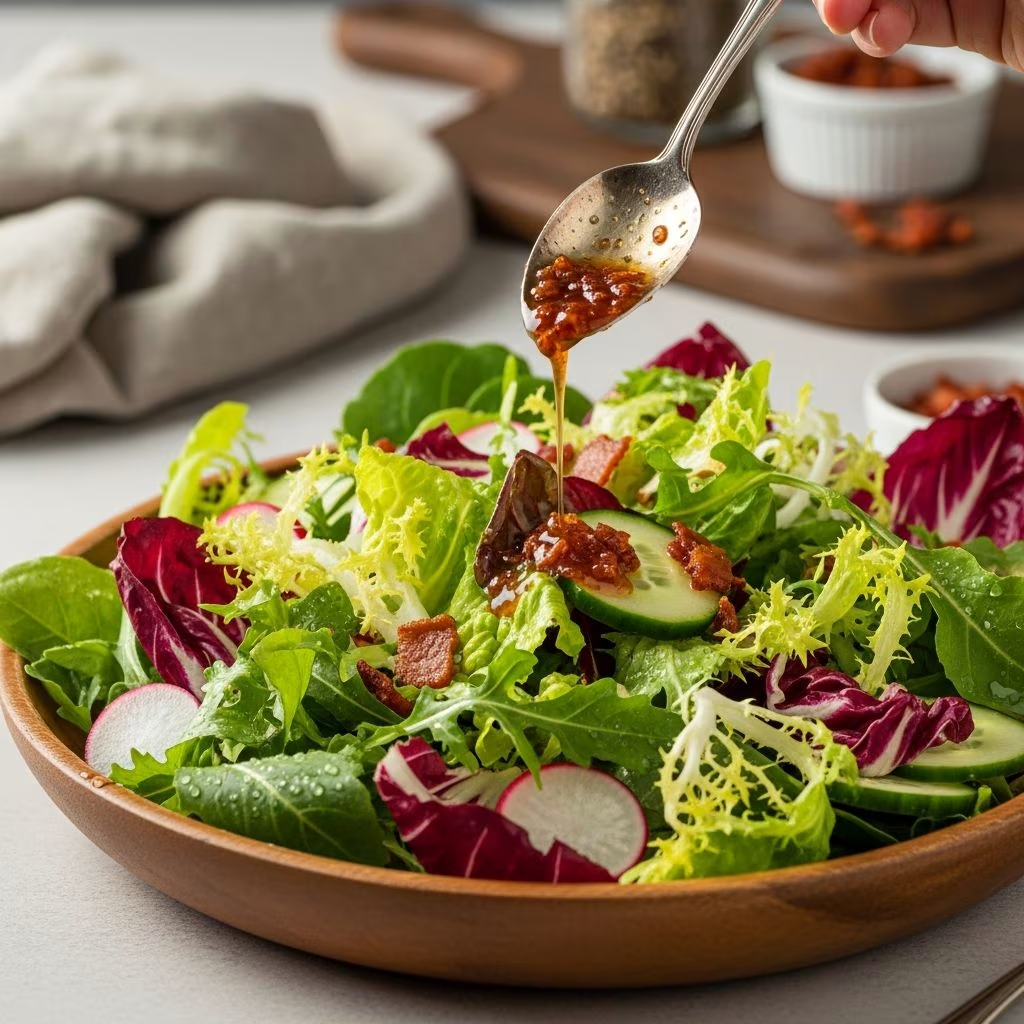
The combination of warm vinaigrette poured over delicate spring greens represents one of the most elegant yet approachable salad preparations in home cooking. This dish bridges the gap between simple and sophisticated, requiring just a handful of pantry ingredients and basic cooking skills to achieve impressive results. The magic happens when the heat from the dressing slightly softens the greens while maintaining their structural integrity, creating a complex interplay of textures and flavors.
Understanding the Foundation: Spring Greens Selection
The success of this salad begins with selecting the right greens. Spring varieties offer mild, delicate flavors that complement rather than compete with the bacon vinaigrette. Look for fresh, vibrant greens that display crisp leaves without any browning or sliminess. The tender nature of spring greens means they require minimal preparation and respond beautifully to warm dressings without becoming mushy.
Baby spinach serves as an excellent choice for this preparation, offering a subtle earthiness that pairs naturally with bacon and vinegar. Alternatively, mixed spring greens or tender lettuce varieties provide a lighter canvas for the robust dressing. The key consideration involves selecting greens tender enough to allow the warm vinaigrette to penetrate slightly, enhancing flavor absorption while preventing the leaves from becoming wilted and unappetizing.
The Supporting Cast: Essential Ingredients
Beyond the greens themselves, several components work in concert to create this dish’s distinctive character. Quality bacon forms the aromatic foundation, while complementary ingredients round out the flavor profile and add textural interest.
- Bacon: Select thick-cut bacon for superior flavor and structural integrity during cooking. The rendered fat becomes essential to the vinaigrette’s richness.
- Fresh scallions: These mild onions add subtle sharpness and color contrast without overwhelming the delicate greens.
- Radishes: Their peppery crunch and bright appearance provide textural contrast and visual appeal to the finished salad.
- Apple cider or red wine vinegar: The acidity forms the dressing’s backbone, cutting through richness and brightening flavors.
- Dijon mustard: This ingredient emulsifies the dressing and adds subtle complexity.
- Maple syrup or honey: A touch of sweetness balances acidity and creates depth in the flavor profile.
- Extra-virgin olive oil: Quality oil contributes body and silkiness to the finished vinaigrette.
- Salt and pepper: Proper seasoning amplifies all other flavors and prevents the dressing from tasting flat.
Preparation Strategy: Organizing Your Workflow
Successful execution of this dish relies on having all components ready before cooking begins. Tear the greens into bite-sized pieces if necessary and spin them dry to remove excess moisture, which would dilute the warm dressing. Chop the scallions into even pieces and slice the radishes uniformly for consistent presentation. Having the greens already combined in a large mixing bowl allows for quick dressing and immediate plating while the vinaigrette remains at optimal temperature.
This advance preparation also prevents the common mistake of applying warm dressing to cold, wet greens, which can result in a watery, underseasoned salad. The temperature differential between warm dressing and room-temperature greens creates an ideal environment for flavor absorption.
Mastering the Bacon Cooking Process
Rendering bacon properly determines both the dressing’s quality and the crispy pieces that garnish the finished salad. Cook the chopped bacon in a large skillet over medium heat, stirring occasionally to ensure even browning. This typically requires five to six minutes, producing crispy bacon pieces with rendered fat that has transformed into liquid gold for the vinaigrette.
The cooking process demands attention—too brief, and the bacon remains chewy; too long, and it becomes bitter. The moment when bacon transitions to golden brown and releases most of its fat marks the ideal stopping point. Transfer the cooked bacon to a paper towel-lined plate using a slotted spoon, which allows remaining fat to drain back into the skillet while preserving the rendered fat for the dressing.
Building the Vinaigrette: Layering Flavors
With the bacon removed, reserve the flavorful fat in the skillet and return it to medium-high heat. Pour in the vinegar, using a wooden spoon to scrape up the browned bits clinging to the pan’s bottom. These caramelized particles contain concentrated bacon flavor and should be fully dissolved into the vinegar, creating a savory, aromatic base.
Next, add the mustard, maple syrup, salt, and pepper, stirring until the mustard dissolves completely and the sweetness balances the vinegar’s acidity. Remove the skillet from direct heat and whisk in the reserved bacon fat, which adds richness and helps emulsify the dressing. Finally, incorporate the olive oil in a thin stream while whisking continuously, creating a cohesive vinaigrette that coats the greens evenly rather than pooling at the bottom of the bowl.
The Critical Assembly Phase
Timing becomes crucial when combining warm dressing with cold greens. While the vinaigrette still steams gently, immediately pour it over the prepared greens and scallions, using a heat-proof spatula to scrape every drop from the skillet. The warmth will slightly soften the greens, coaxing out their natural flavors while the vinegar’s acidity brightens them further.
Toss the greens with the dressing using gentle motions that ensure even coating without bruising the delicate leaves. The goal involves distributing the warm liquid throughout without aggressively breaking down the greens. After the initial toss, add the sliced radishes and cooked bacon pieces, tossing once more to distribute these garnishes evenly throughout the salad.
Serving Considerations and Presentation
This salad reaches its peak immediately after assembly, when the warmth of the dressing still provides gentle heat to the greens. Divide the salad among serving plates without delay, ensuring each portion receives an equitable share of radishes, bacon, and dressing. The slight warmth of the salad at the table creates an appealing sensory experience, distinguishing it from typical cold salads.
For entertaining, consider plating the salad just before guests arrive, allowing the flavors to meld while the temperature remains ideal. The warm-to-room-temperature transition actually enhances flavor perception, as warm foods deliver more aromatic compounds to the palate than cold preparations.
Troubleshooting Common Issues
| Problem | Cause | Solution |
|---|---|---|
| Greens become mushy | Dressing applied too hot or greens overdressed | Use drying medium for greens; apply dressing quickly and toss gently |
| Dressing tastes flat | Insufficient salt or seasoning | Taste before plating and adjust salt and pepper accordingly |
| Bacon remains chewy | Insufficient cooking time | Cook bacon for full five to six minutes until truly crispy |
| Dressing separates | Oil not properly emulsified with vinegar | Add mustard earlier and whisk oil in slowly while removing from heat |
Variations and Adaptations
While the classic preparation remains timeless, thoughtful variations expand the dish’s versatility. Substituting maple syrup with honey creates a subtly different sweetness, while experimenting with different vinegars—such as sherry or white wine vinegar—provides alternative flavor profiles. Some cooks add minced garlic or shallots to the skillet during the dressing preparation, introducing additional aromatic complexity.
Ingredient swaps deserve consideration based on seasonal availability and personal preference. Crumbled hard-boiled eggs add protein and richness, while crispy croutons provide textural contrast. Toasted nuts such as walnuts or pecans introduce earthiness and crunch. The foundation remains sturdy enough to accommodate these additions without compromising the dish’s essential character.
Make-Ahead Strategies
The bacon and vinaigrette components can be prepared separately in advance, simplifying last-minute assembly. Cook bacon up to two days prior and store it in an airtight container in the refrigerator. The vinaigrette itself maintains quality in refrigerated storage for up to two weeks, though reheating becomes necessary before serving.
When ready to serve, gently warm the vinaigrette in a small saucepan over low heat, stirring occasionally until steam rises from the surface. This ensures the dressing reaches the ideal temperature for wilting and flavoring the greens. Keeping the greens separate until the last possible moment prevents sogginess and ensures a crisp salad texture.
Nutritional Benefits and Flavor Science
Beyond its appealing taste and texture, this salad offers legitimate nutritional value. Spring greens provide vitamins K and A, beneficial minerals, and dietary fiber. The warm preparation actually enhances nutrient absorption, as heat breaks down cell walls and releases bioavailable compounds. Bacon, despite its rich reputation, contributes B vitamins and minerals like selenium and phosphorus.
The vinegar’s acidity offers potential metabolic benefits, while the healthy fats from both bacon and olive oil support nutrient absorption and promote satiety. The overall composition creates a nutritionally balanced dish that satisfies both health-conscious and flavor-focused diners.
Frequently Asked Questions
Can this salad be made with different types of greens?
Yes, though spring varieties work best. Sturdier greens like kale can withstand the warm dressing but benefit from a slightly longer cooking time. Avoid delicate mesclun mixes that may become overly wilted.
How do I prevent the greens from becoming too soft?
Ensure the greens are completely dry before dressing, use room-temperature rather than piping-hot dressing, and toss gently but thoroughly. Serve immediately without letting the dressed salad sit.
Can bacon fat be substituted with oil?
While vegetable oil works technically, it sacrifices the distinctive bacon flavor that defines this dish. A blend of bacon fat and olive oil provides the best flavor-to-health balance.
What should I serve alongside this salad?
The warm vinaigrette makes this salad substantial enough to pair with simple proteins like grilled fish or roasted chicken. It also complements pasta dishes and grain bowls beautifully.
References
- Spinach Salad with Warm Bacon Dressing — Healthy Seasonal Recipes. 2024. https://www.healthyseasonalrecipes.com/spinach-scallion-salad-hot-bacon-dressing/
- Vinaigrette Emulsification and Stabilization Methods — Food and Drug Administration. 2023. https://www.fda.gov/food
- Warm Bacon Vinaigrette over Baby Greens — An Affair from the Heart. 2024. https://anaffairfromtheheart.com/warm-bacon-vinaigrette-over-baby-greens/