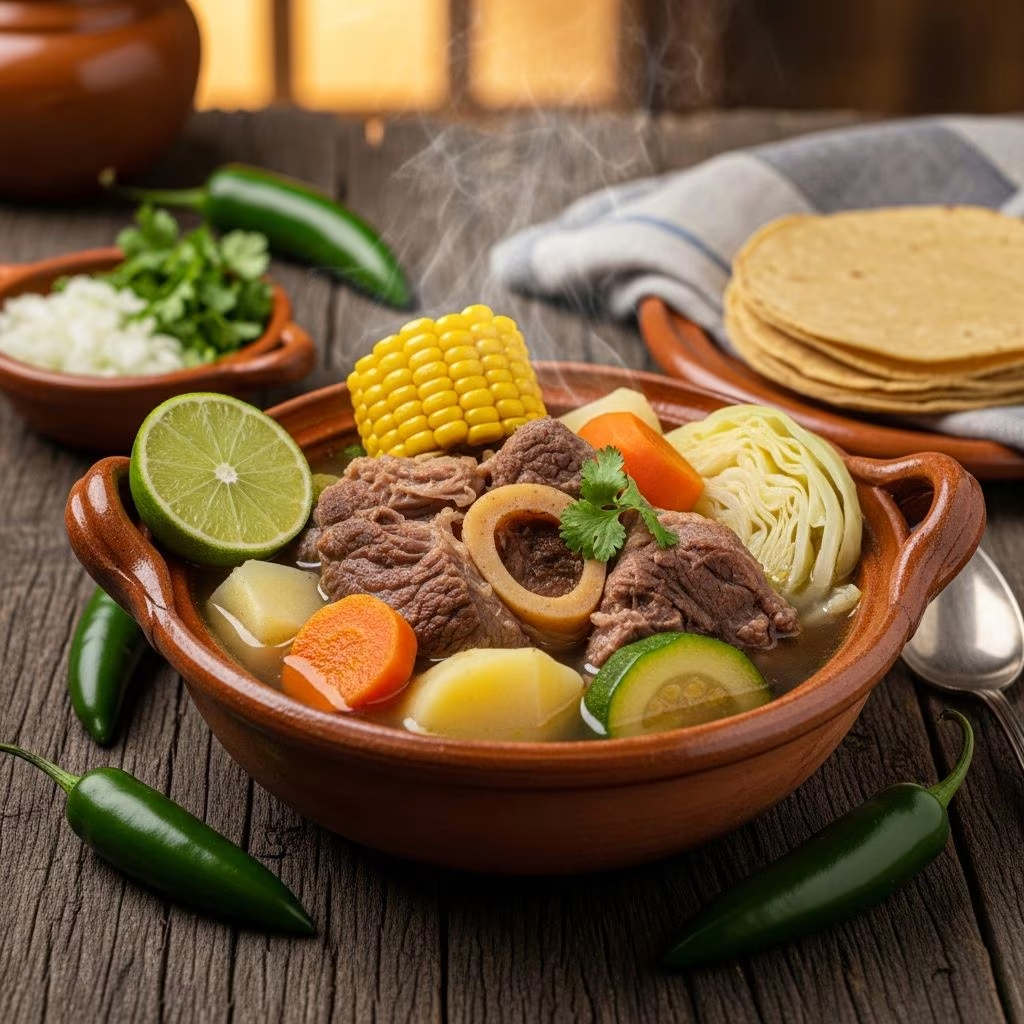
Caldo de Res stands as a cornerstone of Mexican home cooking, delivering a bowl of pure comfort through its rich, bone-simmered broth and medley of vibrant vegetables. This nourishing soup, often enjoyed during family gatherings or chilly evenings, combines tender beef shanks with seasonal produce like corn on the cob, carrots, and cabbage, all infused with garlic, bay leaves, and subtle spices. Rooted in Mexico’s culinary traditions, it emphasizes simple, fresh ingredients that yield profound flavors after hours of gentle simmering.
The Heritage and Appeal of Caldo de Res
Originating from rural Mexican kitchens, Caldo de Res evolved as a practical way to stretch affordable cuts of beef into a satisfying meal for large households. The bone-in shanks provide collagen-rich depth to the broth, creating a silky texture that coats every spoonful. Families pass down variations, some adding spicy serrano chiles for heat or fresh mint for brightness, but the core remains unchanged: a balanced harmony of meat, vegetables, and herbs.
Its appeal lies in versatility. Serve it as a light lunch with warm tortillas or a hearty dinner alongside rice and lime wedges. Nutritionally, it offers lean protein from the beef, fiber from the veggies, and vitamins from the corn and cilantro garnish. In Mexican culture, it’s more than food—it’s a symbol of hospitality and care, often prepared for celebrations or when someone needs soothing.
Essential Ingredients for Perfect Caldo de Res
Gathering the right components ensures authenticity and depth. Focus on quality beef shanks with marrow bones for the best flavor extraction.
- Beef Shanks: 2.5-3 pounds bone-in, providing tenderness and broth richness.
- Aromatic Base: 4 garlic cloves, 2 bay leaves, 1 onion (optional for some recipes).
- Vegetables: 4 carrots (thick slices), 3 corn ears (halved), 2 potatoes (chunky cuts), 2 zucchini, 1/2 cabbage head (shredded).
- Seasonings: 1-2 tablespoons kosher salt, fresh cilantro, lime juice, optional serrano chiles or bouillon for intensity.
- Liquid: 10-12 cups water, enough to cover ingredients generously.
These elements create a soup that serves 6-8 people, scalable for crowds.
Step-by-Step Guide to Stovetop Caldo de Res
Preparing Caldo de Res demands patience, but the process is straightforward. Use a large Dutch oven or stockpot for even cooking.
- Prepare the Broth Base: Place beef shanks, smashed garlic, bay leaves, salt, and water in the pot. Bring to a rolling boil over high heat, then reduce to a low simmer. Cover partially and cook for 1.5-2 hours, skimming foam regularly for clarity.
- Check Meat Tenderness: Test shanks with a fork; they should shred easily. Remove meat to a plate, discard bones and tough sinew, then chop into bite-sized pieces.
- Incorporate Vegetables: Add carrots, corn, and potatoes first. Simmer 10 minutes, then introduce zucchini and cabbage. Cook until veggies are fork-tender but retain shape, about 15-20 minutes total.
- Final Adjustments: Return chopped beef to the pot. Taste and season with more salt or a bouillon cube if needed. Stir in chopped cilantro for freshness.
- Rest and Serve: Let sit 5 minutes off heat. Ladle into bowls with garnishes.
This method yields a broth that’s golden and flavorful, with each bowl brimming with variety.
Alternative Cooking Methods for Modern Kitchens
Not everyone has hours to simmer. Adapt Caldo de Res to slow cookers or pressure cookers without sacrificing taste.
Slow Cooker Version
Combine all broth ingredients in the slow cooker. Cook on low 6-8 hours or high 5-6 hours. Add vegetables in the last 45 minutes. Shred beef and return to pot. Ideal for set-it-and-forget-it prep.
Instant Pot Adaptation
Sauté aromatics first if desired. Pressure cook beef and broth elements for 45-60 minutes on high, natural release 15 minutes. Quick-release remaining pressure, add veggies, and simmer 10 minutes on sauté mode. Efficient for weeknights.
Both methods preserve the soup’s essence while saving time.
Customizing Your Caldo de Res
Mexican cooking thrives on personalization. Tailor to preferences or availability.
| Variation | Ingredients/Additions | Effect |
|---|---|---|
| Spicy Kick | 2-3 minced serrano chiles, blended into salsa | Adds heat and tang; serve on side. |
| Herbaceous Twist | Fresh mint sprigs or epazote | Enhances aroma and cuts richness. |
| Protein Boost | Chuck roast cubes alongside shanks | More meaty bites for heartiness. |
| Gluten-Free | Use corn tortillas; skip bouillon if needed | Naturally aligns with dietary needs. |
| Vegetarian Option | Mushrooms or jackfruit for beef; veggie broth | Maintains texture and savoriness. |
Experiment to match regional styles—northern versions may lean meatier, while central ones emphasize greens.
Perfect Pairings and Serving Suggestions
Elevate Caldo de Res with thoughtful accompaniments. Squeeze fresh lime over each serving for acidity that brightens the broth. Sprinkle chopped cilantro and diced onion for crunch and earthiness. Hot sauce or homemade serrano salsa provides customizable spice.
- Warm corn tortillas or bolillo rolls for dipping.
- Mexican rice (arroz rojo) as a side.
- Avocado slices for creaminess.
- Fresh radishes and lime wedges on the table.
For larger meals, position it as a starter before tacos or enchiladas. Leftovers store 3-4 days refrigerated or freeze for months.
Nutrition and Health Benefits
One serving (about 2 cups) delivers approximately 300-400 calories, 25g protein, and low fat when skimmed properly. The marrow bones contribute glucosamine for joint health, while vegetables provide antioxidants, vitamin C from cabbage and carrots, and potassium from potatoes. It’s hydrating and restorative, akin to chicken soup’s reputation but with bolder flavors.
Consult dietary needs; bone broth aids gut health per studies on collagen, though individual results vary.
Frequently Asked Questions (FAQs)
What cut of beef is best for Caldo de Res?
Bone-in beef shanks are ideal for their marrow and flavor. Chuck roast adds extra tenderness.
Can I make Caldo de Res ahead of time?
Yes, flavors deepen overnight. Reheat gently on stovetop.
How do I prevent greasy broth?
Skim foam diligently and chill overnight to remove solidified fat.
Is Caldo de Res spicy?
Traditionally mild; spice with chiles or sauce to taste.
What’s the difference between Caldo de Res and other beef soups?
It features Mexican vegetables like corn and cabbage, with lime and cilantro finishes.
Storage and Reheating Tips
Cool soup completely before refrigerating in airtight containers. Freezes well in portions; thaw overnight. Reheat to boiling, adding water if thickened. Vegetables may soften slightly but retain goodness.
This timeless dish invites repetition, each pot a chance to refine your technique.
References
- Caldo de Res (Mexican Beef Soup) — Isabel Eats. 2023-10-15. https://www.isabeleats.com/caldo-de-res/
- Caldo de Res (Vegetable Beef Soup) — Kevin Is Cooking. 2022-11-08. https://keviniscooking.com/caldo-de-res/
- Caldo de Res – Mexican Beef Soup Recipe — QueRicaVida.com. 2021-05-20. https://www.quericavida.com/recipes/caldo-de-res-mexican-beef-soup/81c131f7-8cbb-4331-bd78-05a44f30ddb0
- CALDO DE RES – A Hearty Mexican Beef Soup — Latino Foodie. 2020-09-12. https://www.latinofoodie.com/recipes/caldo-de-res/
- Caldo de Res (Mexican Beef & Vegetable Soup) — GypsyPlate. 2023-02-28. https://gypsyplate.com/caldo-de-res/