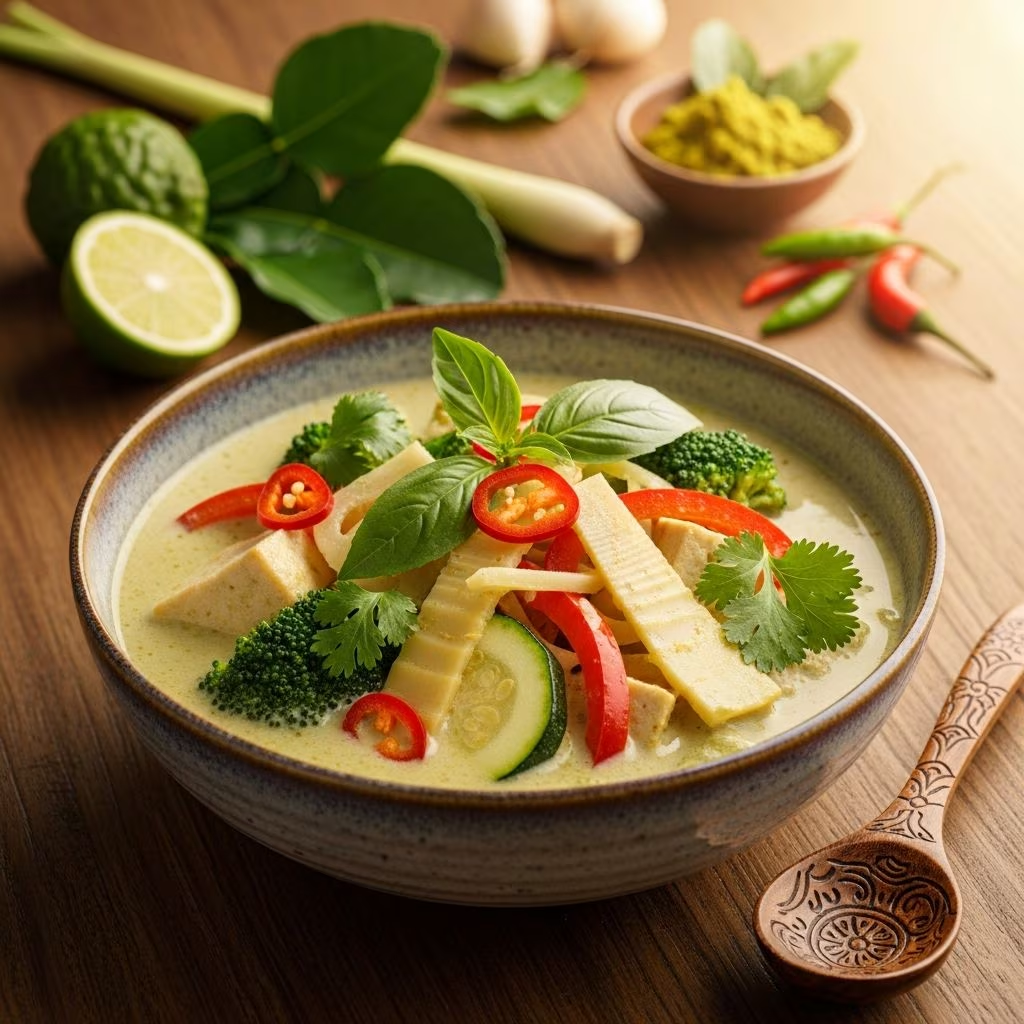
Vegetarian Thai green curry represents one of Southeast Asia’s most beloved comfort dishes, combining the aromatic depth of curry paste with the creamy richness of coconut milk and the vibrant textures of fresh vegetables. This plant-based interpretation of a traditional Thai staple delivers bold, complex flavors that satisfy even the most discerning palates. Whether you’re preparing a quick weeknight meal or impressing guests at a dinner party, mastering this versatile dish opens doors to countless culinary possibilities.
The beauty of vegetarian green curry lies in its flexibility and accessibility. Unlike many cuisines that demand specialized ingredients or extended preparation times, this curry comes together in under an hour using either store-bought curry paste for convenience or homemade paste for maximum flavor control. The vegetable selection adapts easily to seasonal availability and personal preferences, making it an ideal candidate for creative kitchen experimentation.
Understanding Thai Green Curry Paste: The Foundation of Flavor
The foundation of any exceptional green curry begins with understanding curry paste. Commercial Thai green curry paste typically includes green chilies, garlic, lemongrass, kaffir lime leaf, shallots, cilantro, and Thai basil. These ingredients combine to create a complex, layered flavor profile that forms the backbone of the finished dish.
When selecting store-bought curry paste, examine ingredient lists carefully. Most commercial formulations prioritize shelf stability over heat intensity, resulting in a somewhat pale color that doesn’t visually convey the expected verdant hue. This limitation presents an opportunity for enhancement—a technique widely practiced in Thai kitchens involves boosting color and intensity by adding fresh leafy greens directly into the paste.
For those preferring homemade paste, combining fresh green chilies, garlic cloves, lemongrass stalks, kaffir lime leaves, cilantro, Thai basil, shallots, and a touch of shrimp paste (or miso for vegetarian versions) creates an aromatic foundation with superior flavor complexity. Grinding these components with a mortar and pestle releases essential oils and creates the proper texture for optimal curry development.
Enhancing Commercial Curry Paste for Superior Results
Transforming standard curry paste into something extraordinary requires a thoughtful approach. The most effective enhancement technique involves incorporating fresh leafy greens such as baby spinach or Thai basil into the paste before adding it to the pot. This method simultaneously addresses the color deficit common in commercial pastes while introducing fresh, vibrant flavors that elevate the entire dish.
To create an enhanced paste, finely julienne approximately 10-15 leaves of fresh spinach or Thai basil and grind them into a fine paste using a mortar and pestle. The spinach breaks down readily under grinding pressure, incorporating seamlessly with the curry paste. Additionally, incorporating finely grated dried shiitake mushroom adds profound umami depth, while a teaspoon or two of miso paste contributes saltiness and additional savory complexity.
This enhancement approach isn’t a modern culinary innovation—Thai home cooks have routinely employed this technique for generations, adapting it based on whatever leafy greens are available in their local markets. The practice demonstrates how traditional cooking wisdom adapts to available ingredients while maintaining authentic flavor principles.
Selecting and Preparing Vegetables for Optimal Texture and Flavor
Vegetable selection determines not only the nutritional profile but also the textural experience of the finished curry. The most successful vegetable combinations balance softer, quicker-cooking items with firmer vegetables that maintain their integrity during the cooking process.
Hardy vegetables that hold their structure well include winter melon (cut into one-inch chunks), bamboo shoots (from canned sources, thoroughly drained and rinsed), and carrots (sliced on the diagonal for visual appeal and even cooking). These vegetables tolerate extended simmering while gradually becoming fork-tender without disintegrating.
Delicate vegetables like bell peppers, asparagus, broccoli, and zucchini require different handling. Adding these later in the cooking process—typically during the final 5-10 minutes—preserves their crisp texture and bright color. This staged approach ensures each vegetable reaches optimal doneness simultaneously rather than some becoming mushy while others remain undercooked.
For maximum visual appeal and nutritional benefit, incorporate a rainbow of colors: red and green bell peppers for brightness, deep green broccoli or asparagus for earthiness, orange carrots for sweetness, and white or cream-colored cauliflower or mushrooms for subtle depth. The diverse color palette signals nutritional variety while creating an appetizing presentation.
The Cooking Process: Building Layers of Flavor
Successful curry preparation follows a methodical approach that builds flavor systematically rather than simply combining ingredients at once. Begin by heating a portion of coconut milk—approximately three-quarters of a cup—in a heavy-bottomed pot over medium-high heat until it thickens noticeably, which typically requires about five minutes. This step allows coconut solids to concentrate and separate slightly, creating an ideal medium for frying the curry paste.
Once the coconut milk has reduced adequately, reduce heat to medium and introduce the enhanced curry paste, stirring continuously. The paste should gradually thicken and darken as it cooks, with visible coconut oil beginning to separate from the paste itself. This separation—typically occurring within 3-5 minutes—indicates that the curry paste has properly cooked and its flavors have begun to intensify.
With the paste adequately cooked, introduce the remaining coconut milk and water, bringing the mixture to a gentle boil. The liquid should have a beautiful greenish hue if the paste was properly enhanced. Add heartier vegetables and protein components (such as fried tofu), along with flavor builders like palm sugar, soy sauce, and optional makrut lime leaves. The palm sugar balances the heat and saltiness, creating a complex sweet-savory profile characteristic of authentic Thai cuisine.
Allow the curry to simmer for approximately 10 minutes, permitting flavors to meld and develop complexity. During this time, the cooking liquid gradually infuses with the essence of each ingredient, creating a cohesive sauce rather than a simple combination of disparate components. Add more delicate vegetables during the final minutes of cooking, ensuring they maintain their textural integrity while absorbing surrounding flavors.
Protein Options Beyond Traditional Choices
While fried tofu serves as the traditional vegetarian protein in green curry, numerous alternatives accommodate different dietary preferences and tastes. Fried tofu contributes a chewy, satisfying texture that mimics meat-like qualities, making it particularly appealing to those transitioning toward plant-based diets. The frying process creates a golden exterior that contrasts beautifully with the tender interior.
Chickpeas offer a legume-based alternative with a firmer texture and earthy flavor profile. Their starchy nature allows them to absorb curry liquid gradually, becoming more flavorful as they simmer. Cashews—either whole or broken into pieces—contribute richness and a subtle sweetness that complements coconut milk beautifully. For those preferring minimal protein additions, mushrooms (particularly shiitake or oyster varieties) provide umami depth that makes protein supplementation unnecessary.
Flavor Balancing and Customization
Thai cuisine fundamentally relies on balancing four primary flavor profiles: spicy (from chilies), salty (from soy sauce or fish sauce alternatives), sweet (from palm sugar or coconut milk), and acidic (from lime juice). Achieving equilibrium among these elements distinguishes exceptional curry from merely adequate versions.
Begin with conservative quantities of each seasoning component, tasting frequently and adjusting as needed. Additional soy sauce enhances saltiness, extra palm sugar increases sweetness and rounds out harsh edges, and fresh lime juice (added toward the end of cooking) brightens the overall profile with acidity that cuts through richness. A pinch of turmeric, occasionally added to the curry base, contributes earthiness and additional color complexity.
The optional addition of makrut lime leaves—twisted and torn before adding to release their essential oils—imparts a sophisticated citrus undertone that enhances complexity without introducing the bright sharpness of fresh lime juice. Fresh Thai basil leaves, stirred in during the final moments before serving, contribute aromatic qualities that elevate the dish from satisfying to transcendent.
Equipment Considerations and Kitchen Alternatives
Traditional mortar and pestle preparation remains the gold standard for curry paste creation, as the grinding action releases essential oils while maintaining desired texture. However, modern kitchens can employ alternative methods when this specialized equipment isn’t available.
A high-powered blender successfully combines leafy greens with a portion of the coconut milk destined for the curry, creating a smooth green mixture that subsequently incorporates with the curry paste. Food processors work similarly, though they may produce slightly chunkier texture. Both methods eliminate the need for manual grinding while achieving functional results, though purists note subtle texture differences compared to traditionally ground paste.
For the curry cooking itself, a heavy-bottomed pot distributes heat evenly and prevents scorching during the paste-frying stage. Stainless steel, cast iron, or high-quality non-stick surfaces all perform adequately, though stainless steel offers the best balance of heat distribution and durability for repeated use.
Serving Suggestions and Accompaniment Strategies
Vegetarian Thai green curry reaches its full potential when paired thoughtfully with complementary components. Fragrant jasmine rice serves as the traditional accompaniment, its delicate flavor providing neutral grounding for the curry’s bold aromatics without competing for attention.
Alternative grain options include Thai sticky rice (for authentic experience), brown rice (for nutritional enhancement), quinoa (for textural contrast), or even cauliflower rice (for lower-carbohydrate adaptations). Naan bread or other Indian flatbreads provide textural variety while offering convenient curry vehicles for informal dining scenarios.
Fresh garnishes applied immediately before serving enhance both visual appeal and flavor complexity. Thai basil leaves, cilantro sprigs, thinly sliced fresh red chilies, lime wedges, and a drizzle of coconut milk create a restaurant-quality presentation while allowing diners to customize heat levels and acidity to personal preference.
Storage, Freezing, and Make-Ahead Strategies
Vegetarian Thai green curry improves after a day or two as flavors continue developing and integrating, making it an excellent candidate for advance preparation. Store cooled curry in airtight containers within the refrigerator for up to four days, reheating gently over low heat to preserve ingredient integrity.
The enhanced curry paste freezes exceptionally well, remaining viable for several months when stored in freezer-safe containers or ice cube trays for portion control. This advance preparation dramatically reduces active cooking time during busy weekdays, requiring only vegetable preparation and assembly when schedules permit minimal kitchen involvement.
Finished curry also freezes successfully, though coconut milk separates slightly during thawing. Simply reheat gently while stirring occasionally, and the sauce re-emulsifies. Fresh herbs and garnishes should be added after reheating rather than before freezing, as extended cold storage diminishes their aromatic qualities.
Nutritional Considerations and Health Benefits
Vegetarian Thai green curry delivers substantial nutritional benefits within a relatively modest calorie framework. The abundance of vegetables provides dietary fiber, essential vitamins, and minerals, while coconut milk contributes medium-chain fatty acids and creates satisfying richness that promotes satiety despite plant-based protein sources.
Curry paste components—particularly garlic, lemongrass, and cilantro—contain bioactive compounds traditionally valued in Asian medicine. Modern research increasingly validates these traditional applications, identifying anti-inflammatory and antioxidant properties in curry paste constituents. The combination of diverse vegetables and aromatic herbs creates a synergistic effect greater than individual components alone.
Troubleshooting Common Curry Challenges
Curry that appears too thin benefits from additional simmering time, which reduces excess liquid and concentrates flavors, or from stirring in a paste of cornstarch and water to achieve desired consistency. Conversely, overly thick curry improves with additional coconut milk or water, added gradually while stirring to prevent lumps.
Insufficient color despite enhanced paste may indicate inadequate leafy greens incorporation; additional fresh spinach or basil can be ground and stirred directly into the finished curry. A curry that tastes flat benefits from lime juice (added gradually), additional soy sauce for saltiness, or palm sugar for sweetness—adding small increments and tasting frequently prevents overseasoning.
Vegetables that become mushy indicate excessive cooking time; future batches benefit from adding delicate vegetables later or reducing total simmering duration. Conversely, undercooked vegetables require longer simmering of the complete pot or pre-cooking harder vegetables before combining with curry liquid.
Seasonal Variations and Ingredient Adaptations
Seasonal cooking naturally informs ingredient selection and flavor profiles. Spring curries emphasize tender asparagus, fresh peas, and delicate herbs, creating lighter preparations suited to warming weather. Summer versions highlight zucchini, eggplant, and abundant fresh basil, while autumn curries showcase heartier elements like butternut squash and mushrooms that provide satisfying substance.
Winter curries benefit from storage-stable vegetables like carrots, potatoes, and winter melon, which provide comforting warmth during cold months. This seasonal responsiveness creates natural menu variety while ensuring optimal ingredient freshness and supporting local agricultural systems.
References
- Vegan Thai Green Curry Meat Eaters Will Love — Hot Thai Kitchen. 2024. https://hot-thai-kitchen.com/vegan-green-curry/
- One-Pan Vegan Thai Green Curry — Jessica in the Kitchen. 2024. https://jessicainthekitchen.com/thai-green-curry-vegan-gluten-free/
- Vegan Green Curry Vegetables with Chickpeas — Veggie Inspired. 2024. https://www.veggieinspired.com/quick-easy-thai-green-curry-vegetables/
- Incredible Vegan Thai Green Curry — Rainbow Plant Life. 2024. https://rainbowplantlife.com/vegan-thai-green-curry/
- Thai Green Curry with Spring Vegetables — Cookie and Kate. 2024. https://cookieandkate.com/thai-green-curry-with-spring-vegetables/