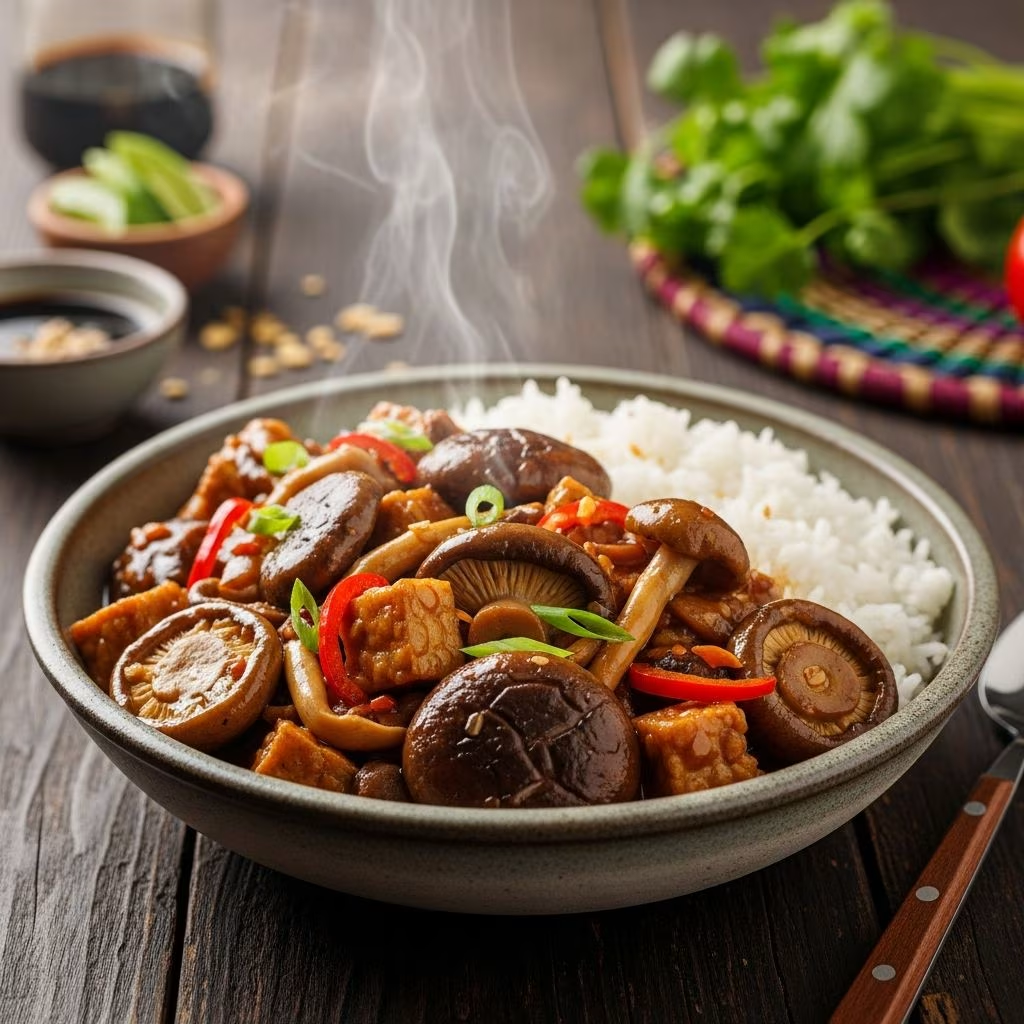
Filipino adobo stands as one of the most beloved dishes in Southeast Asian cuisine, renowned for its perfect harmony of savory, tangy, and slightly sweet notes. Traditionally featuring meat like chicken or pork simmered in a blend of soy sauce and vinegar, this vegan adaptation swaps in mushrooms to deliver the same depth of flavor without compromising on texture or taste. Mushrooms, with their natural umami and ability to soak up marinades, make an ideal substitute, creating a hearty, satisfying meal that’s naturally plant-based and quick to prepare.
Why Mushrooms Excel in Adobo
Mushrooms bring a meaty texture and earthy richness that mimics the tenderness of slow-cooked proteins. Varieties like button, cremini, oyster, maitake, portobello, and shiitake each offer unique qualities: buttons provide a mild base, oysters add a subtle seafood-like note, and shiitakes deliver intense savoriness. When cooked, they release moisture, concentrating flavors and forming a glossy sauce that clings beautifully to rice.
- Umami Boost: Mushrooms naturally contain glutamates, enhancing the dish’s savory profile alongside soy sauce.
- Texture Variety: Tear or chop them to control chewiness—larger pieces for heartiness, smaller for quicker cooking.
- Health Perks: Low in calories, high in fiber and antioxidants, they support immune health and digestion.
Essential Ingredients for Authentic Flavor
The magic of adobo lies in its simple pantry staples, balanced to achieve tang from vinegar, saltiness from soy, and aromatics from garlic and bay leaves. For a vegan version, opt for tamari or vegetarian oyster sauce if desired.
| Ingredient | Quantity (Serves 4) | Purpose |
|---|---|---|
| Mixed Mushrooms (button, oyster, etc.) | 1-1.5 lbs | Main protein substitute |
| Garlic Cloves | 4-6, smashed/minced | Aromatic base |
| Soy Sauce or Tamari | 3 tbsp | Savory depth |
| White or Coconut Vinegar | 3 tbsp | Tangy brightness |
| Bay Leaves | 1-2 | Herbal undertone |
| Neutral Oil | 2 tbsp | Sautéing |
| Brown Sugar | 1 tsp | Balances acidity |
| Peppercorns (optional) | 1/4 tsp | Subtle heat |
These components create a sauce that reduces into a luscious glaze. Experiment with coconut vinegar for a milder tang or add shallots for extra sweetness.
Step-by-Step Cooking Guide
Preparation takes about 20-30 minutes, making this ideal for busy evenings. Focus on high-heat searing to develop browning (Maillard reaction) before simmering.
Prep Mushrooms: Rinse briefly under cold water, pat dry thoroughly to avoid sogginess. Tear or slice into bite-sized pieces—keep shapes irregular for better sauce adhesion.
Sear for Flavor: Heat oil in a skillet or wok over medium-high. Add mushrooms in a single layer; season with salt. Cook undisturbed 2-3 minutes until browned, then stir. This step releases natural sugars.
Aromatics In: Add smashed garlic (and shallots if using). Sauté 1 minute until fragrant and golden—avoid burning to prevent bitterness.
Build the Sauce: Pour in soy sauce, vinegar, bay leaves, sugar, and peppercorns. Bring to a boil without stirring initially to preserve tang, then simmer covered 10-15 minutes. Mushrooms release water, so no extra broth needed unless desired.
Finish and Reduce: Uncover, add a pat of vegan butter for gloss if vegan. Cook until sauce thickens to coat a spoon. Taste and adjust seasoning.
Serve hot over steamed rice or garlic fried rice (sinangag) for authenticity. Garnish with green onions or fried garlic chips.
Variations to Suit Your Taste
Customize this base recipe for endless twists while staying true to Filipino roots.
- Coconut Milk Version: Stir in a can of coconut milk after searing for creamy richness; simmer 45 minutes for melded flavors.
- Spicy Kick: Add chili flakes or fresh chilies during sautéing.
- Protein Boost: Mix in seitan or tofu for extra bulk, though mushrooms shine solo.
- Gluten-Free: Use tamari and ensure vinegar is GF.
- Low-Carb: Serve over cauliflower rice or greens.
For sinangag: Fry leftover garlic slices in oil until crisp, then toss with day-old rice, salt, and scallions.
Pairing and Serving Suggestions
Mushroom adobo pairs brilliantly with starchy sides to soak up the sauce. Traditional accompaniments include:
- Steamed jasmine rice or garlic rice.
- Fresh atchara (pickled papaya) for crunch and acidity balance.
- Stir-fried kangkong (water spinach) or other greens.
Drinks: Iced calamansi juice or ginger tea cuts through richness. For meals, scale up for batch cooking—flavors deepen overnight, perfect for leftovers.
Nutrition and Health Benefits
This dish clocks in at about 150-200 calories per serving, packed with nutrients. Mushrooms provide B vitamins, selenium, and ergothioneine (an antioxidant). Soy adds plant protein, while vinegar aids digestion. It’s naturally vegan, low-fat, and fiber-rich, supporting heart health and blood sugar control.
| Nutrient (per serving) | Amount | % Daily Value |
|---|---|---|
| Calories | 180 | 9% |
| Protein | 8g | 16% |
| Fiber | 3g | 11% |
| Sodium | 800mg | 35% |
Common Mistakes and Pro Tips
Avoid these pitfalls for perfection:
- Over-Washing Mushrooms: Excess water dilutes flavors; pat dry post-rinse.
- Stirring Too Soon: Let vinegar boil undisturbed to retain sharpness.
- Low Heat: High sear then low simmer builds complexity.
- Tip: Use dried shiitakes rehydrated for deeper umami; reserve liquid as broth.
Frequently Asked Questions (FAQs)
Can I use frozen mushrooms?
Thaw and dry well first; fresh yield better texture, but frozen work in pinches.
What’s the best vinegar substitute?
Rice or apple cider vinegar mimics white vinegar’s bite; coconut adds tropical notes.
Is this dish spicy?
Naturally mild; add peppercorns or chilies for heat.
How long does it keep?
Refrigerate up to 4 days; reheat gently to avoid toughness.
Can I make it in advance?
Yes—flavors intensify; store sauce separately if needed.
Exploring Filipino Cuisine Through Vegan Lenses
Adobo’s versatility highlights Filipino cooking’s emphasis on bold, fermented flavors. This mushroom rendition opens doors for plant-based eaters to enjoy heritage dishes. Experiment with local mushrooms or fusions like adding lemongrass for a Thai-Filipino hybrid. Whether for Meatless Mondays or daily vegan meals, it proves tradition evolves deliciously.
Master this recipe, and you’ll have a staple that’s nutritious, flavorful, and crowd-pleasing. Gather ingredients and cook today for a taste of Filipino comfort redefined.
References
- Mushroom Adobo – Salu Salo Recipes — Salu-Salo. N/D. https://salu-salo.com/mushroom-adobo/
- Mushroom Adobo with Sinangag (Fried Garlic Rice) — The Foodie Takes Flight. N/D. https://thefoodietakesflight.com/mushroom-adobo/
- Asha’s Mushroom Adobo (Adapted from Angela Dimayuga) — Diaspora Co. N/D. https://www.diasporaco.com/blogs/recipes/coconut-milk-mushroom-adobo
- Kasama’s Mushroom Adobo — Feral Cooks. N/D. https://feralcooks.com/kasamas-mushroom-adobo/
- Vegan Vinegar Mushroom Adobo — Bittersweet Blog. 2021-05-28. https://bittersweetblog.com/2021/05/28/vegan-vinegar-mushroom-adobo/