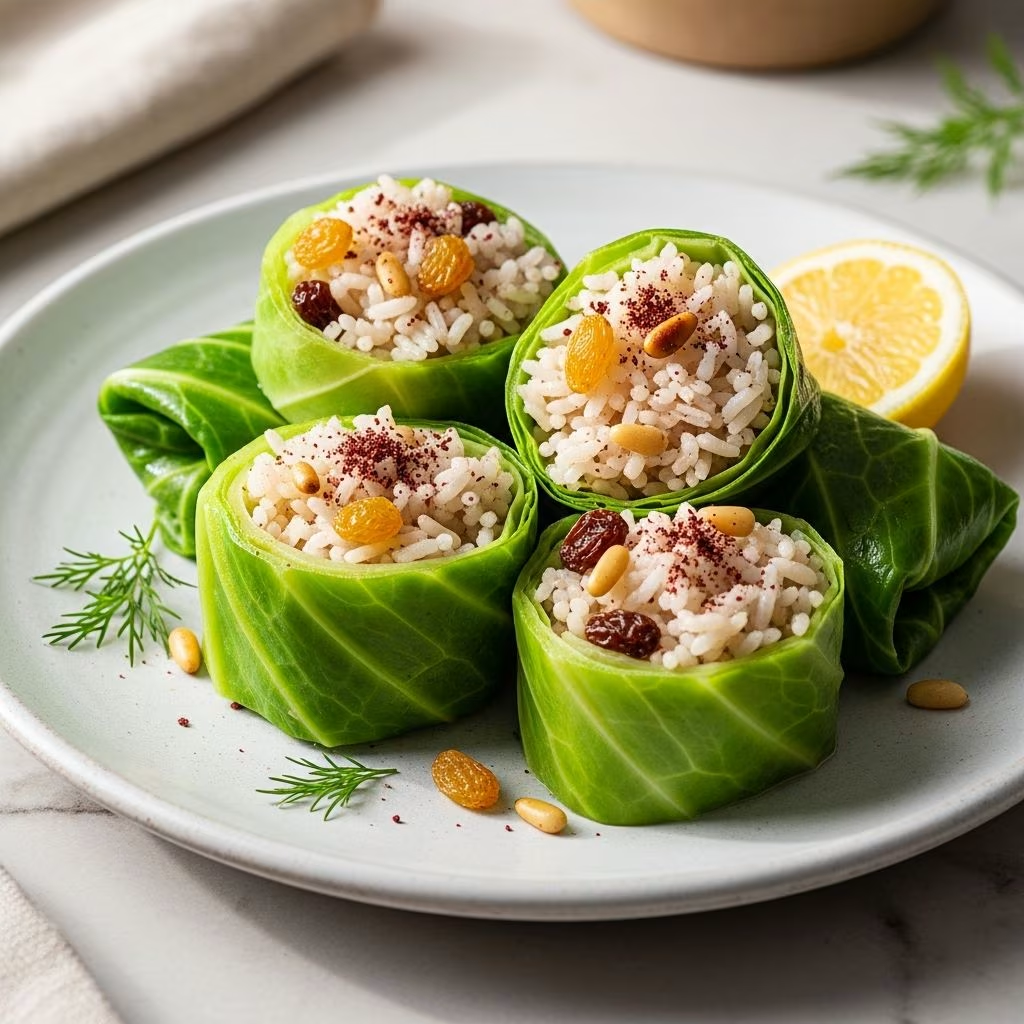
Cabbage rolls represent a timeless culinary tradition that spans multiple Mediterranean and Middle Eastern cuisines. This vegetarian interpretation transforms simple ingredients into an elegant dish that showcases the bright flavors of lemon, the earthiness of toasted nuts, and the distinctive tartness of sumac. The combination creates a sophisticated yet accessible recipe suitable for weeknight dinners or special occasions.
Understanding the Components of This Dish
At its core, this cabbage roll preparation combines several complementary flavor profiles. The tender cabbage leaves serve as edible vessels for a carefully constructed filling that balances nutty textures with herbal brightness. The rice acts as a neutral base that absorbs the surrounding flavors while providing satisfying substance. Pine nuts contribute richness and depth, while fresh herbs introduce vibrancy and complexity. Finally, sumac—a lemony spice derived from berries—adds a sophisticated acidic note without requiring additional citrus juice.
Selecting Premium Ingredients for Superior Results
Success in this dish begins with ingredient selection. Choose a large head of savoy or green cabbage, preferably one with tender, pliable leaves that will soften easily during cooking. The variety of cabbage matters significantly; savoy cabbage, with its crinkled leaves, tears less easily than flatter varieties and provides better structural integrity for the rolling process.
For the rice component, long-grain varieties such as basmati or jasmine rice work optimally. These grains remain separate and distinct during cooking rather than becoming mushy or clumping together. Rinsing the rice before cooking removes excess starch and contributes to achieving individual, well-defined grains in the final dish.
Pine nuts deserve particular attention as they significantly influence the dish’s character. Fresh, high-quality pine nuts provide a buttery flavor and delicate texture. Toasting them briefly brings out their natural oils and deepens their flavor profile substantially. The herbs should be tender varieties—fresh parsley, mint, dill, and tarragon all work excellently—chosen for their aromatic qualities and ability to complement the lemon-sumac combination.
Preparation Techniques That Ensure Success
Preparing the Cabbage Foundation
Begin by setting up your workspace efficiently. Line a baking tray with clean kitchen towels or paper towels; this setup allows the blanched cabbage leaves to drain thoroughly without becoming waterlogged. Bring a large pot of generously salted water to a rolling boil—the salt seasons the leaves while softening their structure.
Work in batches, carefully placing 2-3 cabbage leaves into the boiling water. The leaves should cook until they become bright green and noticeably pliable, typically requiring about 2 minutes per batch. This brief cooking softens the leaves just enough for rolling without making them so fragile they tear during handling. Immediately transfer the cooked leaves to a bowl of ice water to halt the cooking process and preserve their vibrant color and structural integrity.
Once cooled, transfer the leaves to the prepared baking tray, spacing them slightly apart to allow air circulation during draining. Reserve the blanching water; this flavorful, starch-infused liquid will cook the rice, adding subtle depth to the filling.
Crafting the Aromatic Rice Filling
Return the reserved blanching water to a boil and add the rinsed rice. Cook with frequent stirring until the individual grains swell noticeably and begin rising to the surface of the water, typically requiring 3-6 minutes depending on rice quality. Rather than cooking until completely tender, aim for an al dente texture; the rice will continue cooking when baked inside the cabbage rolls, and premature softening results in mushy, unappealing texture.
Test doneness by biting into a few grains; they should offer slight resistance to the tooth while being mostly cooked through. Drain the rice and rinse thoroughly under cold running water to stop the cooking process immediately. Spread the cooled rice in a large mixing bowl, where it will absorb the flavorful components being prepared separately.
Building Flavor Complexity Through Aromatics
Heat extra-virgin olive oil in a clean pot over medium heat and add finely chopped onion. Cook with occasional stirring until the onion transforms from raw to thoroughly softened and develops a golden color, requiring approximately 7-9 minutes. This extended cooking period caramelizes the onion’s natural sugars and mellows its sharp bite, creating a sweet, mellow foundation for the filling.
Add pine nuts to the softened onion and continue cooking with frequent stirring. The nuts should gradually darken and develop a toasty aroma, taking approximately 5 minutes. This step is crucial; properly toasted pine nuts provide their characteristic buttery flavor and prevent a bland, undercooked taste. Watch carefully to prevent burning, as charred nuts introduce bitterness that damages the overall flavor balance.
Introduce the mixed fresh herbs, chopped raisins, and sumac into the aromatic mixture. Continue stirring as the herbs wilt and darken slightly, releasing their essential oils into the oil, approximately 2 minutes. The herbs should become visibly darker and intensely fragrant, signaling that their volatile compounds have been fully activated. Remove from heat and stir in fresh lemon juice, allowing the mixture to cool for 5 minutes before combining with the rice. This cooling period allows flavors to meld and prevents the egg, added next, from cooking prematurely.
Unifying the Filling Components
Combine the cooled onion-nut mixture with the cooked rice and add a beaten egg to bind everything together. Mix thoroughly, ensuring even distribution of all components. Season generously with kosher salt and freshly ground black pepper, tasting as you go to achieve balanced seasoning. The filling should taste fully seasoned at this stage, as it will not receive additional seasoning during cooking.
Assembly and Cooking Techniques
Working with one cabbage leaf at a time, carefully remove the thickest central rib by making a thin V-shaped cut, removing just enough to allow the leaf to fold without resistance. Place approximately 3 heaping tablespoons of filling in the center of each leaf, running the filling crosswise across the leaf’s width.
Beginning at the base where the V-cut was made, fold the notched section up and over the filling, creating a pocket. Fold the sides of the leaf inward, then roll the entire package away from you, creating a burrito-like structure. Arrange the rolled cabbage packages seam-side down in a pot, packing them in a single layer and positioning them close together to prevent unrolling during cooking.
Add butter and water to the pot and bring to a simmer over medium-high heat. Reduce heat to low, cover the pot, and steam the rolls until the filling cooks through completely and the leaves become tender, typically requiring 18-25 minutes. The covered steaming environment creates gentle, even heat that cooks without drying out the delicate leaves.
Finishing Touches and Service
Transfer the finished cabbage rolls to serving plates, allowing any accumulated liquid to drain briefly. Drizzle with premium extra-virgin olive oil, which provides richness and luxurious mouthfeel. Finish with a generous sprinkle of sumac and freshly ground black pepper, adding visual appeal alongside complementary flavor. Serve with dollops of cool soured cream or Greek yogurt, which provides tangy contrast and richness that balances the bright, acidic notes of the sumac and lemon.
Frequently Asked Questions About This Recipe
- Can this recipe be prepared in advance?
- Yes, the cabbage rolls can be assembled several hours ahead and refrigerated, covered with plastic wrap. They can also be frozen before cooking; simply add 5-10 minutes to the cooking time to account for the frozen state.
- What can substitute for pine nuts if unavailable or due to allergies?
- Chopped roasted hazelnuts, walnuts, or sunflower seeds provide similar texture and nutty flavor. Toast any substitution before adding to ensure optimal flavor development.
- Is sumac essential, or can lemon zest replace it?
- While sumac provides distinctive tartness without additional moisture, lemon zest offers a suitable alternative. Use approximately 1 tablespoon of finely grated lemon zest instead of the 2 tablespoons of sumac, though the flavor profile will be slightly different.
- What wine pairs well with this dish?
- Light, crisp white wines such as Sauvignon Blanc, Pinot Grigio, or Greek Assyrtiko complement the lemon-forward, herbaceous characteristics of this dish beautifully.
- Can this recipe be adapted for meat-based preparation?
- Traditional Middle Eastern versions incorporate ground beef or lamb. Use approximately 500g ground meat, combining it with the rice and aromatics before filling the leaves. Reduce herb quantities by half when using meat.
Nutritional Considerations and Dietary Adaptations
This vegetarian cabbage roll preparation provides substantial nutritional value. The cabbage contributes fiber and essential vitamins while remaining low in calories. Rice provides complex carbohydrates for sustained energy, while pine nuts offer heart-healthy monounsaturated fats. Fresh herbs add phytonutrients and antioxidants without adding calories. For vegan adaptation, replace the egg binder with 2-3 tablespoons of aquafaba (liquid from canned chickpeas) or simply omit it, as the rice and vegetables provide sufficient cohesion.
Storage and Make-Ahead Strategies
Cooked cabbage rolls keep refrigerated in an airtight container for 3-4 days. Reheat gently in a covered pot with minimal water at low temperature to prevent drying. These rolls freeze exceptionally well; arrange them in a single layer on a baking sheet, freeze until solid, then transfer to freezer bags for up to 3 months. Thaw overnight in the refrigerator before reheating.
Flavor Variations and Creative Interpretations
While the classic preparation remains excellent, several variations merit exploration. Substitute half the rice with cooked quinoa for increased protein and different texture. Add 2-3 tablespoons of pomegranate molasses to the filling for additional complexity and tangy depth. Include toasted sesame seeds in the filling for nuttier character and added nutrition. Consider infusing the steaming liquid with vegetable broth instead of plain water for enhanced flavor development throughout the cooking process.
References
- Patient.info Vegetarian Recipes: Lemony Rice and Sumac Stuffed Cabbage Rolls — Patient.info. 2024. https://patient.info/recipes/vegetarian-recipes/stuffed-cabbage-with-lemony-rice-and-sumac
- Cabbage Rolls with Nutty Rice and Sumac — CERES Fair Food. 2024. https://www.ceresfairfood.org.au/recipe/cabbage-rolls-with-lemon-and-sumac/
- Warak Malfouf with Sumac — Lebanese Stuffed Cabbage Recipe — Tanios. 2024. https://tanios.co/blogs/our-journal/warak-malfouf-with-sumac
- Lebanese Stuffed Cabbage Rolls — The Lemon Bowl. 2024. https://thelemonbowl.com/lebanese-cabbage-rolls/