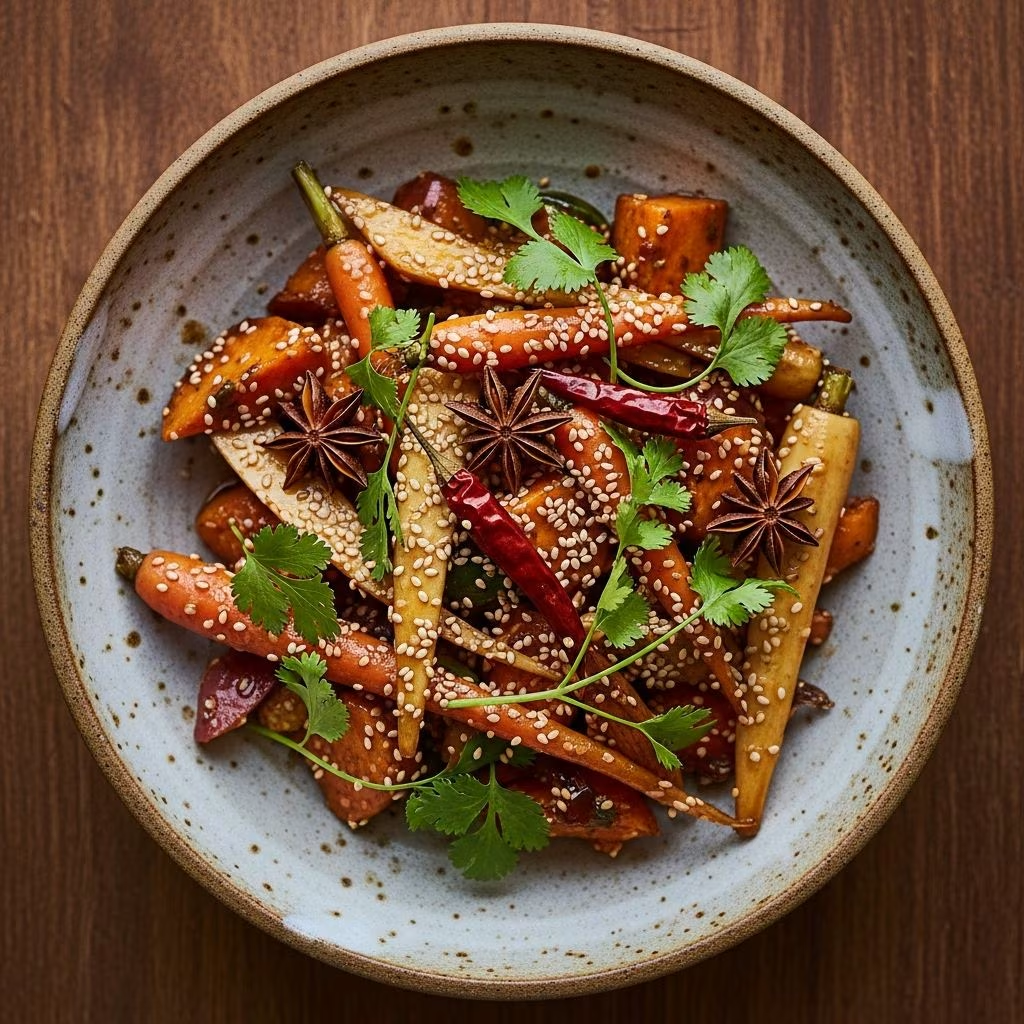
Root vegetables take center stage in this innovative vegan adaptation of the iconic Taiwanese three-cup chicken dish. By swapping meat for nutrient-packed carrots, sweet potatoes, parsnips, and turnips, you create a hearty, flavorful meal that captures the essence of the original—bold umami from soy sauce, nutty depth from sesame oil, and subtle sweetness from rice wine—all without compromising on taste or tradition.
The Origins and Appeal of Three-Cup Cooking
The ‘three-cup’ moniker hails from a classic Taiwanese recipe where equal parts sesame oil, soy sauce, and rice wine form the backbone of the sauce, enveloping chicken in a glossy, aromatic glaze. This vegan riff preserves that harmony while highlighting seasonal root veggies, making it ideal for plant-based diets. The dish’s appeal lies in its simplicity: minimal ingredients yield maximum flavor, with ginger and garlic infusing every bite with warmth and pungency.
Root vegetables are perfect here because they hold their shape during cooking, absorbing the sauce to become tender yet firm. Their natural sugars caramelize beautifully, enhancing the dish’s savory-sweet profile. Whether you’re a vegan veteran or just exploring meatless meals, this recipe delivers restaurant-quality results in under 45 minutes.
Essential Ingredients for Authentic Flavor
Gathering the right components ensures your three-cup root veggies shine. Focus on fresh, firm produce and quality pantry staples for the best outcome.
- Root Vegetables (6 cups, about 2 lbs): Mix carrots, sweet potatoes, parsnips, turnips, or butternut squash. Cut into 1-2 inch cubes for even cooking.
- Aromatics: 1-inch ginger piece (sliced or julienned), 10 garlic cloves (smashed), optional scallions for freshness.
- The Three-Cup Trinity: ¼ cup rice wine (Shaoxing, mirin, or dry white), 4-6 tbsp soy sauce (low-sodium preferred), 3 tbsp toasted sesame oil.
- Sweeteners and Spice: 2 tbsp brown sugar or maple syrup, ¼ tsp red pepper flakes or white pepper for heat.
- Neutral Oil: 2 tbsp canola or similar for initial sautéing.
- Finishing Touches: Thai basil, cilantro, or scallion greens for herbal brightness.
These elements create a balanced sauce: salty, sweet, nutty, and spicy. Pro tip: Use low-sodium soy to control saltiness, as root veggies’ natural flavors amplify everything.
Step-by-Step Stovetop Method
The stovetop approach mimics traditional stir-frying, building layers of flavor through browning before glazing.
- Prep Veggies: Peel and cube roots uniformly. Smash garlic and slice ginger.
- Heat and Sauté: In a large skillet or wok, warm 2 tbsp neutral oil over medium-high. Add veggies, ginger, garlic (and scallion whites if using). Stir-fry 7-10 minutes until edges brown and veggies are crisp-tender.
- Mix Sauce: Whisk rice wine, soy sauce, sesame oil, sugar, pepper flakes, and a splash of water.
- Simmer and Reduce: Pour sauce over veggies. Lower heat to medium, cover partially, and cook 8-12 minutes until tender. Uncover and reduce sauce to a thick glaze, 5-8 more minutes.
- Finish: Stir in fresh herbs. Serve hot over rice or noodles.
Total time: 30-40 minutes. This method yields glossy, sauce-cloaked veggies with caramelized bits.
Oven-Baked Variation for Hands-Off Cooking
Prefer less monitoring? The oven method roasts veggies to perfection while the sauce caramelizes naturally.
- Preheat to 425°F (220°C). Line a sheet pan with parchment.
- Toss cubed veggies, ginger, garlic with all sauce ingredients.
- Spread evenly on the pan. Roast 20-25 minutes, stirring halfway, until tender and glazed.
- Add herbs post-bake.
Ideal for meal prep—reheats beautifully. The high heat intensifies flavors without constant stirring.
Customizing Your Three-Cup Veggies
Adapt this base to your pantry and preferences. Variety keeps it exciting.
| Variation | Swaps/Add-Ins | Tips |
|---|---|---|
| Spicy Kick | Fresh chilies or sriracha | Add during sauté for infused heat. |
| Protein Boost | Tofu cubes or chickpeas | Brown with veggies for 5 extra minutes. |
| Gluten-Free | Tamari for soy sauce | Check rice wine labels. |
| Sweet & Earthy | Extra parsnips, beets | Balances spice naturally. |
| Oil-Free | Vegetable broth | Use non-stick pan, add water as needed. |
Experiment seasonally—winter roots like rutabaga add heartiness; summer versions with zucchini lighten it up.
Nutritional Benefits of Root-Powered Meals
This dish isn’t just tasty; it’s a nutritional powerhouse. Root veggies provide fiber for digestion, beta-carotene for immunity, and complex carbs for sustained energy. Sesame oil offers healthy fats and antioxidants, while ginger-garlic boost anti-inflammatory properties. A 1-cup serving delivers ~200 calories, 5g protein, 30g carbs, and loads of vitamins A and C—making it a smart swap for heavier mains.
Government health guidelines from sources like USDA emphasize root veggies for their low-calorie density and micronutrient profile, supporting heart health and stable blood sugar.
Pairing Suggestions and Serving Ideas
Elevate the meal with thoughtful sides.
- Grains: Jasmine rice, quinoa, or soba noodles soak up the glaze.
- Greens: Steamed bok choy, sesame broccoli, or crisp cucumber salad for contrast.
- Drinks: Green tea, chilled lychee soda, or light white wine echoes the rice wine note.
- Batch Cooking: Doubles easily; freezes well for 3 days.
Serve family-style for sharing, garnished with sesame seeds for crunch.
Frequently Asked Questions
What if I can’t find Shaoxing wine?
Use mirin, dry sherry, or white wine with a tsp extra sugar. Avoid cooking wine—it’s too salty.
Can I make this ahead?
Yes! Prep veggies and sauce separately. Cook fully up to 2 days ahead; reheat gently with a splash of water.
Is it kid-friendly?
Omit flakes for mild version. Kids love the sweet glaze on familiar carrots and sweet potatoes.
How do I store leftovers?
Air-tight container in fridge for 4 days. Microwave or stovetop reheat.
Vegetarian or fully vegan?
Fully vegan as written. Add egg for ovo-vegetarian twist if desired.
Pro Tips for Perfection
- Cut veggies uniformly to avoid uneven cooking.
- Don’t overcrowd the pan—cook in batches if needed.
- Taste sauce before adding; adjust sugar/soy to balance.
- Fresh Thai basil elevates it—dried won’t compare.
- For extra gloss, finish with a drizzle of sesame oil.
Mastering three-cup root veggies opens doors to endless adaptations, blending Taiwanese heritage with modern vegan flair. It’s proof that simple ingredients create profound meals.
References
- Three-Cup Vegetables – Nan Cooks the Books — Nan Cooks the Books. 2023-01-15. https://nancooksthebooks.com/three-cup-vegetables/
- “Three Cup” Root Vegetables – Foodwise — Foodwise. 2024-05-20. https://foodwise.org/recipes/three-cup-root-vegetables/
- Three-Cup Vegetables – Food Revolution Network — Food Revolution Network. 2023-11-10. https://foodrevolution.org/recipes/three-cup-vegetables/
- Three Cup Chicken (San Bei Ji) – The Woks of Life — The Woks of Life. 2022-09-05. https://thewoksoflife.com/three-cup-chicken-san-bei-ji/