Potato casseroles have long been a staple of family dinners, holiday gatherings, and potluck celebrations. This beloved dish combines simple ingredients into a comforting masterpiece that pleases virtually every palate. Whether you’re preparing dinner for your immediate family or hosting a special event, understanding the fundamentals of creating a superior potato casserole will elevate your cooking repertoire and impress your guests.
Understanding the Foundation: Why Potato Casseroles Matter
The potato casserole represents more than just a side dish; it embodies the essence of comfort cooking. This versatile creation works equally well as a supporting player alongside grilled meats or as a substantial main course. The appeal lies in its simplicity combined with sophisticated flavors achieved through careful ingredient selection and proper technique.
What makes a potato casserole truly exceptional is the balance between textural elements and flavor profiles. The contrast between creamy interior components and golden-brown toppings creates an appealing eating experience. Understanding this balance forms the cornerstone of casserole mastery.
Essential Ingredients: Building Your Flavor Foundation
Creating an outstanding potato casserole begins with selecting quality ingredients. Each component serves a specific purpose in developing depth and richness.
The Potato Base
Russet potatoes form the traditional foundation due to their starch content and ability to absorb surrounding flavors. These medium-to-large tubers should be peeled and cut into uniform cubes to ensure consistent cooking throughout the casserole. Using approximately 1.5 to 2 pounds provides adequate volume for a standard 9×13-inch baking vessel.
Creamy Components
The moisture and richness in a potato casserole comes from multiple sources working in concert. Sour cream contributes tanginess and smoothness, while cream of mushroom soup adds umami depth and additional moisture. Heavy cream or milk can be incorporated to enhance the overall creaminess, with some preparations using mayonnaise to create an ultra-luxurious texture.
Dairy and Cheese Elements
Butter provides essential flavor and helps bind ingredients while creating a silky mouthfeel. Cheddar cheese serves as the primary flavor accent, bringing sharpness and complexity. Using divided portions—reserving some cheese for topping—ensures both internal flavor development and an attractive golden-brown finish on the surface.
Aromatics and Seasonings
Green onions introduce freshness and mild allium flavor without overpowering the dish. Garlic powder, onion powder, salt, and black pepper provide foundational seasoning that highlights rather than masks the potato flavor.
Preparation Techniques: Achieving Perfect Texture
Preparing the Potatoes
Begin by thoroughly washing russet potatoes to remove any remaining soil. After peeling with a vegetable peeler, dice the potatoes into uniform cubes approximately three-quarters of an inch in size. Consistency in sizing prevents some pieces from becoming mushy while others remain firm.
Place the diced potatoes into a large saucepan and cover completely with cold water. Starting with cold water rather than hot water ensures even cooking throughout each piece. Bring the water to a gentle simmer—not a rapid boil—which prevents the exterior from breaking down before the interior cooks through.
Cook for approximately 12 to 14 minutes until the potatoes reach fork-tender consistency. This stage is crucial; underdone potatoes remain unpleasantly firm while overdone potatoes become mushy and difficult to handle. Test with a fork beginning around the 11-minute mark to ensure precision.
Creating the Creamy Sauce
In a separate skillet, melt butter over medium heat. For enhanced flavor, consider lightly sautéing minced green onions in this melted butter for 1 to 2 minutes before adding remaining components. This gentle cooking develops their natural sweetness.
Add the cream of mushroom soup, sour cream, and half of the shredded cheddar cheese. Stir continuously until the mixture reaches a homogeneous consistency with no visible lumps. Season appropriately with salt and pepper, keeping in mind that cheese adds saltiness, so adjust quantities accordingly.
Combining Components
Drain the cooked potatoes thoroughly, removing excess water that could dilute the sauce. Transfer them to the creamy mixture and gently fold together, ensuring each potato piece becomes well-coated without mashing them into smaller fragments. Aggressive stirring breaks down the potato structure and creates an undesirable texture.
Baking Process and Temperature Mastery
Preparation Steps
Preheat your oven to 375°F (190°C) at least 15 minutes before baking. This ensures consistent heat distribution and prevents uneven cooking. Prepare a 9×13-inch baking dish with light nonstick cooking spray or butter, which prevents sticking and contributes additional flavor.
Arranging for Success
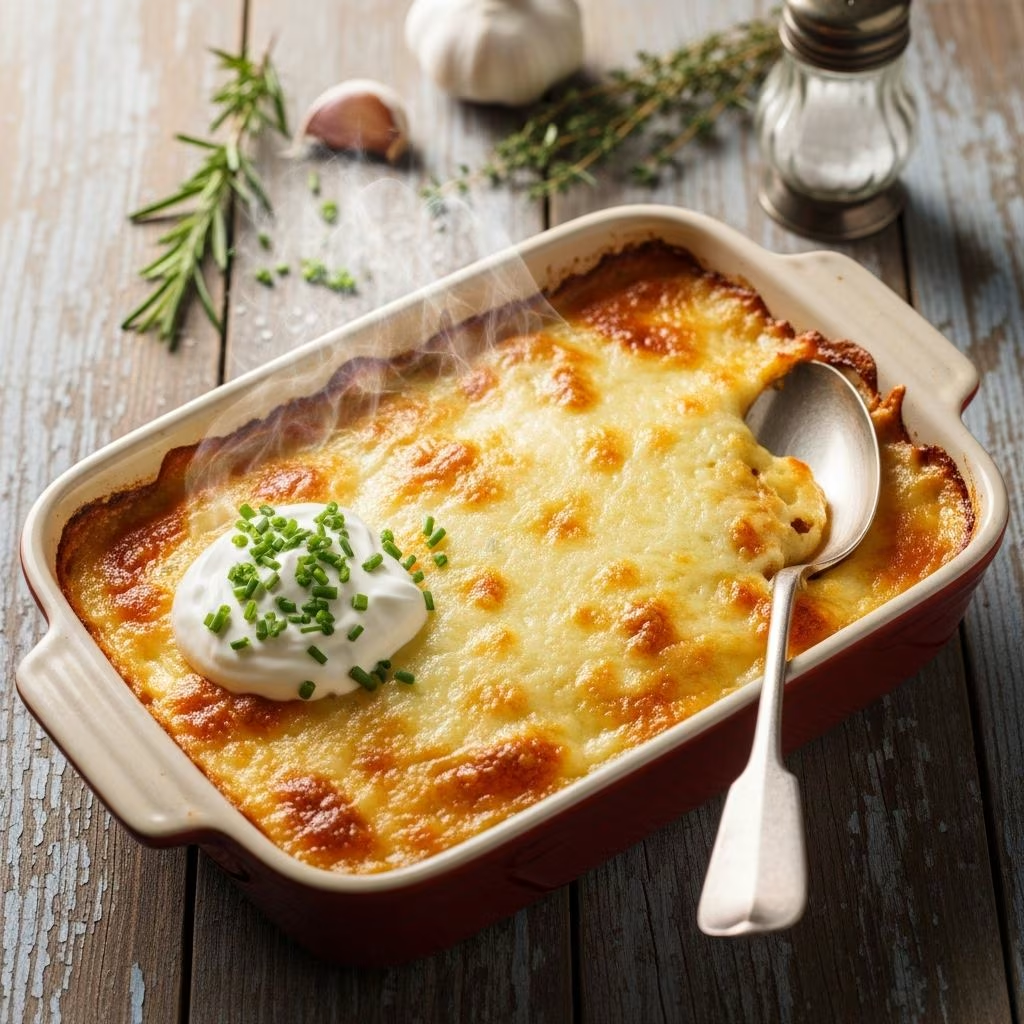
Transfer the combined potato mixture into the prepared baking dish, spreading it evenly across the surface. Use a spatula to create a uniform layer. Reserve the remaining cheddar cheese, sprinkling it across the top surface to create an attractive presentation and ensuring a golden-brown cheese crust develops during baking.
Baking Duration and Doneness
Bake for approximately 30 minutes, or until the cheese on top becomes bubbly and develops light browning at the edges. The casserole’s interior should reach a temperature where the edges show slight browning while the center remains creamy. Remove from the oven immediately upon achieving this stage to prevent overcooking.
Variations and Creative Adaptations
Addition of Proteins
Transform your casserole into a complete meal by incorporating cooked bacon, diced ham, or sautéed sausage. Approximately one cup of crumbled bacon distributed throughout the mixture adds smoky saltiness that complements the creamy base beautifully. Layer the meat with the potato mixture before adding the cheese topping.
Vegetable Enhancements
Red bell peppers, mushrooms, and corn add nutritional value and textural variety. Sauté harder vegetables like peppers and mushrooms briefly before incorporating them into the casserole, allowing them to soften slightly while retaining structural integrity.
Topping Alternatives
While cheese provides classic appeal, consider alternatives or combinations. Crushed Ritz crackers mixed with melted butter create a crunchy exterior layer. Breadcrumbs combined with herbs offer sophisticated appeal. Mixing reserved cheese with crushed crackers provides both textural contrast and visual appeal.
Using Frozen Hash Browns
When fresh potatoes aren’t available, frozen shredded hash browns provide convenient substitution. Allow them to thaw slightly at room temperature for approximately 15 minutes before mixing into the sauce. This partial thawing ensures even distribution and cooking throughout the casserole.
Ingredient Comparison Chart
| Component | Standard Quantity | Purpose | Substitutions |
|---|---|---|---|
| Russet Potatoes | 1.5-2 lbs | Base structure | Frozen hash browns, red potatoes |
| Sour Cream | 0.5 cup | Tanginess, moisture | Greek yogurt, cream cheese |
| Cream of Mushroom Soup | 0.5 cup | Creaminess, umami | Cream of chicken, heavy cream |
| Cheddar Cheese | 1 cup | Flavor, browning | Mozzarella, mixed cheese blend |
| Butter | 2-3 tbsp | Richness, binding | Cream cheese, olive oil |
Expert Tips for Superior Results
- Cut potatoes into uniform sizes to promote consistent cooking throughout the dish
- Avoid over-mixing once ingredients combine, as this can create an undesirable mushy texture
- Use freshly shredded cheese rather than pre-shredded varieties for superior melting and flavor
- Allow the casserole to rest for 5 minutes after removing from the oven, making serving easier
- Prepare the casserole up to 24 hours in advance and refrigerate before baking for enhanced flavor development
- Cover with foil during the first portion of baking if the cheese topping browns too quickly
- Taste the sauce before baking to adjust seasoning appropriately
Frequently Asked Questions
Can I make this casserole ahead of time?
Yes, this dish accommodates advance preparation beautifully. Combine all ingredients in your baking dish, cover with plastic wrap, and refrigerate for up to 24 hours before baking. You may need to add 5-10 minutes to the baking time since the casserole begins at a lower temperature.
What should I do if my casserole seems too dry?
If your mixture appears dry during assembly, incorporate additional sour cream or milk in quarter-cup increments. The casserole should appear moist but not soupy at this stage, as moisture will be released during baking.
How do I prevent the cheese from burning?
If you notice excessive browning during the final 15 minutes of baking, cover the casserole loosely with aluminum foil. This protects the cheese from direct oven heat while allowing the interior to continue cooking.
Can I freeze leftover casserole?
Absolutely. Cool the casserole completely, then transfer portions to airtight freezer containers. Frozen casserole remains quality-preserved for up to three months. Thaw overnight in the refrigerator before reheating in a 350°F oven covered with foil for approximately 25-30 minutes until heated through.
What are suitable serving occasions for this dish?
This casserole adapts beautifully to any occasion requiring substantial side dishes. Serve alongside roasted poultry, grilled beef, or baked fish. It also functions excellently as a vegetarian main course when paired with a fresh green salad.
Storage and Reheating Guidelines
Store leftover casserole in airtight containers in the refrigerator for up to four days. Reheat gently in a 350°F oven covered with foil for 20-25 minutes, or microwave individual portions at 50% power for 3-4 minutes, stirring halfway through. Adding a small splash of milk during reheating helps restore the creamy texture that may diminish slightly during storage.
Nutritional Considerations
This casserole provides substantial carbohydrates from potatoes, protein from dairy and optional meat additions, and healthy fats from butter and cheese. While indulgent, moderation combined with vegetable-forward side dishes creates a balanced meal. Consider incorporating steamed broccoli, roasted Brussels sprouts, or fresh garden salads to increase fiber and micronutrient content.
Conclusion: Your Pathway to Casserole Excellence
Mastering the potato casserole transforms an ordinary side dish into a showstopping component of any meal. Through understanding ingredient roles, proper preparation techniques, and thoughtful cooking practices, you’ll create casseroles that impress family and guests alike. Whether you follow traditional methods or explore creative variations, this versatile dish adapts to your preferences and available ingredients while maintaining its fundamental appeal as ultimate comfort food.
References
- USDA FoodData Central — U.S. Department of Agriculture. 2024. https://fdc.nal.usda.gov/
- The Flavor Bible: The Essential Reference for More Than 1,000 Ingredients and How to Cook With Them — Karen Page and Andrew Dornenburg. Little, Brown and Company. 2008.
- Professional Chef Certification Study Materials — The Culinary Institute of America. 2023.